1980
Fashion history
80s Black Fashion and Its Lasting Influence
Sharp tailoring, tracksuits, leather, gold jewelry and the beginnings of a new visual language around hip-hop.
Black style, past to present
BAAM Boys looks closely at the clothes, shoes and creative decisions that shaped Black men's style—from the confidence of 1980s tailoring to the relaxed proportions of the 1990s and the bold scale of Y2K.
Explore the eras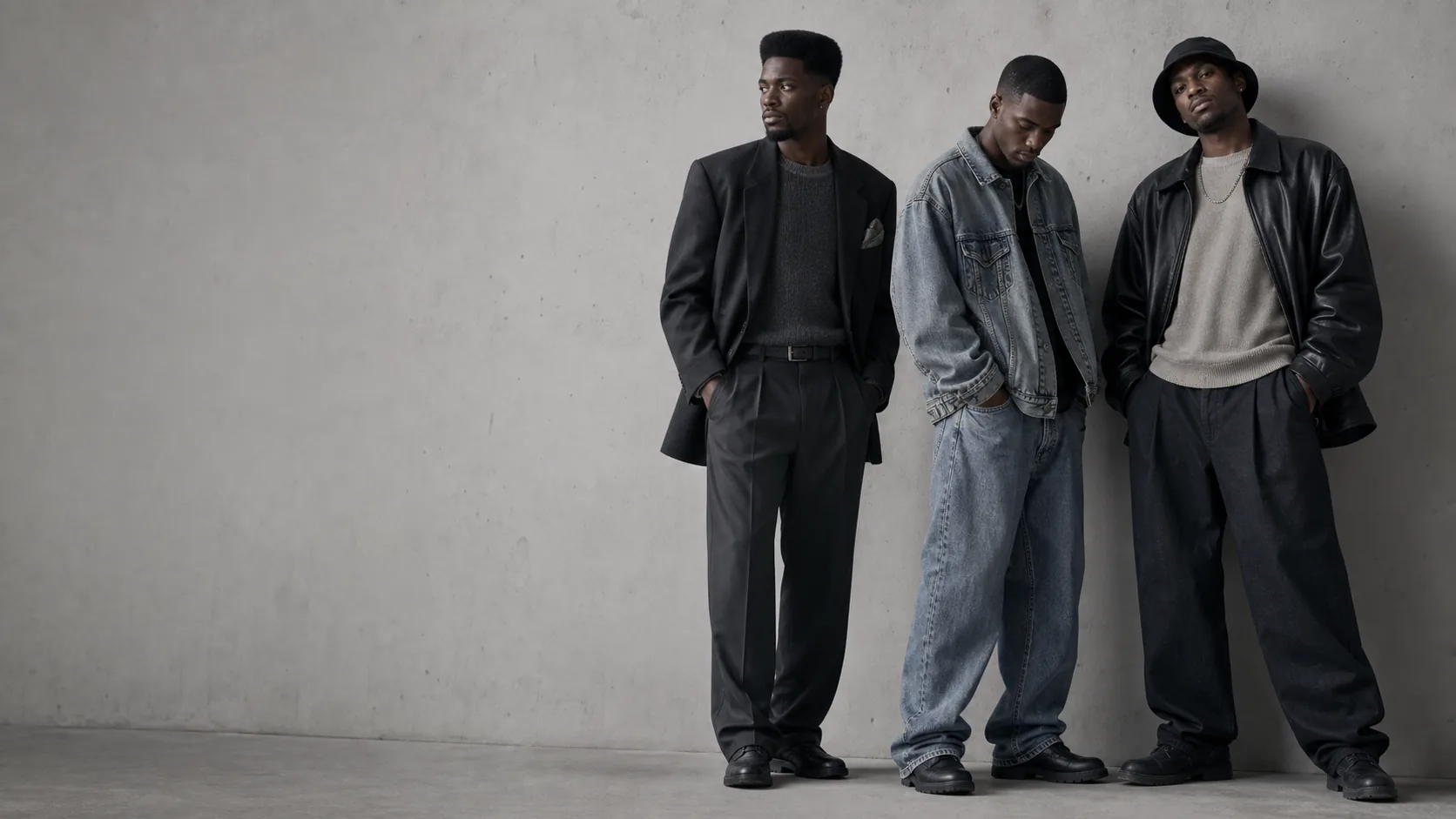
A useful way into the subject
Black fashion is not a single look, and it cannot be reduced to a handful of famous outfits. It is a long exchange between local communities, music, sport, tailoring, beauty culture, college life, nightlife and the everyday need to dress with purpose. A garment may begin as practical workwear, gather a new meaning in a neighborhood scene and eventually arrive on a runway stripped of the story that made it compelling. Our job is to reconnect those pieces.
That means we care about more than identifying an oversized jacket or naming a sneaker. We ask why the proportion worked, who made the look visible, how geography changed it and which details still translate into a good outfit now. The result should help a reader recognize the history and leave with a clearer eye for getting dressed.
Five editorial desks
Designers, movements and the Black creative influence behind defining looks.
Enter Fashion →02Decade-specific guides that separate real details from costume shorthand.
Follow the timeline →03Artist wardrobes, regional streetwear and the relationship between sound and image.
Study the influence →04Basketball shoes, enduring silhouettes and pairs made meaningful beyond the court.
See sneaker stories →05Wearable combinations, accessories and grooming ideas grounded in proportion.
Build an outfit →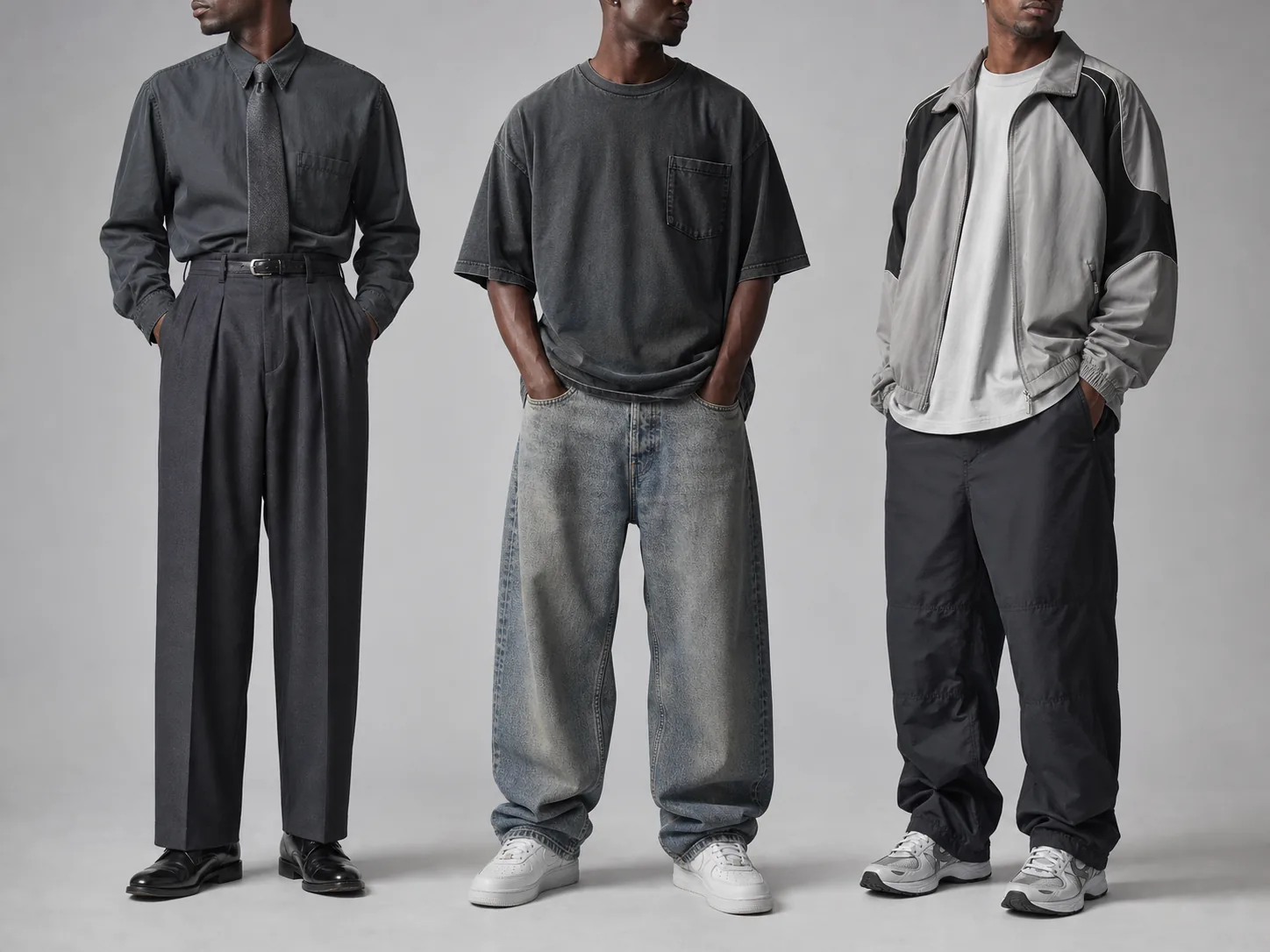
The editor's starting point
When an outfit feels unmistakably 1980s or 1990s, the first clue is usually not the brand. It is the line of the body. Eighties tailoring often lifted the waist and broadened the shoulder. The following decade relaxed that structure: tees grew longer, denim sat looser and outerwear gained room. Early-2000s styling pushed length and scale further before the pendulum moved toward slimmer fits.
Understanding shape makes vintage references more wearable. You do not need every item to come from the same decade. A wide trouser can sit under a compact contemporary jacket; a generous jersey can work with a straighter jean. Pick one dominant proportion, then let the other pieces support it.
Read the complete 90s Black fashion guide →Core reading
1980
Fashion history
Sharp tailoring, tracksuits, leather, gold jewelry and the beginnings of a new visual language around hip-hop.
1990
Essential guide
Baggy denim, workwear, sports jerseys and the regional differences hidden inside the decade's familiar outline.
2000
Y2K revisited
How extreme scale, sports references and luxury aspiration met in early-millennium wardrobes.
Dates help organize the archive, but style rarely changes at midnight on January 1. An idea born late in one decade can become widely visible years later. A music video may preserve a highly styled moment while family photographs show what people wore day to day. Climate matters, too: a heavy East Coast boot and layered jacket answer different needs from a lightweight West Coast shirt. Income, school rules, work and access to stores shape the record just as surely as celebrity influence.
We therefore treat every decade guide as a map with multiple routes. The 1980s section moves between polished tailoring, athletic sets and early rap imagery. Our 1990s coverage separates workwear, collegiate prep, sports clothing and regional scenes instead of blending them into one baggy silhouette. The Y2K archive follows both the expansion of proportions and the later turn toward slimmer, luxury-conscious dressing. Reading the eras side by side reveals continuity: garments change, but the instinct to customize, remix and communicate remains.
Shoes and finishing pieces
A sneaker is never just the final item added at the door. Basketball performance, school dress codes, neighborhood taste, music videos and access to particular stores all helped determine which pairs became important. Work boots tell a different story: climate and utility came first, then musicians and stylists changed how the boot sat inside an outfit.
Accessories work the same way. A fitted cap sharpens a sports reference; a simple chain catches light without taking over; a watch can make relaxed denim feel considered. We discuss those choices without pretending that buying an object grants its history. Good style begins with attention, not accumulation.
Browse retro sneaker stories →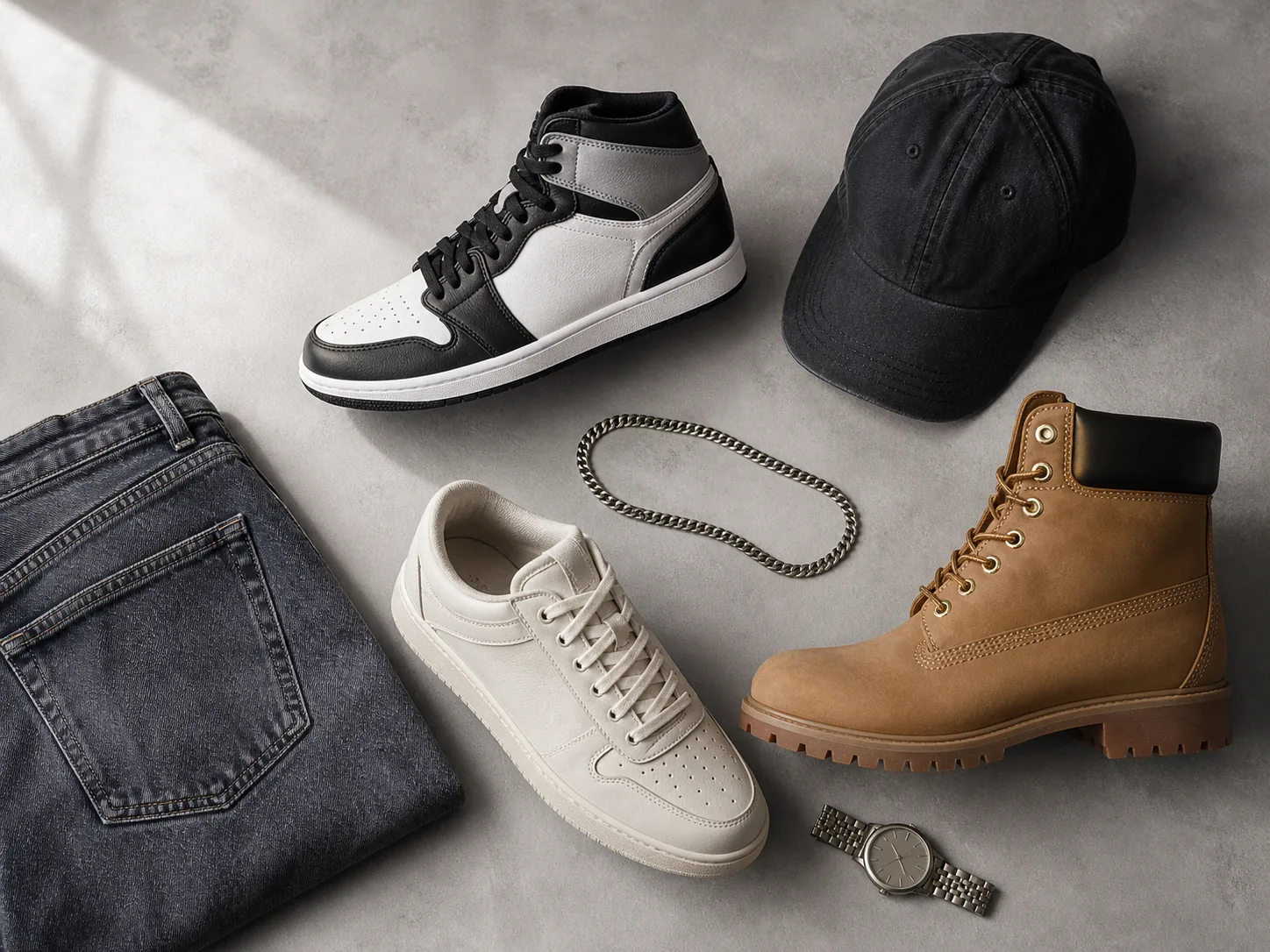
How BAAM Boys works
Our editors build guides around visible evidence: garment construction, dated photographs, documented releases, interviews and credible cultural reporting. We distinguish a broad trend from a look associated with one performer or region. When an identification is uncertain, we would rather say so than turn a guess into fashion folklore.
We also edit for use. Historical detail matters, but a reader may arrive because he needs shoes for a 90s party, a better summer outfit or a clear comparison between two decades. Tables, concise answers and descriptive headings make those decisions easier while leaving room for nuance. Commercial relationships do not dictate conclusions, and substantial factual corrections are reflected in the updated date.
Reader questions
Black fashion describes creative dress practices, businesses and aesthetics shaped by people across the African diaspora. It includes formalwear, streetwear, sportswear, beauty and regional traditions; it is a field of cultural production, not one fixed wardrobe.
Hip-hop gave local style languages an international platform. Artists and their communities made sportswear, workwear, jewelry, sneakers and oversized proportions visible to broader audiences, while later collaborations also changed how fashion companies worked with musicians.
A relaxed silhouette is the clearest starting point: loose denim or workwear trousers, a roomy tee, jersey, hoodie or varsity layer, then substantial sneakers or boots. Region, year and music scene all changed the details, so no single outfit represents the entire decade.
Yes. Use one strong period proportion and keep the surrounding pieces quieter. Wide jeans with a compact jacket, or an oversized jersey with straight trousers, usually feels more natural than combining every recognizable trend at once.
Start with the 90s Black fashion guide for the site's most complete overview, move to 1980s style for contrast, then explore Hip-Hop Style or Men's Style according to whether history or practical outfits interest you most.