Persona under a faster spotlight
2000s Rapper Outfits: Four Image Systems That Defined an Era
Memorable 2000s rapper outfits used scale and repetition to build identity: roomy leather with broad denim, long jerseys over layered tees, complete tracksuits or increasingly refined tailoring. Cameras, stages, stylists and regional scenes shaped the result. Studying the system is more useful than copying a celebrity item for item.
Quick answer
What did rappers wear in the 2000s?
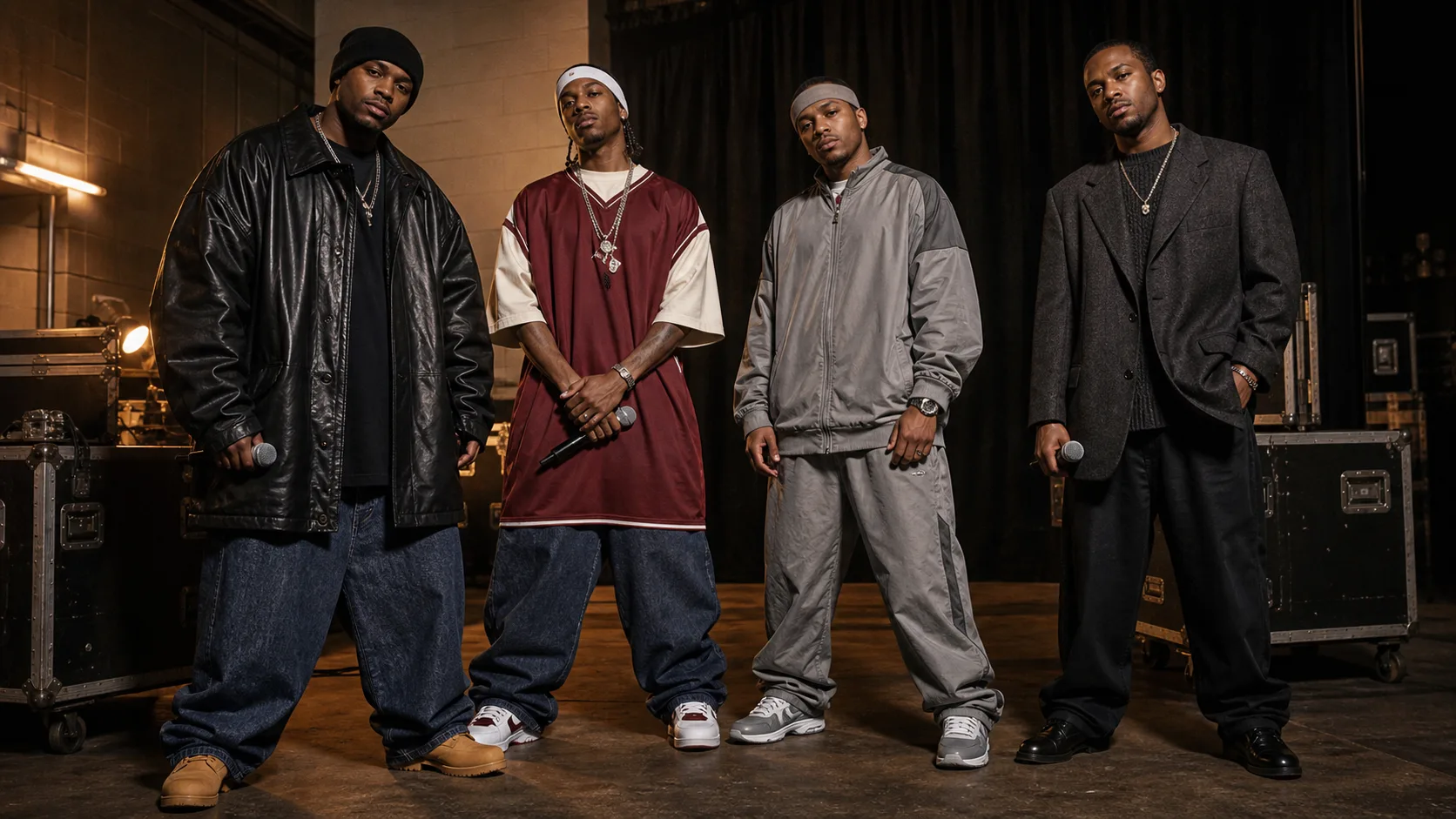
Highly visible rapper wardrobes included long tees, sports jerseys, wide denim, oversized leather, tonal tracksuits, fitted caps, basketball shoes, technical sneakers, boots, watches and jewelry. As the decade progressed, closer jackets, slimmer denim, luxury tailoring and boutique streetwear became more prominent. Artists varied by region, career stage and project; no one outfit represented the whole decade.
Leather heavyweight
Roomy dark outerwear, broad denim and sturdy footwear create visual mass.
Sports representative
Jersey, long base, wide jeans and court shoes connect city, team and scale.
Tonal technician
A matching tracksuit and technical sneaker communicate polish through continuity.
Refined executive
Textured tailoring and controlled trousers signal the decade's changing luxury conversation.
01 / Read the system
A single garment cannot explain a persona
A leather coat appears powerful because of its length, sheen, trouser width, footwear and the way it is photographed. A jersey becomes an artist image through layering, color, team association, cap and repeated use. A tracksuit reads differently when immaculate and tonal than when treated as an anonymous rehearsal layer. Tailoring communicates authority only when the shoulder, trouser and shoe agree.
Begin research with the complete frame. Note setting, date, image type and whether the outfit belongs to a video, portrait, performance or candid scene. Then separate observation from interpretation. You may see a burgundy jersey and long cream tee; explaining why they were chosen requires credits, interviews or careful contextual evidence.
The Early 2000s Hip-Hop Fashion guide covers regions and media. This analysis stays with performer personas and wardrobe function.
02 / Four personas
Scale could communicate different kinds of authority
Leather and denim make the body appear substantial. Matte layers prevent the shine from overwhelming the face.
Jerseys and caps can signal team, player or city, while a long base creates the era's characteristic vertical line.
A tonal track set appears effortless, but fit, cleanliness and footwear coordination determine whether it reads intentionally.
Tailoring, leather shoes and restrained jewelry can express success without abandoning relaxed proportion.
An artist might move among these systems across one album campaign. Continuity could come from grooming, color, jewelry or posture rather than identical clothes. The image remained recognizable because several cues repeated.
03 / Still image
Album photography compressed the wardrobe into one statement
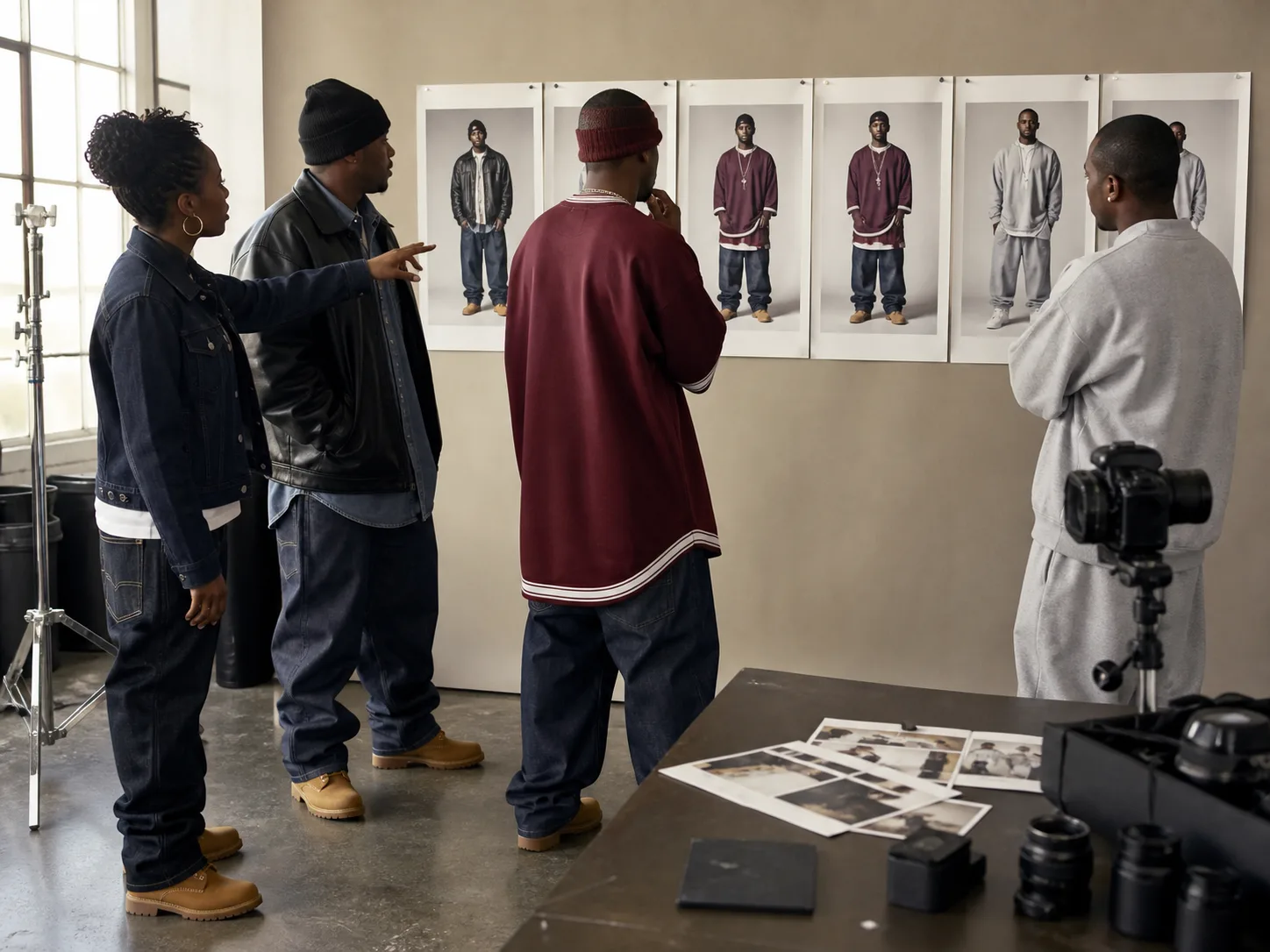
A cover needs instant recognition at several sizes. Leather creates broad dark shapes. A burgundy jersey supplies a focal color. A pale tracksuit separates cleanly from a dark background. Photographers adjust pose and light so garment volume appears intentional rather than accidental.
Contact-sheet review is an editing process. A top may need shortening if it hides the shoe relationship. Reflective jewelry can steal attention. A cap may shadow the eyes. The final picture feels inevitable only after weaker combinations disappear from view.
Generated images in this guide illustrate that process but are not archival proof. BAAM Boys distinguishes reconstruction from documentary evidence under its Editorial Policy.
04 / Performance test
Stage clothing answers heat, motion and distance
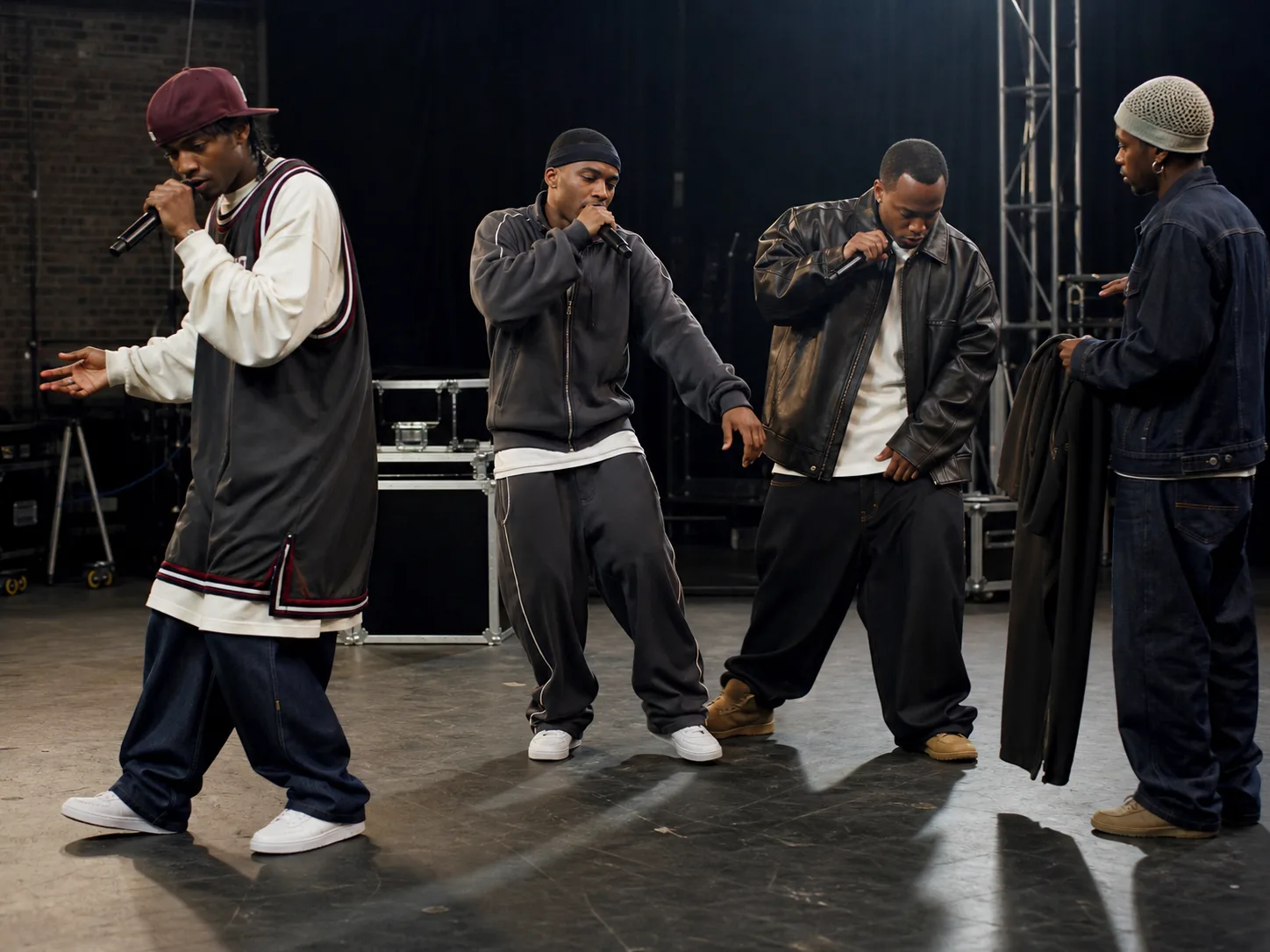
A long layered jersey creates strong movement but can catch against the body. Wide jeans need secure waists and hems that stay clear of the heel. Leather may photograph well while becoming hot under stage light. Tracksuits offer mobility, though loose cuffs and reflective fabric still need rehearsal.
Footwear must balance both silhouette and physical demand. A large court shoe makes a broad jean leg look grounded. A technical runner supports movement under a track pant. Boots carry leather visually but may be heavier. Vintage pairs require structural inspection; old foam and glue can fail suddenly.
Rehearse the full set, not one pose.
Review wide camera footage and audience sightlines.
Fix hems, heat and competing detail before show day.
05 / Rehearsal evidence
The practical version may differ from the portrait
Promotional wardrobes can use a heavier jacket or more jewelry than a live set. Rehearsal allows the creative team to preserve the visual idea with lighter fabric, safer accessories and reliable footwear. A leather persona might become a shorter bomber. A long jersey can retain color while losing excess layering.
That difference is useful to modern readers. Do not duplicate a still image without asking whether it was built to move. Choose a functional garment that communicates the same proportion. A dark leather jacket over broad denim can preserve weight; a burgundy sports layer over a cream base can preserve contrast.
For the decade-wide wardrobe, visit Black 2000s Fashion. For modern fit practice, use Y2K Black Men's Fashion.
06 / Wear the method
Translate without impersonating
Leather weight
Roomy black leather jacket, matte charcoal tee, straight-wide dark denim and substantial boot.
Sports layer
Muted jersey, cream long-sleeve base, controlled wide jeans and clean court shoes.
Tonal motion
Gray track set, understated runner and one functional watch.
Relaxed authority
Textured charcoal blazer, dark knit, broad pleated trouser and polished shoe.
Avoid replica logos, signature jewelry and exact combinations tied to a specific artist. Borrow a material relationship or silhouette, then use your own grooming and setting. Personal style grows from repetition, not celebrity disguise.
07 / A changing decade
The wide silhouette did not remain static
By the later 2000s, closer jackets, slimmer denim and boutique fashion relationships became increasingly visible. That movement did not erase wide clothing overnight. Artists and audiences retained older pieces, while regions and genres changed at different speeds.
Use a narrow date range when describing a reference. “2000s rapper outfit” is a useful search category, but a 2001 jersey-and-denim system differs from a 2009 closer luxury-street combination. Precision makes both fashion history and outfit advice more useful.
Evidence trail
Sources & Further Reading
These references support the historical, cultural or care-related claims in the guide. Outfit combinations and fit recommendations are BAAM Boys editorial judgment unless specifically attributed.
- The Museum at FIT — Fresh, Fly, and Fabulous: Fifty Years of Hip Hop Style
Curatorial overview connecting hip-hop clothing to community, customization, aspiration and fashion-industry influence.
- Smithsonian NMAAHC — Five Things to See: The Fashion of Hip-Hop
Collection-based examples of garments, jewelry, photographs and sneakers used to document hip-hop style.
- The Metropolitan Museum of Art — Superfine: Tailoring Black Style
Institutional context for Black dress, identity, tailoring and self-presentation across time.
Persona casebook
Build the record around image decisions
- Identify the public task. Album art, tour wardrobe, video performance and red-carpet presentation solve different image problems.
- Describe scale precisely. Record tee length, trouser rise, jacket volume and shoe weight rather than using “oversized” as the entire analysis.
- Separate repetition from exception. A recurring uniform supports a persona claim; one experimental appearance does not.
- Credit documented collaborators. Styling, design, grooming, jewelry and photography can be central creative work.
- Track change over time. Early, middle and late-decade appearances may show deliberate repositioning rather than inconsistency.
The archive becomes valuable when it explains why an image worked and what evidence supports that reading—not when it merely identifies a celebrity.