Music, regions and a faster image cycle
Early 2000s Hip-Hop Fashion: How the Look Traveled
Early-2000s hip-hop fashion magnified long tees, wide denim, sports jerseys, tracksuits, roomy leather, fitted caps, technical sneakers and visible jewelry. Television, magazines, DVDs and a growing internet accelerated the image, while regional rap scenes kept the wardrobe from becoming one national uniform.
Quick answer
What defined early-2000s hip-hop fashion?
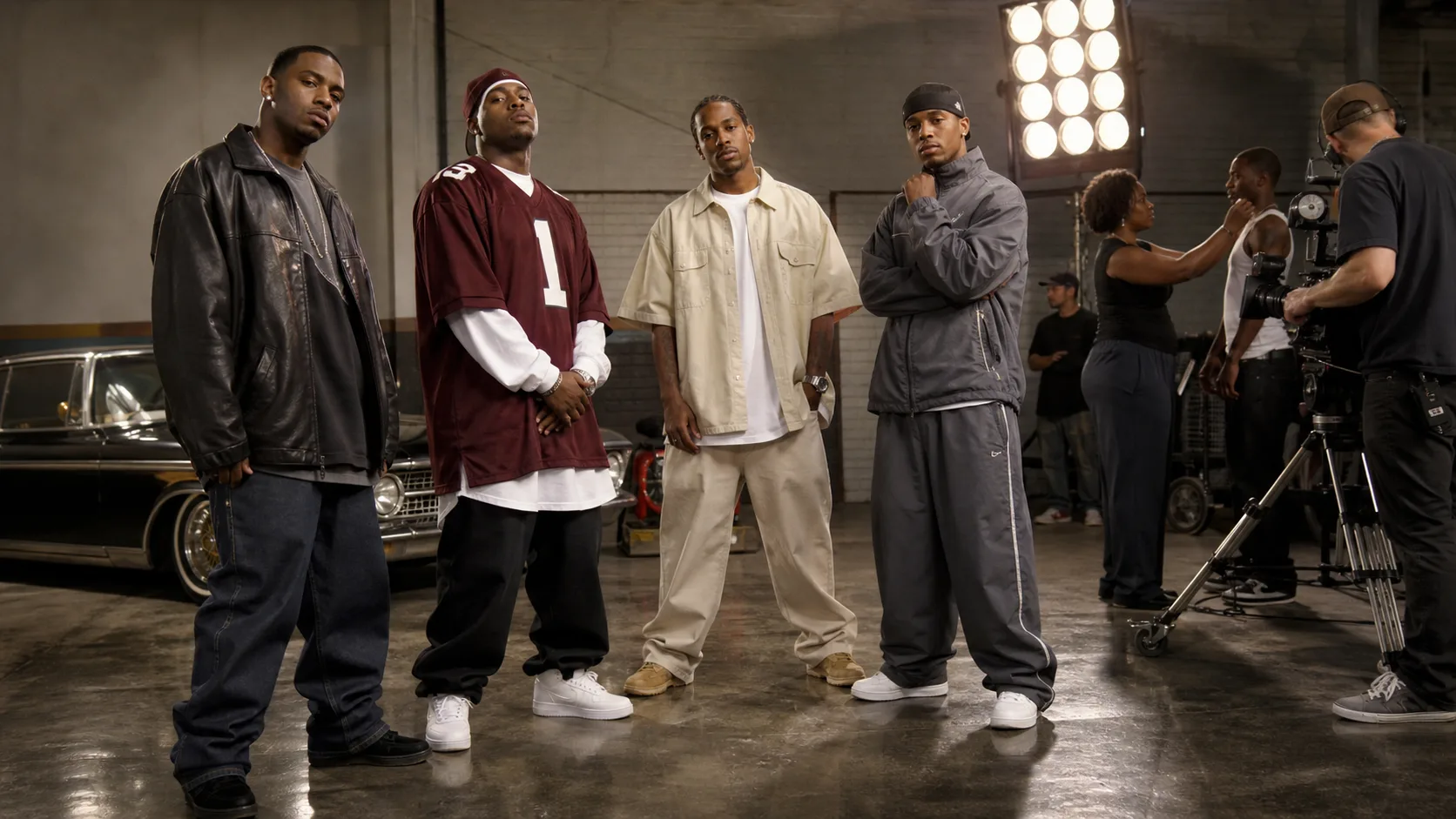
Scale, coordination and media visibility defined the period. Long base layers extended beneath jerseys; wide denim stacked over basketball shoes or boots; tonal tracksuits created complete outfits; leather communicated polish and success; fitted caps, watches and jewelry sharpened the image. The South, East Coast, West Coast and Midwest contributed different local relationships among these pieces.
Repeated videos made one styled outfit nationally recognizable.
Portraits and features explained artist personas in still images.
Behind-the-scenes footage placed performance beside everyday clothing.
Forums and image circulation shortened the distance between regions.
01 / Continuity
The 1990s silhouette did not stop at midnight
Many opening-decade outfits extended changes already visible in the late 1990s. Tops grew longer, denim remained broad and athletic footwear held substantial visual weight. The new decade intensified the scale and placed it inside a faster commercial image system. A jersey layered over a long tee could remain legible in a wide video shot, while jewelry and polished leather rewarded close-ups.
Calling the result entirely new misses the continuity; calling it merely 1990s misses the shift in distribution, business and regional influence. The Black 2000s Fashion pillar traces the full decade. The Y2K Black Men's Fashion guide translates the millennium proportions into practical outfits.
02 / Regional conversation
A national screen carried several local wardrobes
Dark leather, wide denim, boots, athletic layers and sharper luxury signals could communicate street authority and polish.
Long tees, roomy jerseys, prominent footwear and regionally rooted labels gained powerful national visibility.
Relaxed shirts, clean tees, straight broad trousers and low-key sneaker relationships retained local climate and history.
Cold-weather layers, sports references and local experimentation complicated any simple coast-to-coast map.
These categories are tendencies, not uniforms or borders. Touring, television, collaboration and retail carried garments between cities. An artist could change wardrobe between an album portrait, hometown appearance and national video. Date and locate the image before assigning it to a regional story.
03 / Collaborative authorship
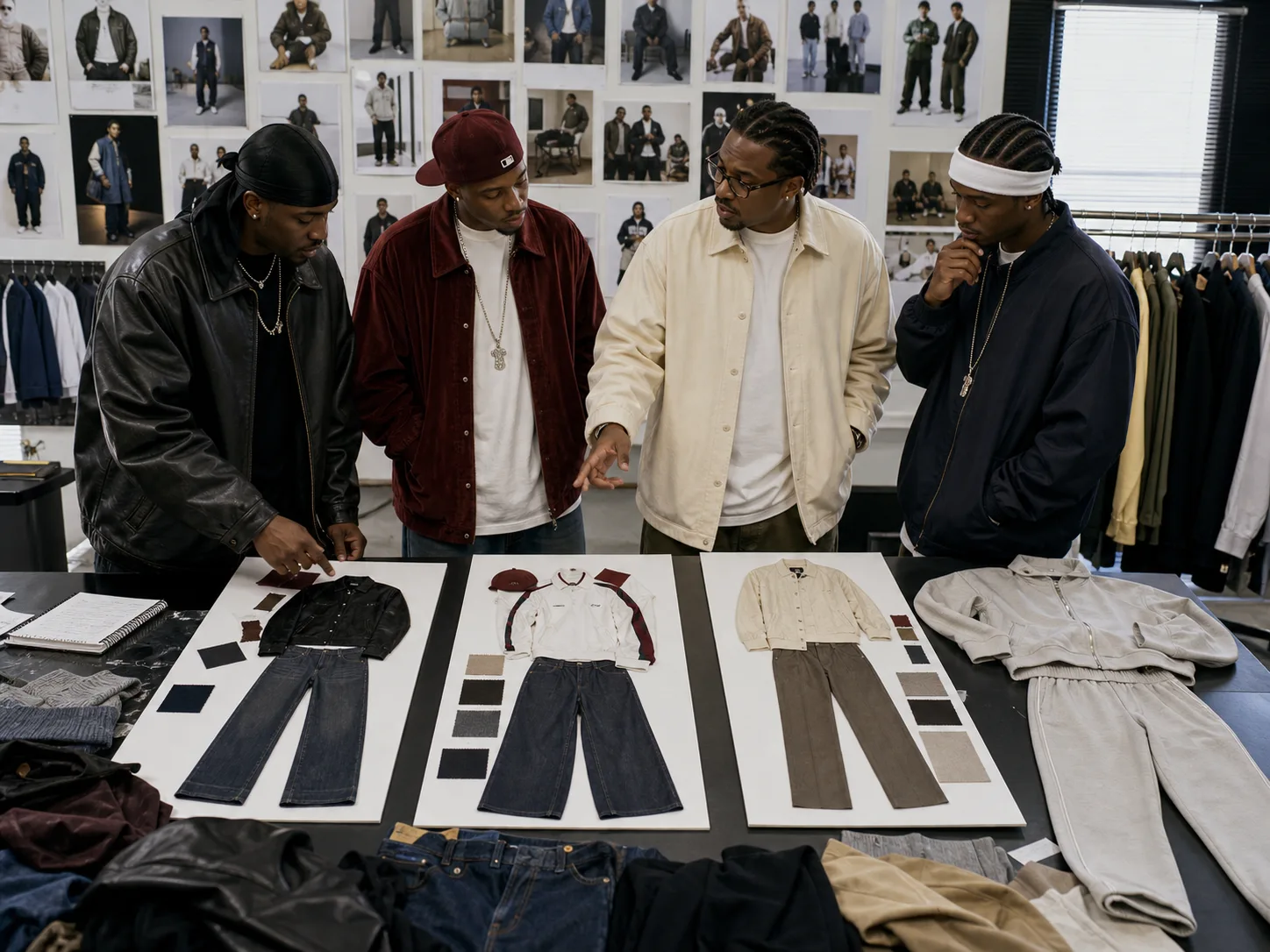
The video wardrobe belonged to a team
Artists brought taste, community references and commercial ambition. Stylists organized garments for character and continuity. Directors decided what the camera would emphasize. Costume departments managed duplicates and movement. Hair, grooming and set design completed the frame. Credit matters because a famous outfit is often collaborative work.
A wardrobe board connects silhouette to narrative. Dark leather may suit a nocturnal street scene; a long jersey can establish city allegiance; a tonal tracksuit may unify a group; a relaxed cream outfit can provide contrast. The same artist could occupy several directions without losing identity if recurring grooming, accessories or posture held the persona together.
When researching, separate visible evidence from attribution. A photograph can show what was worn, but identifying who selected or designed it requires reliable credits or interviews.
04 / Garment language
Six pieces carried more than their material
Created a low visual center and a plain field for jerseys, chains and outerwear.
Connected team, player, city and color to an artist's public identity.
Added movement, weight and space for large shoe silhouettes.
Combined comfort with immediate head-to-toe coordination.
Made success and physical presence visible through scale and finish.
Produced a precise upper edge that could repeat across public appearances.
Jewelry should be read alongside these systems. It expressed success, memory, crew identity or performance visibility, but it did not replace the outfit. A large pendant registered because the shirt behind it was simple; a watch gained meaning through close-up framing; a belt became visible when top length allowed it.
05 / Industry shift
Fashion influence and fashion access were not equal
Hip-hop delivered enormous cultural visibility to clothing companies while formal recognition, collaboration and ownership opportunities developed unevenly. Artists mixed sportswear, local labels, luxury references and custom pieces, making older boundaries between “street” and “designer” less stable.
Visible luxury was a language of arrival, but reducing the era to expensive labels erases creative combination and local enterprise. The significant development was the conversation: music audiences saw high and low together, brands observed demand, and artists increasingly sought greater control over clothing businesses and partnerships.
Claims about specific brand relationships need dated primary evidence. Retrospective marketing frequently simplifies who influenced whom. A careful history recognizes both creative power and commercial asymmetry.
06 / Media ecosystem
Style circulated through repeated, social viewing
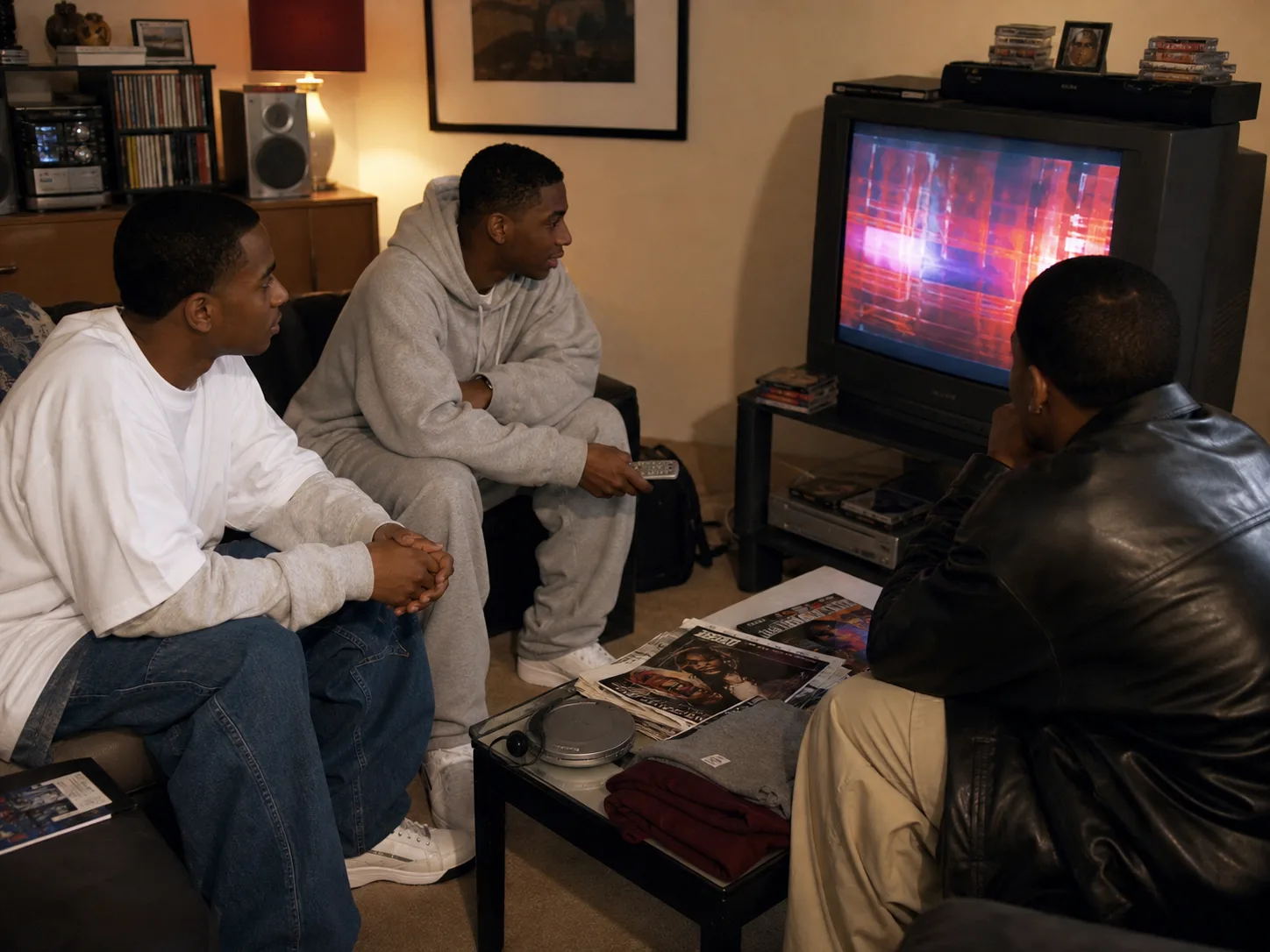
A music video might debut on television, appear again in a countdown, be discussed at school, surface in a magazine and later circulate through DVDs or online images. Viewers could study one outfit repeatedly. That repetition made the styled performance feel close to daily life even when the production involved a full creative team.
Analog and early-digital media also preserved different evidence. A magazine offered high-resolution stills but strong editorial control. DVD footage revealed movement and backstage context but could be promotional. Early web images traveled quickly while losing captions and dates. Today, search results often detach those images further from their original source.
Verify date and context before using an image as proof. The Editorial Policy explains how BAAM Boys separates archival claims from generated illustration and interpretation.
07 / Modern reading
Reference the culture without flattening the region
Dark weight
Roomy leather jacket, charcoal knit, controlled wide denim and sturdy black footwear.
Layered scale
Long cream tee, roomy jersey, straight-wide dark jeans and substantial court shoes.
Relaxed column
Open cream overshirt, white tee, broad straight trouser and clean low-profile sneaker.
Tonal athletic
Charcoal track set, quiet base and technical runner with one restrained accessory.
These are proportion studies, not permission to claim a regional identity. Learn the context, avoid replica celebrity styling and use clothing that suits your climate and life. The strongest outfit borrows a relationship—length over width, leather over matte denim, or tonal sportswear—rather than assembling stereotypes.
Evidence trail
Sources & Further Reading
These references support the historical, cultural or care-related claims in the guide. Outfit combinations and fit recommendations are BAAM Boys editorial judgment unless specifically attributed.
- The Museum at FIT — Fresh, Fly, and Fabulous: Fifty Years of Hip Hop Style
Curatorial overview connecting hip-hop clothing to community, customization, aspiration and fashion-industry influence.
- Smithsonian NMAAHC — Five Things to See: The Fashion of Hip-Hop
Collection-based examples of garments, jewelry, photographs and sneakers used to document hip-hop style.
- The Metropolitan Museum of Art — Superfine: Tailoring Black Style
Institutional context for Black dress, identity, tailoring and self-presentation across time.
Direct answers
Early-2000s hip-hop fashion FAQ
What clothes defined early-2000s hip-hop fashion?
Long tees, sports jerseys, wide denim, coordinated tracksuits, roomy leather, fitted caps, basketball shoes, technical runners, boots, watches and jewelry were highly visible. Combinations differed across regions and artists.
Why were early-2000s hip-hop clothes so large?
They extended relaxed late-1990s proportions and created strong presence in music videos and performance. Long tops and wide trousers also worked with prominent footwear, but not every artist or everyday wearer dressed at the same scale.
How did music videos influence 2000s fashion?
Repeated national broadcasts made carefully styled outfits recognizable across regions. Directors, stylists, artists, grooming teams and set designers worked together to construct those images.
Did every region have one hip-hop style?
No. Regional tendencies existed, but cities, artists and scenes contained many wardrobes. Touring, collaboration and media also moved ideas across geographic boundaries.
How can I wear early-2000s hip-hop style respectfully?
Study a specific proportion and context, use one strong clothing relationship, avoid stereotypes and celebrity replicas, and adapt the outfit to your own setting rather than claiming an identity through costume.