Sets the character, carries the clothing and decides which references feel authentic to the record.
The Hip-Hop Style Desk
The Outfit Joins the Record
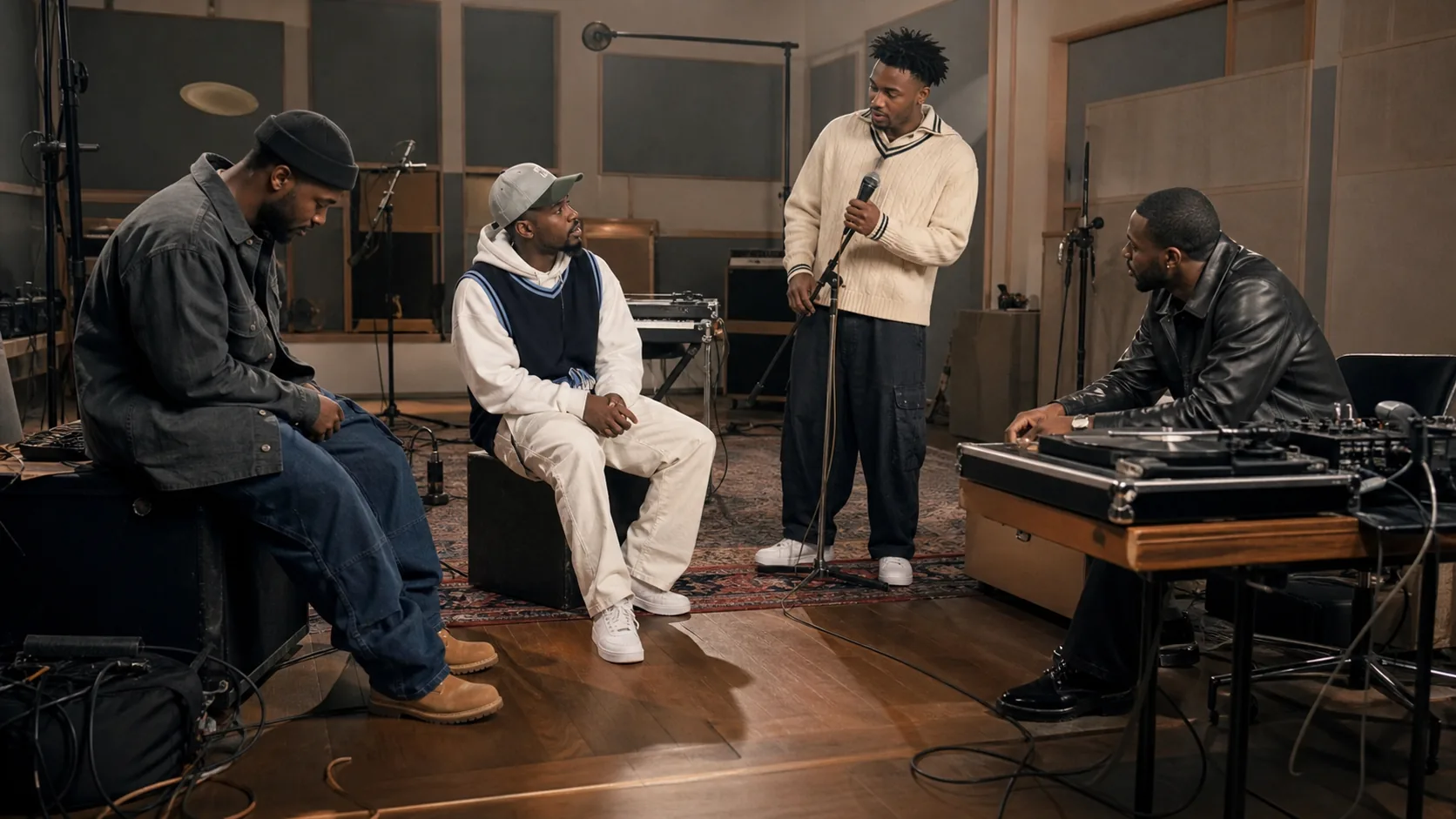
Hip-hop style turns clothing into authorship. The strongest looks tell us where an artist stands, what he values and how he wants the music to feel before the first verse begins.
A working vocabulary
Six recurring ideas, constantly remixed
-
- Sportswear
- Tracksuits, jerseys and athletic shoes carry movement, team identity and the visual authority of competition.
- Workwear
- Boots, utility pants and durable jackets bring function, weight and a connection to local everyday dress.
- Prep
- Polos, knits, loafers and collegiate references complicate the assumption that hip-hop style is always rugged or oversized.
- Luxury
- Fine leather, jewelry and designer pieces can express arrival, aspiration or the creative tension of mixing high and low.
- Customization
- Airbrushing, tailoring, jewelry and personal combinations make mass-produced garments speak in an individual voice.
- Proportion
- Changes in length, width and layering often identify an era faster than any logo or color.
A cultural map
Region changes the meaning of the same garment
A white tee, for example, can function as a clean base, a neighborhood uniform or a deliberate rejection of decorative fashion. A work boot may begin as weather-ready utility and later become central to a music image. The garment does not carry a complete explanation on its own.
Regional influence should be discussed with humility. Cities contain many scenes, and artists often borrow across them. Still, climate, retail access, car culture, nightlife and local music all leave visible traces. East Coast layering tends to make footwear and outerwear feel substantial. West Coast dressing can prioritize ease and the line of a shirt over relaxed trousers. Southern style has repeatedly moved between vivid sportswear, oversized scale and sharply polished presentation.
These are starting points, not rules. The useful question is not “Which city owns this item?” but “What conditions gave this combination its particular force?” Our Retro Style archive adds the missing dimension of time.
From sound to image
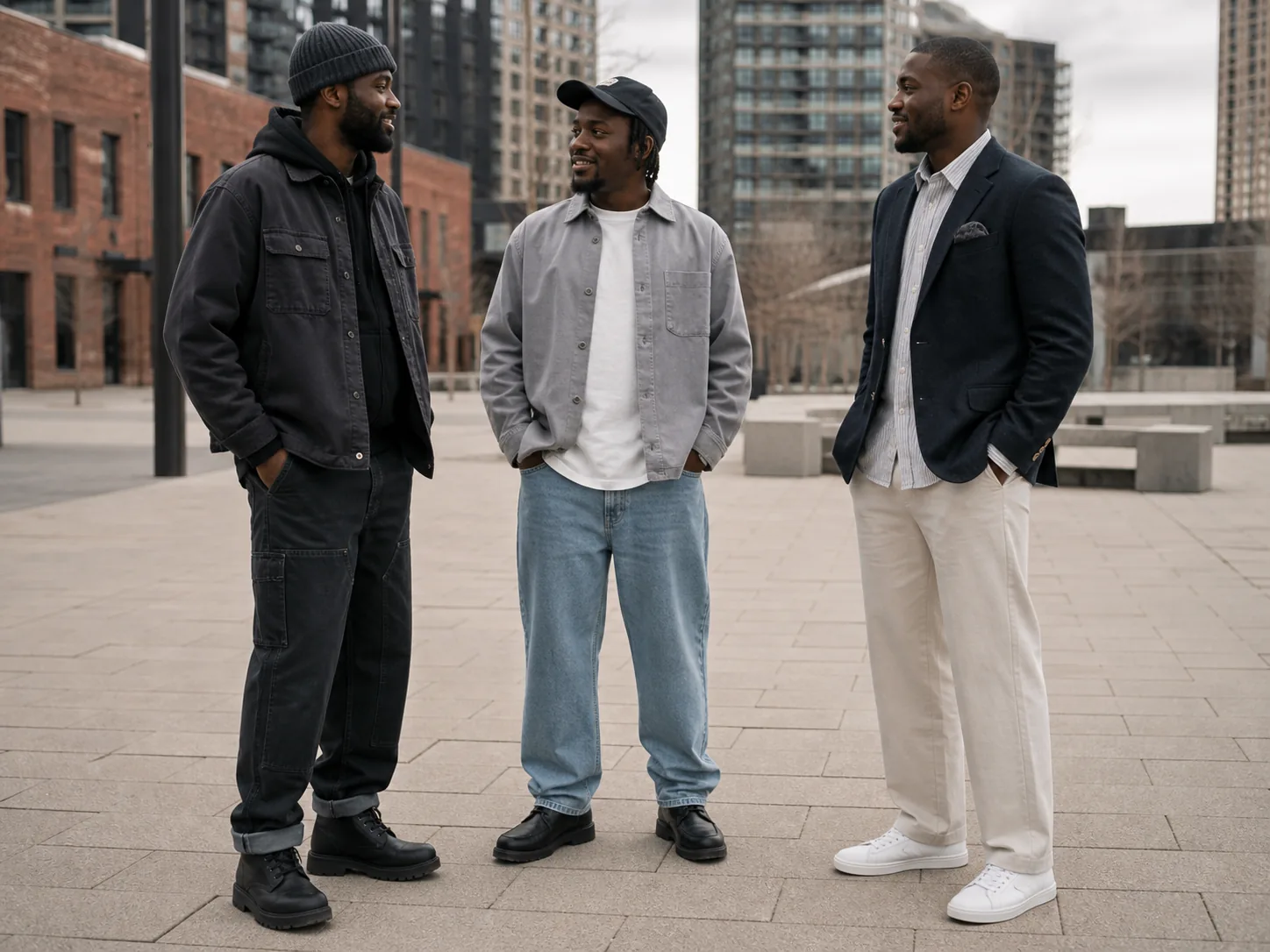
Four people may shape a famous outfit
Finds, edits and coordinates pieces so the image remains legible across a cover, video or performance.
Creates the garment's form and material logic, whether working independently or inside a larger house.
Supplies the living style language that commercial fashion frequently notices only after it becomes visible through music.
Crediting only the person in front of the camera can erase the network behind a look. BAAM Boys names contributors when reliable documentation is available and avoids inventing attribution when it is not.
The outfit lab
Build from rhythm, not a checklist
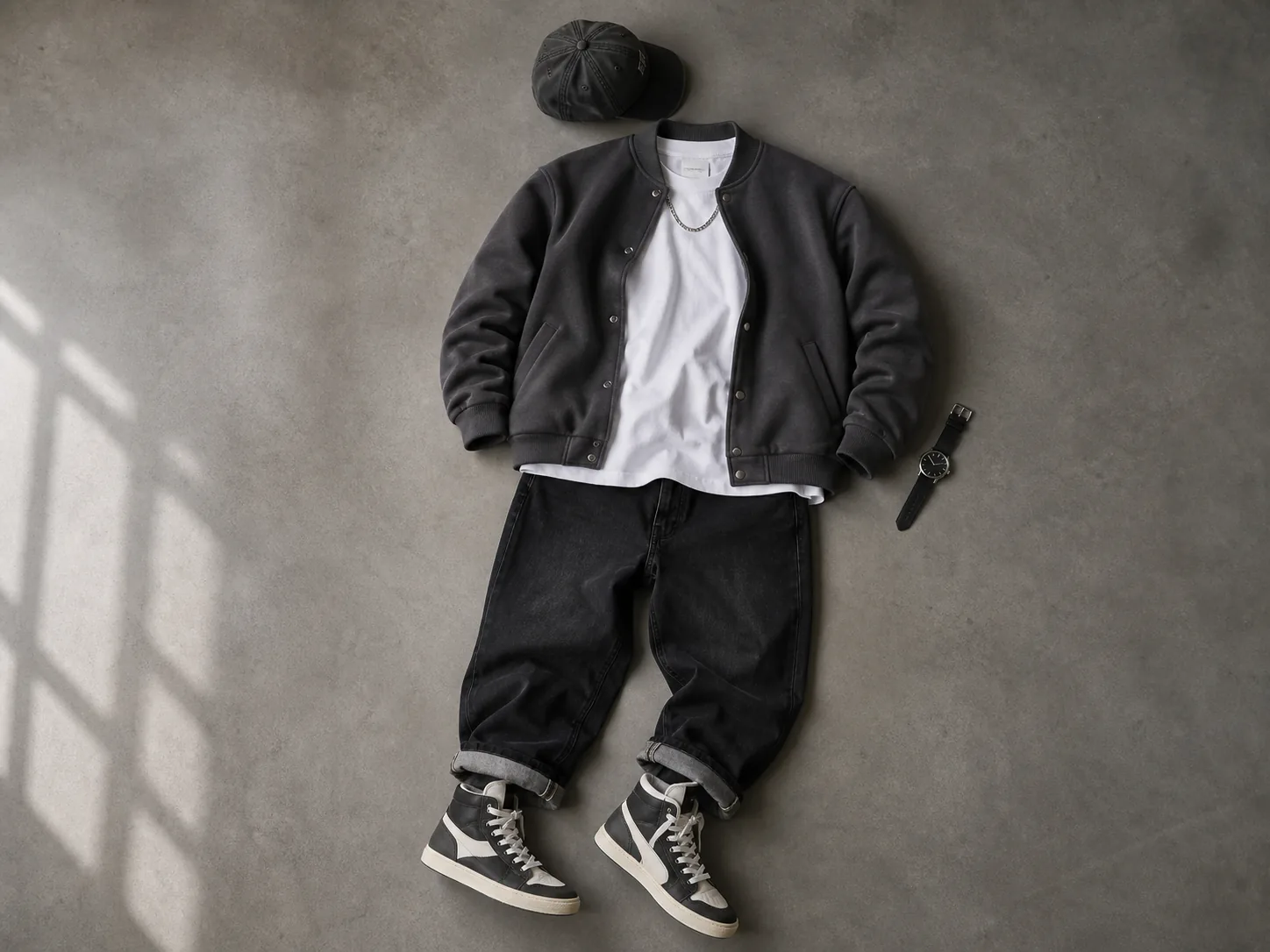
Think of an outfit the way a producer treats a track. The base establishes tempo: jeans, cargos or track pants decide the width and movement. The upper layer supplies the main sample—a varsity jacket, leather coat, jersey or knit. Shoes give the composition weight, while accessories add accents.
The easiest mistake is turning every element up at once. If the jacket is graphic and the trouser is wide, a plain tee may be enough. If the jewelry is prominent, the cap and watch can stay quiet. Repetition helps: a white tee can echo the sole of a sneaker; a metal watch can answer a chain without matching it exactly.
A dependable modern formula
- Choose relaxed denim that falls cleanly instead of pooling without control.
- Add a heavyweight tee with a shoulder line that suits the width below.
- Use one structured layer, such as a varsity or work jacket.
- Pick sneakers or boots substantial enough for the trouser opening.
- Stop after one or two accessories.
For more specific combinations, read 13 wearable 90s hip-hop outfits for men.
The long view
What changed—and what remained
Coordination and presence
Tracksuits, leather, hats, sneakers and gold created clear visual identities. Tailoring and collegiate style remained part of the surrounding picture.
Read the 80s guide →Volume and regional voice
Workwear, denim, jerseys, boots and basketball shoes expanded the silhouette, while prep and luxury offered important countercurrents.
Read the 90s guide →Scale and aspiration
Long tees, wide denim, sports imagery and visible luxury grew larger before the later decade shifted toward closer fits.
Read the Y2K guide →Hip-hop has shaped global fashion, but broad popularity does not make its history ownerless. Respectful coverage identifies the communities and creative workers attached to a style, avoids presenting Black culture as an exotic trend and distinguishes appreciation from imitation.
That approach also produces better fashion writing. Specificity replaces cliché. Instead of calling any large chain “hip-hop,” we can discuss scale, material, setting and the role jewelry played in a particular artist's image. Instead of treating every loose jean as a 90s uniform, we can examine rise, wash, hem and regional context. Accuracy and cultural respect support each other.
Our broader Fashion desk follows authorship and craft, while the editorial policy explains how we handle sourcing, corrections and commercial independence.
Style questions
Useful answers about hip-hop fashion
What defines hip-hop style?
Hip-hop style is a changing visual language connected to the music and its communities. Sportswear, workwear, tailoring, sneakers, jewelry and luxury have all played roles, but coordination, proportion, regional context and personal authorship matter more than a fixed item list.
Did hip-hop make baggy clothing popular?
Hip-hop artists greatly expanded the visibility of relaxed and oversized silhouettes, especially during the 1990s and early 2000s. Loose clothing had other histories and practical sources, however, and not every hip-hop scene or artist dressed the same way.
What shoes work with a 90s hip-hop outfit?
Retro basketball sneakers, clean low-tops and sturdy work boots all fit different 90s directions. Match the visual weight of the shoe to the trouser opening, then consider region, season and whether the outfit leans athletic, workwear or preppy.
Can hip-hop-inspired style look polished?
Absolutely. A fine knit, pressed wide trouser, clean leather jacket or restrained jewelry can produce a polished result. Hip-hop imagery has long included formal, collegiate and luxury dressing alongside rugged streetwear.
How do I avoid looking like I am wearing a costume?
Choose one clear reference, use clothing that fits your actual routine and avoid stacking the most recognizable symbols together. Understanding the cultural context and adapting proportion thoughtfully will look more natural than copying a famous outfit item for item.
1980s research
Before the silhouette widened
Explore the complete 80s Hip-Hop Fashion guide, covering coordinated sportswear, leather, hats, footwear, image making and regional change.
Artist image systems
How 1980s rappers became visually recognizable
Read the 80s Rapper Fashion guide for coordinated groups, stage movement, wardrobe fitting and modern ways to borrow the method without impersonation.
Everyday 1980s wardrobe
The street was a setting before it was a retail category
Read the 80s Streetwear guide for varsity, leather, athletic layers, denim, transit logic and a practical capsule wardrobe.
The early-2000s image cycle
Regional wardrobes reached a faster national screen
Read the complete culture study covering music-video collaboration, regional style, media circulation and the business conversation around influence.
2000s detail guides
Performer image and everyday clothing
Hip-Hop research library
History, image, streetwear and jewelry
Topic cluster
Hip-Hop reading path
Begin with the pillar, then choose the guide that matches the historical, visual or practical question.