An athlete supplies a moment people remember: a season, a game, a distinctive movement or a public persona.
The Footwear Archive
Shoes Carry More Than the Outfit
Performance design, neighborhood taste, music imagery and personal memory can all meet in one pair. We study the shape under the trouser and the story beneath the sole.
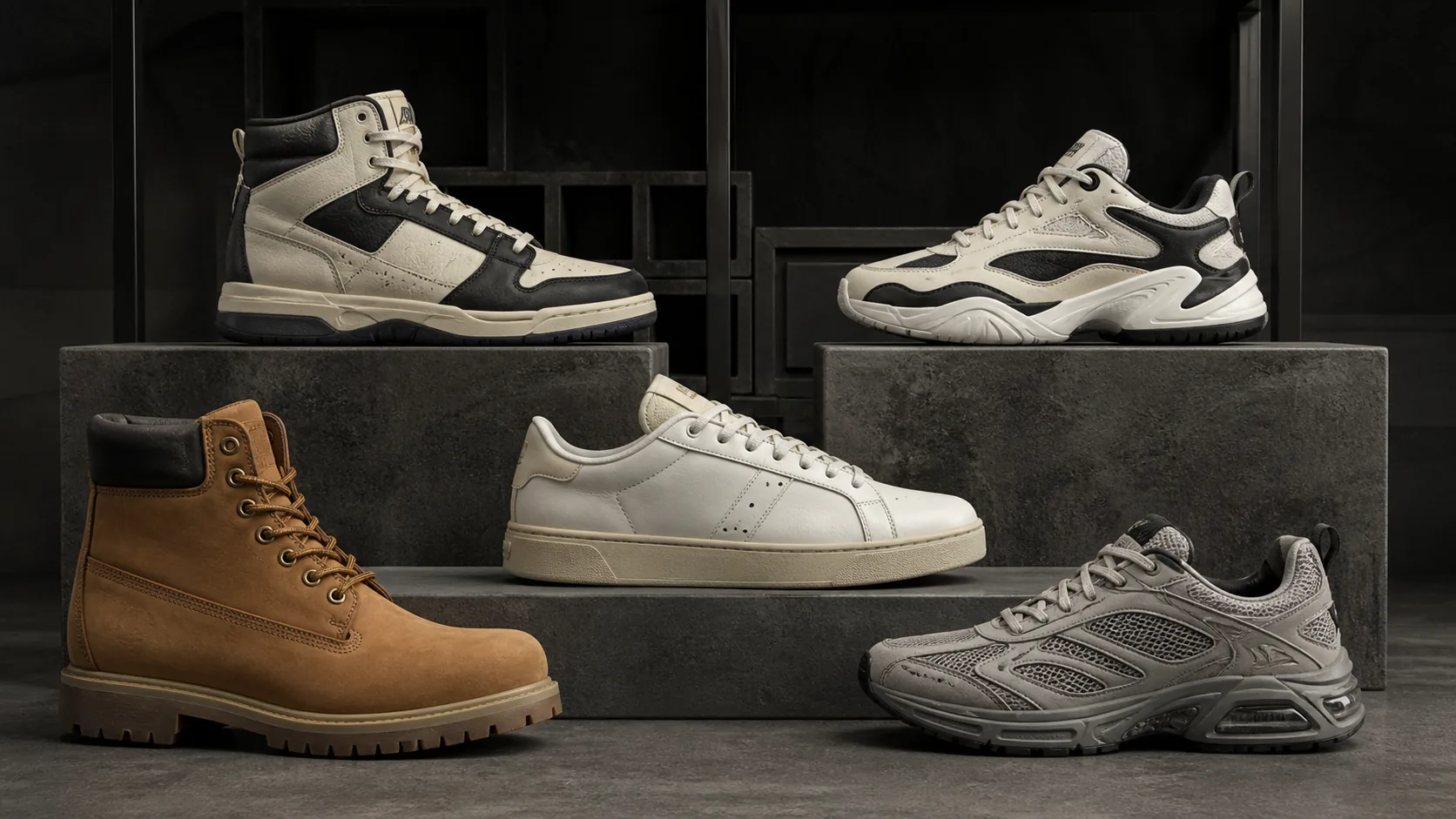
Start with purpose, then read the symbolism
Sneaker discussion often begins with rarity. That order serves the resale market better than the wearer. A more useful assessment starts with construction: how the last shapes the foot, what the midsole does, whether the upper breathes and how the outsole meets the ground. Only then should history, scarcity and cultural association enter the picture.
The cultural layer still matters. Basketball shoes moved from performance equipment into daily wardrobes because athletes, young fans, musicians and local style communities made them visible away from the game. A clean low-top could signal care and discipline; a heavy court shoe could anchor wide denim; a work boot could move from climate and labor into a forceful street silhouette. None of those meanings is permanent or universal.
Court to street
Why basketball shoes changed everyday style
Basketball footwear is unusually visible. The game places shoes against a polished, uncluttered floor and ties them to movement, personality and performance under pressure. When television carried that image into homes, footwear became part of the athlete's public identity.
Off court, technical features became visual language. A padded collar added volume above the ankle. Air windows, molded panels and contrasting outsole shapes made engineering legible from a distance. During the 1990s, increasingly complex basketball designs paired naturally with wider jeans and sportswear. Hip-hop artists strengthened the association by wearing court models in photographs, videos and ordinary public appearances.
Read a retro basketball shoe
-
- Upper
- Leather offers structure; mesh reduces weight and heat.
- Collar
- Padding changes comfort and the visual height at the ankle.
- Midsole
- Foam and cushioning systems age even when the exterior looks intact.
- Outsole
- Rubber pattern affects grip, flexibility and how bulky the profile appears.
Cultural value
A pair becomes iconic through repeated association
An artist places the shoe inside another story, connecting it to sound, region and a wider emotional identity.
Daily wear establishes the pair beyond celebrity. Cleaning rituals, lace choices and local availability build lived meaning.
A later release turns memory into product. Accuracy, materials and changed construction affect whether nostalgia survives contact with the new pair.
This sequence is not a formula. Some shoes gain importance without a signature athlete; others are commercially successful but never become culturally durable. Our Hip-Hop Style desk follows the music side of that exchange, while the Retro Archive places footwear back inside changing silhouettes.
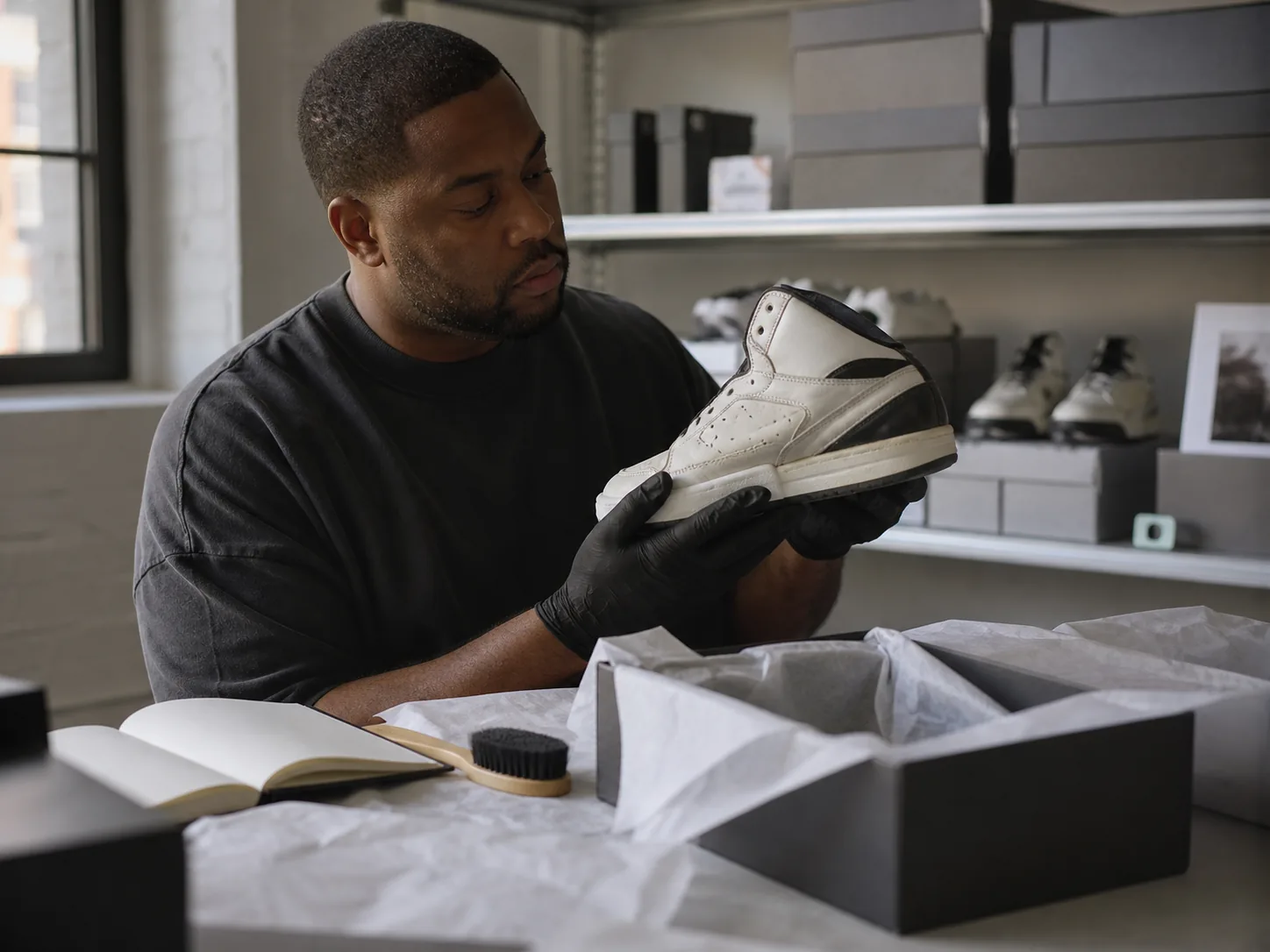
Buy with clear eyes
Old sneakers can fail quietly
Age affects materials differently. Leather may dry or crack; synthetic coatings can peel; glue can release; foam can harden or crumble. A pair stored unworn for years is not necessarily stronger than one used carefully. In some constructions, occasional flexing may reveal problems earlier, while a sealed box hides them until the first walk.
Ask for evidence
- Clear photographs of both midsoles, heel seams, toe flex points and interior lining.
- The production information and an honest account of storage conditions.
- Disclosure of repainting, sole swaps, regluing or replaced parts.
- Measurements for insole length and width rather than size alone.
Collectors should distinguish display value from wearability. If structural failure could cause a fall, treat the shoe as an archive object. Authentication also requires model-specific knowledge; generic checklists and online photographs can support an assessment but cannot guarantee it.
Proportion clinic
Match the shoe to the trouser opening
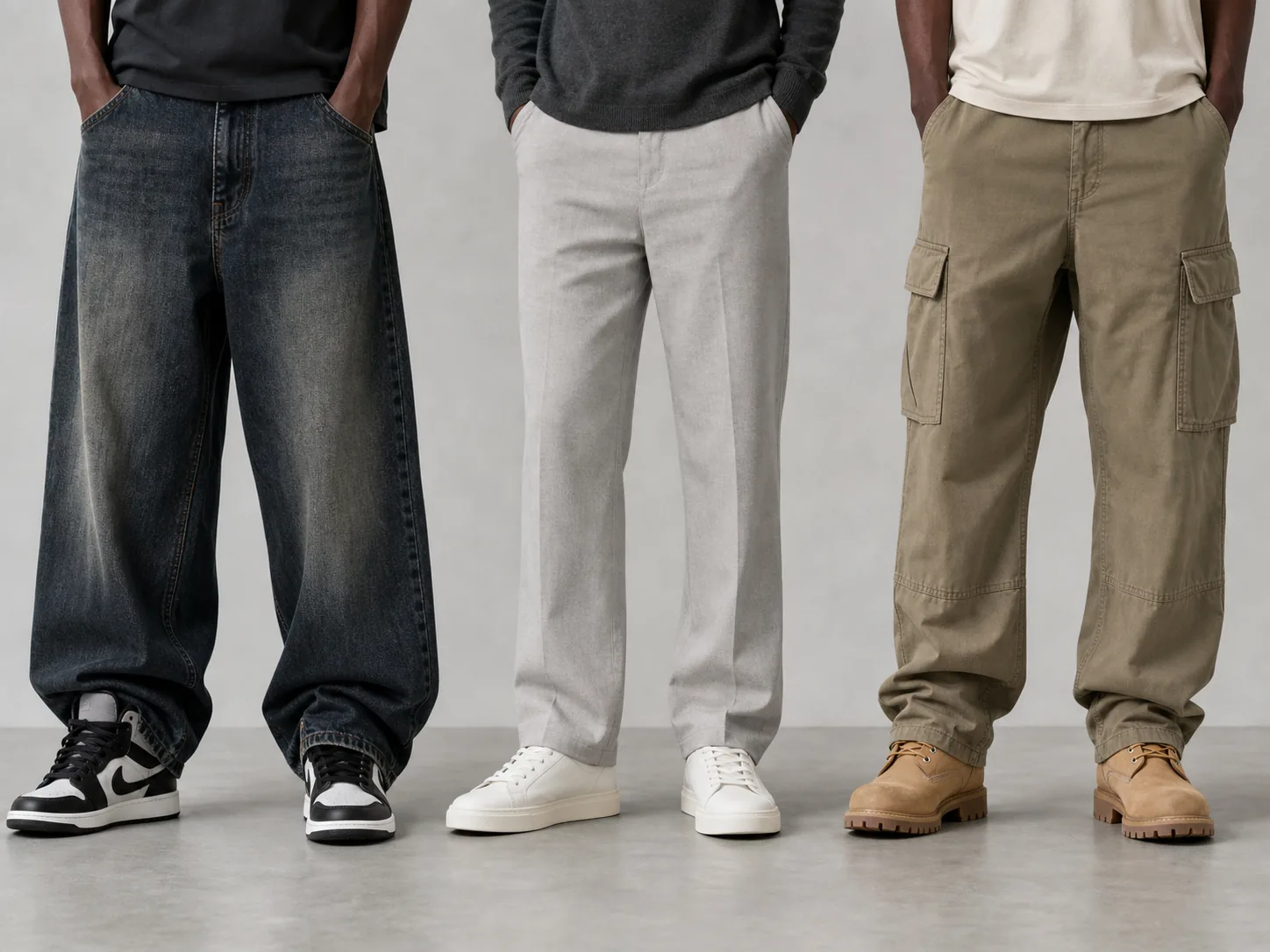
The eye reads footwear and hem as one unit. Wide denim can swallow a narrow shoe, leaving only a small toe visible. A massive technical runner under a sharply tapered trouser may pull attention downward. Neither combination is forbidden, but the imbalance should be intentional.
High-tops work best when the hem has enough room to fall around the collar or is cropped clearly above it. Clean low-tops suit straight and tailored trousers because they keep the line uninterrupted. Work boots support cargos and heavy denim through shared material weight. Technical runners can make relaxed nylon or contemporary wide trousers feel purposeful.
Three quick checks in a mirror
- Front: Can you see enough of the shoe to understand its shape?
- Side: Does the hem break cleanly, stack deliberately or bunch by accident?
- Movement: Does the trouser catch on the collar when you walk or sit?
See 90s hip-hop outfit ideas for complete combinations rather than isolated footwear.
Care desk
Clean according to material, not internet folklore
Smooth leather
Remove loose dirt first, then use a lightly damp cloth and a product intended for finished leather. Test conditioner away from view because it can darken the surface.
Suede and nubuck
Let mud dry, lift it with an appropriate brush and avoid soaking. Water can change nap and color; aggressive rubbing creates polished patches.
Mesh and textile
Use mild solution sparingly, blot rather than saturate and air dry away from direct heat. Machine washing may damage glue, structure and printed details.
Rubber soles
A soft brush handles grooves. Strong solvents can discolor rubber or migrate onto the upper, so begin with the least aggressive method.
What BAAM Boys values in a sneaker story
Use over hype. We want to know how a pair fits into a wardrobe and whether its construction serves the wearer.
Documented context. Release dates, design claims and cultural associations should be supported rather than repeated from reseller descriptions.
Visible detail. Shape, material and wear deserve clear photography and precise captions.
Honest limits. We do not claim authentication from incomplete evidence or pretend that cultural importance guarantees comfort.
Footwear questions
Practical answers for retro sneaker readers
Can old sneakers be safe to wear?
Sometimes, but age, materials and storage matter. Foam and adhesive can weaken without obvious exterior damage. Flex the pair carefully, inspect separation and treat very old performance shoes as display objects if failure could create a safety risk.
What sneakers look best with baggy jeans?
Substantial basketball shoes, sturdy low-tops and some technical runners balance a wide hem. The shoe should remain visible enough to read as a shape; hem length and opening matter as much as the model.
Why are basketball shoes important to hip-hop fashion?
They connect athletic excellence, television visibility, neighborhood fandom and expressive design. Artists helped carry court models into music imagery, while communities established how those shoes were worn and maintained in daily life.
Should I buy vintage or retro reissue sneakers?
Vintage pairs offer period materials and detail but carry aging risk. Reissues are usually easier to wear, although construction and shape may differ. Choose according to whether your priority is archive accuracy, regular use or price.
How should sneakers be stored?
Keep them clean, dry and away from direct sunlight, heat and large humidity changes. Avoid sealed damp environments. Storage slows deterioration but cannot stop the chemical aging of foam, glue and synthetic coatings.
Sneaker research library
Construction, culture and documented influence
Topic cluster
Sneakers reading path
Begin with the pillar, then choose the guide that matches the historical, visual or practical question.