Professional, not anonymous
Use a clean trouser, knit or shirt and an outer layer with structure. A restrained sneaker may work in a casual office; elsewhere, choose a loafer or simple boot. One textured element keeps the outfit personal.
The Men's Style Desk
Personal style becomes easier when clothing solves real problems: a morning with no time, weather that changes, a dinner after work, shoes that must carry a full day.
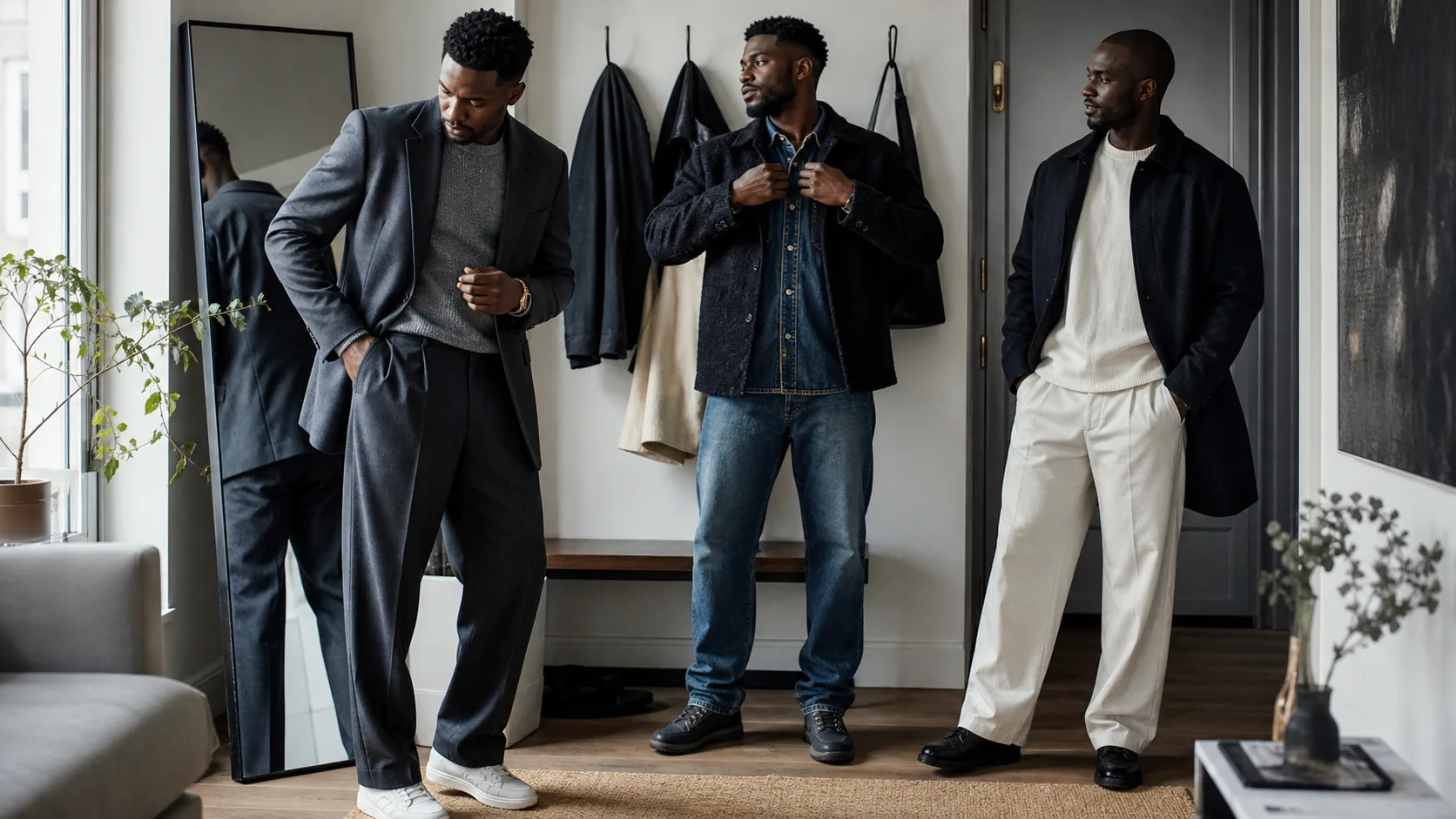
Before buying anything, answer three questions.
A garment fits when its shape works with your body and the intended silhouette. A relaxed jacket can be correct even when the shoulder extends; a fitted shirt can be wrong if the buttons pull or the armhole restricts movement. “Size up” and “size down” are poor substitutes for looking at actual lines.
Start with the hardest areas to alter. Jacket shoulders, coat armholes and trouser rise should feel right before you consider sleeve or hem length. For trousers, check the waist while sitting, space through the seat and thigh, and how the leg falls over the shoe. A good tailor can refine length and suppression, but cannot easily invent missing cloth.
A working foundation
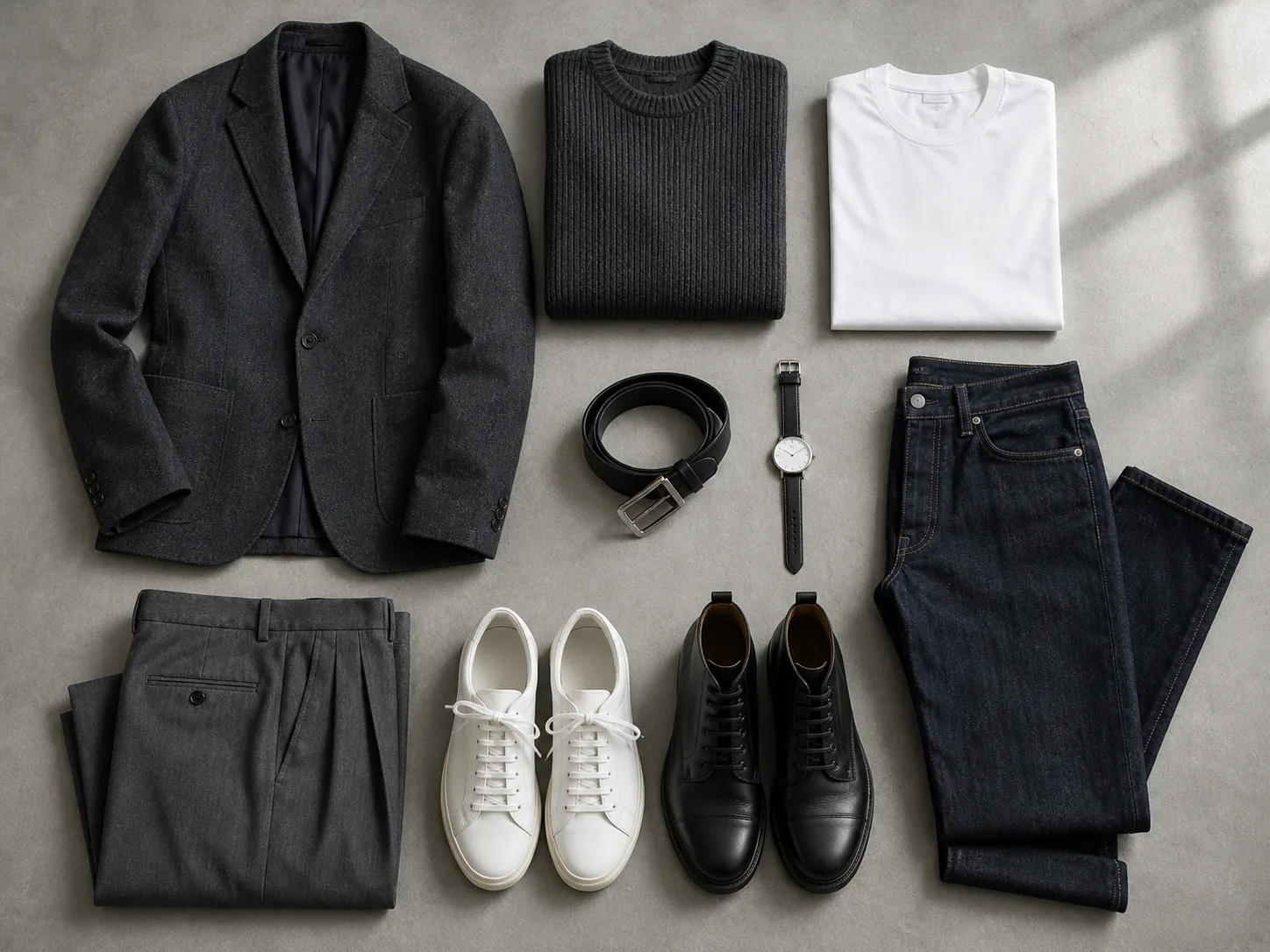
A capsule wardrobe should not erase personality. It should remove friction. Begin with pieces that can change level when combined: a textured blazer that works over a tee or knit, dark denim clean enough for dinner, pleated trousers relaxed enough for sneakers and outerwear with room for a layer.
Neutral does not have to mean dull. Texture separates charcoal wool from washed black denim; cream knitwear adds light without a bright color; a polished boot changes the same trouser that looked casual with a low-top. Once these relationships are reliable, stronger vintage, graphic or cultural pieces have a calm base to work against.
Decision desk
Use a clean trouser, knit or shirt and an outer layer with structure. A restrained sneaker may work in a casual office; elsewhere, choose a loafer or simple boot. One textured element keeps the outfit personal.
Relaxed denim and a heavyweight tee become intentional when the shoulder and hem are considered. Add a work jacket, overshirt or cardigan according to weather rather than piling on decoration.
Dark denim or pleated trousers, a fine knit and leather footwear make an easy evening base. Suede, wool and subtle jewelry register well in low light without demanding attention.
Read the invitation and location. A suit can be relaxed in cut while remaining formal in cloth. When the dress code is uncertain, a jacket and proper shoe give you more flexibility than a highly casual statement piece.
Four-season logic
Good layering is an adjustable system, not simply several visible garments. The base manages skin comfort, the middle traps warmth or supplies texture, and the outer layer handles wind or rain. Each piece needs enough room for the one beneath it.
Favor breathable weaves, room around the body and fewer contact points. A loose linen-blend trouser often feels cooler than tight shorts.
Use removable overshirts, light knits and unlined jackets. Temperature range matters more than the calendar.
Start with socks and base layers, then protect neck, hands and head. One serious coat beats several weak outer layers.
Prioritize an actual water-resistant shell and footwear with grip. Long denim that absorbs street water is not romantic vintage styling.
Proportion clinic
A wide trouser needs a decision above and below. A compact jacket reveals the waist and lets the leg carry the outfit. A roomy coat can also work, but then footwear must provide enough weight to keep the silhouette grounded. What looks accidental is usually not volume itself; it is the absence of a clear focal point.
Men exploring 1990s Black fashion or Y2K style should preserve the idea rather than every original measurement. Modern wide denim may use a cleaner seat and controlled hem. An oversized jersey can sit over straighter trousers instead of another extremely large piece.
Use the mirror at a distance. Close inspection finds details; six feet of distance shows the actual outline. If the eye goes immediately to an awkward break or tiny shoe, solve that relationship before adding accessories.
The finishing work
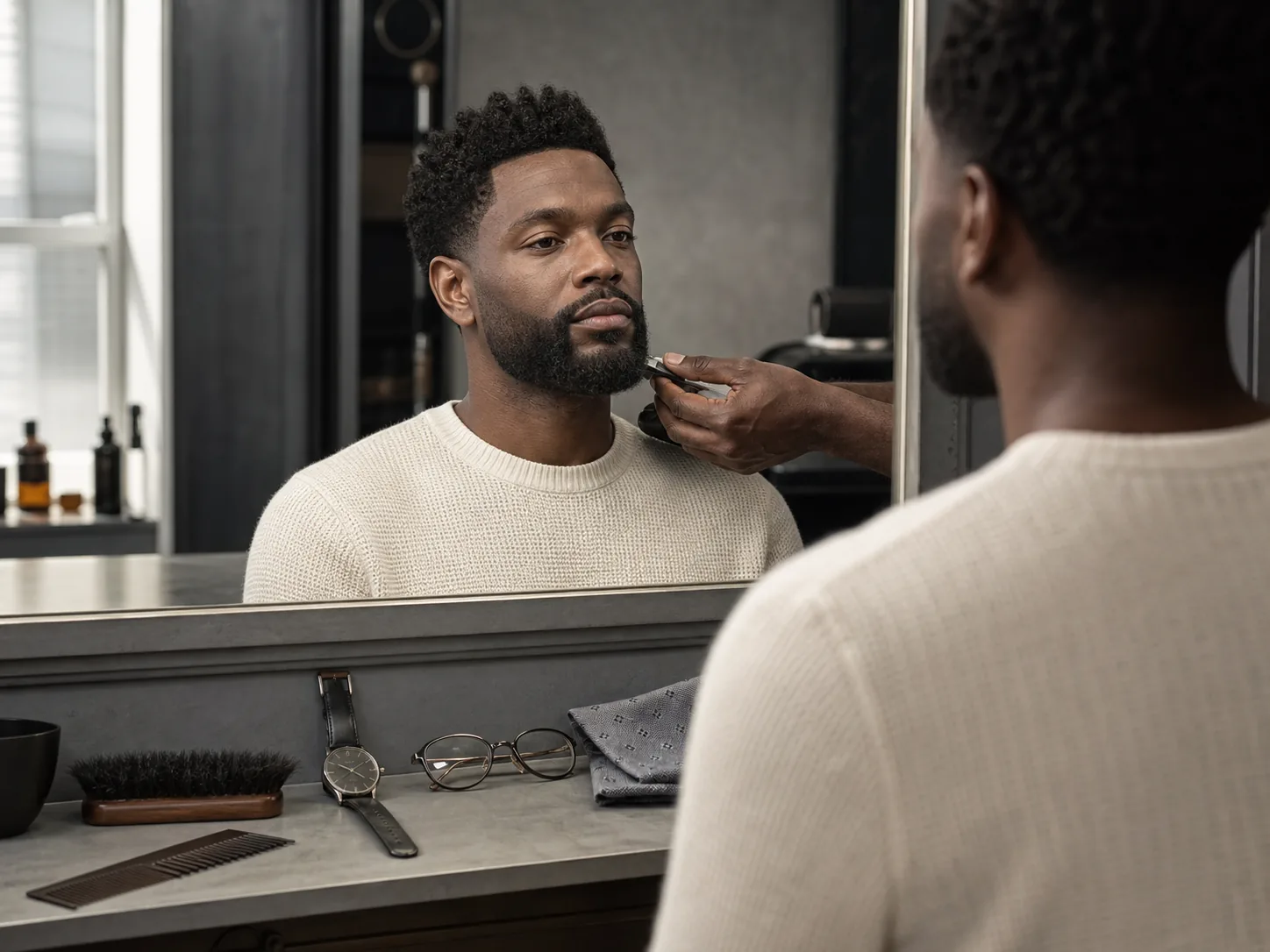
Hair, beard and skin are not accessories, but their upkeep changes how clothing reads. A deliberate haircut can sharpen relaxed tailoring; healthy hair and a clean neckline make a plain knit feel finished. The best routine is sustainable: products and appointments that suit your texture, skin and schedule.
Eyewear, a watch, belt and jewelry should support the same level of formality. Metals do not need to match perfectly, though repetition helps. Glasses should fit the bridge and sit level. A belt should relate to the outfit's purpose rather than automatically matching the shoe shade.
Black hair and skin vary widely, so universal product prescriptions are rarely useful. Test new products, pay attention to irritation and consult a qualified professional for persistent scalp or skin concerns. Style advice should never disguise medical claims.
Wardrobe questions
Start with well-fitting dark denim, a versatile trouser, quality T-shirts, a textured knit, one casual jacket, one structured jacket and two footwear options covering casual and polished settings. Adjust the list for climate and dress code.
Relaxed clothing should provide room without twisting, pulling or obscuring every line of the body. Watch shoulder placement, trouser rise and hem behavior. One clear proportion should lead while the other pieces support it.
Yes, when the suit is softly constructed and the sneaker is clean and visually compatible with the trouser. A simple leather low-top is easiest. Formal ceremonies and conservative workplaces may still require traditional shoes.
Photograph outfits, notice which proportions you repeat, alter clothing you already like and create new combinations around one strong piece. Personal style becomes clearer through use; frequent purchasing can hide that learning process.
There is no fixed number. Begin with one functional piece such as eyewear or a watch, then add jewelry only if it improves the balance. When several accessories compete for attention, remove one and look again from a distance.
1980s grooming research
Read the 80s Black Hairstyles guide for high-top fades, short naturals, waves, curls, barber communication and scalp-safety boundaries.
Men's Style research library
Topic cluster
Begin with the pillar, then choose the guide that matches the historical, visual or practical question.