The Retro Archive
Three Decades.
Different Proportions.
The most useful way to read retro Black men's style is through change: how trousers widened, shoulders softened, sports clothing left the court and local details moved through music into a global visual language.
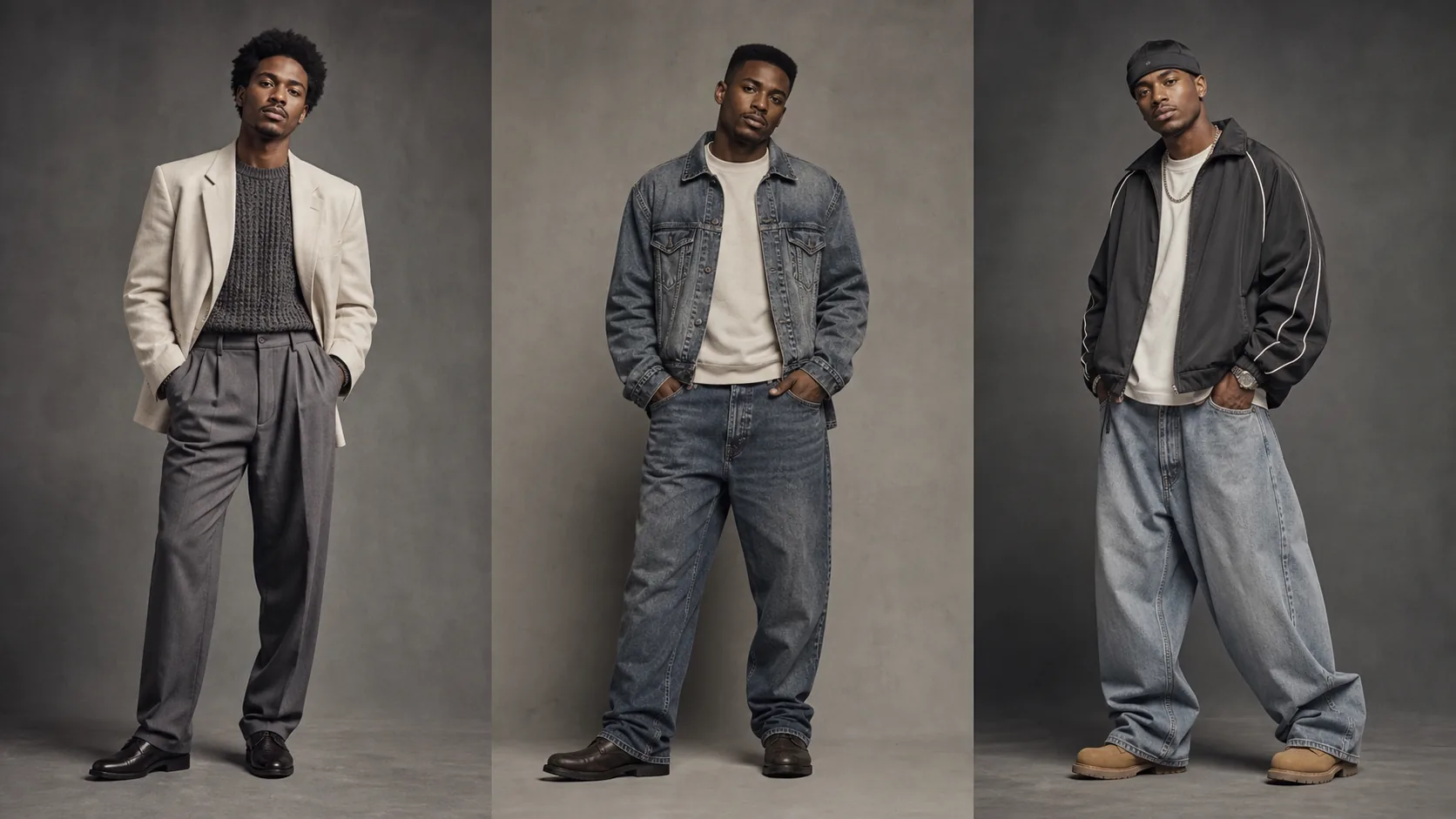
How to read the archive
Dates organize the story; they do not contain it
Fashion does not reset when a calendar changes. An outfit photographed in 1992 may carry the previous decade's color and tailoring, while an oversized silhouette associated with the early 2000s was already developing years before. We use decade labels because they help readers navigate, then look inside those labels for overlap and disagreement.
Surviving images also need care. Music videos preserve highly styled performances, magazine editorials exaggerate an idea, and family photographs record everyday choices. No single source stands in for everyone. Geography, age, work, climate and income explain why several apparently conflicting looks can all belong to the same moment.
Structure and display lived side by side. Broad jackets, pleated trousers and polished shoes shared the decade with tracksuits, leather, high-top sneakers and athletic color.
What changed in the silhouette
The waist was often more visible than it would become in the 1990s. Tailored trousers sat higher and carried volume through pleats, while jackets built presence across the shoulder. Sports sets offered a second kind of shape: easy movement, coordinated color and a clean vertical line.
What the shorthand misses
Reducing the 1980s to neon leaves out restrained knitwear, collegiate prep, formal dressing and the practical role of athletic clothing. Early hip-hop imagery mattered enormously, but it occupied one part of a much wider Black wardrobe. Looking at church, workplace, campus and nightlife photographs produces a fuller picture.
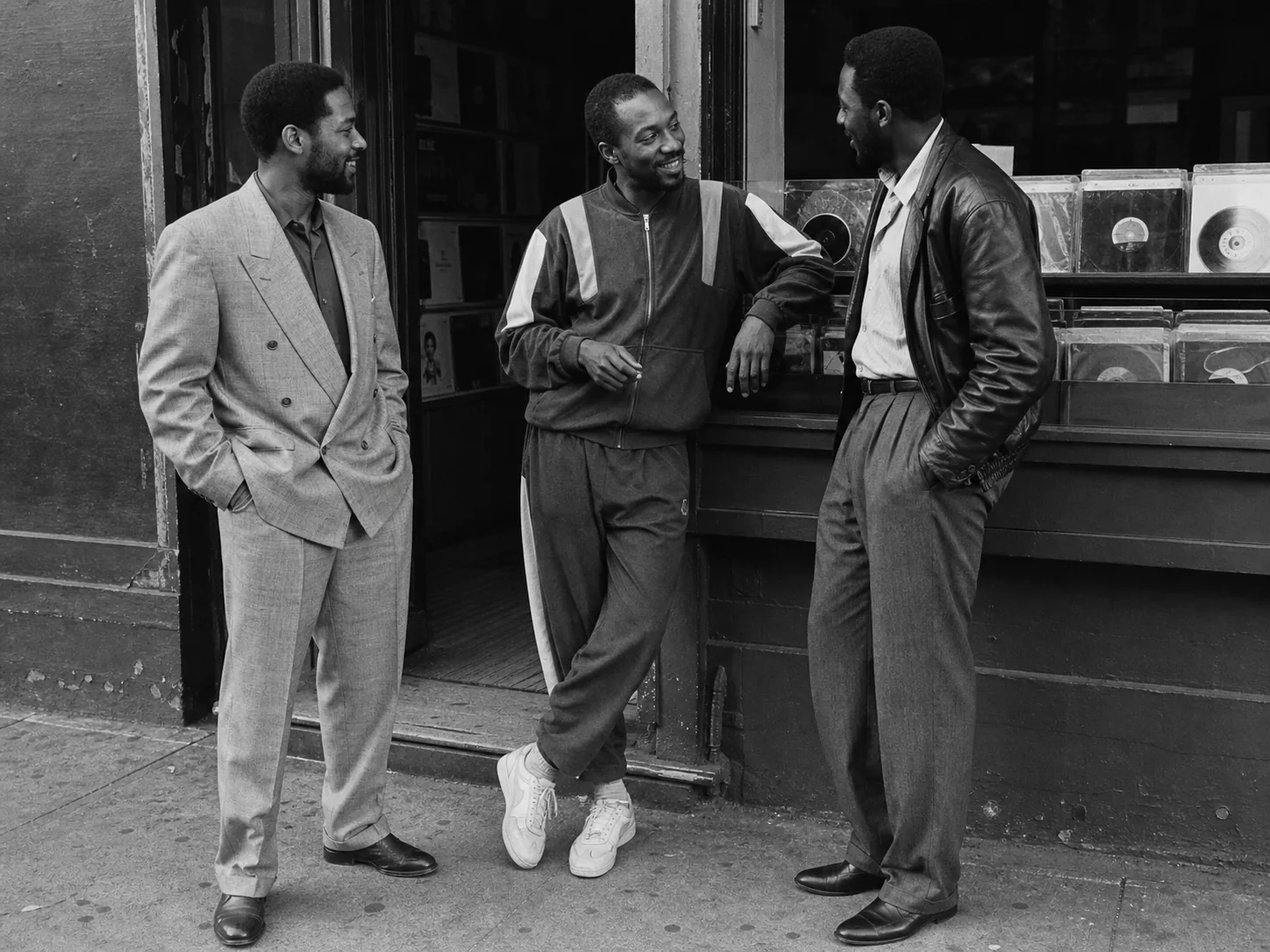
The outline relaxed. Denim widened, tees lengthened and workwear gained cultural visibility, yet preppy polos, leather, tailored suits and technical sportswear prevented the decade from becoming one uniform.
Why volume mattered
Room around the body created attitude and movement. A dropped shoulder altered posture; stacked denim changed the relationship between trouser and shoe. Musicians made these choices visible, but regional street scenes and practical garments supplied much of the raw material.
Early and late are not interchangeable
Early-90s color and pattern retained energy from the previous years. Mid-decade workwear and muted palettes offered a heavier mood. Toward 2000, luxury references, sports jerseys and increasingly oversized proportions pointed forward. Our 90s outfit guide translates those differences into combinations that can be worn now.
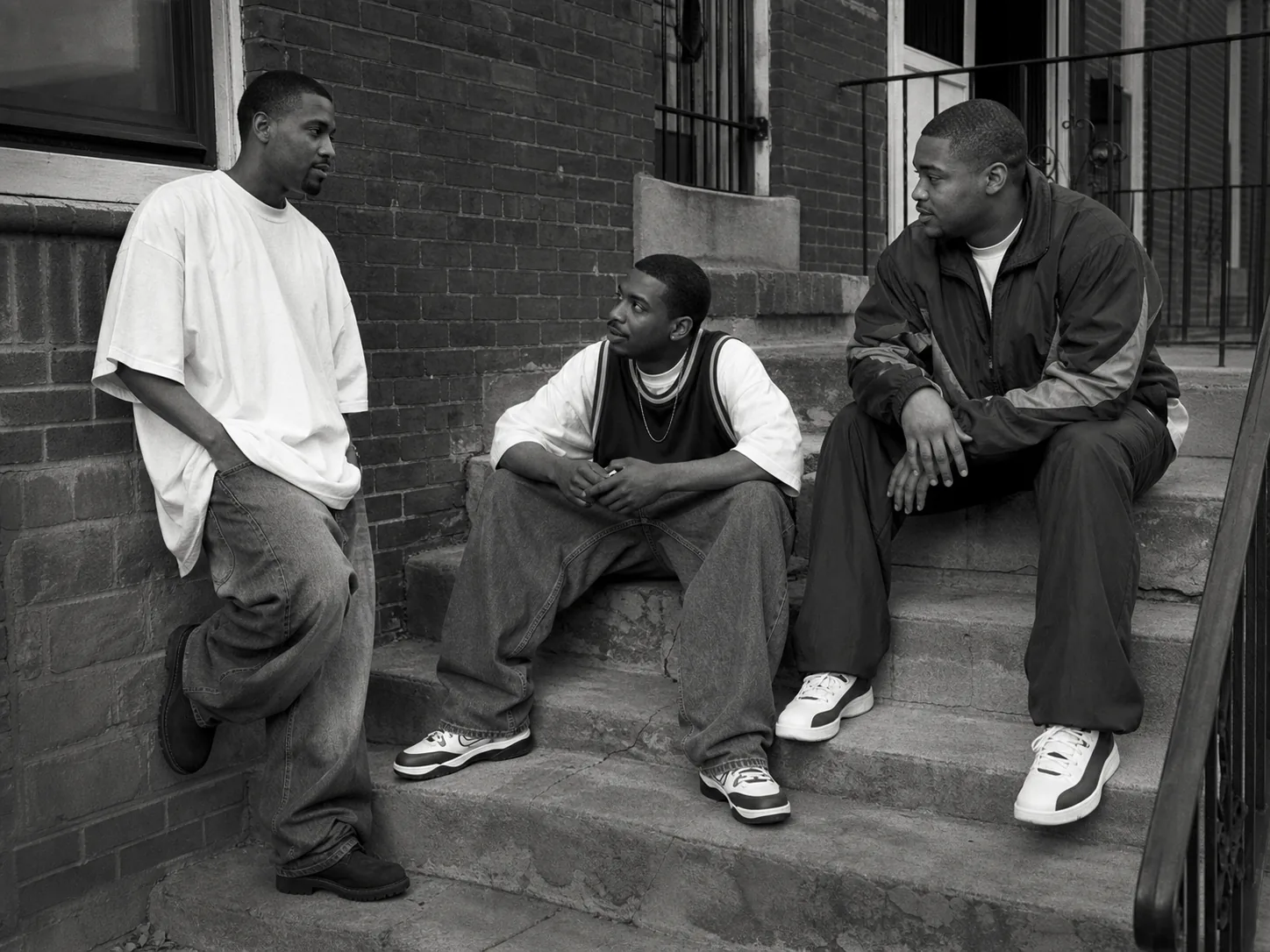
At the opening of the millennium, scale became unmistakable: long tees, generous denim, large outerwear and prominent sneakers. By the decade's end, the line had already begun to narrow.
Sports and aspiration
Jerseys, coordinated tracksuits, fitted caps and basketball shoes connected fandom to personal presentation. At the same time, visible luxury references communicated success. The combination could be polished or deliberately excessive, depending on performer, region and moment.
The decade turns inward
It is easy to remember only the widest jeans. Later-2000s wardrobes brought slimmer denim, closer jackets and a different conversation between streetwear and high fashion. That internal swing is why “Y2K” should be used precisely rather than as a label for anything vaguely nostalgic.
At a glance
Compare the decades by what the clothes do
| Detail | 1980s | 1990s | Early 2000s |
|---|---|---|---|
| Dominant line | Higher waist, built shoulder | Dropped, loose and layered | Long, wide and visibly oversized |
| Everyday bottoms | Pleated trousers, straight denim, track pants | Baggy denim, cargos, work pants | Wide stacked jeans, track pants, long shorts |
| Outer layer | Leather, blazer, track jacket | Work jacket, varsity, puffer | Oversized sports jacket, hoodie, statement coat |
| Footwear balance | Clean trainers and dress shoes | Work boots and basketball sneakers | Prominent basketball and lifestyle sneakers |
| Modern approach | Use one structured piece | Control volume with a clean base | Keep one oversized focal point |
Wear it well
Retro style works best as editing
Begin with a detail you genuinely enjoy, not the detail that photographs most obviously. Maybe it is the drape of a pleated trouser, a faded denim wash or the functional pockets on a work jacket. Build around that element with quieter clothing already in your wardrobe. The outfit will carry a reference without depending on theatrical recognition.
Condition matters when buying vintage. Inspect stress points, hems, zippers and odors; old size labels are unreliable, so use actual measurements. A repairable seam is different from fabric that has weakened throughout. For shoes, age can degrade foam and adhesives even when the upper looks clean. Our Sneakers desk covers silhouette and history, while Men's Style focuses on practical combinations.
Use measurements, not nostalgia
Record the chest, shoulder, rise, waist, thigh, inseam and hem of a garment you already enjoy wearing. Compare those numbers with a vintage listing instead of trusting small, medium or large. Older tailoring may have extra internal allowance for alteration; denim often changes after years of washing. Ask a seller for photographs of cuffs, collars and pocket corners, where wear appears first.
A good alteration can rescue length or waist, but it cannot easily rebuild a narrow shoulder or add fabric to a tight thigh. Buy for the hardest dimension, then refine the easier ones. This practical approach keeps vintage shopping connected to real daily wear rather than collecting pieces that only look persuasive on a hanger.
Choose the proportion first. Choose the decade second.
Archive questions
Sorting real differences from retro shorthand
Which decade had the baggiest men's fashion?
The late 1990s and early 2000s produced some of the most visibly oversized mainstream silhouettes, but fit varied by region and scene. Wide clothing also existed earlier, and plenty of men wore straight or tailored shapes during those same years.
What is the difference between 90s style and Y2K style?
They overlap. Broadly, 1990s style includes workwear, relaxed denim, varsity and preppy influences, while early Y2K often extends garment length, increases scale and makes sports and luxury references more prominent. Late-90s outfits can already look Y2K.
How can I date an old outfit photograph?
Use several clues together: trouser rise and width, jacket length, footwear model, hairstyle, accessories and image context. One garment may remain in use for years, so a precise date should not be claimed from a single clue. Check background details, image format and any known occasion before settling on a range.
Is retro fashion the same as vintage clothing?
No. Vintage describes older garments, while retro describes a contemporary item or outfit that references an earlier period. A modern wide jean can create a retro silhouette without being vintage.
What is the easiest era to wear today?
The 1990s is especially adaptable because relaxed denim, work jackets, hoodies and simple sneakers already fit contemporary wardrobes. The best era, however, is the one whose proportions suit your body and daily routine. Borrowing one shape at a time keeps the result personal.
New 1980s guide
Black men's fashion beyond a single scene
Read the complete 80s Black Men's Fashion guide for tailoring, sportswear, leather, denim, grooming and wearable outfit formulas.
Music and the decade
How hip-hop reorganized familiar clothing
The 80s Hip-Hop Fashion study follows athletic sets, leather, footwear and crew identity from community settings to constructed performance imagery.
Y2K research shelf
The millennium transition in practical detail
Explore Y2K Black Men's Fashion for jerseys, long tees, tracksuits, wide denim and present-day outfit construction.
Topic cluster
90s reading path
Begin with the pillar, then choose the guide that matches the historical, visual or practical question.
Topic cluster
80s reading path
Begin with the pillar, then choose the guide that matches the historical, visual or practical question.
Topic cluster
2000s / Y2K reading path
Begin with the pillar, then choose the guide that matches the historical, visual or practical question.