Decade Guide · 2000—2009
Black 2000s Fashion Turned Scale Into a Statement
Long tees, wide denim, jerseys, coordinated tracksuits and prominent sneakers defined the opening years. Then the decade changed direction: fits narrowed, luxury and streetwear moved closer, and a new digital fashion rhythm took hold.
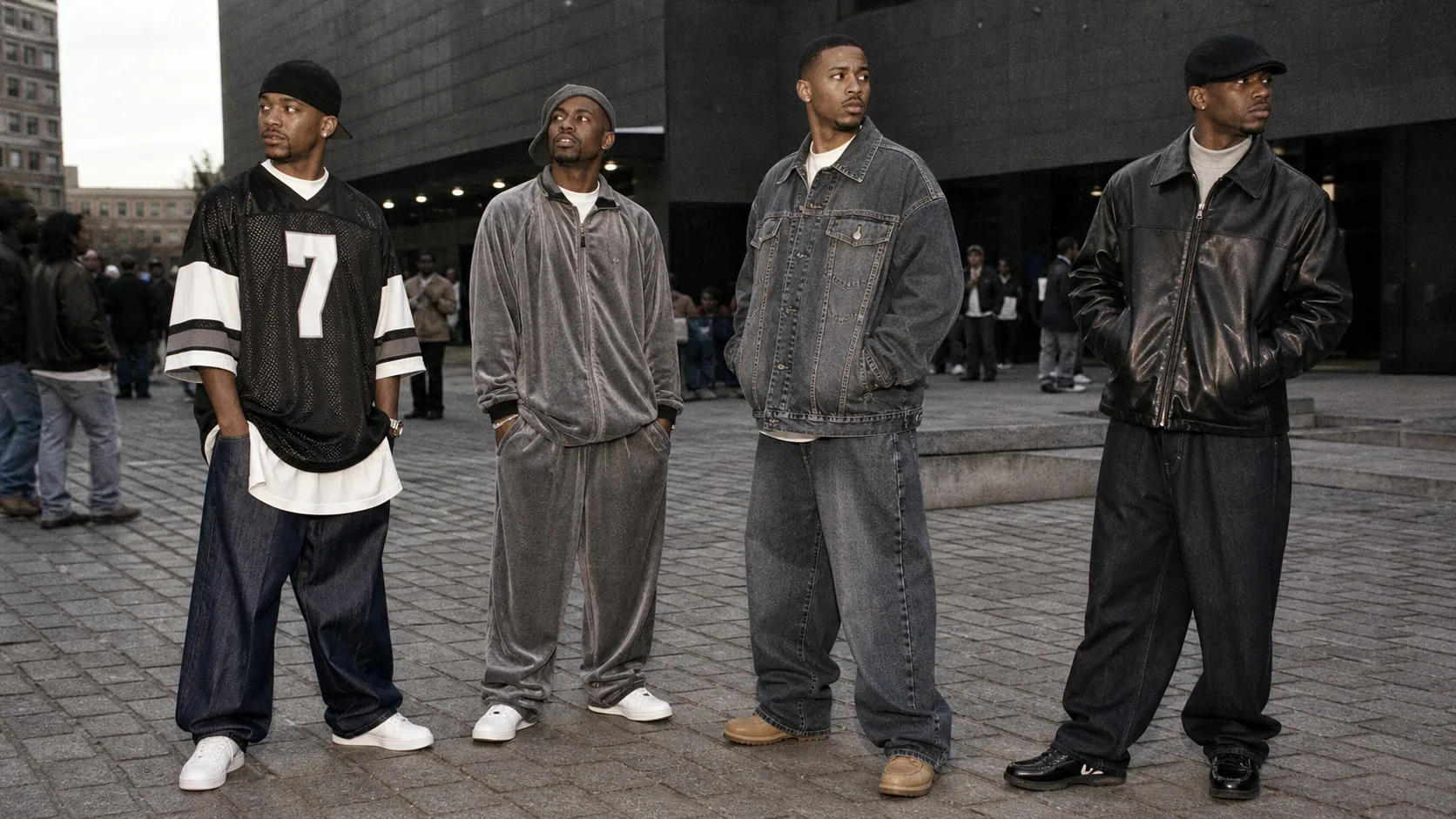
What defined Black men's fashion in the 2000s?
Early-2000s Black men's style often emphasized length and volume: oversized tees, sports jerseys, wide or stacked denim, coordinated tracksuits, large outerwear and visible sneakers. Fitted caps, chains, watches and belts sharpened the look. By the middle and end of the decade, cleaner luxury-street combinations and slimmer clothing became increasingly visible. Hip-hop amplified these changes, but sport, regional scenes, video culture and everyday wardrobes all shaped the result.
The Y2K magnifier
One decade, three different proportions
The 90s silhouette expands
Long tees, oversized jerseys, wide jeans and heavy footwear continue late-90s movement. Denim sets and tonal tracksuits make coordination immediate.
Scale meets visible aspiration
Sports imagery, bold outerwear, fitted caps, jewelry and luxury references share the frame. Regional labels and music-video styling gain national reach.
The line starts to narrow
Denim and jackets become closer, while designer and boutique streetwear relationships grow. The decade ends looking noticeably different from its opening.
These are tendencies, not universal deadlines. Clothing remains in wardrobes for years, and fashion travels unevenly. A 2002 image may look late-90s; a style associated with 2008 may have appeared earlier in a specific music or city scene.
Why “Y2K” needs a careful definition
Y2K originally names the turn of the millennium and the technological anxiety and optimism surrounding it. In fashion today, the term is often used more loosely for late-1990s and early-2000s references. That can be useful, but it also flattens differences. Metallic club clothing, oversized hip-hop sportswear and minimal late-decade luxury are not interchangeable simply because they now appear on the same inspiration board.
For BAAM Boys, the most useful Y2K window is the transition from the late 1990s through the early years after 2000. We identify the specific silhouette, garment and cultural setting whenever possible instead of using “Y2K” as a universal synonym for nostalgic.
The pieces that carried early-2000s style
Length lowered the visual center and created a base under jerseys, jackets and chains. A crisp white layer made dark sportswear read clearly.
Room through the thigh and hem allowed jeans to stack over shoes. Wash, pocket placement and belt treatment added identity.
Team and player association supplied color, geography and aspiration. Layering changed a performance object into a full street outfit.
Tonal or coordinated sets balanced comfort with immediate presentation. Fabric sheen and piping registered strongly on camera.
Matching jacket and jean turned an everyday fabric into a statement. Different washes and scale prevented the combination from feeling flat.
Roomy leather jackets and coats added polish, weight and a visible connection to success-oriented music imagery.
Music video changed the wardrobe process
By the 2000s, music imagery moved quickly across television, magazines, DVDs and the expanding internet. Outfits had to communicate immediately. Scale helped: long layers and prominent shoes remained legible in a wide shot, while jewelry and polished material caught light in close-up.
Stylists coordinated the performer, location, dancers and narrative. A jersey might connect an artist to a city; a monochrome tracksuit could unify a group; a denim set could become the visual memory of a single scene. Credit matters because these images were collaborative work, not spontaneous proof that one celebrity invented a trend.
Regional style still resisted one national formula. Southern rap increasingly shaped mainstream scale and presentation; East Coast wardrobes moved between street weight and luxury; West Coast looks kept local relationships with relaxed shirts, denim and sneakers. Artists borrowed and toured, so these boundaries remained porous.
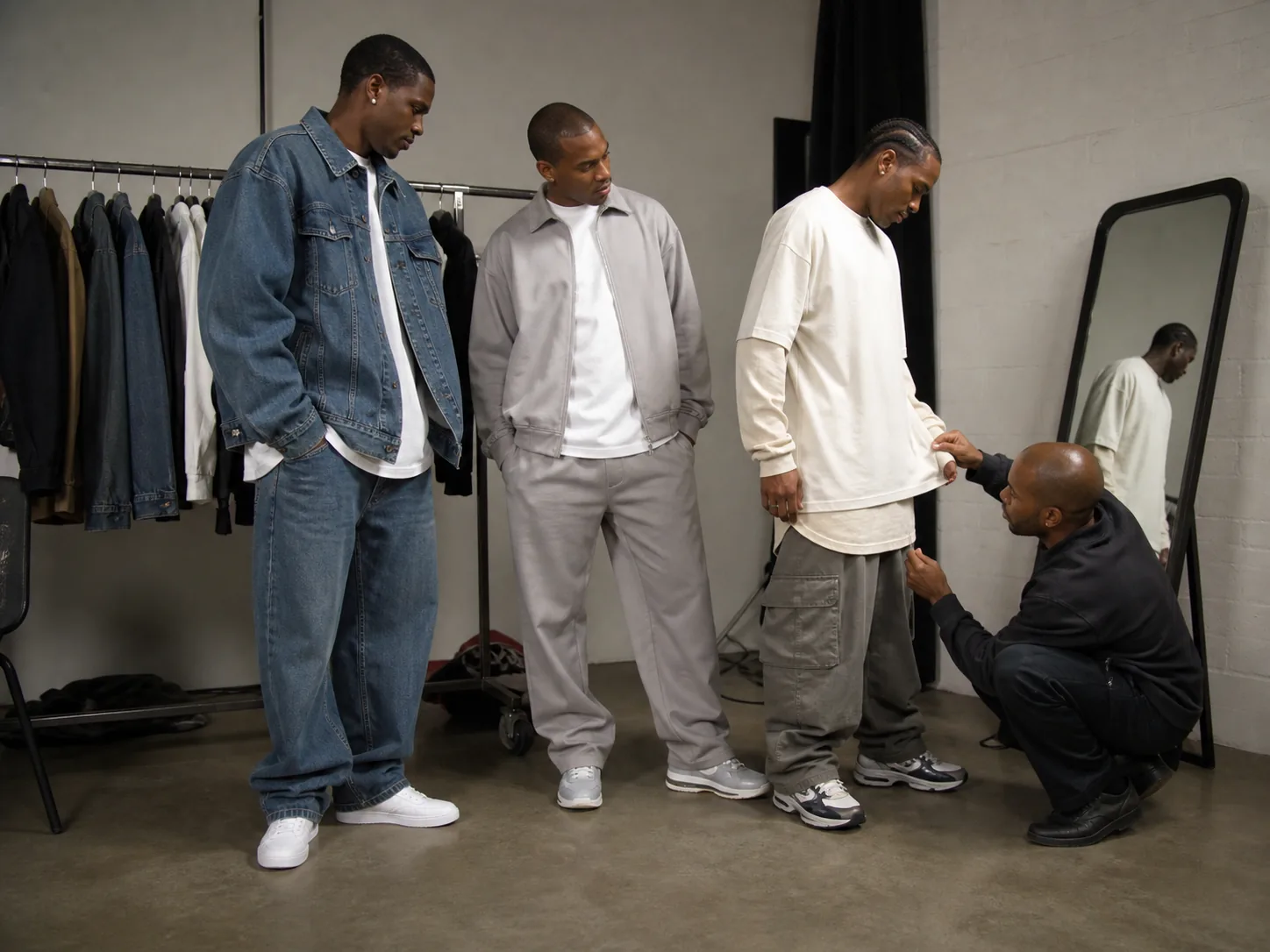
Technical sneakers, clean low-tops and fitted details
Footwear grew visibly engineered. Basketball shoes and technical runners used molded panels, mesh and substantial midsoles that balanced wide hems. Clean white low-tops offered a quieter alternative and made coordinated sets feel precise. Boots remained important for heavier workwear and denim combinations.
Fitted caps created a controlled line above extremely relaxed clothing. Large belts and decorative buckles drew the eye to the waist even when it sat low. Chains, watches and earrings varied in scale according to scene and performer. Tinted eyewear and carefully maintained sneakers reinforced the era's polished camera awareness.
Old sneakers from this period now carry material risk. Foam, glue and synthetic coatings age even in storage. Review the Sneakers archive before buying a vintage pair for regular wear.
The decade's luxury conversation
Luxury in 2000s hip-hop fashion was not only a list of labels. It was a language of arrival: fine leather, monograms, jewelry, tailoring and rare objects made commercial success visible. Artists also mixed those signals with jerseys, denim and workwear, challenging the separation between high fashion and street clothing.
That relationship was unequal. Fashion companies benefited from music visibility while recognition and formal collaboration did not always arrive at the same speed. By the late decade, direct partnerships, designer references and boutique streetwear helped change the business conversation, setting conditions for the closer music-fashion system that followed.
How to wear Y2K proportions now
The most convincing update controls one exaggerated element. Modern fabric, a cleaner seat and deliberate hem keep the outfit mobile while preserving the early-2000s idea.
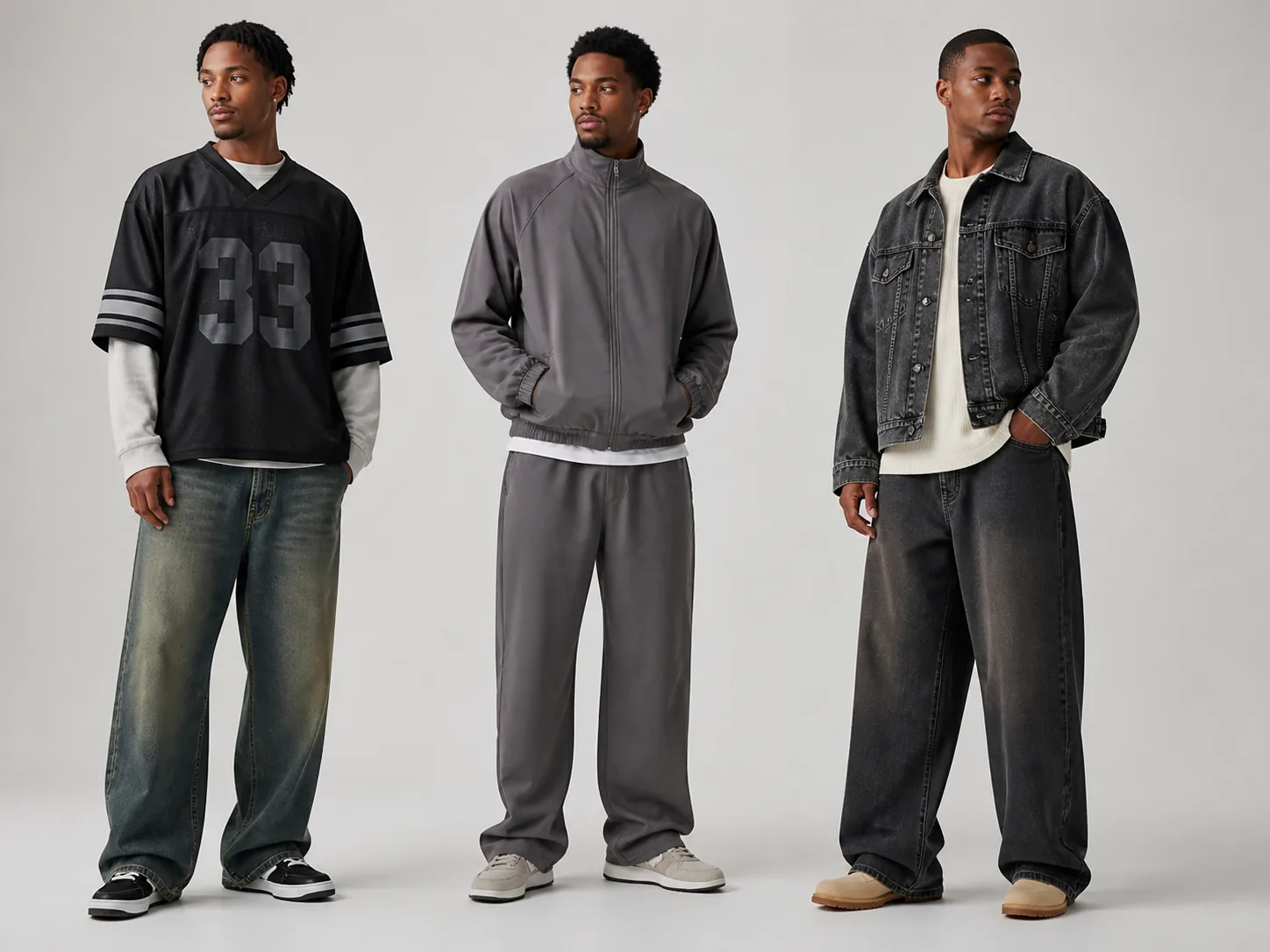
Roomy jersey + long-sleeve base + straight wide denim + clean low-top.
Minimal track jacket + matching relaxed trouser + understated technical runner.
Oversized denim jacket + simple knit + controlled wide trouser + sturdy boot.
Avoid making every piece oversized. If the jersey is long, a straighter jean gives it space. If both denim pieces are roomy, use a compact base and quiet accessories. The Men's Style desk explains how to test proportion against your body and routine.
Buying original 2000s clothing
Look at measurements and construction before nostalgia. Long tees may have changed shape through repeated drying; denim can show stress at the crotch, hem and rear pockets; coated or synthetic tracksuit fabric may peel. Elastic cuffs and waistbands often lose recovery before the main cloth fails.
Graphic jerseys and branded pieces require additional authentication knowledge. Compare tags, stitching and period references, but remember that online checklists cannot guarantee authenticity from limited photographs. If an item is expensive, use a trusted specialist and retain documentation.
Some original pieces were inexpensive mass-market clothing and should be judged accordingly. Age does not automatically create quality. Buy the garment because its condition, fit and story make sense—not because a seller attached “Y2K” to the title.
Continue the cluster
2000s / Y2K specialist guides
Evidence trail
Sources & Further Reading
These references support the historical, cultural or care-related claims in the guide. Outfit combinations and fit recommendations are BAAM Boys editorial judgment unless specifically attributed.
- The Metropolitan Museum of Art — Superfine: Tailoring Black Style
A cultural and historical examination of Black style, identity and dandyism through garments, art and photography.
- Library of Congress — African American clothing and fashion photographs
A cataloged photographic record with creator, date, subject terms, repository and rights notes.
- The Museum at FIT — Fresh, Fly, and Fabulous: Fifty Years of Hip Hop Style
Curatorial material on the invention, remixing and wider adoption of hip-hop fashion.
Timeline synthesis
The decade changed direction more than once
| Phase | Dominant movement | Historical caution |
|---|---|---|
| 1999–2002 | Late-90s volume continued through long tops, wide denim, jerseys and substantial footwear. | Calling the entire period Y2K hides continuity with the 1990s. |
| 2003–2006 | Brand visibility, coordinated sets, music-video polish and regional identities intensified. | Broadcast prominence does not prove universal everyday adoption. |
| 2007–2009 | Some silhouettes narrowed while luxury, skate and emerging digital influences overlapped. | The transition occurred at different speeds across scenes and wardrobes. |
The strongest historical conclusion is not one “2000s look,” but a sequence of competing proportions shaped by music, sport, retail, media and local use.