Daily wardrobe · 2000–2009
2000s Streetwear for Men: From Wide Layers to a Cleaner Line
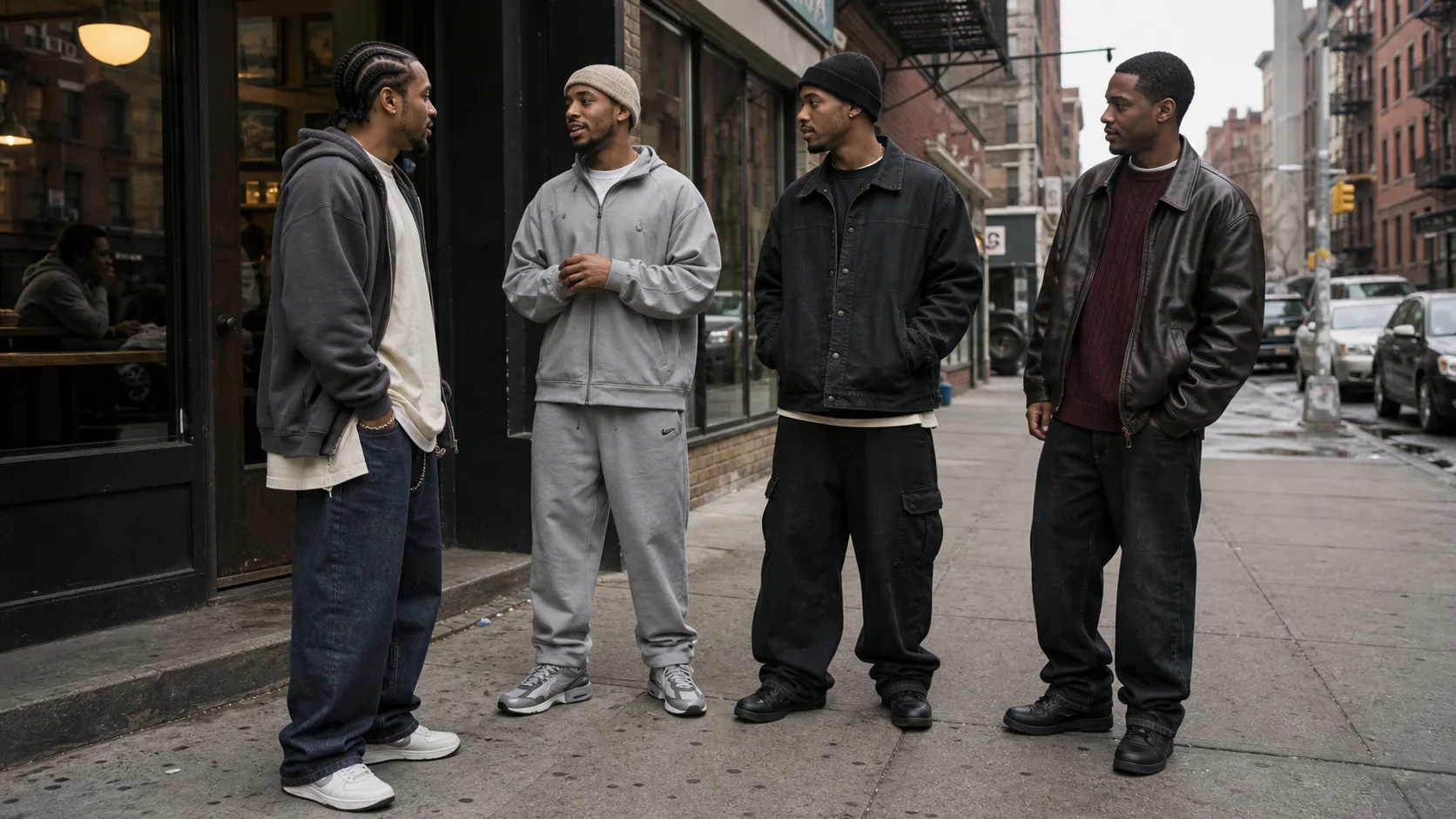
2000s men's streetwear moved from long tees, roomy hoodies, wide denim, cargo pants, tracksuits, large leather and prominent sneakers toward closer jackets, straighter jeans and boutique-influenced styling. The decade did not change everywhere at once; everyday clothing followed weather, transit, work, sport and local taste.
Quick answer
What did men's streetwear look like in the 2000s?
Early years often emphasized long tees, oversized hoodies, wide or stacked jeans, broad cargos, tracksuits, roomy denim and leather jackets, fitted caps, basketball shoes, runners and boots. Mid-decade wardrobes refined coordination, while later years increasingly introduced shorter jackets, straighter or slimmer denim and closer relationships with boutique fashion. Many men mixed phases rather than replacing a closet at once.
| Period | Upper body | Lower body | Footwear |
|---|---|---|---|
| 2000–2003 | Long tees, roomy hoodies, jerseys | Wide denim and cargos | Large court shoes and boots |
| 2004–2006 | Tonal tracksuits, leather, denim jackets | Broad but cleaner trousers | Technical runners and court styles |
| 2007–2009 | Shorter, closer outerwear | Straighter and slimmer jeans | Cleaner low-tops and refined runners |
01 / Everyday evidence
Streetwear was what survived the schedule
Music videos preserve the spectacular edge of the decade, but daily outfits answer mundane needs: walking, transit, temperature, pockets, school, work and social plans. A hoodie layered over a long tee offered warmth and a recognizable proportion. A tracksuit moved easily and required little coordination. Denim and leather endured regular wear. Cargo pockets held practical objects before becoming a styling detail.
An outfit becomes historically useful evidence only when its context is understood. A candid commute photograph and a staged album portrait do different work. The 2000s Rapper Outfits guide focuses on performer image; this discussion stays with clothing designed to move through ordinary life.
02 / Layer systems
Length organized early-decade street outfits
The extending base keeps the layered line visible beneath soft outerwear.
Matching top and pant create continuity without complex styling.
A broad jacket adds structure while a simple knit controls bulk.
Weight and texture move an everyday outfit toward dinner or nightlife.
Each system needs adequate room. A hoodie that fits alone may bind over a tee or thermal. A leather jacket may require a higher armhole or broader body. When tops extend far below the waist, trouser rise becomes less visible, but the waist still must stay secure without a belt pulled excessively tight.
03 / Transit test
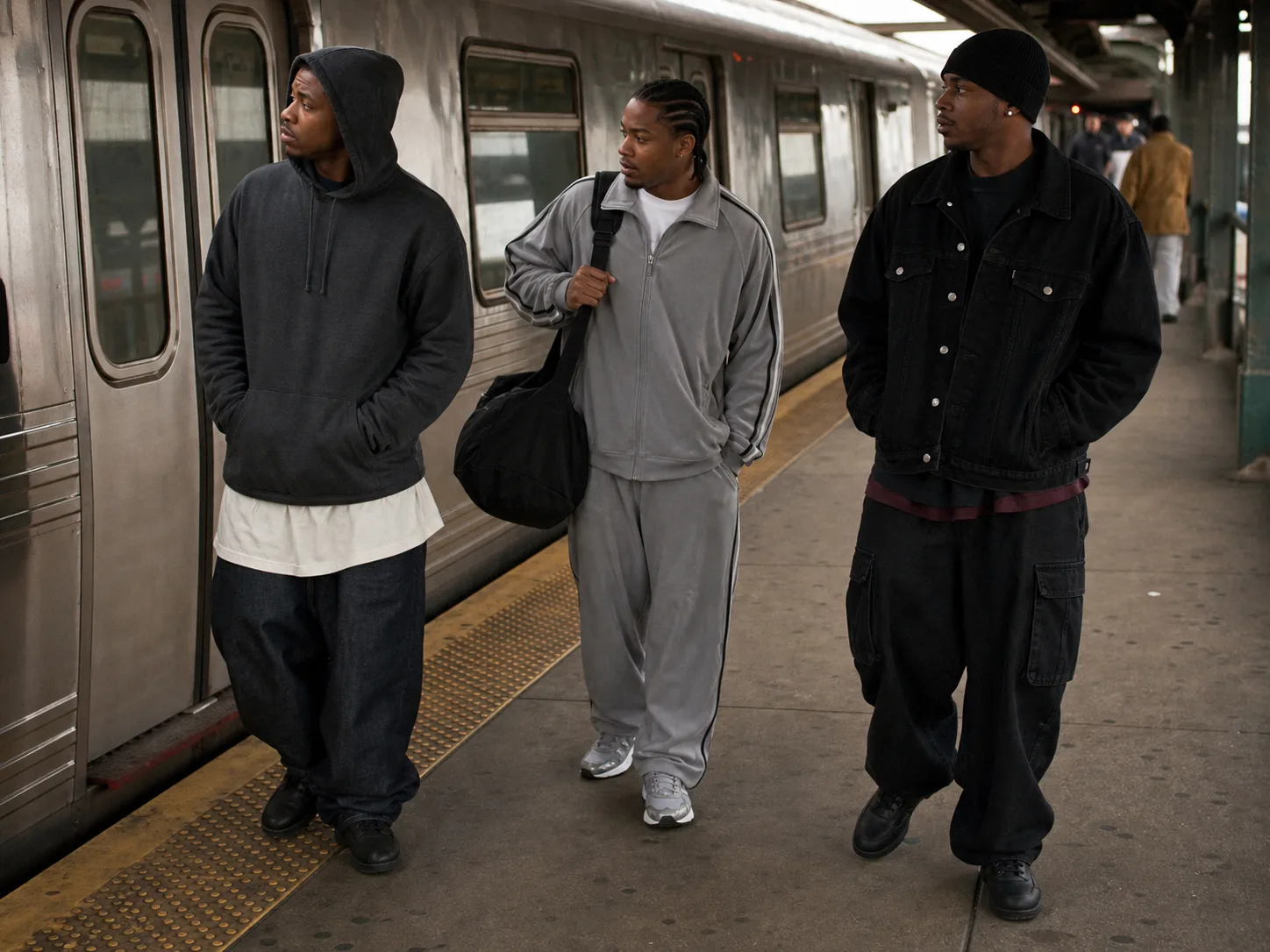
A good silhouette still has to catch the train
Wide jeans should not drag beneath the heel. Long tops should not obstruct pocket access. A heavy leather jacket needs room for movement without becoming exhausting to carry. Track pants require cuffs or hems that stay clear of escalators and wet pavement.
Footwear must support the actual walking distance. Technical runners work naturally with tracksuits and cargos; basketball shoes balance broad denim; sturdy boots handle weather but add weight. Old sneakers may be structurally unsafe even when they look clean, so vintage pairs need inspection before commuting.
Five-minute movement check
- Walk quickly and climb a flight of stairs.
- Sit while checking waist and rise pressure.
- Use every pocket and open the bag.
- Watch whether the hem enters the heel path.
- Remove the outer layer and carry it comfortably.
04 / Garment desk
A small capsule covers several phases
Choose a charcoal hoodie, cream heavyweight tee, gray track jacket and matching relaxed pant, washed-black denim jacket, dark straight-wide jean, broad cargo trouser and short leather bomber. Add a technical runner, court sneaker and sturdy dark shoe. Not every item needs an early-2000s measurement; the capsule works because several pieces retain the period's relationships.
Hoodie and long tee for casual volume.
Track jacket and pant for continuity.
Denim or leather to define the shoulder.
Wide denim and cargo offer different shoe relationships.
Every outer layer should work with at least two bottoms. Both casual shoes should work with denim and the tracksuit. If a piece supports only one themed combination, treat it as a specialty item rather than the core.
05 / Setting matrix
Use the reference where it makes sense
Hoodie and denim
Charcoal hoodie, cream long tee, controlled wide jeans and clean court shoes.
Tonal athletic
Gray tracksuit, white base, technical runner and practical shoulder bag.
Denim and cargo
Washed-black denim jacket, muted knit, broad cargo trouser and sturdy shoe.
Leather cleanup
Short roomy leather bomber, burgundy knit, straight dark jeans and polished black footwear.
A sports jersey or very long tee can work for a casual event but may be inappropriate in a formal room. Preserve the era through trouser width or outerwear scale while changing the top. Style is an adaptable system, not a demand to ignore the invitation.
06 / The narrowing
The decade ended with a different outline
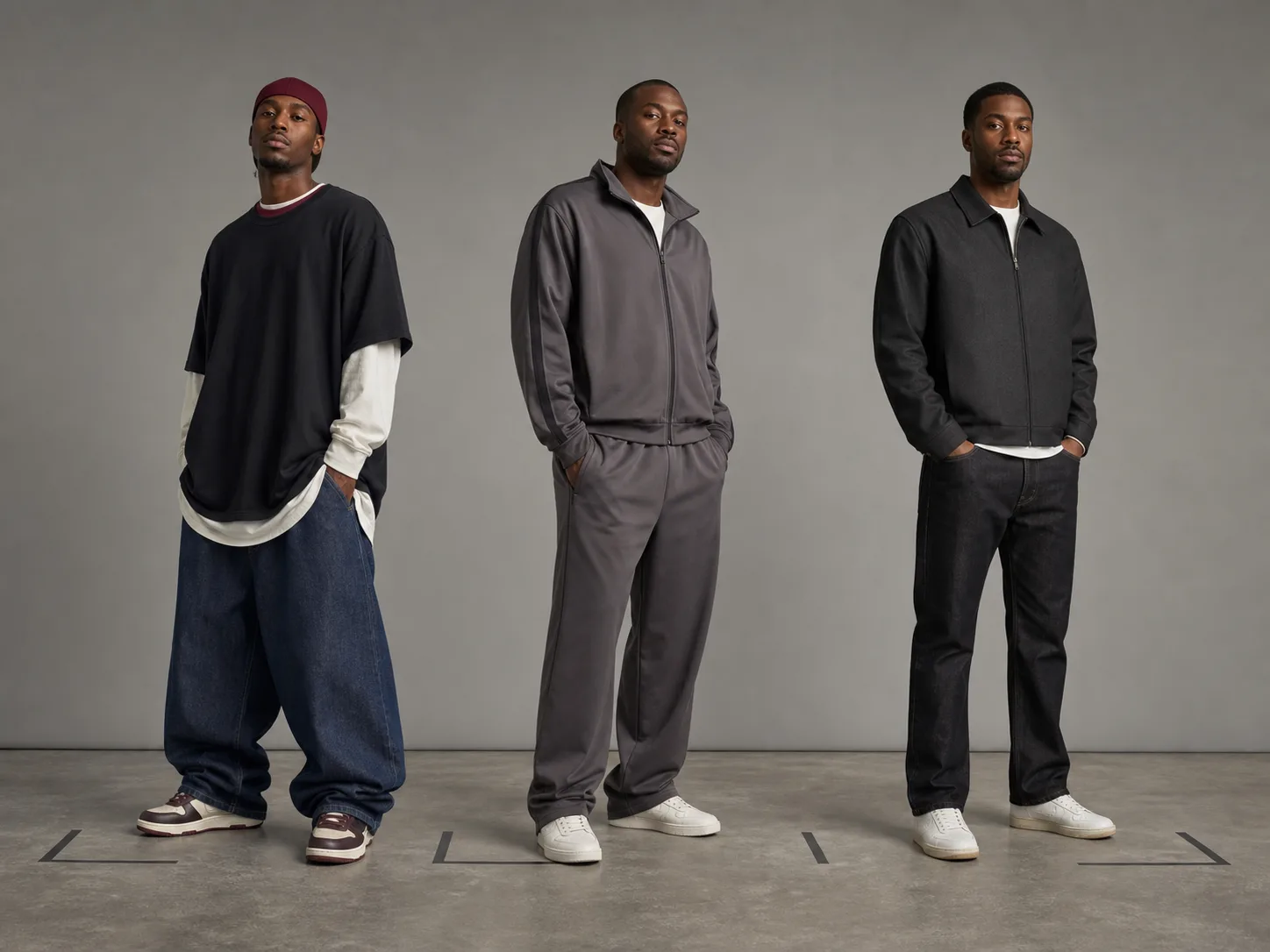
Later-2000s streetwear increasingly showed shorter jackets, closer tees, straight or slim denim and cleaner low-profile sneakers. Boutique retail, designer relationships, music scenes and online style discussion all contributed. The shift did not arrive as a universal deadline. Wide outfits remained in wardrobes while narrower silhouettes gained visibility.
That internal change makes “2000s streetwear” too broad for precise advice. Decide whether you want early length, mid-decade tonal polish or late-decade closer lines. Mixing phases can work when one shape leads; a shorter jacket over broad trousers creates a contemporary combination, while a long top with very slim jeans creates a different, later tension.
The Black 2000s Fashion pillar places this shift inside the entire decade. The Y2K fit guide focuses on the opening years.
07 / Shop and maintain
Condition determines whether nostalgia becomes useful
Measure hoodies and jackets at chest, shoulder, sleeve and length. Check jeans at waist, rise, thigh, inseam and hem. Inspect sweatshirts for stretched cuffs, tracksuits for failing elastic and coated fabric for peeling. Denim abrasion commonly appears at crotch, rear pockets and heel-damaged hems.
Wash according to the care label, air dry when suitable and clean footwear with material-appropriate methods. Age does not guarantee superior construction. A modern garment with the right silhouette may withstand daily life better than a fragile original.
- Every piece is oversized. Keep one layer or lower-body shape in control.
- Hem meets pavement. Shorten, cuff or change footwear.
- Performance becomes everyday proof. Compare staged imagery with ordinary contexts.
Evidence trail
Sources & Further Reading
These references support the historical, cultural or care-related claims in the guide. Outfit combinations and fit recommendations are BAAM Boys editorial judgment unless specifically attributed.
- The Museum at FIT — Fresh, Fly, and Fabulous: Fifty Years of Hip Hop Style
Curatorial overview connecting hip-hop clothing to community, customization, aspiration and fashion-industry influence.
- Smithsonian NMAAHC — Five Things to See: The Fashion of Hip-Hop
Collection-based examples of garments, jewelry, photographs and sneakers used to document hip-hop style.
- The Metropolitan Museum of Art — Superfine: Tailoring Black Style
Institutional context for Black dress, identity, tailoring and self-presentation across time.
Daily route planner
Build the outfit around the longest part of the day
Check pocket security, hem clearance and whether outerwear can be carried when the temperature changes.
Use one relaxed proportion with a clean collar, controlled layer or quieter shoe.
Add interest through a jacket, texture or accessory rather than rebuilding the entire outfit.
Choose the shell and footwear for actual rain, heat or cold before selecting a nostalgic reference.
Streetwear earns repeat wear when it survives movement, storage, seating and changing settings—not when it works only in a front-facing photograph.