Function, scale and finishing
Black Men's Accessories: Choose the Detail That Earns Its Place
Accessories can solve practical needs, frame the face, connect colors or carry cultural meaning. They work best when their purpose is legible. Start with the item the day requires—eyewear, belt, watch, bag or hat—then decide whether jewelry adds balance or merely another point of competition.
Quick answer
Which accessories should a man own first?
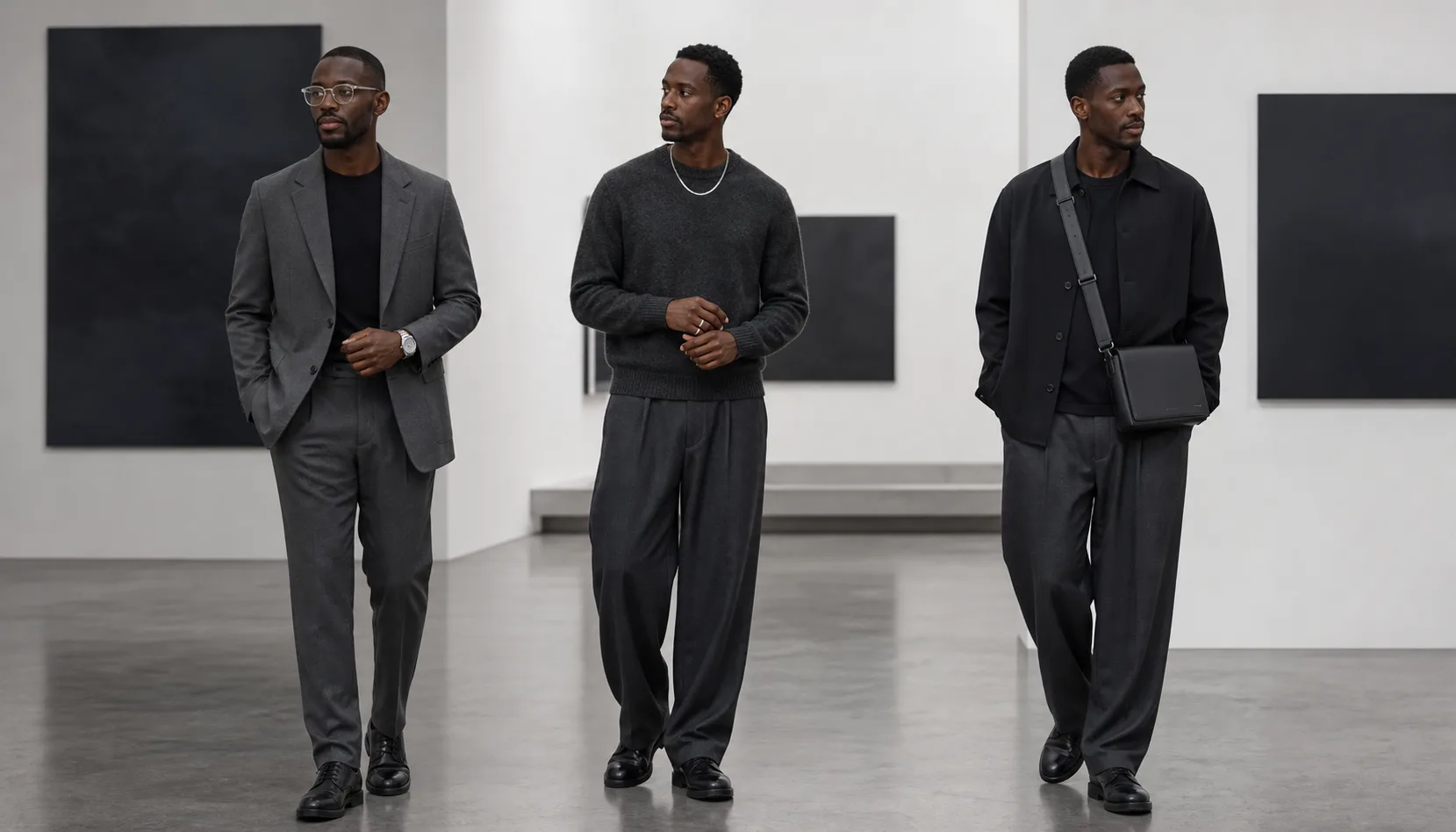
Begin with accessories that solve recurring needs: correctly fitted eyewear or sunglasses, a belt suitable for your main trousers, a durable everyday bag and, if useful, a watch. Add one necklace, ring or bracelet only after understanding the scale and metal finish that suit your clothing. A hat belongs in the foundation when weather, hair protection or personal style makes it genuinely useful.
The object should perform its job comfortably and reliably.
Frame, case, buckle and chain need to relate to body and clothing.
Face, neckline, wrist and waist are separate focal zones.
Cultural and personal symbols deserve informed, respectful wear.
01 / Priority test
Ask what the outfit needs before asking what to add
An accessory can supply function, contrast, texture, repetition or meaning. Name its job. Clear frames can lighten a dark outfit around the face. A black belt can continue the line of dark trousers. A silver chain can create one bright point at a crew neckline. A leather bag can introduce structure while carrying the items that would otherwise distort pockets.
If two accessories perform the same visual job, choose the stronger one. Large glasses, a thick chain, a bright watch and several rings all near the upper body create competing signals. More can be intentional within specific traditions, performance contexts and personal aesthetics, but accumulation should be a decision rather than a default prescription for Black style.
View accessories at conversation distance. Close-up product photographs exaggerate small details; in real life, the outline and reflection often matter more than engraving. Take a full-body photograph before checkout when possible.
02 / Selection order
A practical hierarchy keeps the edit clear
Prescription frames, sun protection, bag capacity, belt support and weather come first.
Notice strong collar, graphic, footwear or hair shape before adding another leader.
Compare object width and thickness with lapel, neckline, wrist and overall silhouette.
Metal, acetate, leather, canvas and nylon should support the outfit's level of polish.
Echo a metal, color or shape once if it creates connection; perfect matching is unnecessary.
Take one item away and compare. The cleaner version often reveals the real priority.
03 / Eyewear and watches
Fit is more important than status
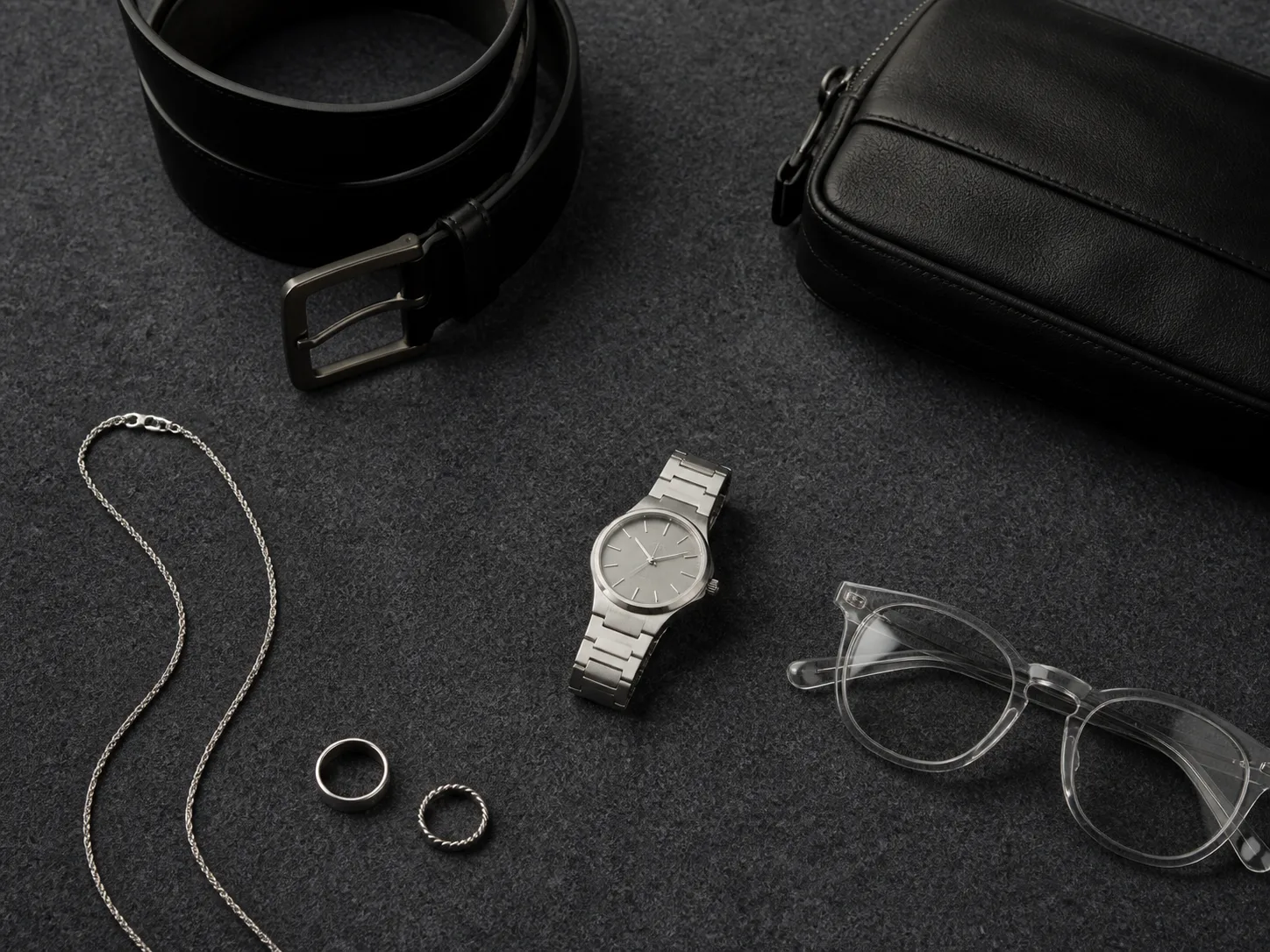
Frames should sit level, remain secure at the bridge and avoid pressing painfully behind the ears. Lens center, prescription requirements and professional adjustment belong with a qualified optician. Visually, frame width should relate to the face without a rigid formula. Clear acetate softens contrast; black frames add definition; thin metal creates a lighter line.
Sunglass lens darkness does not prove UV protection. Buy from a source that provides credible protection information and use professional guidance where vision or prescription needs apply.
A watch case should not overhang the wrist awkwardly, and the strap should allow comfortable movement. Slim watches integrate easily with tailoring and knits; larger sport watches may work with technical clothing. The object does not need to be expensive to keep time, fit properly and complete a look.
04 / Jewelry
Choose a focal zone and understand the symbol
A necklace interacts with neckline. A short chain sits clearly above a crew collar; a longer chain may disappear beneath a layer or create a vertical over a plain tee. Pendants add meaning and visual weight, so confirm their cultural or religious significance before wearing them. Jewelry borrowed from traditions should not be reduced to costume.
Rings change the rhythm of the hands. Begin with one comfortable band, then consider balance across both hands rather than filling every finger. Measure when hands are at a normal temperature; swelling varies. Bracelets and watches share limited wrist space, so check noise, scratching and comfort at a desk.
Gold, silver and mixed metals can all complement deep skin tones, but undertone rules are not law. Test surfaces in daylight. Highly polished metal reflects sharply; brushed metal reads quieter. Metal allergies and skin reactions require material information and, when persistent, qualified medical advice.
The 90s Hip-Hop Accessories guide examines how jewelry, hats and eyewear operated within a specific historical culture rather than treating them as generic decoration.
05 / Neckline and face
Leave breathing room between focal points
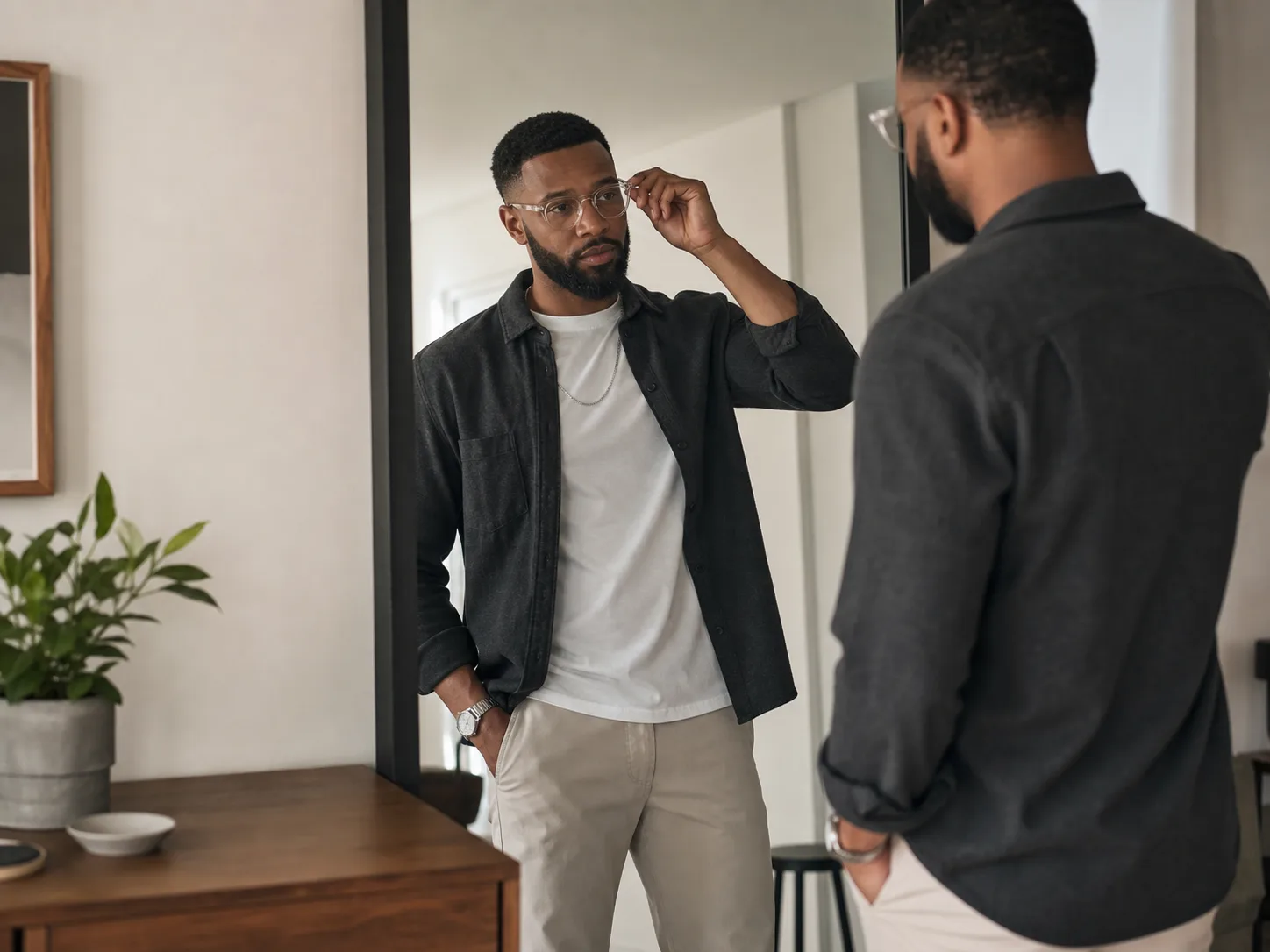
Eyewear, haircut, facial hair, collar and necklace all occupy the same upper zone. Strong frames can carry a simple crew tee without a chain. A plain frame and open overshirt create room for one necklace. A high knit collar may make a chain redundant even when the metal looks good on its own.
Check where the chain ends relative to the collar opening. A pendant half-hidden by a neckline looks unresolved. Adjust length or change the shirt. Glasses should not repeatedly collide with a hat brim, and a cap should not force frames down the bridge.
This is coordination, not a command to minimize Black expression. Layered jewelry and bold frames can be fully intentional. The question is whether the relationships are chosen, comfortable and appropriate to the setting—not whether they conform to a narrow idea of restraint.
06 / Belts, bags and hats
The most useful pieces alter silhouette
A belt should support the trouser and sit comfortably at its intended rise. Its width must fit the loops, and buckle scale should match the clothing: a compact buckle disappears into tailoring; a broader one can suit denim or workwear. Exact shoe matching is optional. Similar formality and connected tone are usually enough.
Bags deserve the same proportion check as jackets. A small crossbody creates a diagonal line and can pull lightweight clothing out of shape if overloaded. A tote offers capacity but occupies one hand. A structured brief or compact shoulder bag adds polish. Test the strap over the actual coat, and distribute weight to avoid strain.
Hats frame the head and may serve sun, warmth, hair protection or cultural expression. Check crown height, brim width, interior finish and how the hat interacts with hair. Avoid treating a historically meaningful style as a theme-party prop. For everyday use, comfort and secure fit determine whether the piece leaves the closet.
07 / Buy and maintain
Inspect contact points and repairability
For metal items, inspect clasps, hinges, links and plating information. For leather goods, check edge finishing, stitching, zipper movement and strap attachment. Synthetic materials can be practical, but understand how they crease and whether peeling can be repaired. A recognizable logo does not replace construction.
Store chains separately to prevent tangling, wipe glasses with appropriate cloth and keep leather away from prolonged moisture or direct heat. Follow maker guidance for cleaning. Watches with water-resistance claims have specific limits; seals can age, so do not assume an old rating remains reliable forever.
- Buying a set before finding your scale. Test one piece in daily wear first.
- Overloading pockets. Use a bag before keys and phone distort the trouser line.
- Matching every metal exactly. Repetition helps, but compatible finishes can mix naturally.
- Ignoring comfort. Pressure, pinching, noise and excess weight turn style into distraction.
Evidence trail
Sources & Further Reading
These references support the historical, cultural or care-related claims in the guide. Outfit combinations and fit recommendations are BAAM Boys editorial judgment unless specifically attributed.
- Federal Trade Commission — Clothes Captioning: Care Labeling Rule
Official explanation of garment care labels and the evidence manufacturers need for care instructions.
- The Metropolitan Museum of Art — Superfine: Tailoring Black Style
Institutional context for tailoring, Black identity, distinction and self-presentation.
- The Museum at FIT — Fresh, Fly, and Fabulous: Fifty Years of Hip Hop Style
Curatorial context for sportswear, designer fashion, customization and individual expression.
Final edit
Remove one object, then reassess the focal point
- Stand at full length rather than judging each accessory close up.
- Name the intended focal zone: face, neck, wrist, waist or footwear.
- Remove the second object competing in that same zone.
- Check metal color, leather finish and scale against the clothing.
- Confirm comfort, security and appropriateness for the destination.
A quieter edit is not automatically better. The purpose is hierarchy: the viewer should understand which object leads and which details support it.
Direct answers
Black men's accessories FAQ
What accessories should every man have?
Choose according to need: properly fitted eyewear, a useful belt, an everyday bag and possibly a watch. Jewelry and hats are personal additions, not universal requirements.
Should men match all their metals?
No. Repeating one finish can create cohesion, but silver, gold and dark metal may mix when their scale and placement feel deliberate. Test them with the full outfit.
How many jewelry pieces should a man wear?
There is no fixed number. Start with one focal zone, then add only when another piece improves balance or meaning. Bold layered jewelry can be intentional within many personal and cultural styles.
How should glasses fit a man's face?
Frames should sit level and comfortably at the bridge and ears without slipping or painful pressure. Visual shape is personal; prescription and lens alignment should be handled with an optician.
Does a belt need to match shoes?
Not exactly. Similar formality, compatible tone and related material usually create enough connection. Formal settings may reward closer coordination than casual outfits.