Detail Guide · 1990—1999
90s Hip-Hop Accessories Finished the Message
Hats changed the silhouette, jewelry caught the camera, glasses shaped expression and belts or bags added function. Their meaning came from scale, setting and the person wearing them—not from a universal checklist.
In one paragraph
What accessories were used in 90s hip-hop fashion?
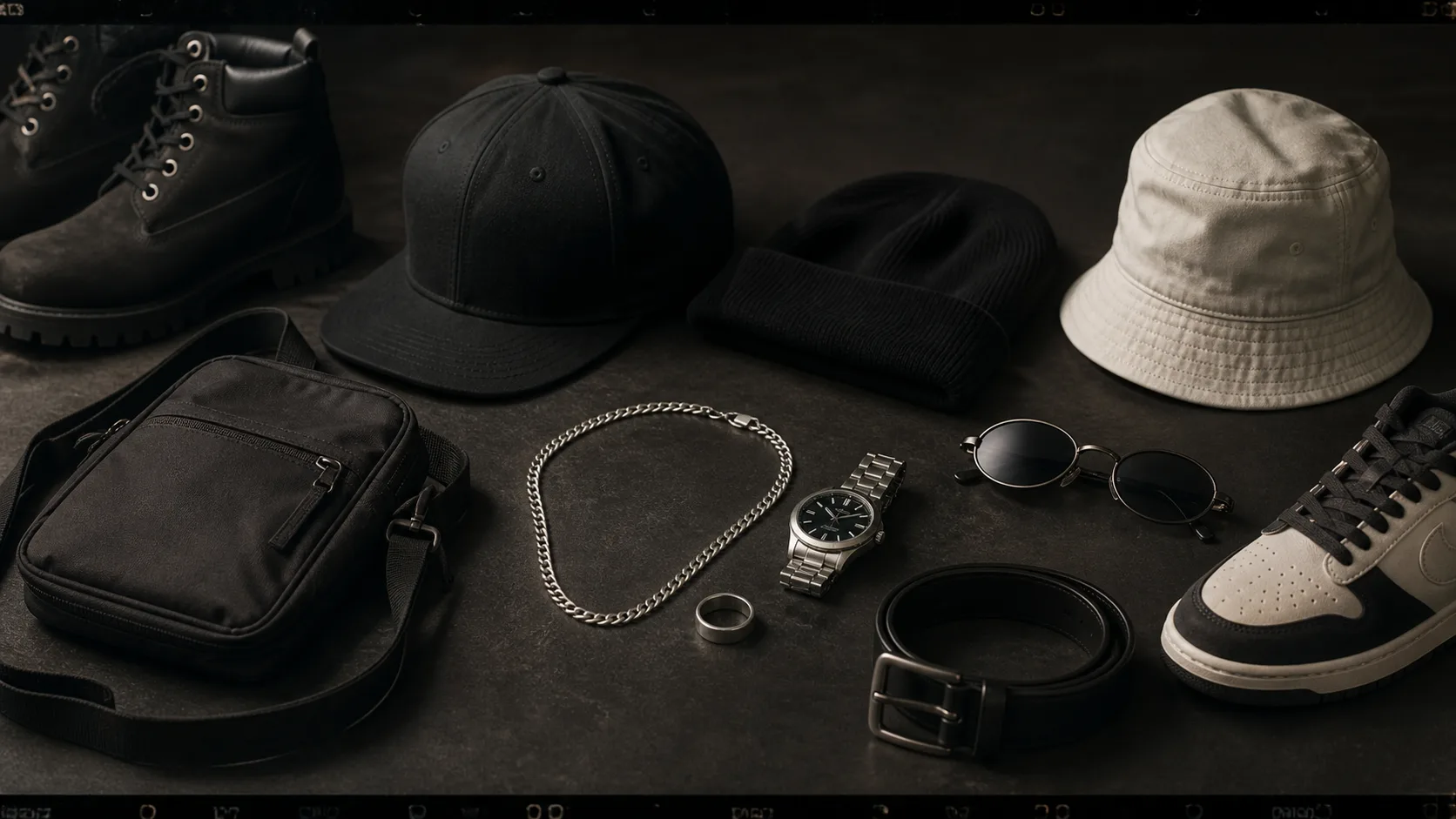
Visible 1990s hip-hop accessories included fitted-style caps, knit caps, bucket hats, sunglasses, chains, pendants, rings, earrings, watches, belts and practical bags. Shoes also functioned as major outfit details, from sturdy work boots to basketball sneakers and clean low-tops. The selection changed by region, decade phase, artist, weather and media setting. Some looks were restrained; highly visible stage or video jewelry should not be treated as an everyday requirement.
01
Accessories performed four different jobs
A team-related hat, personal pendant or repeated eyewear shape could make affiliation or individual continuity visible.
Knit caps supplied warmth, belts secured trousers, watches kept time and bags carried practical objects.
A hat completed the top line; a watch or ring added a small point of weight; footwear stabilized wide trousers.
Metal, lenses and contrasting trim reflected light and remained visible in close-ups or under performance lighting.
One object could do several jobs. A cap might be practical, culturally meaningful and compositionally important. Meaning also changed when an object moved from neighborhood use into an album cover, advertisement or global tour.
02
A directory of the decade's recurring details
A firm crown and flat or curved brim created a strong upper line. Team and city meaning could matter as much as color.
Cold-weather function suited hoodies, work jackets and heavy denim. Depth and cuff affected the head shape.
A softer brim created a different outline from a cap and appeared across music, sport and casual wardrobes.
Length, link scale and pendant size determined whether jewelry sat quietly at the collar or became the focal point.
Small metal details registered in portraits and gestures. Quantity and scale ranged widely.
A watch combined function with a visible signal of finish, technology or success.
Oval, rectangular and other lens shapes changed expression and introduced polish or futuristic contrast.
Usually functional, the belt became more visible as tops shifted, jackets opened or buckles gained scale.
Small shoulder and waist-carried bags existed as practical storage, though shape and popularity varied by scene.
Lacing, sole volume, material and condition made shoes a central accessory even when the clothing stayed plain.
These details sit inside a larger clothing system. Review 90s Hip-Hop Fashion for decade phases and regional context.
03
The camera rewarded contrast and reflection
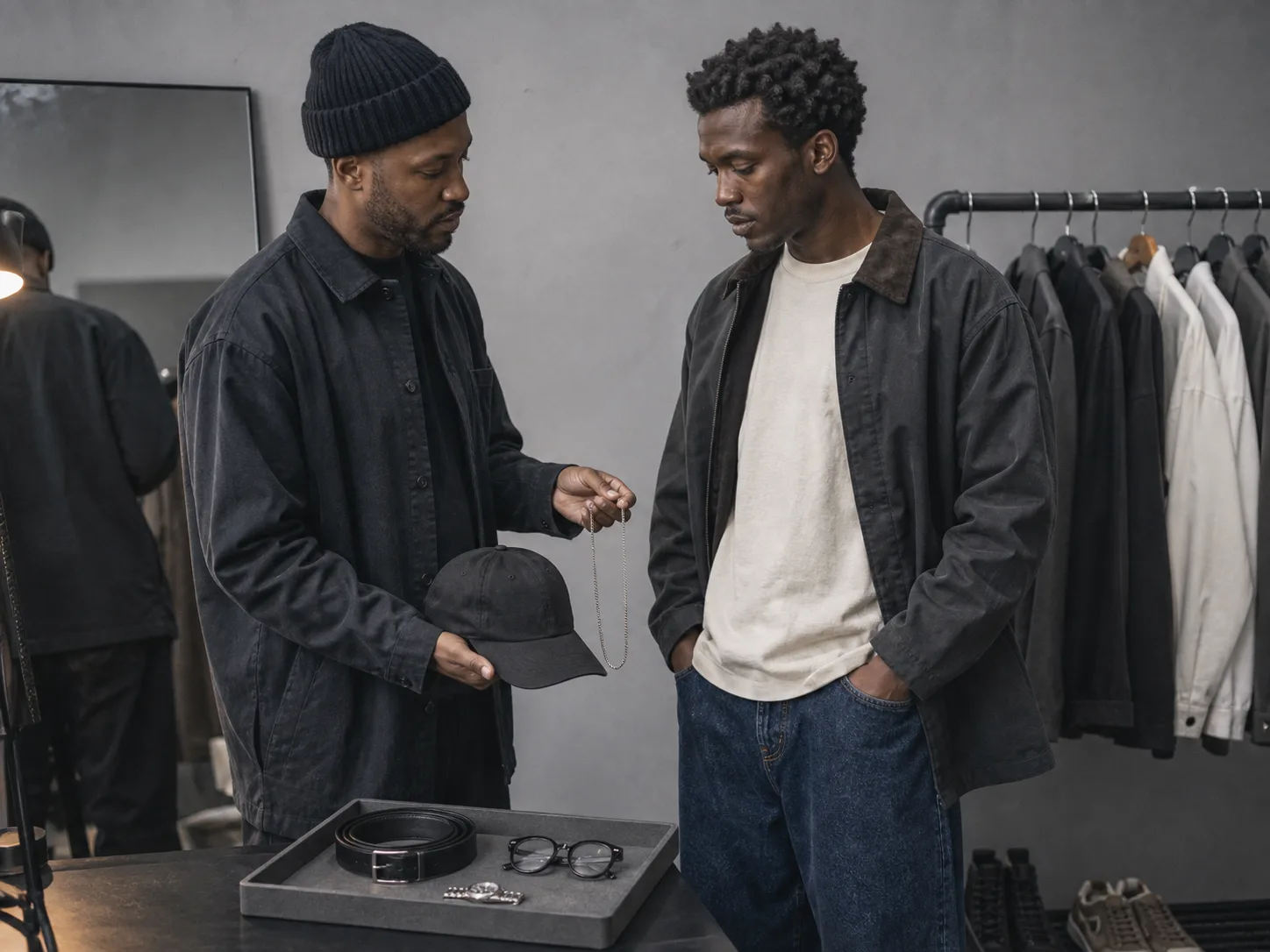
Stage lights and video close-ups made metal, polished lenses and bright shoe panels highly legible. A large chain could carry a visual role that a small textile detail could not. That does not prove the same scale was typical away from performance.
Portrait crops also change memory. A chest-up photograph emphasizes hat, eyewear and jewelry while removing the trouser and shoe relationships that balanced the complete outfit. A full-body frame may reveal that a prominent chain was only one accent inside a quiet tonal look.
Stylists considered movement and sound as well as appearance. Heavy pieces behave differently during performance, and reflective objects can interfere with a planned light. The result was often a negotiated image rather than an accidental pile of possessions.
04
Region and period changed accessory language
Cold-weather cities made knit caps and sturdy boots practical. Team hats could connect a wearer to a place, sport or adopted visual identity. Sunglasses and lighter headwear behaved differently in warmer settings. Southern scenes developed their own combinations of polish, jewelry and sports reference rather than following one national schedule.
Early-90s styling retained coordinated color and graphic energy from the previous decade. Mid-decade workwear often made hats, boots and one metal accent especially forceful. Late-90s imagery expanded technical eyewear, footwear and visible luxury as clothing length and scale moved toward the early 2000s.
These are broad tendencies, not ownership rules. Touring, migration, magazines and television moved details rapidly between cities. Specific claims require dated, located evidence.
05
A photograph cannot authenticate value
Color and shine do not prove gold, silver, plating, stone type or price. Lens distortion and compression alter size. Reproductions can resemble older products, and custom pieces may lack a public catalog record. A responsible caption describes what is visible unless documentation supports more.
Find the original image, date, photographer, production credit and higher-resolution views.
Seek maker records, receipts, hallmarks or qualified physical testing rather than visual guesses.
Require a documented chain of ownership; a reseller story alone is not evidence of celebrity use.
Use an appropriate independent appraiser. Editorial discussion is not an appraisal or guarantee.
Counterfeit and misattributed objects can carry financial risk. BAAM Boys does not authenticate accessories or memorabilia from photographs.
06
Three rules prevent accessory overload
- Choose one lead. Let a cap, glasses, chain or watch become the first detail noticed.
- Add one support. Use a smaller ring, belt or bag that serves a practical or balancing role.
- Repeat one element. Echo metal tone, leather color or off-white between the accessory and outfit.
Stop when the hierarchy is clear. More recognizable symbols do not make a look more historically accurate. The clothing should already work before accessories are added.
07
Modern accessory systems for three outfits
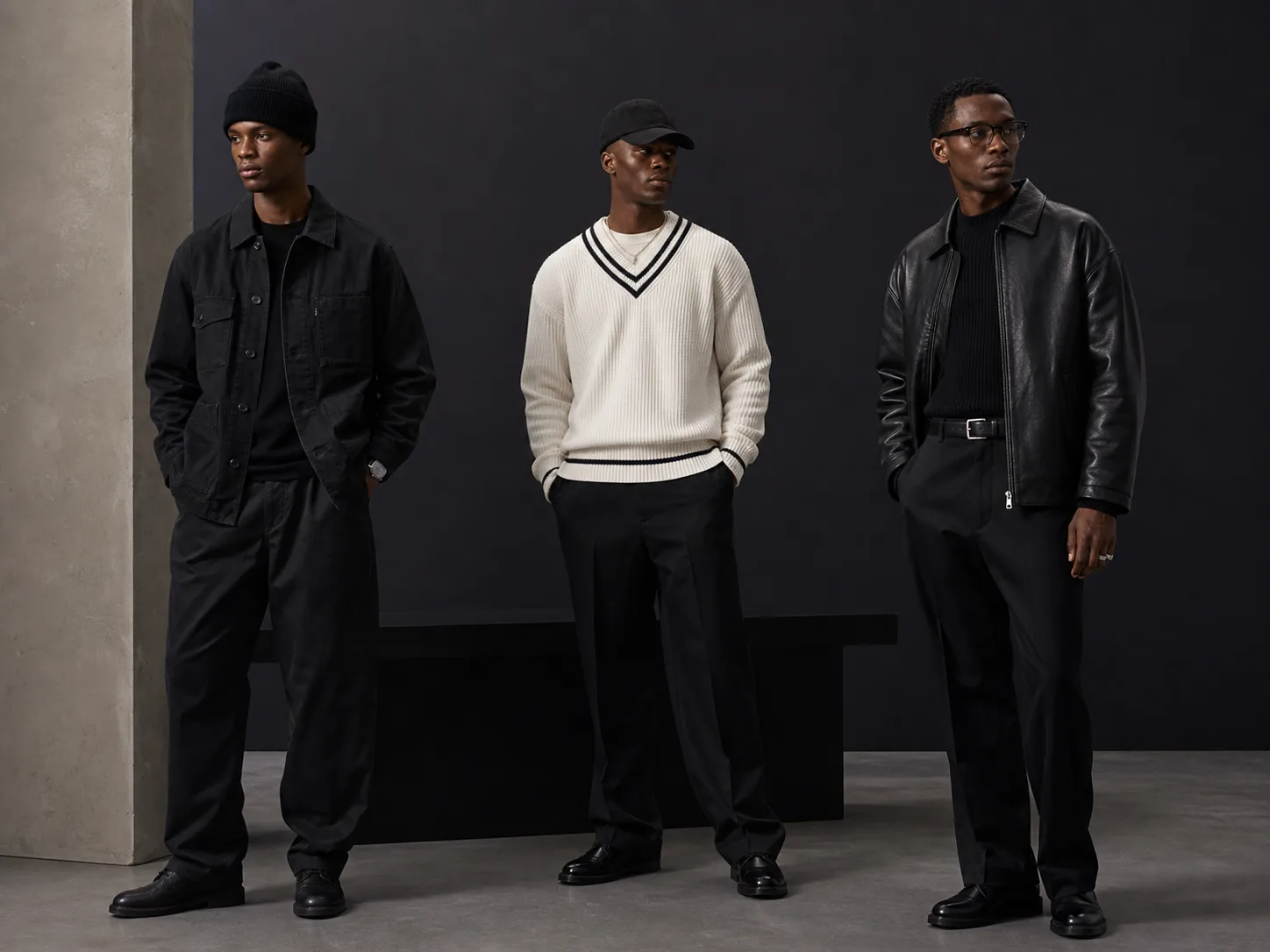
Workwear: dark knit cap and simple watch with a utility jacket, knit and relaxed trousers. The hat finishes the top; the watch is quiet support.
Sports-prep: plain cap and modest chain with a contrast knit or varsity layer. Keep the footwear clean and avoid another large focal point.
Polished leather: understated glasses, one ring and a clean belt with dark leather, fine knit and pleated trousers. Repeated black leather unifies the details.
Use objects that suit your routine and cultural relationship, not a costume checklist. Outfit-level guidance appears in 90s Hip-Hop Outfit Ideas for Men.
08
Care follows material, not appearance
Store hats without crushing the crown and follow fabric-specific cleaning guidance. Keep eyewear in a protective case and avoid abrasive wiping. Watches, plated jewelry, leather and stones require different care; unknown materials should be handled conservatively.
Check bag straps, belt holes and jewelry clasps for wear. Heavy pendants or earrings can be uncomfortable, and metal sensitivity varies. If an object causes skin irritation, stop wearing it and seek appropriate advice rather than relying on a fashion article.
Evidence trail
Sources & Further Reading
These references support the historical, cultural or care-related claims in the guide. Outfit combinations and fit recommendations are BAAM Boys editorial judgment unless specifically attributed.
- The Museum at FIT — Fresh, Fly, and Fabulous: Fifty Years of Hip Hop Style
Curatorial overview connecting hip-hop clothing to community, customization, aspiration and fashion-industry influence.
- Smithsonian NMAAHC — Five Things to See: The Fashion of Hip-Hop
Collection-based examples of garments, jewelry, photographs and sneakers used to document hip-hop style.
- The Metropolitan Museum of Art — Superfine: Tailoring Black Style
Institutional context for Black dress, identity, tailoring and self-presentation across time.
Detail questions
90s hip-hop accessories FAQ
What hat works with a 90s hip-hop outfit?
A plain fitted-style cap, knit cap or bucket hat can work. Choose shape according to weather, outfit direction and the upper silhouette rather than treating one hat as mandatory.
Were large chains required for 90s hip-hop style?
No. Highly visible jewelry appeared in performance and publicity, but scale varied greatly. Many effective outfits used a modest chain, watch or no jewelry.
Can jewelry material be identified from an old photo?
Usually not with confidence. Lighting and image quality alter color and shine. Documentation, hallmarks or qualified physical examination are stronger evidence.
How many accessories should a modern outfit use?
There is no fixed number, but one lead accessory and one or two quiet supporting details usually preserve hierarchy.
Are sneakers considered accessories?
They are footwear, but their color, sole volume, lacing and cultural association often perform an accessory-like role in the complete composition.