A wardrobe built from decisions
Black Men's Fashion Guide: Build Style Around Your Actual Life
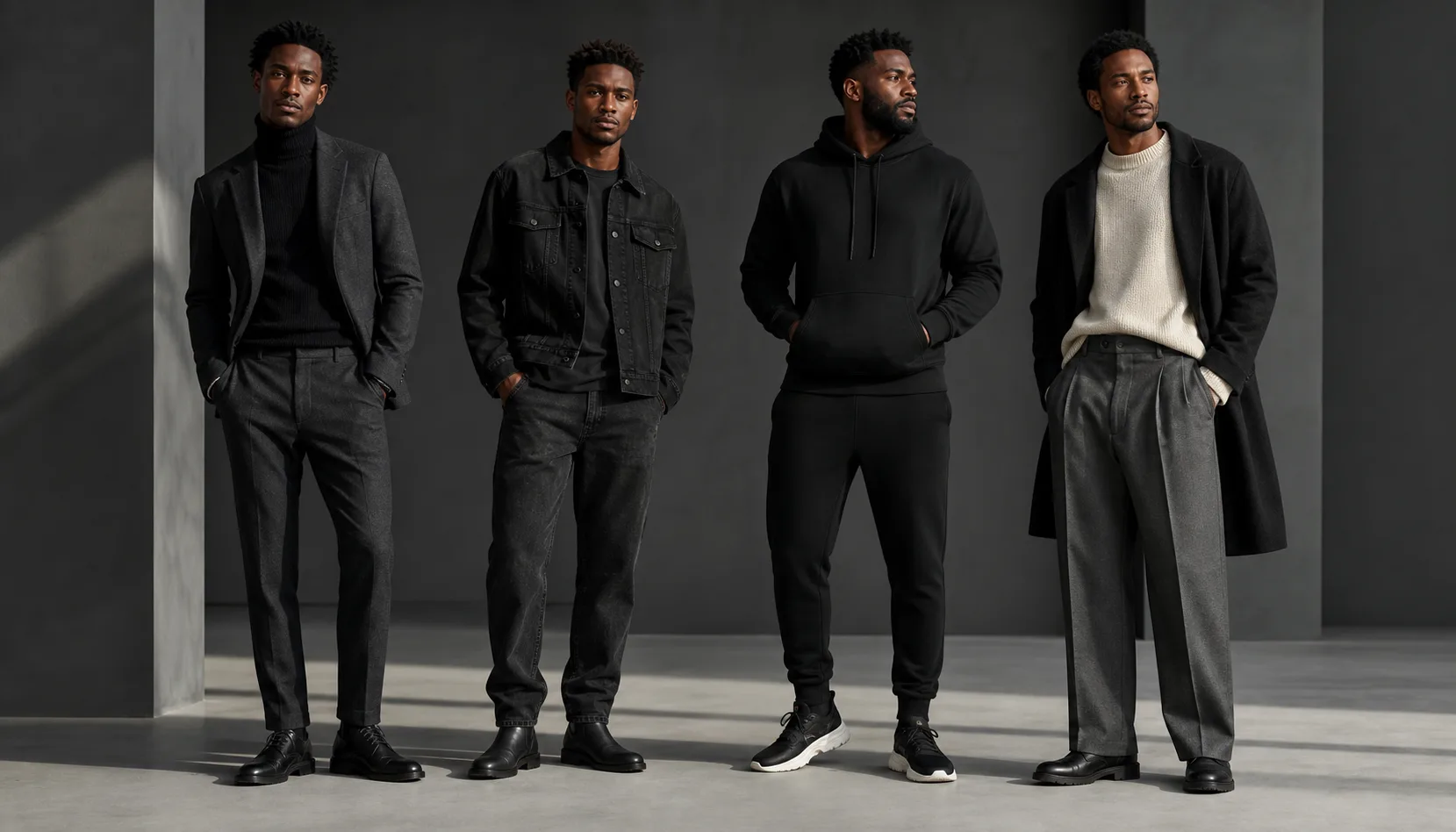
Black men's fashion is not one silhouette, palette or level of formality. It includes tailoring, denim, workwear, sportswear, street style, ceremonial dress and countless regional traditions. A useful wardrobe respects that range while giving each garment a clear job, fit relationship and reason to stay.
Quick answer
How can a Black man build a strong wardrobe?
Map the settings that fill your month, choose a preferred silhouette, and buy versatile foundations for the most frequent situations. Prioritize trousers, outer layers and footwear because they define the outline. Add culturally meaningful, vintage or statement pieces after the base works. Test colors on your own complexion in daylight rather than following universal skin-tone rules.
Work, travel, worship, social plans, weather and care capacity set the requirements.
Straight, relaxed, tailored or oversized should be a chosen relationship.
Reliable trousers, layers and shoes make expressive pieces easier to use.
Black fashion history informs the wardrobe without becoming a costume brief.
01 / Inventory life
Count occasions before counting garments
Review the previous month. How many days required work clothes, long walking, formal presentation, casual social wear, weather protection or travel? A wardrobe should reflect those proportions. Five dramatic jackets cannot solve a week of office trousers, and several collectible sneakers cannot replace one weather-ready pair.
Create three columns: frequent, occasional and rare. Frequent needs deserve the highest fit standards and maintenance budget. Occasional clothing should combine with the foundation. Rare ceremonial or highly formal pieces may be worth owning, renting or borrowing depending on culture, frequency and personal preference.
Next, identify friction. Perhaps every shirt works only with one trouser, or trousers fail over existing shoes. Maybe jackets fit the chest but not the shoulder, or everything requires dry cleaning. These observations are more valuable than a generic essentials list because they reveal the next useful purchase.
02 / Decision stack
Judge every piece through six filters
Name where, when and how often the garment will be used.
Check hard-to-alter areas first: shoulder, armhole, rise, seat and thigh.
Relate garment length and volume to trousers, footwear and outer layers.
Understand weight, breathability, durability, care and how the cloth ages.
Build at least three outfits using clothing and shoes already owned.
Decide whether history, identity or personal memory makes the piece worth keeping.
A low score in one area does not always reject an item. Ceremonial clothing may be infrequent but meaningful. A vintage jacket may require care yet supply singular character. The point is to see the tradeoff clearly.
03 / Foundation
Build a flexible nine-piece engine
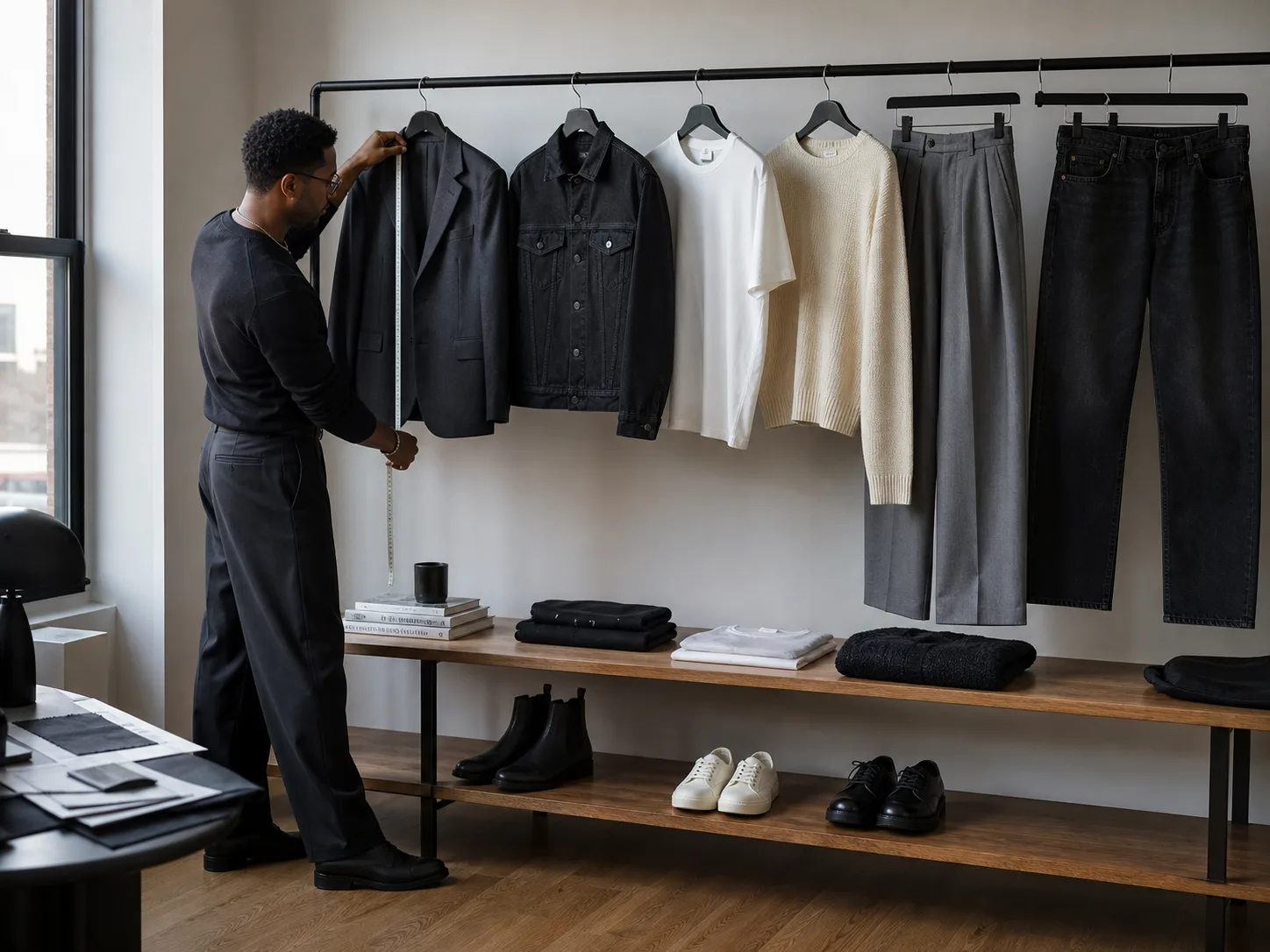
Start with two trousers: dark denim and a tailored or chino option. Choose three upper-body foundations: opaque tee, knit or polo, and overshirt. Add a casual jacket, one more structured or weather-capable outer layer, a clean casual shoe and a polished or rugged shoe.
The exact colors can change, but a controlled palette improves interchangeability. Deep gray, black, white and cream offer clear value shifts; navy, brown, olive and stronger color can enter according to taste. Texture prevents neutrals from looking flat.
A foundation should not suppress Black expression. It creates a stable field for a patterned shirt, heirloom jewelry, heritage garment, bold sneaker or vintage sports piece. When every basic competes for attention, meaningful items lose their distinction.
04 / Fit and proportion
Fit describes movement and shape—not tightness
A well-fitting relaxed jacket may extend at the shoulder; a badly fitting slim jacket may pull despite matching the label. Check whether the intended line remains while standing, sitting, reaching and walking. The most difficult areas to alter—jacket shoulders and armholes, trouser rise and seat—should work before sleeve and hem refinements.
Proportion emerges between pieces. A cropped jacket can lengthen a wide trouser. A longer coat can unify several layers. A broad padded sneaker needs enough trouser opening; a narrow shoe may sharpen a fuller leg. View the body from distance and at waist-height camera angle rather than relying on a close mirror.
Oversized clothing needs anchors. Reveal a waistband, control a hem, repeat one strong line or use footwear with sufficient weight. Slim clothing needs ease. Buttons should not pull, pockets should lie flat and movement should not distort the garment.
05 / Four wardrobe languages
Mix systems only after each one makes sense
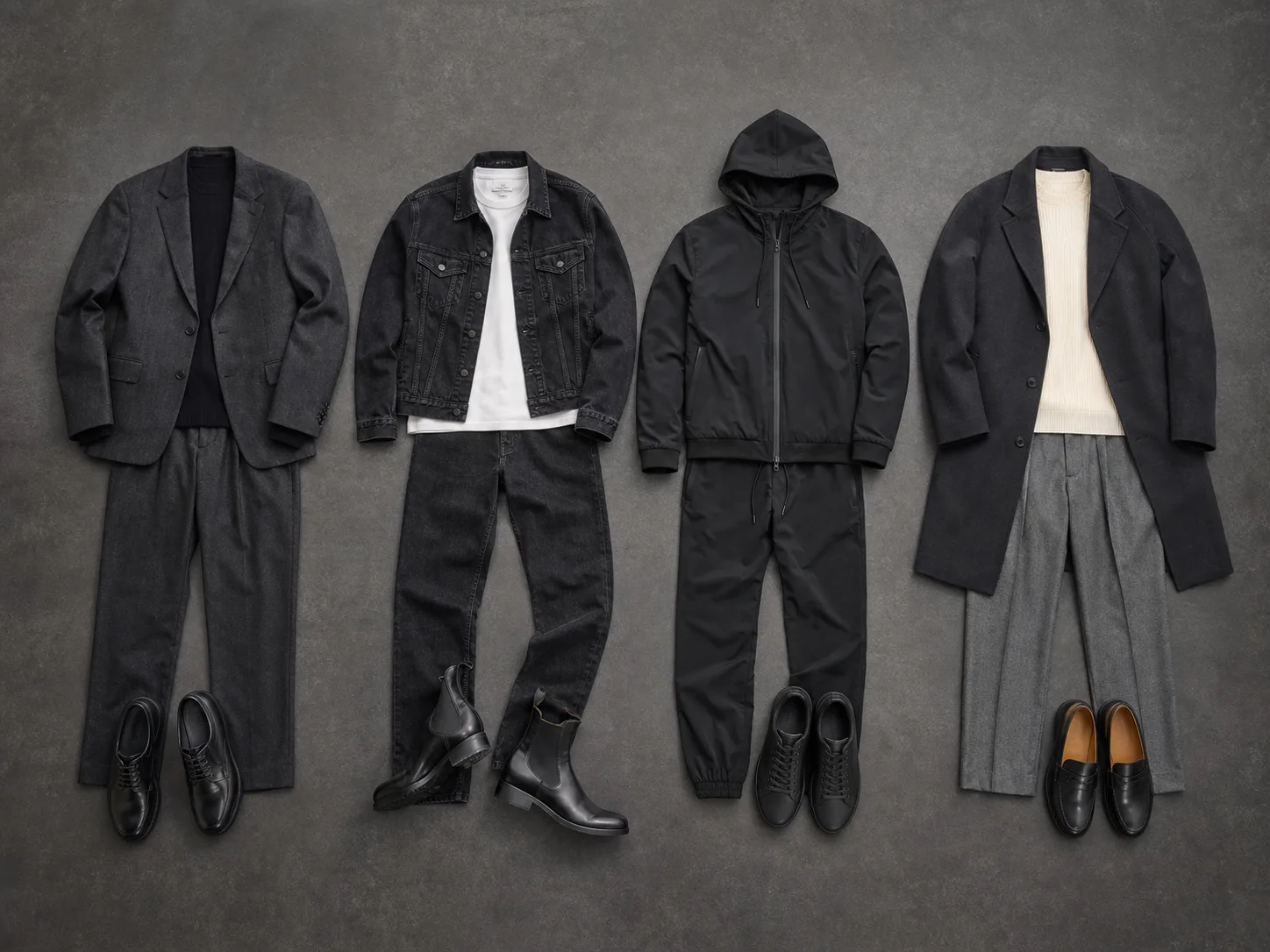
Soft tailoring uses drape, lapels and clean shoes to create presence without stiffness. Denim uses wash, seam and aging; matching jacket and jeans can form a suit-like column or contrasting washes can separate layers. Sportswear values movement, technical function and coordinated color. Knitwear brings texture and a softer frame around the face.
A hybrid look needs a bridge. Tailored trousers and sneakers connect through a simple knit. A denim jacket can sit over pleated trousers when both share relaxed volume. A sports shell can work with wool trousers if color is controlled and footwear acknowledges the technical layer.
Do not add categories simply to prove range. Choose one leader and one supporting contrast. Our Casual Outfits guide offers twelve practical combinations, while the Hip-Hop Style hub explores sportswear and cultural context.
06 / Color and complexion
Test real cloth in real light
Black skin is not one undertone or depth, so lists declaring universal “best colors” flatten the people they claim to help. Hold fabric near the face in daylight and observe clarity, warmth and contrast. Decide whether that effect supports your intention. The same charcoal may lean blue in wool and brown in washed cotton.
Use value as a stronger starting point than color name. A light shirt beneath a dark jacket frames the face and separates layers. A dark monochrome look creates length, especially when textures remain distinct. Mid-tone outfits feel softer and can gain focus through dark footwear or a lighter neckline.
Strong colors work when their role is clear. Let a saturated coat lead while trousers and shirt support it, or repeat a smaller accent in socks or jewelry. Matching is not a moral achievement. Coordination comes from relationship, not identical dye lots.
07 / Culture and reference
Study the source before recreating the image
Black men's fashion has developed through work, worship, migration, music, sport, tailoring, resistance, entrepreneurship and everyday community life. A decade photograph should not be reduced to a shopping list. Ask who is pictured, where, under what conditions, and whether the garment was ordinary, aspirational, ceremonial or performative.
Modern adaptation works best when it preserves a relationship: the coordination of an athletic set, the volume of 1990s denim, the confidence of broad tailoring or the texture contrast of leather and knit. Copying every prop can become costume. The 90s Black Men's Fashion guide shows how one period included multiple contexts rather than one rapper uniform.
Symbols require care. Religious, fraternal, regional and ethnic garments are not generic accessories. Understand meaning and permission. Personal style grows richer through knowledge, not through collecting visual signals without context.
08 / Buy less, learn more
Make each purchase produce evidence
Measure a garment you already like and compare actual dimensions online. Read fiber and care information. Inspect return terms. On arrival, try the item with three outfits and move naturally. Photograph front, side and back. If the problem is a straightforward hem or sleeve, price alteration before deciding.
- Buying for an imagined life. Put frequent situations first.
- Following a size instead of a line. Measurements and movement reveal fit.
- Keeping duplicates with no distinct job. Retain the best example or define the difference.
- Chasing identity through labels. Construction, use and context matter more than recognition.
- Ignoring care. Maintenance cost and time belong in the purchase decision.
Track what earns wear for one season. Cost per wear is imperfect—meaningful clothing is not merely a spreadsheet—but repetition identifies reliable shapes and colors.
Continue the cluster
Men's Style specialist guides
Evidence trail
Sources & Further Reading
These references support the historical, cultural or care-related claims in the guide. Outfit combinations and fit recommendations are BAAM Boys editorial judgment unless specifically attributed.
- Federal Trade Commission — Clothes Captioning: Care Labeling Rule
Official explanation of garment care labels and the evidence manufacturers need for care instructions.
- The Metropolitan Museum of Art — Superfine: Tailoring Black Style
Institutional context for tailoring, Black identity, distinction and self-presentation.
- The Museum at FIT — Fresh, Fly, and Fabulous: Fifty Years of Hip Hop Style
Curatorial context for sportswear, designer fashion, customization and individual expression.
Quarterly wardrobe audit
Measure use before adding pieces
| Audit | Question | Action |
|---|---|---|
| Occasion | Which real setting is underserved? | Buy for that gap only. |
| Fit | Which pieces stay unworn because they restrict or collapse? | Alter, replace or release. |
| Combination | Which item works with fewer than two others? | Stop building around an isolated purchase. |
| Condition | What needs repair, cleaning or resoling? | Maintain before shopping. |
Direct answers
Black men's fashion FAQ
What clothes should a Black man have in his wardrobe?
Start with pieces matched to daily life: two versatile trousers, three useful tops, casual and structured outer layers, and two footwear options. Add expressive and culturally meaningful clothing once the foundation combines reliably.
Which colors look best on Black men?
There is no universal list because Black complexions and undertones vary widely. Test actual fabric near the face in daylight and use value, texture and intended contrast to decide.
Should men's clothes be slim or oversized?
Either can work. Evaluate shoulder, rise, seat, length, movement and the relationship to footwear. Relaxed clothing needs anchors; close-fitting clothing still needs ease.
How can I make my wardrobe more personal?
Notice recurring proportions, reference your cultural and personal history with knowledge, alter pieces you already value and let one meaningful item lead otherwise dependable foundations.
How often should I buy new clothes?
Buy when a clear wardrobe need exists and the new item combines with what you own. A fixed shopping schedule is less useful than reviewing wear, condition, fit and changing life requirements.