Everyday style without guesswork
Black Men's Casual Outfits: 12 Formulas That Work in Real Life
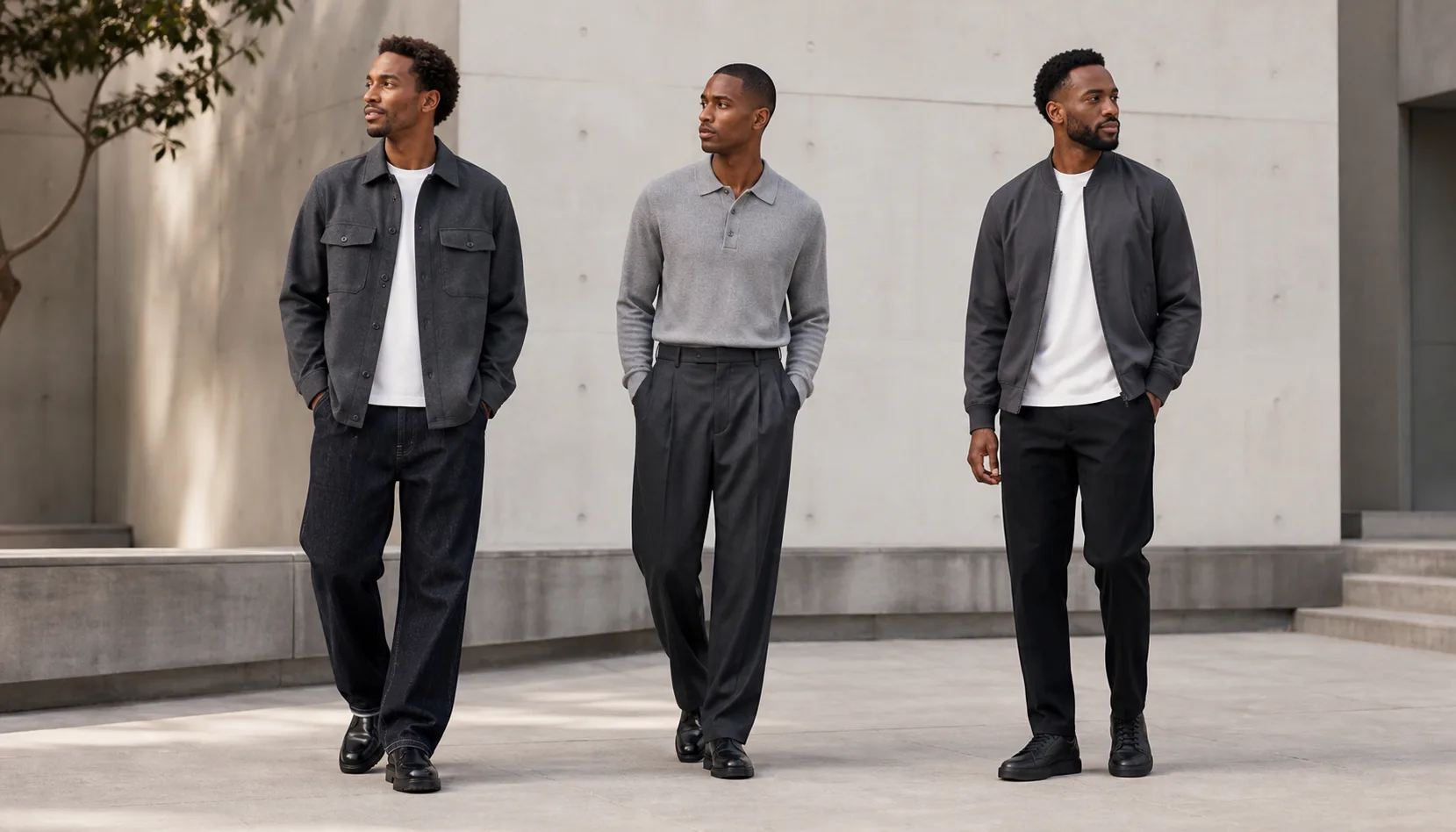
The best casual wardrobe is not a pile of statement pieces. It is a small set of reliable relationships: a shirt with the right weight, trousers with a controlled line, footwear that suits the hem, and one layer that makes the outfit feel finished. These formulas cover ordinary days without erasing personality.
Quick answer
What makes a casual outfit look put together?
A strong casual outfit has a clear silhouette, clean garment condition, compatible visual weight and one intentional finishing decision. Start with trousers that fit through the waist, seat and thigh. Add a top whose length supports the rise, choose footwear wide or slim enough for the leg opening, then introduce a layer or accessory only if it improves the balance.
Decide whether the line is straight, relaxed or softly tailored.
Use light and dark to direct attention, not divide the body randomly.
Denim, knit, canvas and leather keep neutrals visually distinct.
Weather, walking and the destination determine the final pieces.
01 / Start below the waist
Choose the trouser before the interesting layer
Trousers determine more of a casual silhouette than most men expect. A straight dark jean creates a stable vertical line and accepts low-tops, boots or loafers. A pleated trouser introduces drape and room through the thigh, allowing a knit polo or tee to look considered instead of formal. Chinos occupy the practical middle, but their cut matters: a rigid narrow chino can make the entire outfit feel dated, while a clean straight leg gives footwear space.
Check the rise before judging the waist. A higher rise can lengthen the leg and keep a tucked shirt secure. A lower rise may suit a longer untucked tee, but it can create an empty section through the torso if the top is cropped. Sit, walk and view the side profile. Pulling across the hip, collapsing pockets and fabric trapped beneath the seat are fit problems, not character.
The hem is a decision. A slight break feels relaxed, a clean no-break looks sharper, and a deliberate stack connects to specific streetwear eras. Avoid accidental bunching that hides the shoe and collects dirt. Our 90s Baggy Jeans guide goes deeper on controlled volume.
02 / The formula board
Twelve combinations, four levels of polish
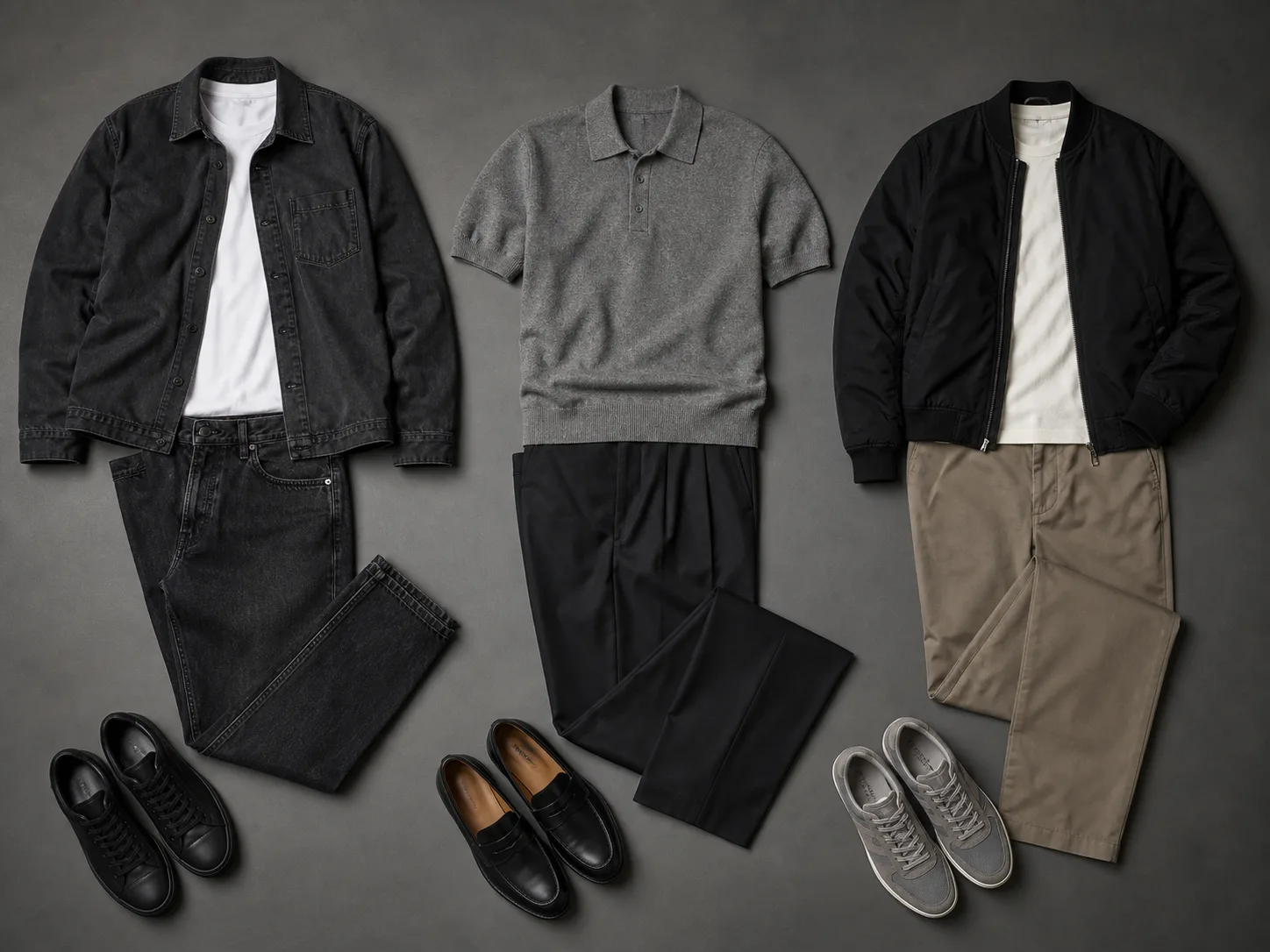
Heavyweight tee + straight jeans + clean low-tops. Add an overshirt when the temperature drops.
Plain sweatshirt + relaxed chinos + supportive sneakers. Keep the cuffs and neckline in good condition.
Knit polo + pleated trousers + plain leather shoes. Use a soft jacket if meetings appear.
Fine knit + dark denim + suede or smooth leather footwear. Choose low contrast and rich texture.
Breathable tee + drawstring trouser + overshirt + comfort runner. Carry one weather layer.
Monochrome base + cropped jacket + deliberate shoe. Let proportion create interest.
Open-collar shirt + loose linen-blend trouser + minimal low-top or sandal appropriate to the venue.
Long-sleeve tee + dark denim + leather bomber + grounded shoe with enough visual weight.
Track jacket + straight trouser + clean trainer. Limit colors so the set feels edited.
Canvas jacket + sturdy tee + relaxed denim + practical footwear. Mix fades instead of matching them perfectly.
Unstructured blazer + crew tee + pleated trouser + low-profile sneaker. Keep the tee opaque.
Charcoal top + washed black trouser + black shoe. Separate pieces through texture and value.
03 / Build a small engine
Seven foundations create most of the rotation
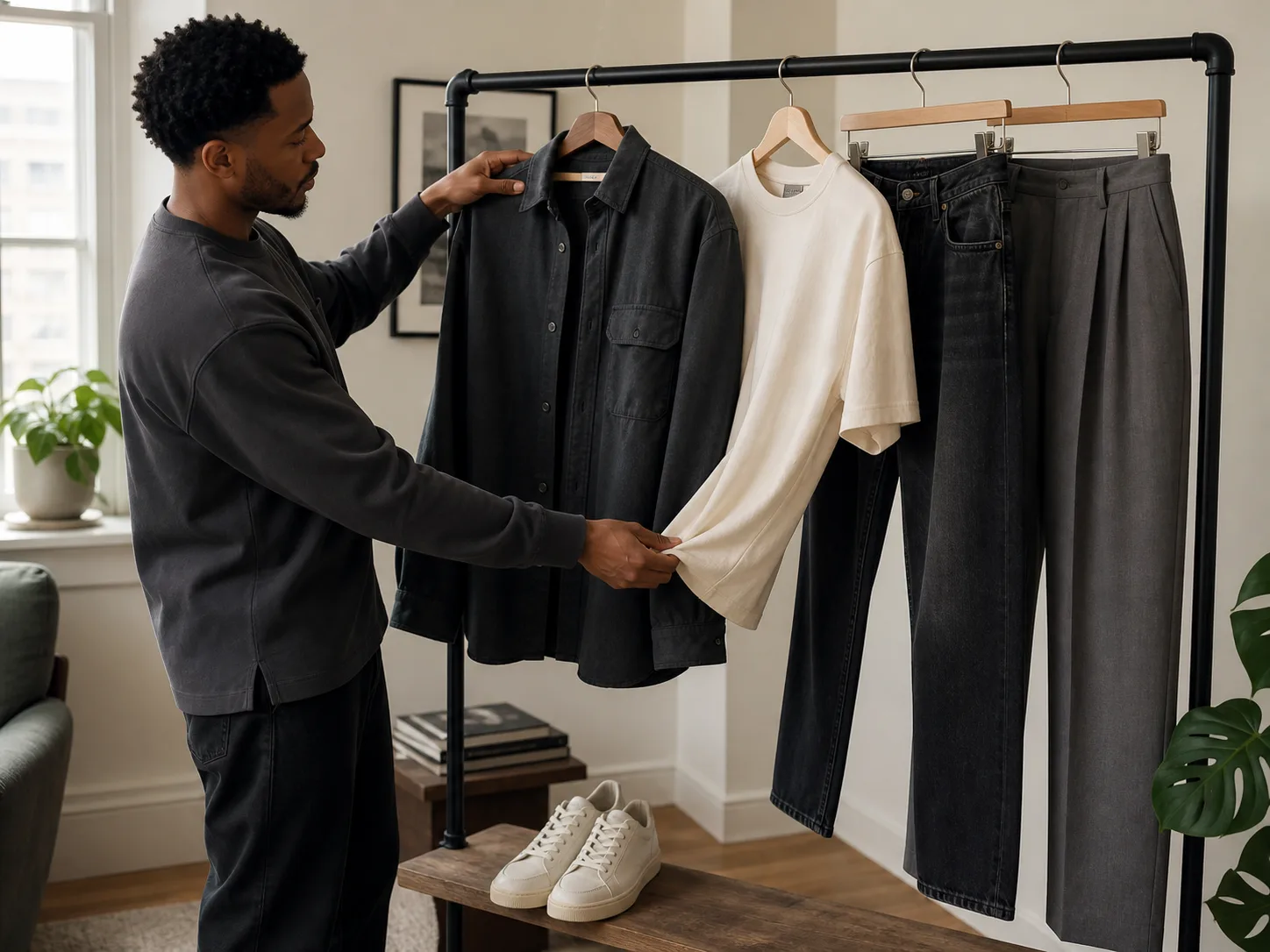
Begin with two trousers: one dark denim and one softer tailored or chino option. Add three tops with different functions: an opaque tee, a knit polo or fine crew, and a buttoned overshirt. Finish the foundation with one clean casual shoe and one more polished or weather-capable pair.
These pieces should not all be memorable. The tee must repeat without announcing itself. The trousers should work with several shoe shapes. The overshirt should close comfortably over a layer and look equally sensible open. Reliability gives a vintage jacket, graphic piece, jewelry choice or culturally specific reference enough room to matter.
Before buying, make three outfits with the item and footwear you already own. If it works only with a future purchase, it is not solving today’s wardrobe. Photograph combinations under ordinary light; shop mirrors and dramatic fitting-room angles can disguise proportion.
04 / Color around skin, not rules
Use contrast as an adjustable tool
Black men have an enormous range of undertones and complexions, so universal declarations about “best colors” are rarely useful. Test cloth near the face in daylight. A gray can lean blue, green, purple or brown; the same color name may behave differently across fabrics. Notice whether the garment makes the face look clear and present, then decide whether that effect suits the occasion.
Deep gray, black, cream and white form a flexible base because their values are easy to control. Earth tones bring quiet warmth. Saturated color works best when its job is clear: a jacket that leads the outfit, a knit that frames the face, or one smaller accessory that breaks a neutral field. Repeating a color twice can connect the look, but the repetitions do not need to match exactly.
Monochrome requires variation. Pair matte washed denim with smoother leather, or soft knit with crisp cotton. If every surface has the same darkness and finish, the silhouette can disappear. A cream tee at the neckline, silver accessory or lighter sole can create separation without turning the outfit into high contrast.
05 / Read the whole line
Top length and shoe size resolve the silhouette
A casual top should relate to the trouser rise. A long tee over a low rise may stretch the torso visually; a slightly shorter heavyweight tee above a mid or higher rise can establish balance. Cropped does not need to expose skin. It means the hem ends with intention rather than drifting halfway down the thigh.
Footwear carries the final visual weight. Wide denim over a tiny shoe can feel unstable unless the contrast is deliberate. Narrow trousers above a massive padded shoe can create the opposite problem. Look at the sole width, collar height and toe volume as shapes. The Sneakers desk provides deeper construction and styling guidance.
Outer layers change both lines. A short bomber emphasizes the leg; a thigh-length coat adds a strong vertical; an overshirt connects top and bottom without much structure. Try the layer closed as well as open. If it works only in one posed position, it may fail during the day.
06 / Groom the clothes
Condition is part of style
A simple outfit exposes maintenance. Remove lint from dark layers, address loose threads, keep collars flat and clean footwear according to its material. Overwashing can fade black garments and weaken fibers, while waiting too long allows odor and stains to set. Follow care labels, air pieces when appropriate and use a qualified cleaner for garments you cannot safely handle.
Store knitwear folded if hanging stretches the shoulder. Give shoes time to dry between wears. Rotate tees so one favorite does not collapse before the rest of the wardrobe. Alter trouser length once the preferred shoe is known; the same inseam will not meet every sole identically.
Personal grooming and clothing should support one another, but there is no single correct Black masculine presentation. Hair, facial hair, skin finish and accessories can be sharp, expressive, natural or minimal. The practical standard is care and intention, not conformity.
07 / Fix common failures
Diagnose the relationship before replacing everything
- The outfit feels unfinished. Add a functional layer, tuck or half-tuck only when it improves proportion, or introduce one restrained accessory.
- The outfit feels too formal. Replace the shirt with a quality tee, soften the jacket structure or use a clean low-top while retaining the trousers.
- The outfit feels juvenile. Reduce competing graphics, refine the trouser line and choose one deliberate sportswear reference.
- The outfit feels flat. Mix texture or shift one piece lighter rather than adding several bright colors.
- The outfit feels bulky. Establish one anchor: reveal the waist, shorten the outer layer or choose footwear with a cleaner profile.
Change one variable, then view the full outline. Buying a new wardrobe is rarely the first solution. Fit adjustments, a different hem, cleaner footwear or a better layer often restores pieces you already own.
Evidence trail
Sources & Further Reading
These references support the historical, cultural or care-related claims in the guide. Outfit combinations and fit recommendations are BAAM Boys editorial judgment unless specifically attributed.
- Federal Trade Commission — Clothes Captioning: Care Labeling Rule
Official explanation of garment care labels and the evidence manufacturers need for care instructions.
- The Metropolitan Museum of Art — Superfine: Tailoring Black Style
Institutional context for tailoring, Black identity, distinction and self-presentation.
- The Museum at FIT — Fresh, Fly, and Fabulous: Fifty Years of Hip Hop Style
Curatorial context for sportswear, designer fashion, customization and individual expression.
Rotation builder
Test a casual wardrobe over five real days
- Day one: trouser, tee and clean shoe establish the base.
- Day two: repeat the trouser with knitwear and a more polished shoe.
- Day three: change the leg shape and reuse the first layer.
- Day four: add weather-specific outerwear and test movement.
- Day five: use the strongest accessory without changing every other element.
The exercise exposes isolated purchases and shows whether pieces actually combine. Photograph each full outfit under similar light before deciding what the wardrobe lacks.
Direct answers
Black men's casual outfits FAQ
What are the essential pieces for a Black man's casual wardrobe?
Start with dark jeans, a second versatile trouser, an opaque tee, knit or polo, overshirt, clean casual shoes and a more polished or weather-ready pair. Choose colors and proportions that suit your life rather than a fixed racial formula.
How can a simple T-shirt and jeans look more stylish?
Use a tee with an intentional shoulder and hem, jeans that fit through the waist and thigh, and shoes compatible with the leg opening. Add texture through an overshirt, belt, watch or understated jewelry.
Do all-black casual outfits work?
Yes. Separate black and charcoal pieces through texture, material and value. Washed denim, matte cotton, knit and leather prevent the outfit from becoming one indistinct surface.
Should casual clothes be slim or oversized?
Either can work. Judge shoulder line, rise, seat, trouser opening and footwear together. Relaxed clothing should still have controlled length and a clear anchor; slim clothing should allow comfortable movement.
How many colors should a casual outfit use?
There is no mandatory number, but two or three connected colors are an easy starting point. A stronger accent is most effective when its role is obvious and the remaining pieces stay calm.