Fit Lab · Loose Denim
90s Baggy Jeans Outfits Need Shape, Not Just Size
The right pair has room through the rise and thigh, a deliberate leg line and a hem that works with the shoe. Buying several sizes larger cannot replace a pattern designed for movement and drape.
In one paragraph
How should men style 90s baggy jeans?
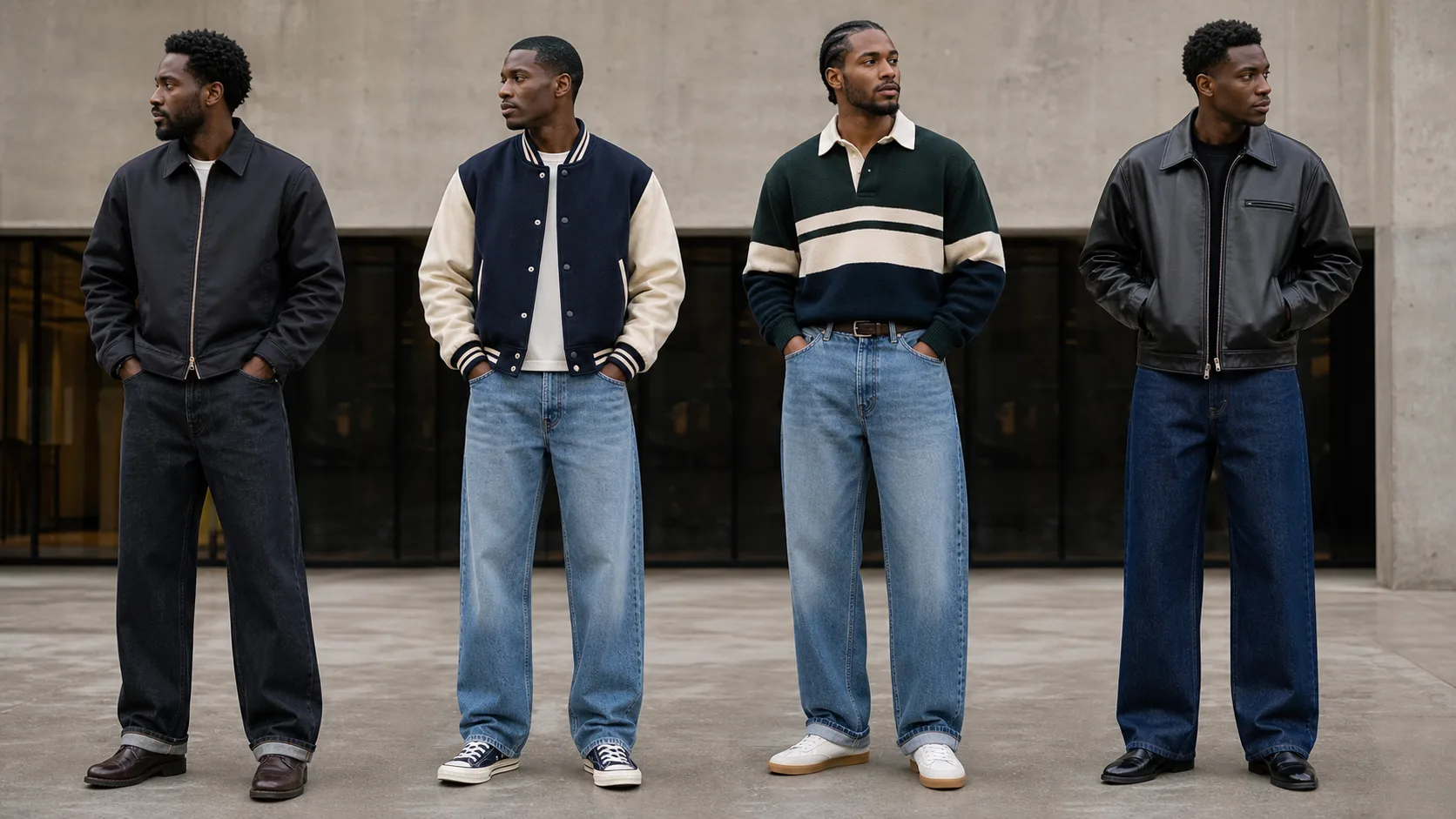
Start with loose jeans that fit securely at the intended waist, provide room through seat and thigh, and finish at a hem width your shoes can support. Pair them with either a compact structured jacket, a tucked or controlled-length knit, or one deliberately relaxed upper layer. Retro sneakers, boots and substantial loafers work according to the outfit direction. Keep the hem clear of the ground and avoid sizing up so far that the rise, pockets and waistband sit incorrectly.
01
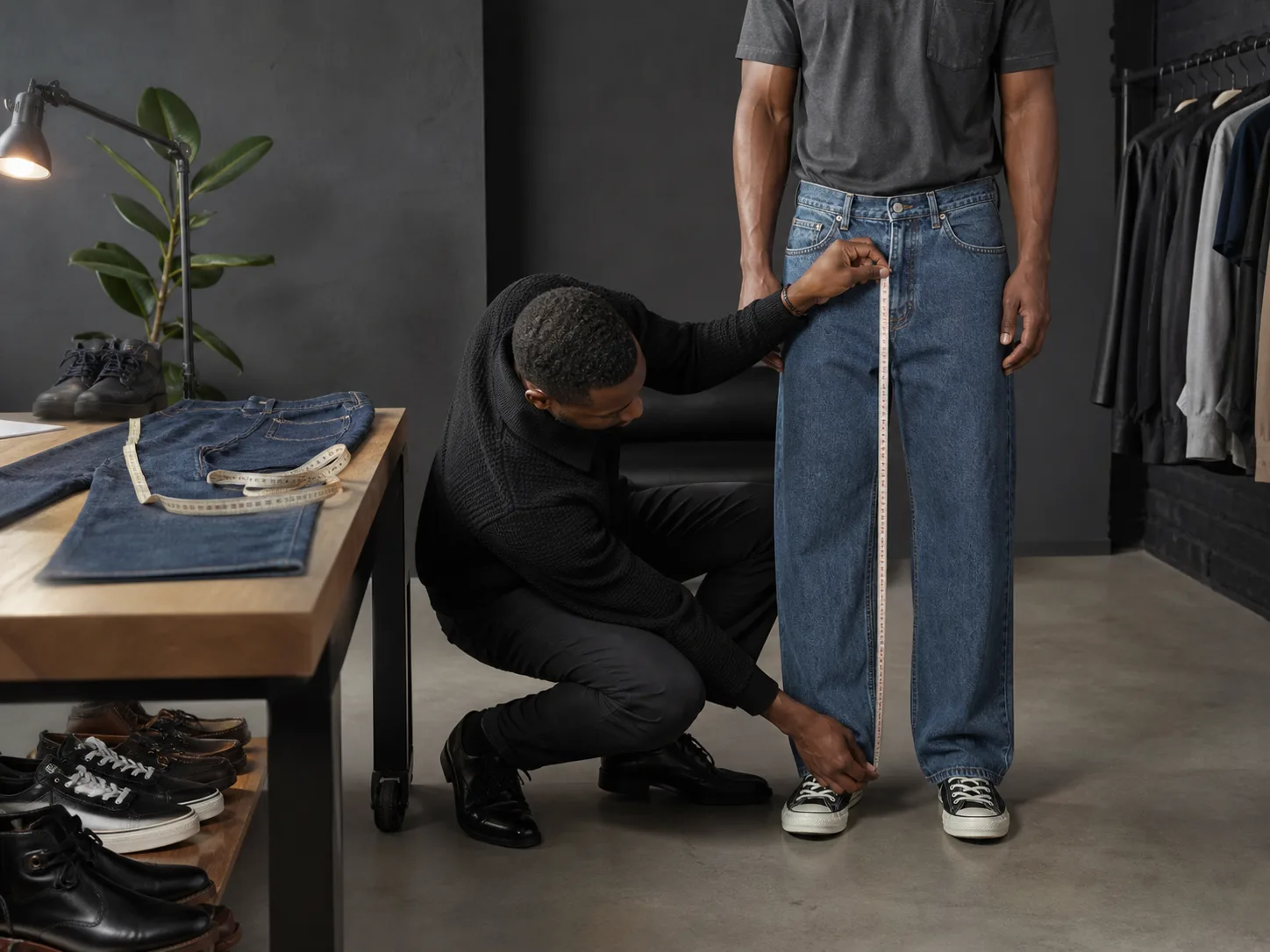
Six measurements define a useful loose jean
Measure where the jean is intended to sit. It should remain secure without relying on extreme belt tightening.
The distance from crotch seam to waistband affects comfort, torso length and where volume begins.
Room here allows sitting and movement. A tight thigh with a wide lower leg is a different silhouette.
Knee width shows whether the line remains straight, tapers or expands toward the hem.
The opening determines how much fabric falls over, beside or against the shoe.
Length controls break and stacking. The correct number depends on rise, shoe and intended waist position.
Back rise, seat shape and pocket placement also affect fit. Two jeans with identical waist and inseam can look completely different because pattern distribution changes. “Baggy” describes a relationship between body and garment, not a standardized size.
02
Measure a pair that already works
Lay a trusted jean flat without stretching it. Record waist across, front rise, thigh shortly below the crotch, knee, hem and inseam. Note fabric composition because rigid denim behaves differently from stretch cloth.
Compare seller measurements using the same method. Vintage tagged sizes may differ from current expectations, and prior washing or alteration changes the garment. Ask whether the waist was aligned, doubled and measured naturally.
Try candidate jeans with the shoes and upper layers you plan to wear. Sit, take stairs and make a long step. A secure waist and comfortable rise are non-negotiable; length and minor width may be alterable depending on construction.
03
Balance comes from three vertical points
A compact jacket ends near the waist or upper hip and exposes more of the long trouser line. A longer coat requires cleaner denim drape.
A tuck, short knit or visible base layer establishes where the torso stops. An uncontrolled long tee can make the whole outfit sag.
The shoe and hem create the final boundary. Boots support dense stacking; cleaner shoes often suit a controlled break.
Not every upper garment must be fitted. A roomy varsity jacket can work with baggy jeans when its hem is compact. A relaxed overshirt can remain open over a shorter base. The aim is hierarchy, not a rule that one half must always be slim.
04
Choose footwear by hem and visual weight
Retro basketball sneakers use padding and sole height to meet a wide opening. Work boots give heavy denim a firm base and suit rugged layers. Clean low-tops work when the jean is straighter or hemmed to avoid swallowing the shoe. Substantial loafers and derby-style shoes turn loose denim toward polished casualwear.
The hem should not drag underneath the sole, obscure traction or become a trip hazard. A cuff can solve temporary length but adds visual weight and may not suit every jean. Hemming preserves a clean line; retain enough length for the intended break.
Old sneakers can fail because foam and adhesive age in storage. For regular wear, choose structurally sound footwear and consult the Sneakers archive for material cautions.
05
Six baggy-jeans outfit formulas
Compact canvas jacket + heavyweight tee + dark loose denim + sturdy boot.
Waist-length varsity jacket + plain tee + medium-wash baggy jean + retro sneaker.
Rugby or polo knit, partially tucked + relaxed jean + clean low-top or loafer.
Short leather jacket + fine knit + wide dark denim + polished black shoe.
Substantial short-sleeve knit + lighter loose denim + low-profile sneaker.
Hoodie + lined work jacket + roomy dark jean + weather-capable boot.
The 90s Streetwear guide adds functional layering, while 90s Hip-Hop Outfit Ideas offers broader period combinations.
06
Adjust the lines, not the person's worth
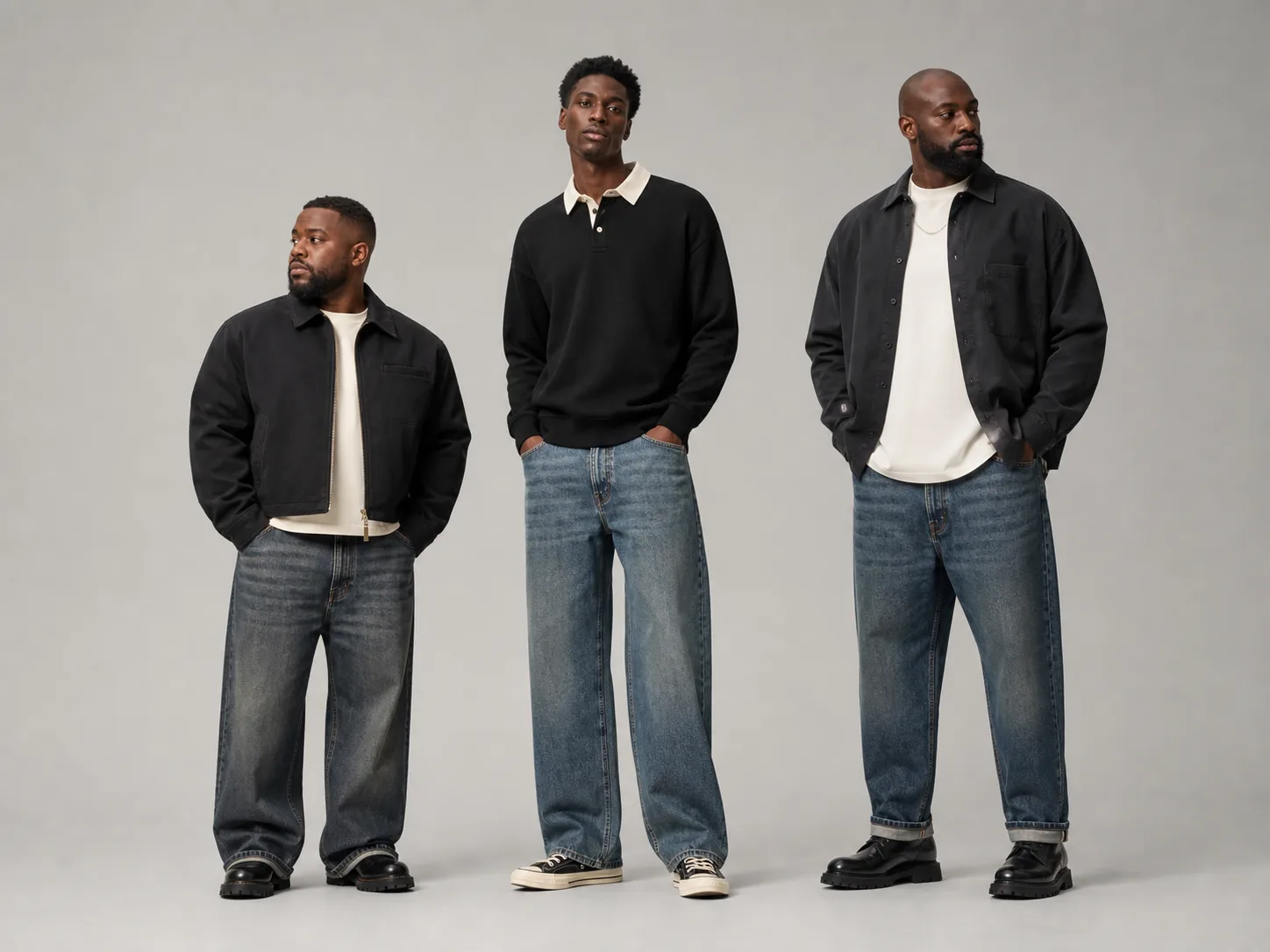
A shorter wearer may prefer a higher rise, controlled break and compact jacket to reveal more trouser length. A tall wearer can use a longer knit or larger break without losing the overall line. A broad or athletic wearer may need more seat and thigh room while keeping shoulder layers clean.
These are options, not rules for hiding bodies. Comfort, mobility and personal preference come first. The relevant test is whether the chosen proportions behave as intended during real use.
Tailoring can adjust length and sometimes taper, but changing rise or seat is more complex. Start with the hardest dimensions—waist position, rise, seat and thigh—then refine the easier ones.
07
Vintage denim needs condition checks
Inspect the crotch, seat, pocket corners, belt loops, hem and zipper area. Thin fabric can fail even when attractive fading hides the weakness. Check repairs from both sides and ask about odors, storage and alterations.
Older denim may be rigid and shrink history may be unknown. Seller labels such as “deadstock” or “90s” do not guarantee age, condition or fit. Provenance matters for collectors; measurements and structural integrity matter most for a wearable pair.
Wash according to fiber and care information when available. Avoid aggressive treatment simply to create a vintage appearance, and never mix cleaning chemicals.
08
Five mistakes create accidental volume
- Sizing up only at the waist. The waistband and pockets may collapse while the thigh remains wrong.
- Ignoring rise. Waist position changes torso length and every upper-layer relationship.
- Letting every top cover the thigh. Without a clear interruption, the outfit loses structure.
- Choosing a shoe after hemming. Different sole heights change break and ground clearance.
- Allowing fabric under the heel. Dragging damages denim and creates a preventable trip risk.
Evidence trail
Sources & Further Reading
These references support the historical, cultural or care-related claims in the guide. Outfit combinations and fit recommendations are BAAM Boys editorial judgment unless specifically attributed.
- Federal Trade Commission — Clothes Captioning: Care Labeling Rule
Official explanation of garment care labels and the evidence manufacturers need for care instructions.
- The Metropolitan Museum of Art — Superfine: Tailoring Black Style
Institutional context for tailoring, Black identity, distinction and self-presentation.
- The Museum at FIT — Fresh, Fly, and Fabulous: Fifty Years of Hip Hop Style
Curatorial context for sportswear, designer fashion, customization and individual expression.
Fit questions
90s baggy jeans FAQ
Should I size up for a 90s baggy fit?
Prefer a jean designed with a loose rise, seat, thigh and leg. Moderate sizing adjustments may work, but large waist sizing often distorts pocket placement and requires excessive belt tightening.
How long should baggy jeans be?
They may break or stack over the shoe, but fabric should not remain under the heel or interfere with walking. Test length with the intended footwear.
What tops look best with baggy jeans?
Compact work or varsity jackets, controlled-length knits, substantial tees and open overshirts all work. Establish one clear point where the torso ends.
Can shorter men wear baggy jeans?
Yes. A secure medium or higher rise, controlled hem and compact upper layer can reveal a clear vertical line. Personal comfort matters more than a universal height rule.
Which shoes work with loose denim?
Retro basketball sneakers, sturdy boots, clean low-tops and substantial loafers can all work. Choose enough visual weight for the hem and match the outfit's rugged, athletic or polished direction.