Heat-aware wardrobe planning
Black Men's Summer Outfits: Stay Cool Without Dressing Carelessly
Summer style begins with heat management. Air needs space to move; cloth needs to release moisture; shoes need to suit both the temperature and the destination. A good warm-weather outfit looks composed because its fabric and proportion solve the day before color or accessories enter the conversation.
Quick answer
What should Black men wear in hot weather?
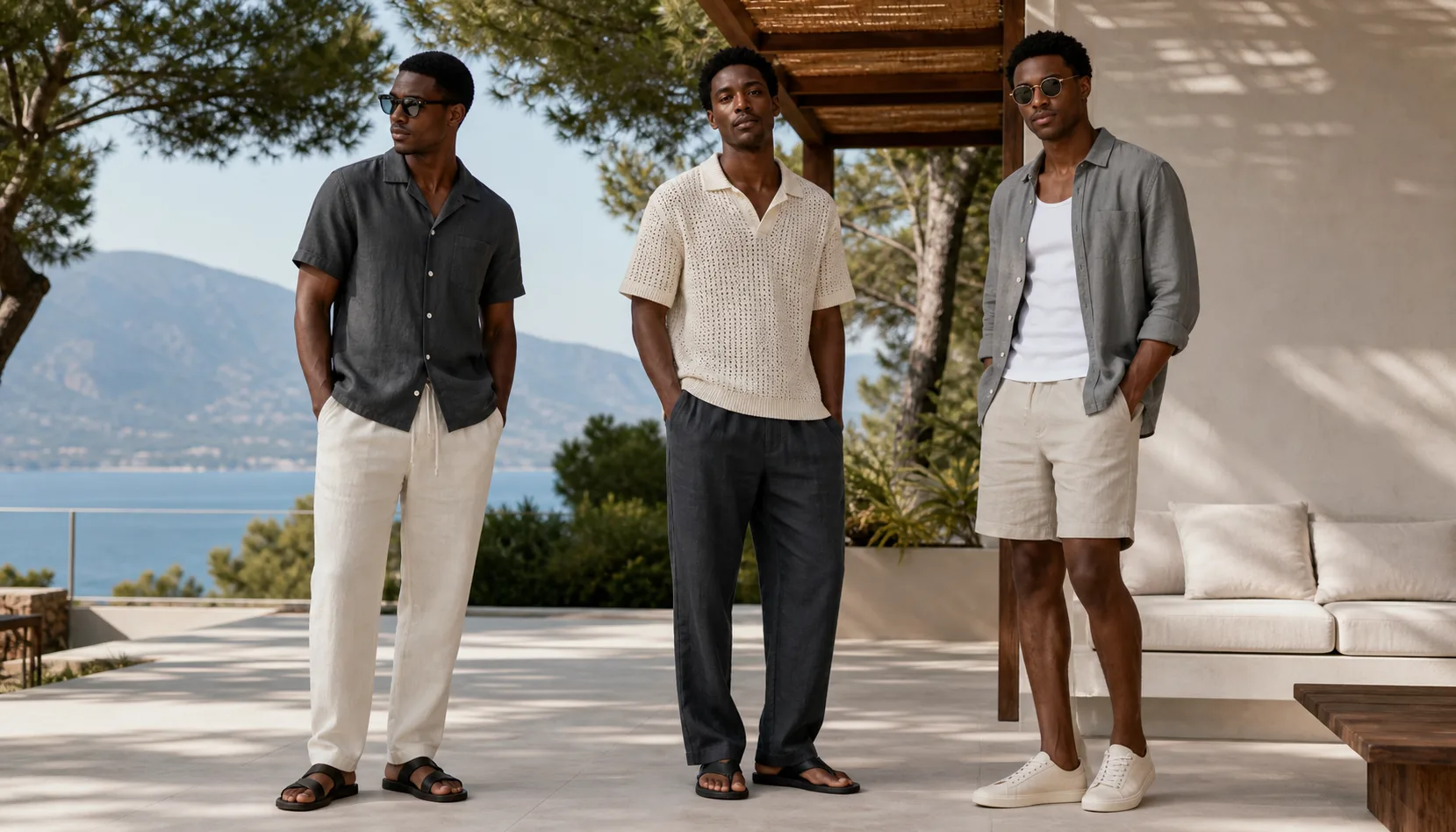
Choose breathable, lightweight cloth with room around the torso and thigh: linen, suitable cotton weaves, seersucker, tropical wool and open knits are useful options. Build around a loose shirt or opaque tee, relaxed trouser or clean short, and footwear appropriate to the walking and dress code. Color affects appearance, but airflow, shade, hydration and sun protection matter more than a simplistic “light colors only” rule.
Room between skin and cloth allows heat and moisture to move.
Fiber name alone does not reveal thickness or breathability.
Long loose clothing can protect from sun while remaining comfortable.
Plan for cold interiors, evening temperature and dress codes.
01 / Read conditions
Temperature is only one part of the summer problem
Humidity slows evaporation. Direct sun raises radiant heat. Wind changes how a loose shirt feels. A dry 90-degree afternoon and a humid 80-degree commute demand different clothing even though both are called hot. Check the full forecast, expected walking time, shade and whether the destination uses aggressive air conditioning.
Skin tone does not remove the need for sun protection. Clothing coverage, shade, hats and broad-spectrum sunscreen can all be relevant; follow current health guidance and personal medical advice. Style content cannot determine an individual skin-care plan. If heat triggers dizziness, confusion, nausea or other concerning symptoms, clothing advice is no substitute for cooling and appropriate medical help.
Think of the outfit as portable climate control. A loose long-sleeve shirt can protect arms outside and roll neatly indoors. An unlined overshirt can handle a cold train. A heavy jacket carried for appearance becomes a burden that traps heat and occupies a hand.
02 / Fabric desk
Judge the cloth, not the marketing label
Often breathable and quick to release heat; wrinkles are normal. Check opacity and softness.
Ranges from airy voile and seersucker to dense heavyweight jersey. Weave and weight decide performance.
Fine open weave can drape cleanly and breathe well for tailored settings despite the word wool.
Creates airflow and texture; consider what is visible beneath it and whether the knit stretches.
May move moisture and dry quickly. Test odor retention, shine and comfort against skin.
Can feel fluid and cool, but care and durability vary. Read the label and handle wet cloth gently.
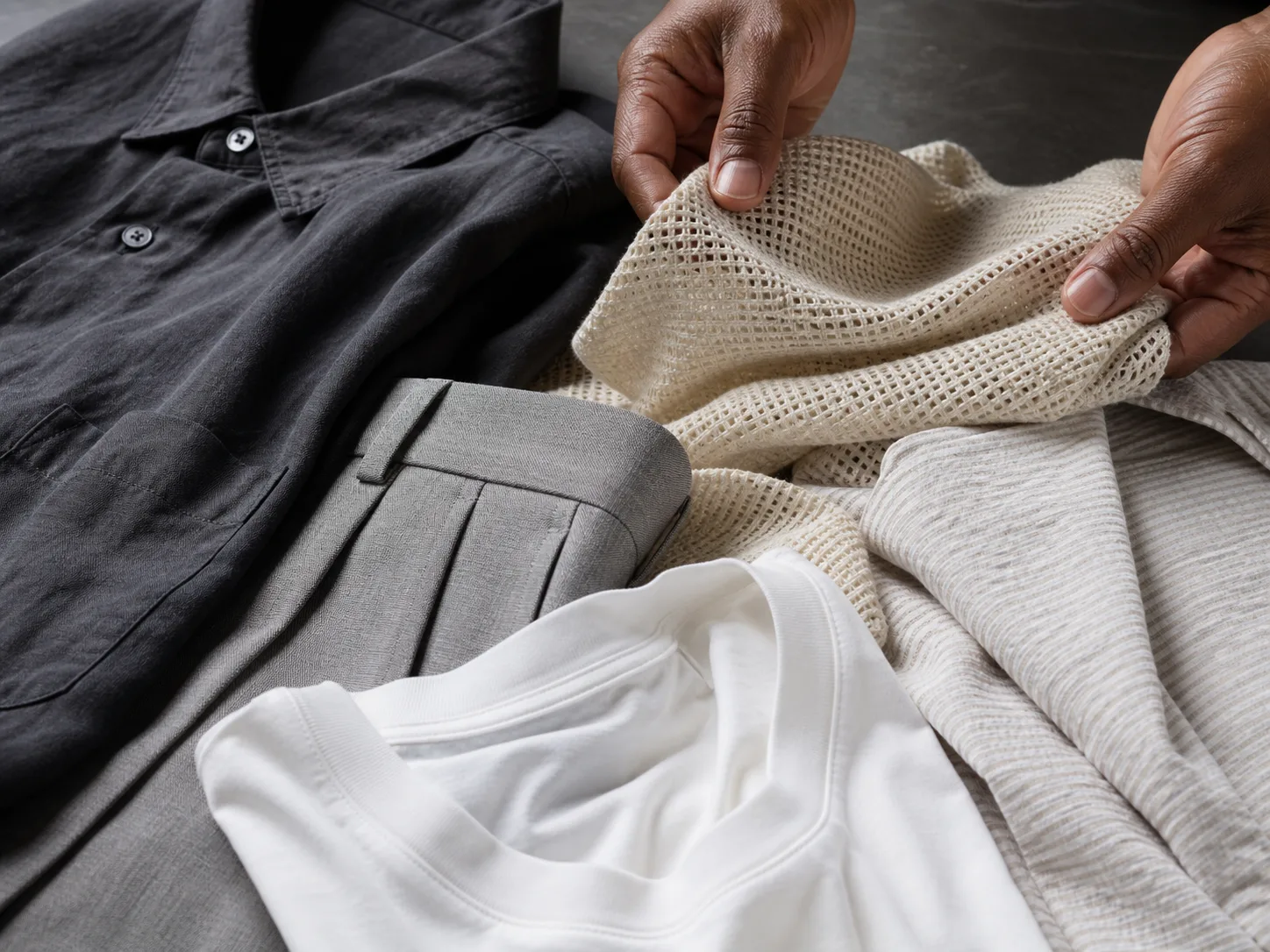
Hold fabric toward light, then bunch it in your hand. A shirt can be thin yet densely woven and clingy; a slightly heavier open weave may ventilate better. Seams, lining and pockets create local heat, so inspect the whole garment.
03 / Room around the body
Relaxed does not mean shapeless
Airflow improves when cloth does not cling across the back, underarm and thigh. Look for a shoulder that supports the intended cut, an armhole that permits movement and a hem that clears the hip. Very long oversized tops can add cloth and trap warmth even when the width feels loose.
For trousers, prioritize space through the rise, seat and thigh. A straight or gently tapered leg provides air while preserving a readable line. Linen-blend drawstring trousers can look refined when the waistband is clean, the drawcord is restrained and the hem meets the shoe deliberately.
Shorts should suit the activity and venue. The inseam can be above, at or below mid-thigh depending on preference, but the opening should not grip the leg during walking. A tailored short gains polish from a stable waistband and clean front, not from being tight.
04 / Six settings
Dress for where the heat takes place
Camp shirt + loose trouser
Wear a breathable open-collar shirt with cream or stone trousers and simple sandals or low-tops.
Knit polo + tropical wool
A fine polo and relaxed tailored trouser stay professional without a stiff collar or heavy jacket.
Tee + drawstring trouser + overshirt
Use a washable base, comfortable waistband and removable layer for transport.
Tank + open shirt + shorts
The open layer supplies sun coverage and allows an easy transition away from the water.
Seersucker or unlined suit
Choose a dress-code-appropriate open weave, breathable shirt and proper shade strategy.
Fine tee + relaxed tailoring
Lower contrast and darker cloth add polish once direct sun is no longer the central problem.
For a broader foundation, the Casual Outfits guide explains how trousers, layers and footwear combine across the year.
05 / From day to dinner
Change texture and structure, not the entire wardrobe
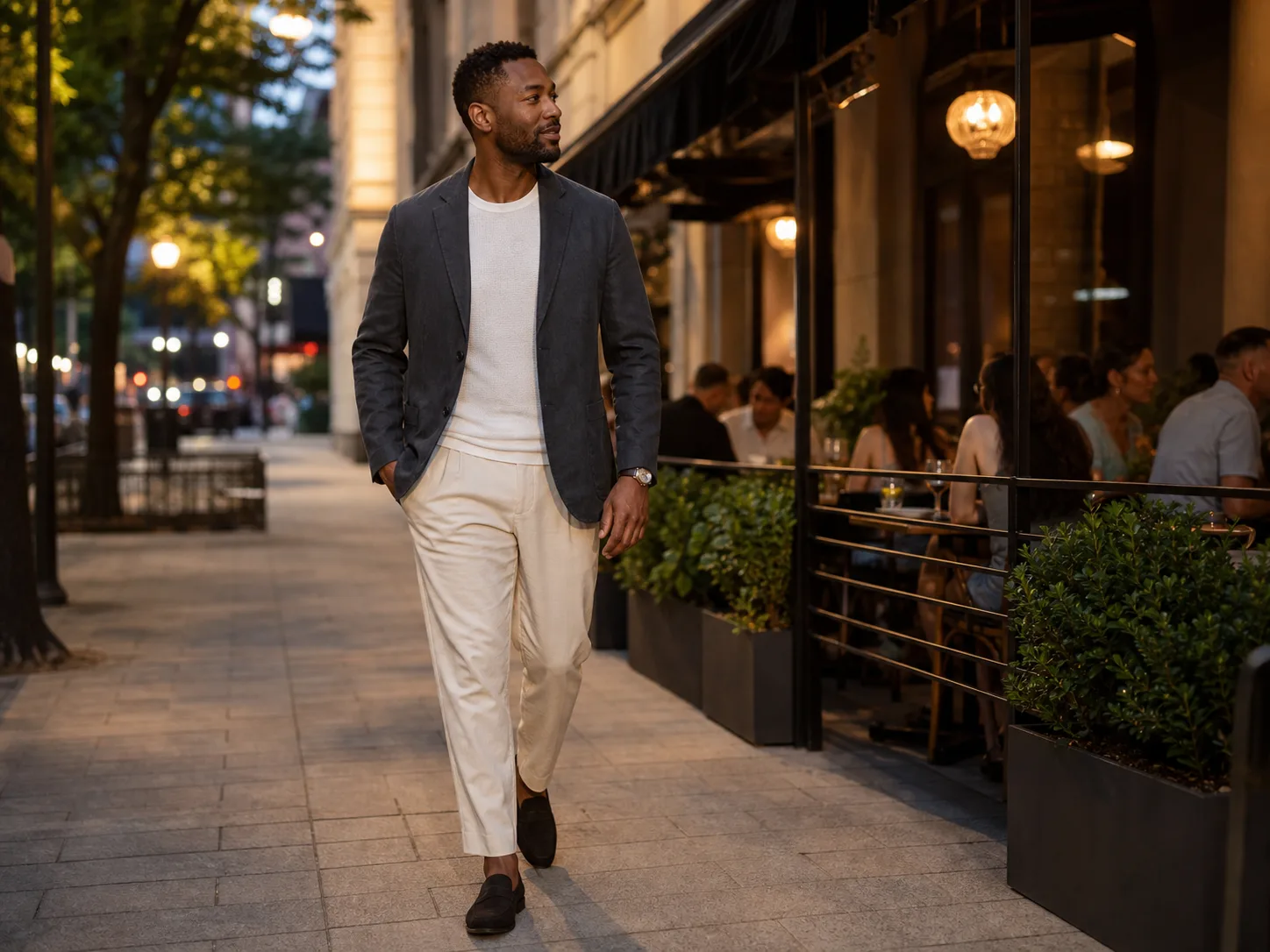
A summer evening look needs enough polish for low light without recreating winter clothing. Start with relaxed cream trousers and a breathable fine-knit tee. Add an unlined jacket only if the venue or temperature justifies it. Dark suede or smooth leather footwear changes the register more effectively than piling on accessories.
The jacket should have room through the back and armhole, minimal lining and cloth that recovers after sitting. Carrying it over the shoulder for every photograph does not prove it works in heat. If the dress code permits, an open-collar shirt can replace the jacket entirely.
Keep jewelry light against warm skin, and consider sweat, tarnish and metal sensitivity. One watch, ring or chain can finish the look. Sunglasses belong outside; check that frames fit the bridge securely and offer appropriate UV protection rather than treating lens darkness as proof.
06 / Light and dark
Black clothing can work in summer—with conditions
Dark fabric absorbs more radiant energy in direct sun, but color is not the only variable. A loose, open-weave charcoal shirt in shade may feel better than a tight, dense white shirt. The practical choice depends on exposure, airflow, coverage and activity. Do not use color theory to ignore physical feedback.
To keep a deep-gray palette visually cool, introduce cream near the face or below the waist, expose a small white base layer, and vary surfaces. Washed charcoal linen, crisp off-white cotton and dark smooth leather remain distinct. If sweat marks are a concern, test the garment with water before committing to a long event; mid-gray can reveal moisture more than very light or very dark cloth.
Pattern can reduce the visibility of wrinkles and marks. Fine stripes, subtle checks and melange knits add movement without turning the outfit loud. Make one pattern the leader and keep the other garments quiet.
07 / Footwear and care
Use the lightest shoe that still serves the day
Minimal leather sneakers work across casual settings but can hold heat; choose breathable socks and rotate pairs. Loafers provide polish and should fit securely without rubbing. Sandals require venue judgment and a stable sole. Technical runners make sense for extensive walking even when a sleeker pair looks better in a still photograph.
Long trousers need a hem that stays off hot, dirty pavement. Shorts expose footwear more fully, so scale matters: a giant padded shoe can overwhelm a narrow tailored short, while a slim sandal may look fragile beneath a very wide one. The Sneakers hub covers shape and construction in more detail.
Air garments after wear and allow them to dry before storage. Sweat, sunscreen and deodorant can interact with fabric, so follow the label and address marks promptly. Avoid sealing damp clothing in a bag. Steam or embrace linen wrinkles rather than scorching cloth in pursuit of a perfectly flat surface.
Evidence trail
Sources & Further Reading
These references support the historical, cultural or care-related claims in the guide. Outfit combinations and fit recommendations are BAAM Boys editorial judgment unless specifically attributed.
- Federal Trade Commission — Clothes Captioning: Care Labeling Rule
Official explanation of garment care labels and the evidence manufacturers need for care instructions.
- The Metropolitan Museum of Art — Superfine: Tailoring Black Style
Institutional context for tailoring, Black identity, distinction and self-presentation.
- The Museum at FIT — Fresh, Fly, and Fabulous: Fifty Years of Hip Hop Style
Curatorial context for sportswear, designer fashion, customization and individual expression.
Heat decision tree
Choose by exposure, movement and destination
Direct sun
Prioritize coverage, breathable structure, hat compatibility and fabric that does not become transparent.
High humidity
Reduce cling, lining and unnecessary layers; allow room around the torso and thigh.
Air-conditioned interior
Carry one light layer that folds without dominating the outdoor outfit.
Formal destination
Use an open-weave or lightweight tailored structure and test it while seated before the event.
Direct answers
Black men's summer outfits FAQ
What fabrics are best for men's summer outfits?
Breathable linen, suitable lightweight cotton weaves, seersucker, open knits and tropical wool can work well. Fiber names are only a start; inspect weave, weight, lining, opacity and care.
Can Black men wear dark colors in summer?
Yes. Consider direct sun, airflow, garment looseness and activity. A loose charcoal open weave in shade can be comfortable, while any dense tight fabric may feel hot. Respond to actual conditions.
Are long trousers too hot for summer?
Not necessarily. Relaxed trousers in breathable cloth can allow airflow and provide sun coverage. Tight, heavy or lined trousers are more likely to trap heat.
How can I dress smart casual in summer?
Combine an open-collar shirt, knit polo or fine tee with relaxed tailored trousers and clean loafers or minimal sneakers. Add an unlined jacket only when the dress code or temperature calls for it.
What should I wear under an open-knit shirt?
Choose based on the knit's transparency and the venue. An opaque tank or tee in a connected tone provides coverage; wearing the knit alone may be appropriate in some casual settings if the construction permits.