Movement, image, commerce and community
Hip-Hop Fashion History: The Clothes Moved Before the Story Became Global
Hip-hop fashion developed through people using clothing in motion: DJs carrying equipment, dancers testing footwear, performers building image, neighborhoods interpreting sport and workwear, and stylists translating local knowledge for cameras. Brands and celebrities amplified parts of that story, but they did not create it alone.
Quick answer
How did hip-hop fashion evolve?
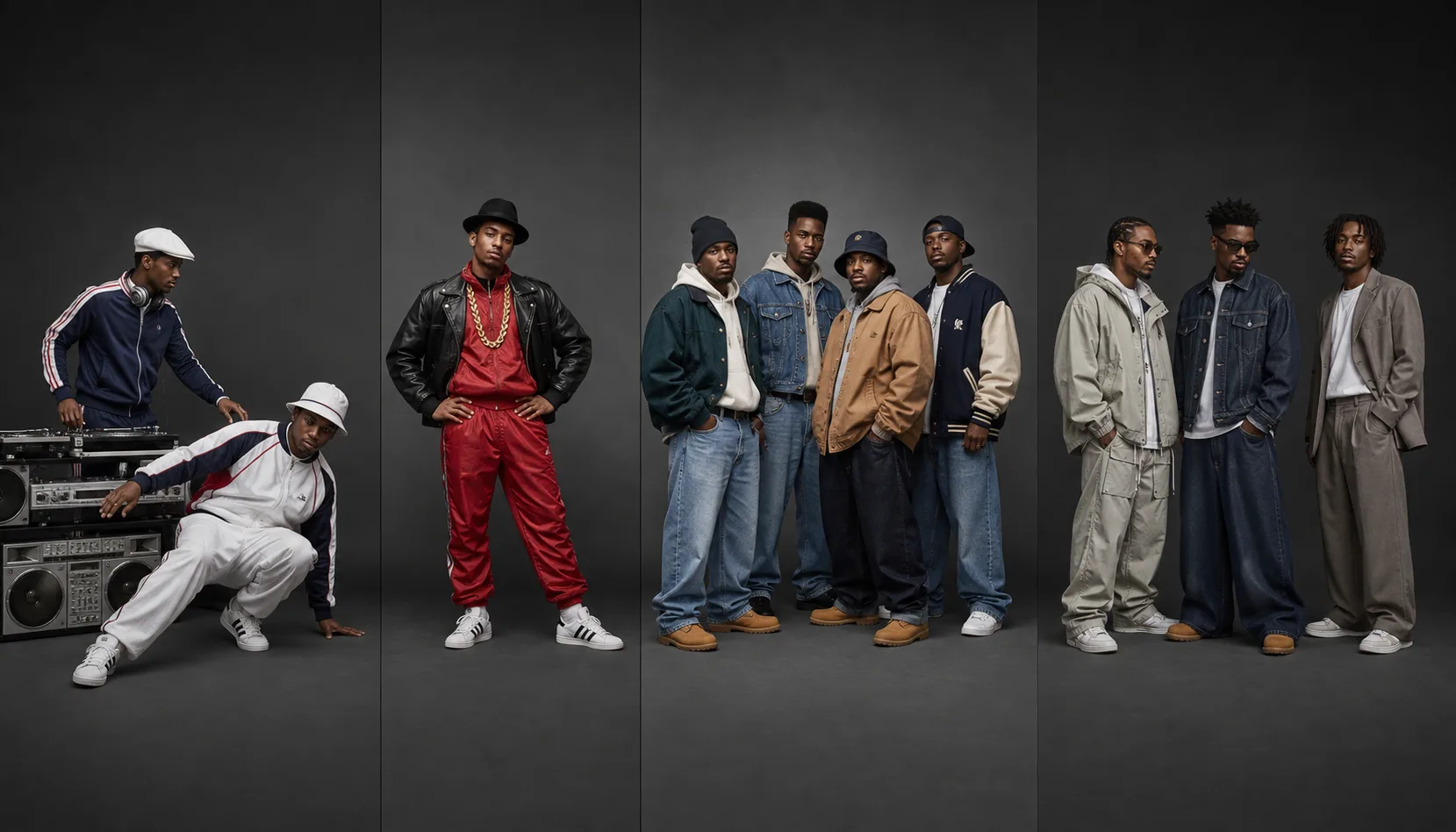
Hip-hop fashion grew from community parties, dance, sport, neighborhood retail and existing Black style traditions. Early athletic clothing and clean sneakers supported movement; 1980s leather, hats, jewelry and coordinated sets built performance image; 1990s relaxed denim, workwear and basketball footwear expanded scale; early-2000s jerseys, wide jeans and visible luxury references magnified it; digital culture later mixed archival, technical and tailored influences globally.
Parties, parks, schools, clubs and stores supplied the first circulation routes.
Dance and performance tested comfort, grip, visibility and durability.
Photography, television and video made local choices legible at scale.
Retail and brand relationships widened access while often simplifying origins.
01 / Method
Keep appearance, adoption and influence separate
A dated photograph can establish that a garment appeared in a specific setting. Repeated photographs and oral accounts can support a pattern. Retail records show availability. A campaign establishes commercial messaging. Wider influence requires evidence that people beyond one performer adopted, discussed or reinterpreted the look.
Most clean histories fail by moving too quickly from “wore” to “invented.” Artists can accelerate visibility, but dancers, athletes, stylists, shop owners, tailors and ordinary wearers create the conditions in which an image means something. Use narrow verbs and preserve uncertainty when sources disagree.
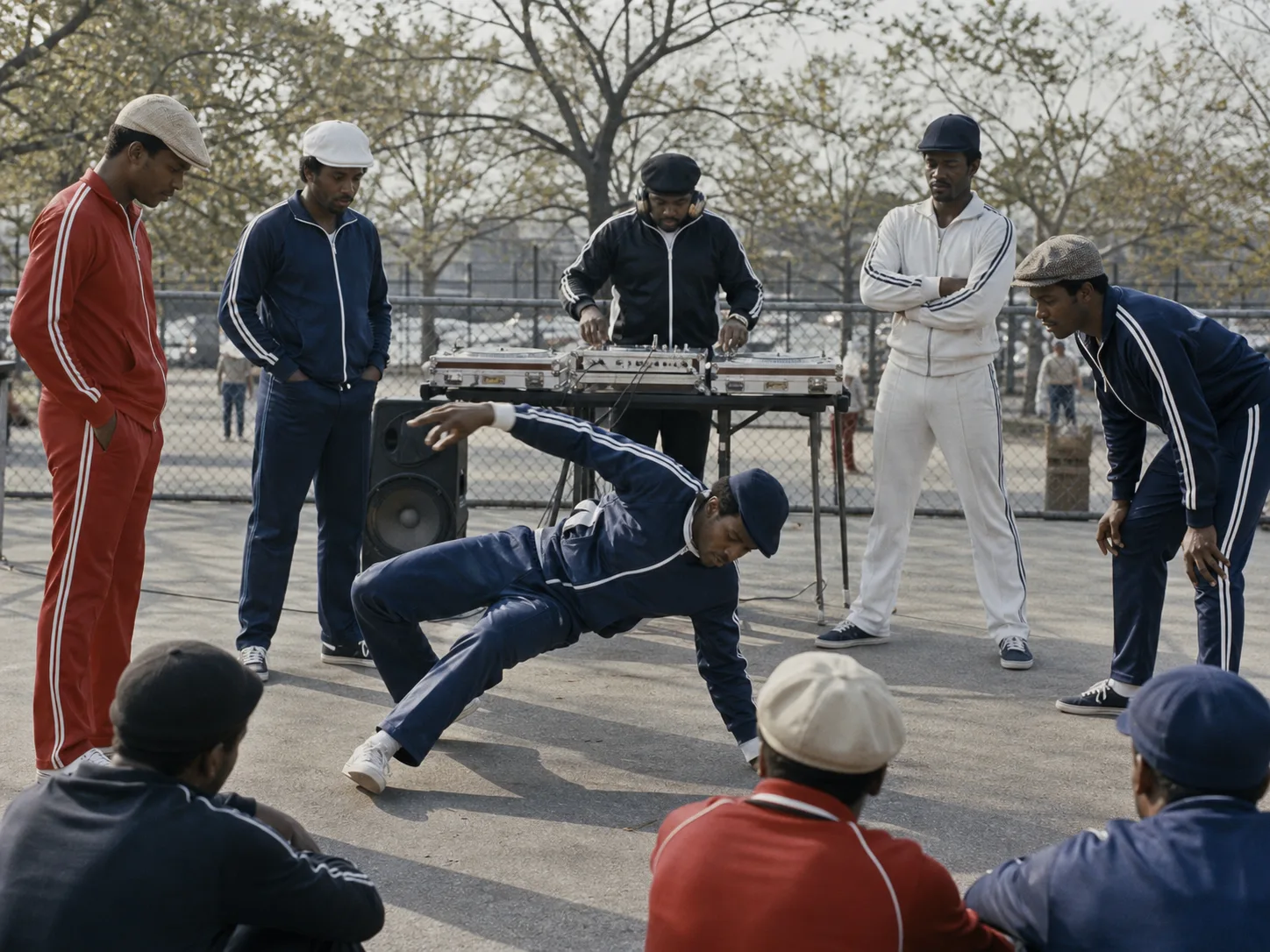
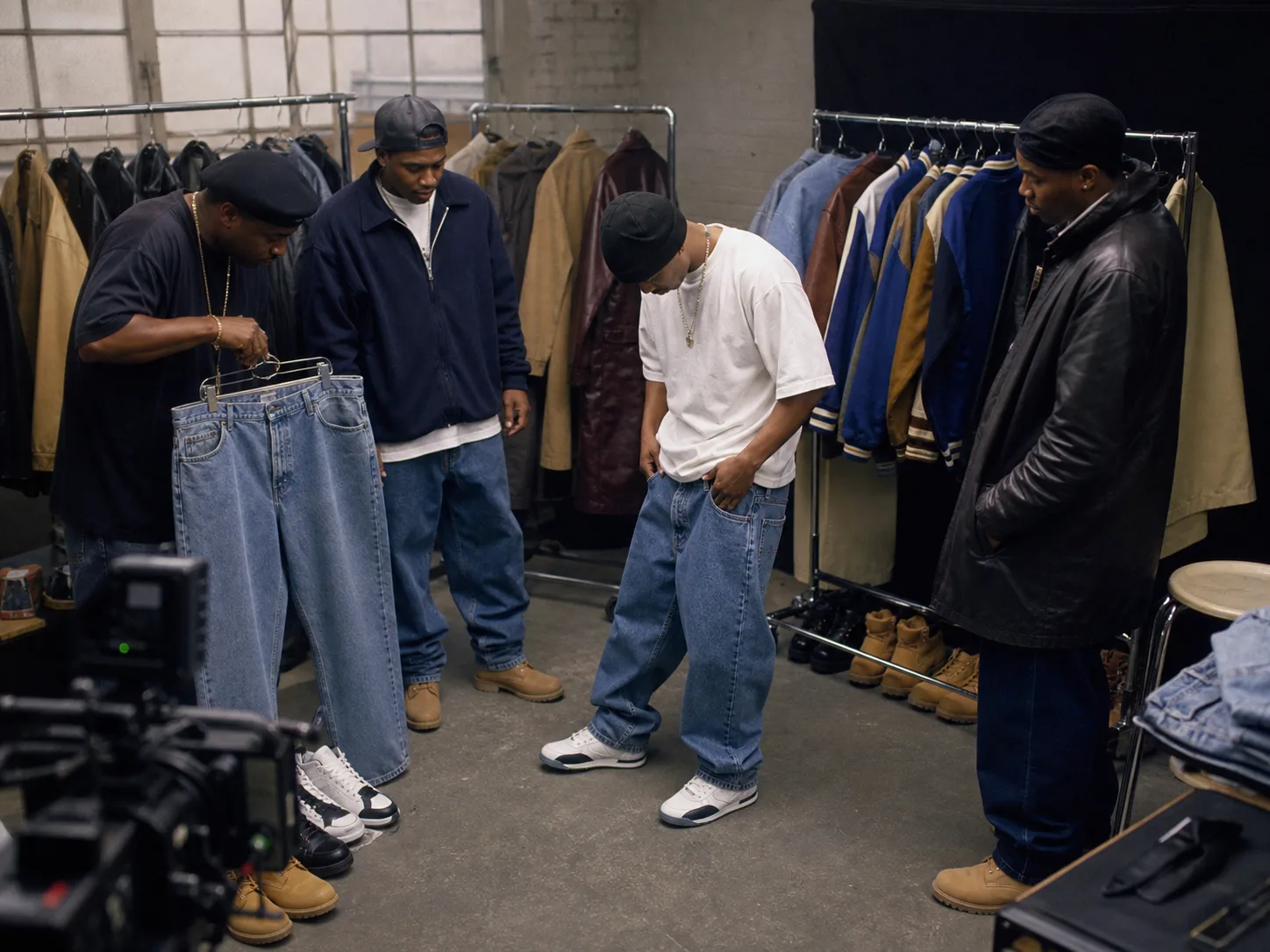
The images here are fictional editorial reconstructions. They help readers see proportion and setting; they do not document a historical event, artist or neighborhood. Claims should be tested against primary materials and credible scholarship.
02 / Foundations
Hip-hop inherited and remixed existing Black dress languages
Before the culture had a global industry, Black communities already carried deep traditions of tailoring, workwear, athletic dress, nightlife presentation, church formality, natural hair, hats and jewelry. Hip-hop did not begin outside that history. It selected, combined and repurposed garments according to new music, movement, place and youth identity.
Affordable availability mattered. A pair seen locally and maintained carefully could build stronger community meaning than an inaccessible luxury object. Customization, fresh laces, coordinated color and trouser-to-shoe presentation made common pieces specific. Cleanliness was often a styling practice, not proof that a garment was expensive.
Regional climate and retail prevented one universal uniform. What worked through winter, transit and city streets differed from clothing in warmer regions or car-centered routines. Any timeline should preserve local variation.
03 / Early community era
Sportswear made music visible in motion
Tracksuits, tees, caps and trainers offered room to dance, carry equipment and spend time outside. Coordinated sets created a group image without the restrictions of formal clothing. Hats and eyewear shaped the face; laces and trouser hems made footwear part of the performance.
Party and park images are essential but partial. The clothing in one event does not describe every participant's school, work or family wardrobe. Some people changed presentation between contexts; others brought formal or street elements together.
The practical lesson is that function and image were connected. The shoe had to move. The jacket had to work under physical activity or night air. A color scheme made several people readable as a unit. Those relationships remained important even as price and branding changed.
04 / 1980s
Leather, hats, jewelry and broadcast image expanded the vocabulary
As recorded music and televised image reached larger audiences, artist wardrobes became more deliberate. Coordinated athletic looks continued, while leather jackets and trousers added shine and authority. Hats, glasses and jewelry created recognizable upper-body silhouettes. Tailoring and knitwear remained available as alternate languages.
Gold jewelry could communicate success, continuity, craft, affiliation or stage visibility, depending on object and wearer. It should not be reduced to excess. Scale mattered under stage light and low-resolution media; a small detail visible in person could disappear on screen.
The 80s Hip-Hop Fashion guide covers garment groups in detail, and 80s Rapper Fashion explains how persona and group uniform affected presentation.
05 / 1990s
Relaxed volume gave region, role and persona more room
Relaxed denim, work jackets, varsity layers, hoodies, leather coats, knitwear, boots, court shoes and clean trainers circulated through 1990s hip-hop image. Trouser width allowed footwear to become a substantial base. Outer layers gave crews visual unity while permitting individual hats, color or jewelry.
Music television and magazines made regional scenes visible, yet national circulation could strip them of local history. A garment might carry weather, work or neighborhood meaning before a video transformed it into a broad trend. Stylists helped convert real references into camera-ready wardrobes and deserve a place in the account.
See the complete 90s Hip-Hop Fashion guide, then compare 90s Streetwear for Men for everyday rather than performance-centered use.
06 / Image labor
A rapper outfit is rarely one person's spontaneous act
A video look may involve the artist, stylist, designer, manager, label, director, photographer and brand loan. Stage clothing must survive heat and movement. An album portrait must communicate quickly. A tour wardrobe needs repetition and repair. Each setting creates a different clothing brief.
That construction does not make the image false. It makes authorship richer. When a photograph becomes iconic, research credits and interviews rather than assigning every decision to the visible performer. Distinguish an artist wearing a product from a documented endorsement or collaboration.
The most useful style analysis asks why the outfit worked: how the jacket framed the torso, how jeans met the shoe, how color survived lighting and how one accessory focused attention.
07 / Early 2000s
Scale grew as music image and product relationships intensified
Wide jeans, long tees, jerseys, padded footwear, technical outerwear and larger jewelry created an enlarged visual system. Video framing and commercial success made logos and luxury dialogue more visible. At the same time, regional, skate, preppy, tailored and everyday clothing continued beyond the most repeated images.
The era also made business relationships harder to ignore. Artists moved between wearing products, endorsing them, collaborating and building labels. Those relationships require evidence; visual appearance alone cannot prove a contract or design role.
The Early 2000s Hip-Hop Fashion guide examines media and industry, while 2000s Rapper Outfits focuses on image archetypes.
08 / Digital and contemporary era
The archive became immediate—and easier to detach from context
Social platforms allow a local look to circulate globally in hours. Vintage references, technical apparel, luxury, independent design and relaxed tailoring can appear together in one feed. This access expands creative possibility while encouraging flattened mood boards that remove date, place and authorship.
Reissues make old silhouettes wearable again but can rewrite history around brand anniversaries. Compare campaign language with independent evidence. A current performer may revive a garment relationship without reproducing the conditions that first gave it meaning.
Contemporary hip-hop fashion is plural. Minimal uniforms, experimental tailoring, workwear, skate influence, archival sportswear and highly decorated performance clothes coexist. A single “current trend” is less useful than following scenes, functions and creators.
09 / Evidence ledger
Research a fashion claim in five moves
| Move | Record | Avoid |
|---|---|---|
| Locate | Original image, video, interview or campaign | Undated repost as sole source |
| Contextualize | Date, place, event, creator and styling credits | Assuming stage equals everyday wear |
| Identify | Visible category and model only when clear | Guessing from color or blur |
| Compare | Independent evidence of wider use | Calling one sighting a movement |
| Word | Narrow claim matched to proof | Using wore, endorsed and invented interchangeably |
Continue the cluster
Hip-Hop specialist guides
Evidence trail
Sources & Further Reading
These references support the historical, cultural or care-related claims in the guide. Outfit combinations and fit recommendations are BAAM Boys editorial judgment unless specifically attributed.
- The Museum at FIT — Fresh, Fly, and Fabulous: Fifty Years of Hip Hop Style
Curatorial overview connecting hip-hop clothing to community, customization, aspiration and fashion-industry influence.
- Smithsonian NMAAHC — Five Things to See: The Fashion of Hip-Hop
Collection-based examples of garments, jewelry, photographs and sneakers used to document hip-hop style.
- The Metropolitan Museum of Art — Superfine: Tailoring Black Style
Institutional context for Black dress, identity, tailoring and self-presentation across time.
Timeline synthesis
Hip-hop changed fashion through adoption, remix and visibility
- Community use came first. Existing work, sport, dress and neighborhood garments entered a new cultural arrangement.
- Performance increased legibility. Stage, photography and video rewarded silhouette, contrast, jewelry and repeatable signatures.
- Industry relationships expanded. Designers, stylists, brands and artists negotiated influence, commerce, collaboration and appropriation.
- Regional scenes resisted one uniform. Climate, retail access, local music and social life changed the same garment's meaning.
- The archive remains incomplete. Famous images survive more readily than ordinary wardrobes and behind-the-scenes creative labor.
A useful history tracks those mechanisms instead of crediting every fashion change to one performer or one brand.