Movement, memory and repeated association
Iconic Hip-Hop Sneakers: How a Pair Earns Cultural Weight
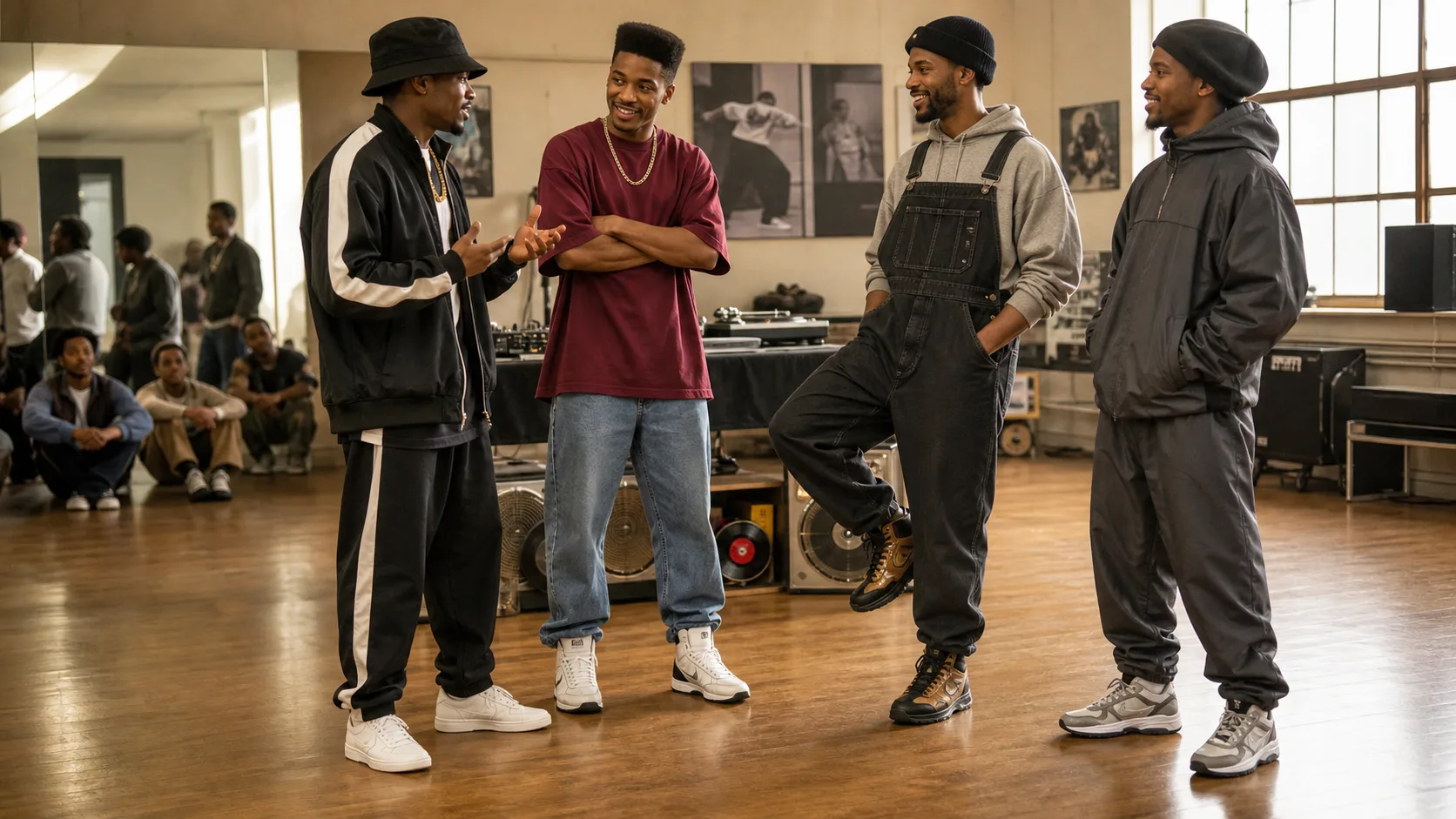
A sneaker becomes iconic in hip-hop through repeated use and meaning: dancers trust its movement, neighborhoods adopt its silhouette, artists place it inside memorable images, and generations reinterpret it. A logo or celebrity sighting may accelerate attention, but cultural importance comes from a network of people, places and practices.
Quick answer
Which qualities make a sneaker iconic in hip-hop?
The strongest candidates combine a distinct silhouette, practical role, repeated community adoption, visible music or dance association, regional meaning and enough longevity to be reinterpreted. Low-profile trainers, padded basketball shoes, rugged weather footwear and technical runners each entered hip-hop through different routes. There is no single objective ranking.
Dance and daily wear prove whether the shoe performs in real life.
Climate, city retail and local preference give a model regional meaning.
Albums, videos, stages and photographs amplify association.
Reissues and new styling carry the silhouette across generations.
01 / Define iconic
Popularity is measurable; cultural weight needs context
Sales, search interest and resale price can show demand, but none alone explains cultural importance. A shoe may sell widely without becoming central to a specific scene. Another may have limited distribution yet carry deep meaning in one city. “Iconic” should be supported with dated evidence: photographs, performances, interviews, retail history and repeated community use.
Brand storytelling often compresses complex adoption into a single celebrity moment. That moment may matter, but dancers, athletes, shop owners, stylists and ordinary wearers also build visibility. A responsible history names the kind of evidence it has and avoids claiming one person invented an entire relationship.
The Hip-Hop Style hub provides the wider cultural frame. The Sneakers hub explains purpose, symbolism and aging.
02 / Four routes
Different shoe families entered through different doors
A clean low profile supports precise movement, tonal tracksuits and a disciplined head-to-toe line.
Athlete visibility, strong collar and broad sole connect court technology to denim and street presentation.
Grip, durability and dark materials gain meaning through climate, workwear and city routines.
Layered mesh and sculpted soles reflect speed, comfort and changing late-1990s or 2000s aesthetics.
These routes overlap. A court shoe can become a dance shoe; a weather pair can enter music imagery; a runner may shift from practical commuting to fashion statement. The cultural story lies in that change of use.
03 / Community route
Music and footwear traveled through shared spaces
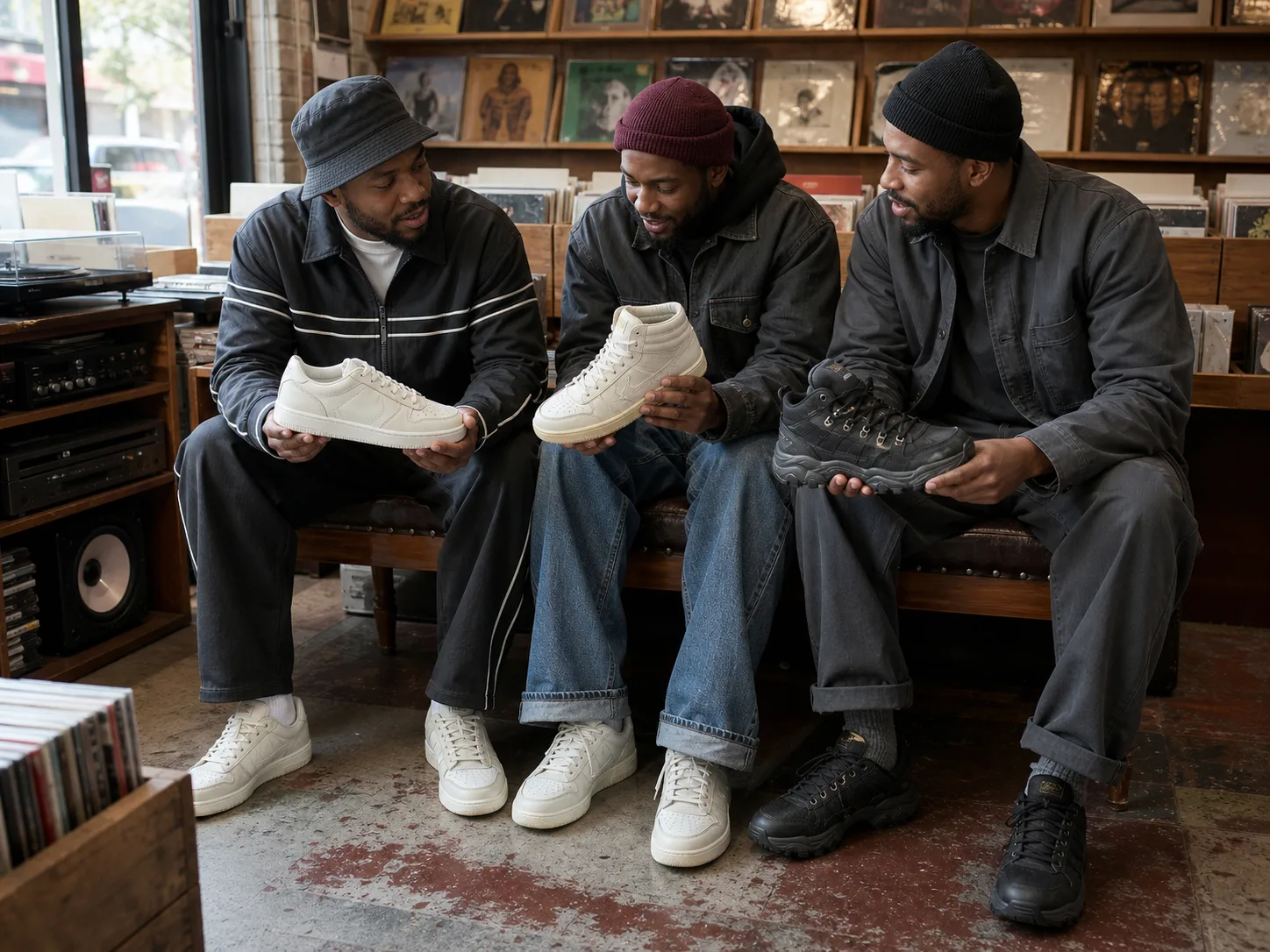
Before an image could spread instantly online, people encountered shoes at school, on courts, in record stores, dance rehearsals, videos, magazines and live shows. A pair could become locally recognizable before national marketing noticed. Shop availability and price determined whether admiration became ownership.
Cleanliness and customization also mattered. Fresh laces, careful maintenance and how trousers met the shoe made a common pair feel specific. Cultural value was not always tied to scarcity. A widely available trainer could become iconic precisely because many people used it and developed personal rituals around it.
When researching, distinguish a documented formal partnership from a person merely wearing a pair. Photographs establish appearance; contracts, credits or reliable interviews establish endorsement.
04 / Era map
The leading relationship changed with the clothes
In the 1980s, clean trainers and athletic sets could create a unified line, while leather and hats supplied alternate polish. The 1990s gave court shoes and rugged footwear more visual room beneath relaxed denim and workwear. Early-2000s wide jeans supported even larger basketball and technical shapes. Later clothing shifts opened space for cleaner low profiles again.
| Era | Common outfit relationship | Shoe role |
|---|---|---|
| 1980s | Coordinated tracksuit or straight trouser | Clean movement and group identity |
| 1990s | Relaxed denim, workwear, varsity | Weight and regional association |
| Early 2000s | Long tops and wide stacked jeans | Prominent base for enlarged scale |
| Contemporary | Edited retro proportions | Historical reference or functional contrast |
Use the 90s Basketball Shoes guide for court construction and the 90s outfit footwear guide for broader styling choices.
05 / Outfit logic
Match role, material and trouser before chasing status
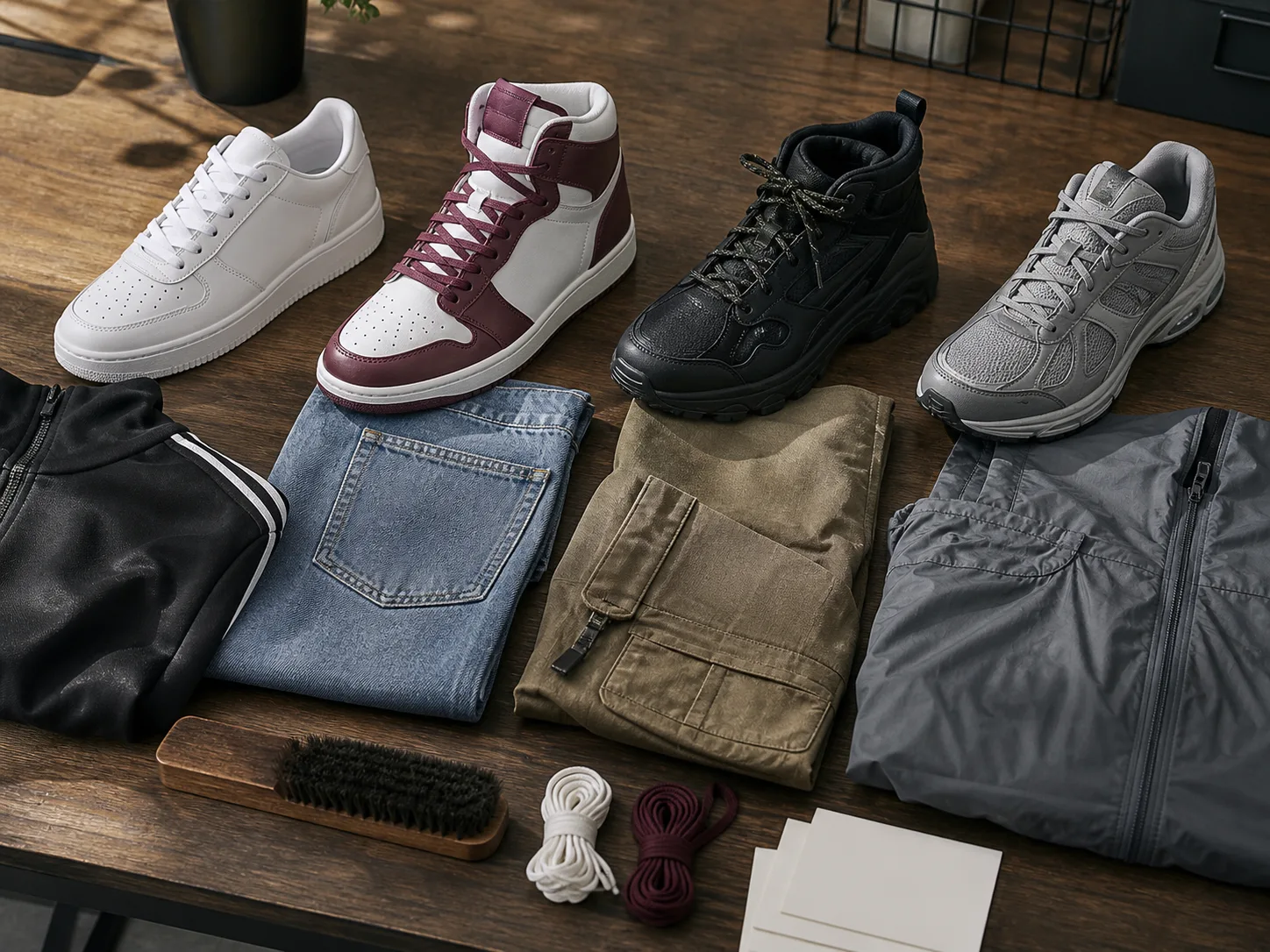
A smooth white low-top extends a black tracksuit with quiet contrast. A padded burgundy-and-white high-top needs relaxed denim with enough opening. A rugged black shoe fits canvas workwear and uncertain weather. A gray technical runner works with tonal nylon and commuting.
The shoe does not have to match the clothing color. It must match visual weight and purpose. Try the intended trousers, walk, sit and view the full silhouette. If only the toe remains visible, decide whether that is intentional. If the hem catches beneath the sole, alter it.
Care follows material: soft brushing for dry debris, suitable cleaner for leather or mesh, and air drying away from direct heat. Test methods in an inconspicuous area and follow manufacturer guidance when available.
06 / Build a rotation
Three useful pairs beat one untouchable trophy
Clean low-top
Flexible everyday shoe for tracksuits, straight trousers and lighter denim.
Court mid or high
Substantial shape for relaxed denim, varsity and sports layers.
Rugged pair
Grip and durable materials for workwear, rain and cold routes.
Technical runner
Comfort-oriented option for travel, nylon and long walking days.
Fit each category independently; sizing varies between constructions. A shoe that is culturally important may not suit your foot. Comfort, stability and intended use take priority over status.
07 / Evidence and collecting
A sighting is not always an endorsement
Caption sources carefully. An artist wearing a shoe in a dated photograph supports a documented appearance. It does not automatically prove a contract, long-term preference or sales effect. Those claims require stronger sources. Likewise, a reissue campaign may describe cultural history from a brand perspective and should be compared with independent evidence.
For collectors, authenticity and condition are separate. Verify provenance when value is high, then inspect material aging. Vintage foam, glue and rubber may fail. A culturally significant original can be best preserved as an object rather than forced into daily wear.
- Ranking without criteria. State whether you mean influence, sales, design or personal use.
- Confusing wear with endorsement. Match each claim to its evidence.
- Buying status over fit. A painful icon is still the wrong shoe for your foot.
Evidence trail
Sources & Further Reading
These references support the historical, cultural or care-related claims in the guide. Outfit combinations and fit recommendations are BAAM Boys editorial judgment unless specifically attributed.
- Smithsonian NMAAHC — Five Things to See: The Fashion of Hip-Hop
Museum collection records connecting documented sneakers and other objects to hip-hop performers and culture.
- adidas Archive — History
The brand archive's account of the Superstar's basketball origin and its documented relationship with Run-D.M.C.
- Nike Department of Archives — The History of the Air Force 1
An official design history covering Bruce Kilgore, the 1982 release and the shoe's original basketball function.
- Converse — Converse History
An official chronology of the All Star, Chuck Taylor and the model's early basketball context.
Cultural weight scorecard
An icon needs more than a famous photograph
- Repeated use: documented appearances across time rather than one isolated sighting.
- Community adoption: evidence that the shoe mattered beyond a campaign or celebrity wardrobe.
- Distinct role: a recognizable relationship with music, dance, region, silhouette or identity.
- Traceable exchange: records showing how sport, street use, retail and media interacted.
- Durable memory: later references that can be connected to the earlier history without rewriting it.
The scorecard is an editorial test, not a numerical ranking. It prevents sales volume and marketing repetition from standing in for cultural evidence.