Footwear Matrix · 90s Style
The Best Shoes for a 90s Outfit Match the Hem
Start with trouser opening, break, activity and weather. A padded basketball shoe, sturdy boot, clean low-top or polished loafer succeeds when its visual weight and real function suit the clothing above it.
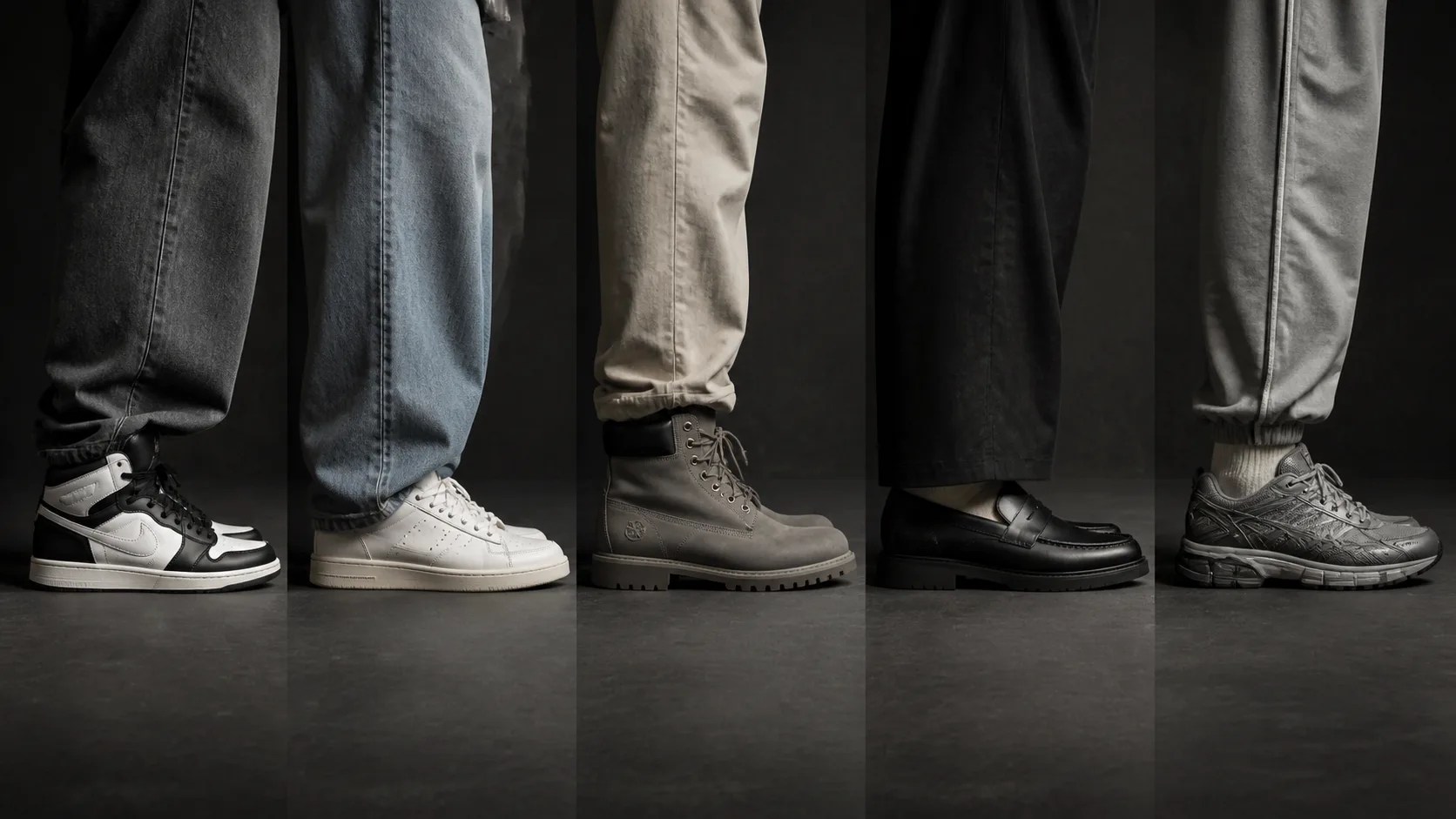
In one paragraph
Which shoes work best with a 90s outfit?
Retro basketball sneakers suit wide denim, jerseys and varsity layers; sturdy work boots pair with loose jeans, hoodies and utility jackets; clean leather low-tops complement straight denim, polos and relaxed prep; technical runners fit track pants and sport-heavy outfits; substantial loafers or lace-up shoes refine pleated trousers, leather and dark denim. Choose a structurally safe pair that supports the planned walking or dancing, and keep trouser fabric from dragging beneath the sole.
01
Five shoe families cover most outfit directions
| Shoe type | Best trouser | Outfit direction | Watch for |
|---|---|---|---|
| Padded basketball sneaker | Wide or relaxed denim | Jersey, varsity, sports layering | Bulky collar under narrow hems |
| Clean leather low-top | Straight denim or chinos | Prep, quiet casual, summer | Wide hems swallowing the upper |
| Sturdy work boot | Loose denim or cargos | Workwear, cold weather, rugged | Dragging hems and poor grip |
| Technical runner | Track pants or controlled relaxed trouser | Athletic, movement-heavy | Aged foam and unstable cushioning |
| Loafer or lace-up | Pleated trouser or dark denim | Polished, leather, evening | Toe shape too delicate for wide cloth |
These are shoe families, not brand rankings. Within each family, sole thickness, toe width, upper height and material change the result. A slim court low-top behaves differently from a thick cupsole even when both are called leather sneakers.
02
The trouser and shoe form one lower silhouette
A wider opening needs enough upper or sole presence to remain visible. Narrow openings can bunch awkwardly on padded collars.
No break shows the shoe clearly; a soft break connects cloth and upper; stacking emphasizes relaxed denim but must stay controlled.
Fabric may touch the upper, but it should not remain trapped under the heel or cover the outsole's contact surface.
A light shoe can separate from dark denim; tonal dark footwear extends the leg line. Both can work when deliberate.
Try shoes before final hemming. Sole height changes where fabric lands, and boot shafts affect how a trouser collapses. The Baggy Jeans Fit Guide covers rise, thigh, hem and inseam as one system.
03
Basketball shoes carried more than visual mass
Basketball footwear connected technical design, player identity, aspiration and everyday street style. Padded collars, layered panels and substantial midsoles made many models visually compatible with loose denim. High and mid-cut shapes also created a firm boundary under stacked hems.
That cultural importance does not mean every basketball shoe suits every wearer or use. Older performance technology may no longer provide reliable cushioning, and a retro design built primarily for casual wear may differ from a current court shoe. Use footwear for the activity it is designed and currently safe to perform.
The Sneakers hub explains how sport, music and material construction intersect without reducing the story to a shopping list.
04
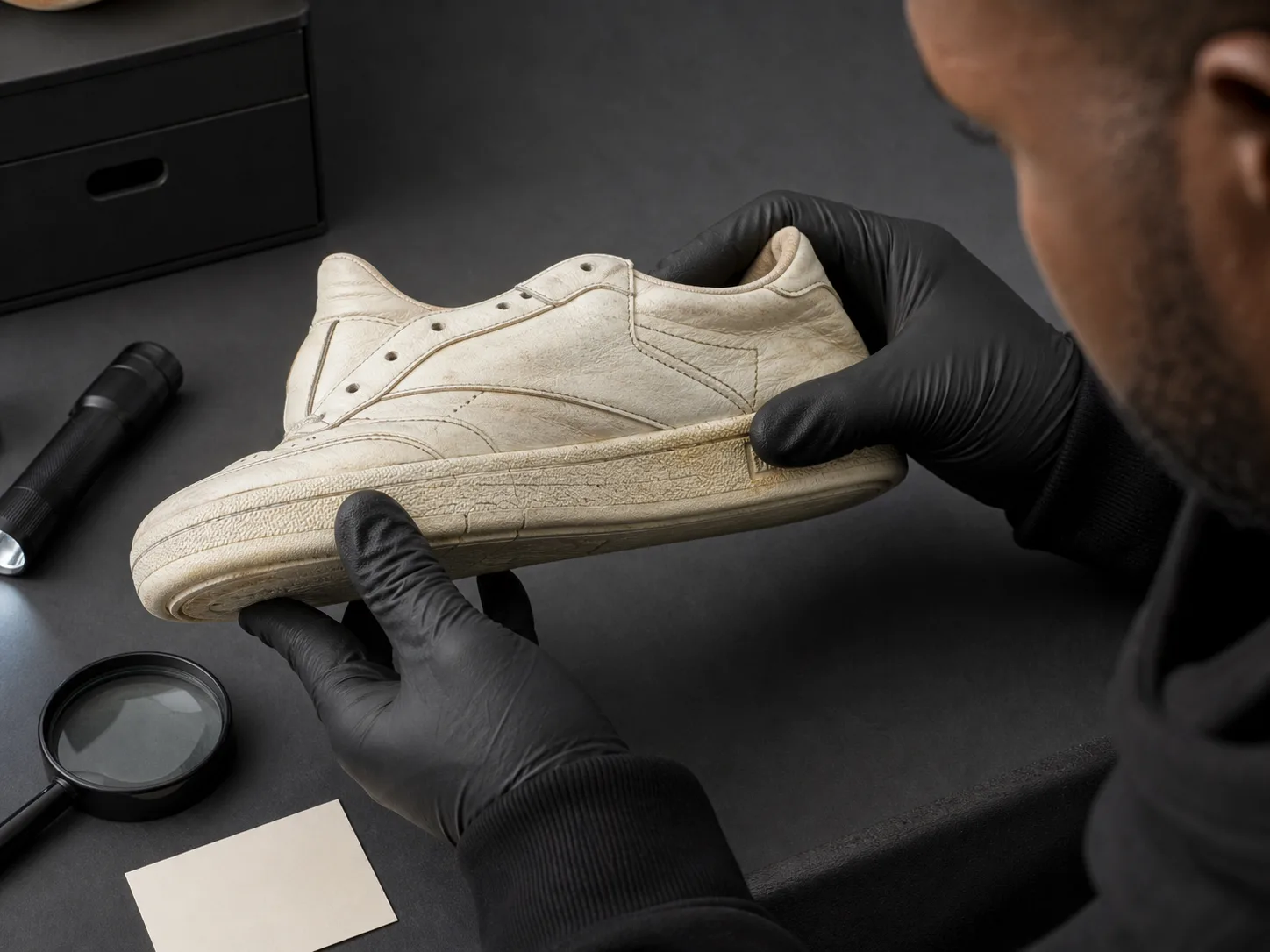
Collectible does not mean wearable
Foam can crumble or lose resilience through age. Adhesive can dry and separate between upper, midsole and outsole. Synthetic coatings may peel, air or gel systems can fail, and rubber may harden. Storage appearance alone does not reveal internal condition.
Inspect cracking, separation, deformation, stickiness, powdering, odor and uneven compression. Flex gently without forcing the shoe. If structural integrity is uncertain, keep it for display or consult a qualified footwear professional.
No visual checklist guarantees safety. A modern pair with a period-compatible silhouette is generally a better choice for long walks, dancing or uncertain weather.
05
Choose by the actual setting
Wear a current, supportive shoe already tested for the distance. Visual accuracy comes after comfort and stability.
Use secure lacing, reliable traction and a hem clear of the floor. Avoid fragile collector pairs.
Select weather-capable boots or shoes with suitable grip and material care; not every suede or vintage upper is appropriate.
A substantial loafer, lace-up or quiet leather sneaker works with pleated trousers and refined outerwear.
A clean low-top with straight denim, chinos or shorts keeps the lower line light and breathable.
Use footwear designed for the current sport and your needs, not an aged lifestyle reference chosen only for appearance.
06
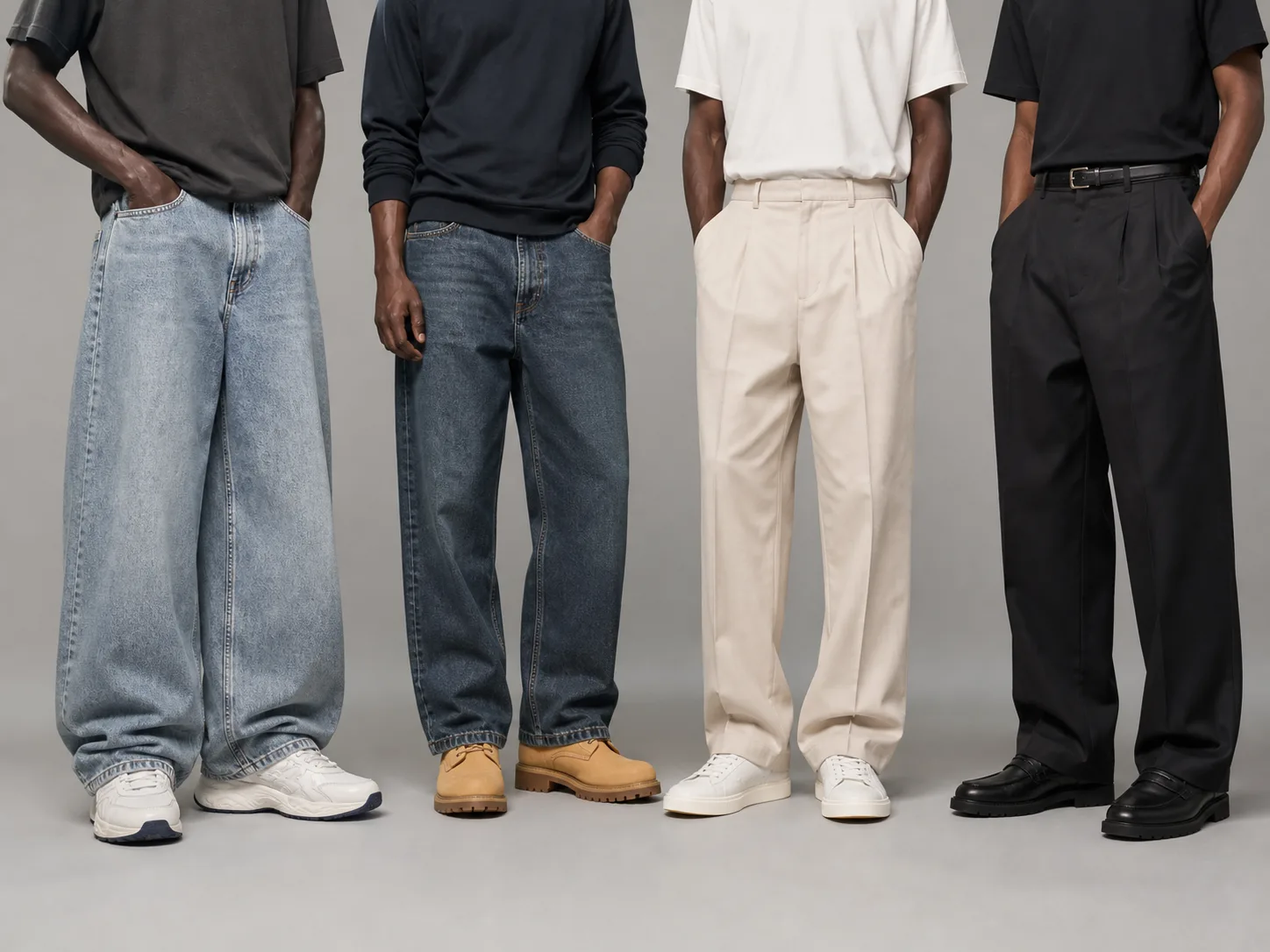
Four hem-to-shoe pairings
Wide denim + basketball sneaker: let a controlled break touch the upper while the toe and sole remain visible.
Straight loose denim + work boot: place the hem over or near the shaft without trapping excessive cloth behind the heel.
Pleated chino + low-top: a soft break or cleaner crop keeps the prep direction precise.
Wide dark trouser + loafer: use a broad toe and substantial sole so the shoe does not disappear beneath the fabric.
07
Fit cannot be judged by labeled size alone
Measure both feet and fit the larger one, allowing appropriate toe room for the shoe type. Width, instep, heel shape and sock thickness affect comfort. Different models in the same numerical size can fit differently because lasts and construction vary.
Walk indoors on a clean surface where returns permit it. Check heel slip, toe pressure, side compression and whether the foot slides during direction changes. Do not expect painful footwear to become safe solely through break-in.
Persistent pain, numbness, skin injury or a condition affecting circulation or sensation warrants advice from an appropriate qualified healthcare professional. BAAM Boys provides style information, not medical or biomechanical assessment.
08
Care according to material and construction
Brush loose dirt before applying moisture. Use products appropriate to leather, suede, textile or synthetic material and test inconspicuously. Dry shoes away from intense direct heat, which can distort material and stress adhesive.
Rotate pairs so they can dry, and store them supported in a stable environment. Cleaning cannot reverse foam hydrolysis, hardened rubber or structural adhesive failure. Restoration may improve appearance without making an old shoe dependable for demanding wear.
Evidence trail
Sources & Further Reading
These references support the historical, cultural or care-related claims in the guide. Outfit combinations and fit recommendations are BAAM Boys editorial judgment unless specifically attributed.
- Smithsonian NMAAHC — Five Things to See: The Fashion of Hip-Hop
Museum collection records connecting documented sneakers and other objects to hip-hop performers and culture.
- adidas Archive — History
The brand archive's account of the Superstar's basketball origin and its documented relationship with Run-D.M.C.
- Nike Department of Archives — The History of the Air Force 1
An official design history covering Bruce Kilgore, the 1982 release and the shoe's original basketball function.
- Converse — Converse History
An official chronology of the All Star, Chuck Taylor and the model's early basketball context.
Buyer verdict
Choose from the hem upward
Wide stacked denim
Start with a substantial basketball shoe or work boot that remains visible beneath the break.
Straight clean denim
Use a low-profile court shoe, classic canvas shape or restrained leather sneaker.
Tracksuit or jersey
Match footwear mass to the set's volume; avoid a sole so exaggerated that it changes the intended era.
Prep or leather
A clean low-top, loafer or simple boot often protects the more polished register.
Buy for actual wear, fit and condition. Historical recognition cannot make degraded foam safe or an uncomfortable last suitable for your foot.