Court engineering, street presence
90s Basketball Shoes: Why the Silhouettes Still Matter
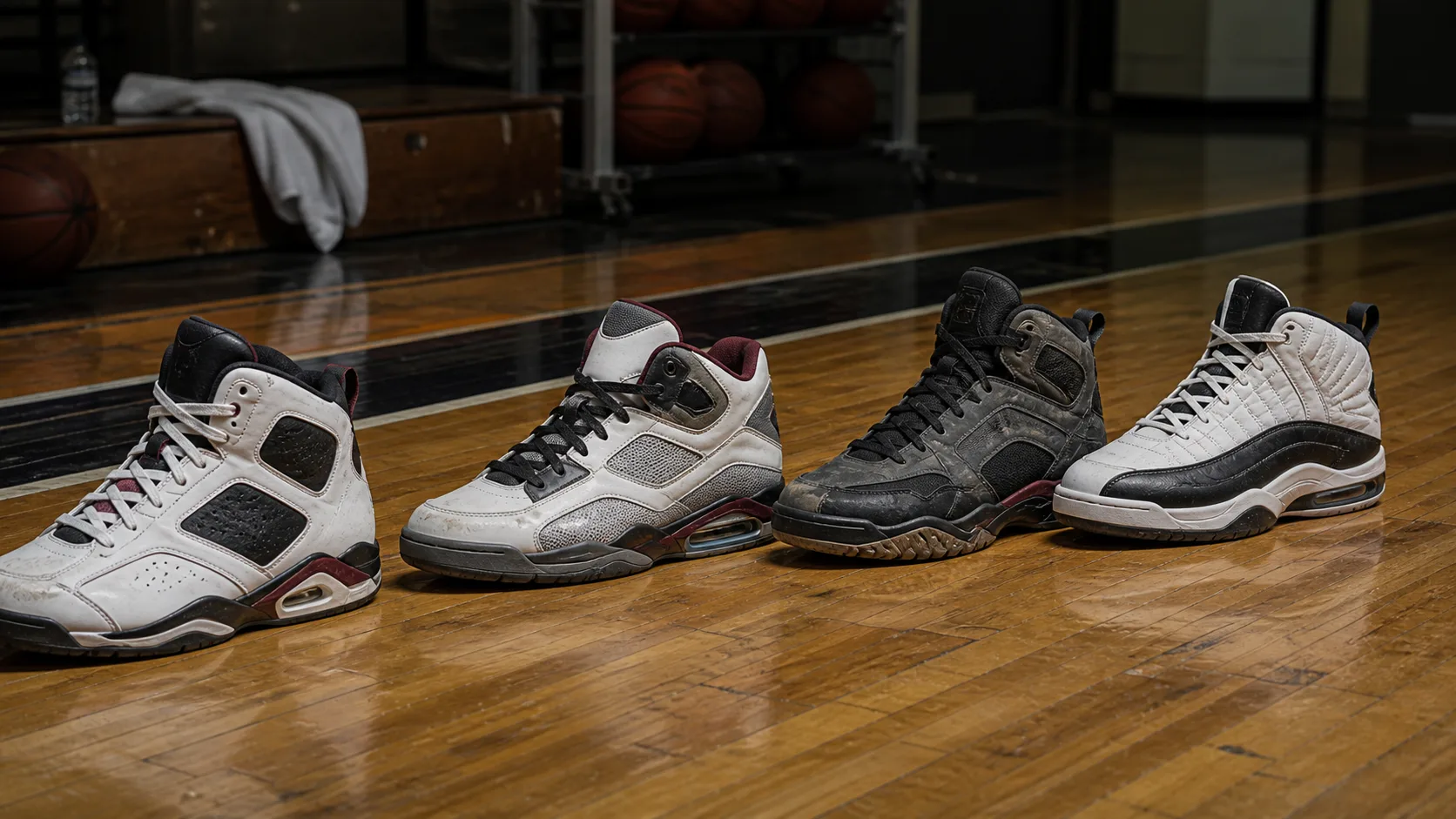
1990s basketball shoes combined padded high or mid collars, layered leather and mesh uppers, visible cushioning stories, stabilizing structures and substantial rubber soles. Designed for court demands and athlete imagery, they also balanced the decade's straight and baggy trousers, helping performance footwear become everyday style.
Quick look
What made 90s basketball shoes distinctive?
They made performance technology visually legible. Padded collars, layered panels, visible cushioning windows, wide bases, rubber outriggers and aggressive traction gave shoes physical and visual weight. Athlete marketing and televised basketball carried those shapes beyond the court, while hip-hop, school and neighborhood style placed them under denim, cargos and tracksuits.
| Archetype | Construction | Visual weight | Best trouser partner |
|---|---|---|---|
| Leather high-top | Padded collar, layered leather, broad sole | Heavy | Straight or relaxed denim |
| Technical mid-top | Mesh panels, support overlays, visible cushioning | Medium-heavy | Track pants or cargos |
| Outdoor court | Durable upper, thick rubber and aggressive traction | Rugged | Workwear or broad athletic pants |
| Late-90s streamlined | Cleaner upper with sculpted tooling | Controlled | Straight denim or refined sportswear |
01 / Read the object
A shoe is a system from collar to outsole
The collar controls how the upper meets the ankle, but height alone does not prove support. Lacing, heel hold, platform width, midsole geometry and fit all contribute. Layered leather can resist deformation and abrasion, while mesh reduces weight and heat. Internal padding shapes comfort but may compress over time.
The midsole manages impact and transition; the outsole supplies grip and durability. Stabilizing pieces can resist unwanted twisting or broaden the platform. A visible window communicates technology to the consumer, but visibility does not automatically make one system better. Performance depends on the whole construction, correct size and the player's needs.
The Sneakers hub provides the broader framework for purpose, symbolism, aging and care. Here the focus stays on 1990s basketball design and its outfit relationship.
02 / Decade progression
Technical detail became part of the visual identity
Leather-heavy court forms retained clear links to the previous decade while gaining more sculpted tooling.
Layering, visible cushioning and expressive panel geometry made technology easier to recognize.
Mesh, synthetic materials and smoother sculpting pointed toward the technical language of the 2000s.
These phases overlap. Shoe development follows product cycles, athlete needs and manufacturing rather than calendar boundaries. One court may include old pairs, current releases and budget alternatives at the same time. Avoid describing a single flagship model as the shoe everyone wore.
03 / Construction
Why old shoes can look solid and still fail
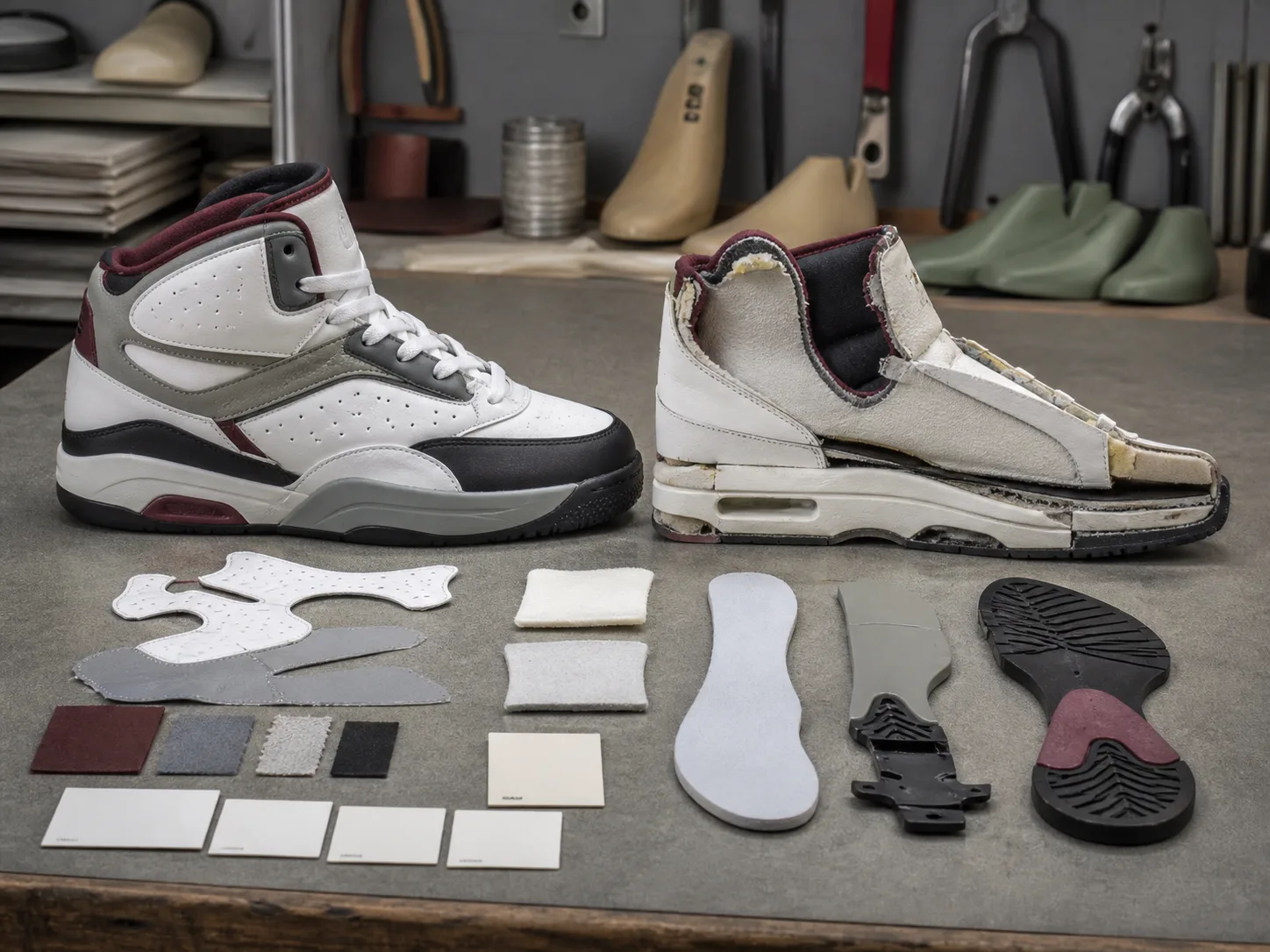
Leather and mesh are only the visible portion. Foam can harden, crumble or lose resilience. Adhesives can dry out and separate. Internal components may crack. Rubber can become brittle or lose grip. Storage conditions, heat, humidity and wear history influence aging, so production date alone cannot predict safety.
A collector pair may remain displayable while being unsuitable for basketball or extended walking. Flex the shoe gently, inspect the bond line and look for crumbling, cracking or separation. Listen for unusual sounds and stop if materials shed. No visual inspection can guarantee court safety.
Do not play basketball in an aged vintage pair solely because it appears unworn. Choose current performance footwear suited to your feet and activity; seek qualified fitting or medical advice for persistent pain.
04 / Court to street
Television supplied the image; daily wardrobes changed the meaning
Professional basketball gave shoes an athlete narrative and repeated broadcast exposure. Advertisements strengthened personality and technology stories. Once the same broad forms appeared with denim, school clothing and hip-hop style, a performance object gained new cultural use.
Adoption was neither automatic nor universal. Price, availability, team loyalty, local retail and personal taste shaped which shoes appeared in a community. Some men wore court pairs because they played; others valued the silhouette, athlete association or social visibility. The 90s Hip-Hop Fashion guide places footwear inside a larger clothing culture.
Credible history separates documented athlete contracts, advertising and photographs from claims about who “made” a model popular. Several groups can contribute different kinds of influence.
05 / Trouser balance
The hem decides how much shoe the outfit sees
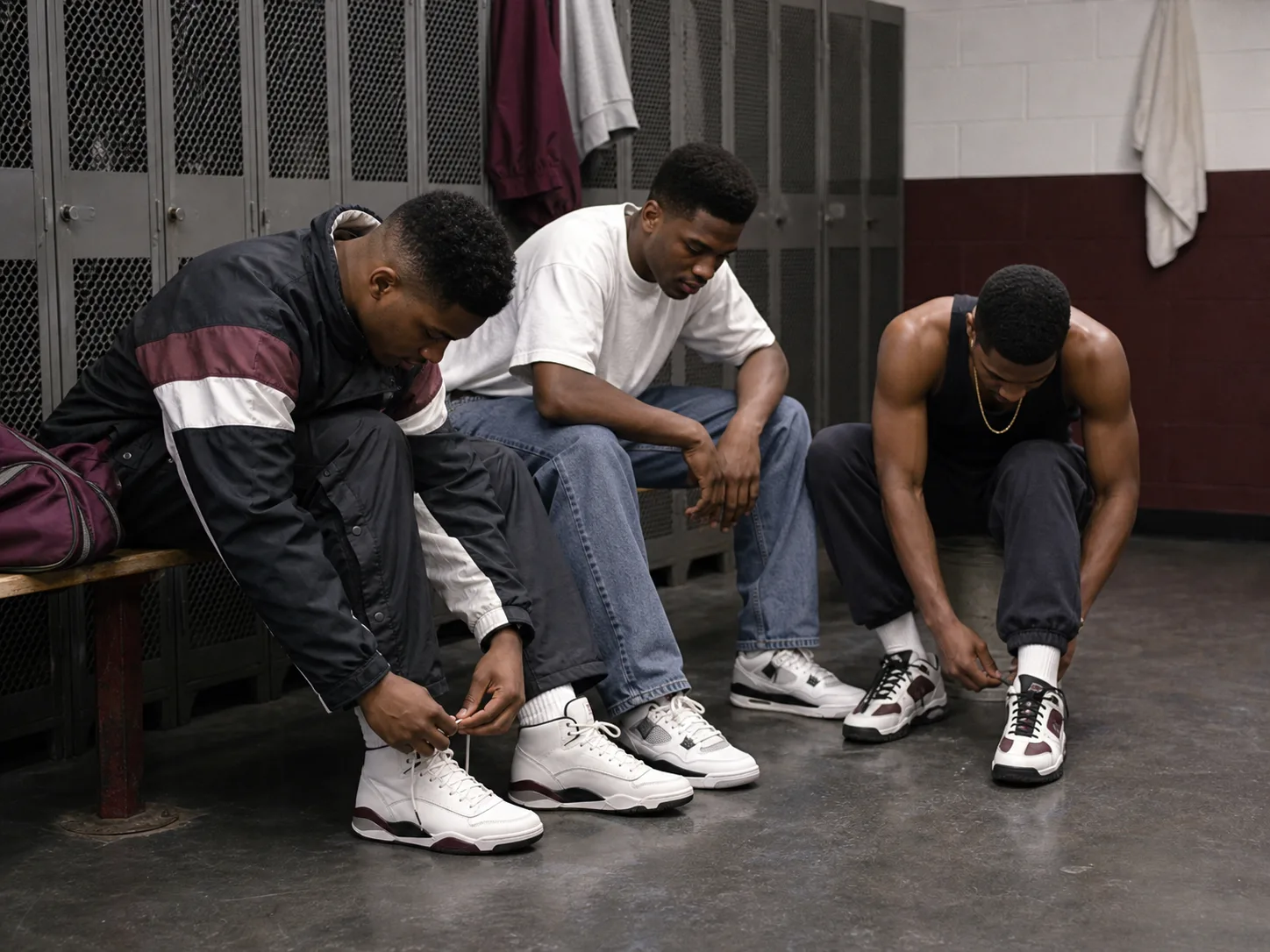
A straight warm-up pant can settle near a high collar and preserve the shoe's full outline. Relaxed jeans may break over the upper, revealing mostly toe and sole. A cuffed athletic pant exposes the collar and makes the shoe more visually active. None is inherently correct; the goal is a deliberate boundary.
Very narrow trousers can make a large 1990s court shoe look detached. Extremely long denim can hide the upper and drag under the heel. Adjust inseam and opening before changing accessories. When comparing pairs, wear the intended trousers rather than judging against shorts.
The Best Shoes for a 90s Outfit guide compares basketball shoes with trainers, boots and dressier options.
06 / Modern selection
Choose by use before nostalgia
Current performance pair
Prioritize fit, traction, containment and cushioning appropriate to your court and body.
Retro-inspired mid-top
Use a current build with straight denim or cargos and enough room at the hem.
Leather high-top
Pair a clean, substantial shape with relaxed denim and a quieter upper body.
Original vintage
Document provenance and condition, then treat fragile materials as display objects.
Feet differ in width, volume and sensitivity. Try shoes later in the day, use the socks intended for wear and walk on a clean indoor surface where returns remain possible. A historically admired silhouette is not useful if it causes pressure or instability.
07 / Buying retro
Authentication and wearability are separate questions
A genuine old pair can be unsafe; a modern reproduction can be wearable but historically inaccurate in detail. Evaluate provenance, tags, construction, box information and seller reputation when authenticity matters. High-value purchases may require a trusted specialist because photographs cannot reveal every inconsistency.
Then evaluate condition independently. Ask how the pair was stored, request close views of midsoles and bond lines, and understand the return policy. Do not assume “deadstock” means structurally fresh. Clean according to material, avoid harsh soaking and never use household chemicals based on an unverified social-media shortcut.
- Buying by collar height. Fit and platform matter more than the high-top label.
- Playing in an untested original. Material age can be invisible until failure.
- Ignoring trousers. A great shoe can look wrong when the hem fights its scale.
Continue the cluster
Sneakers specialist guides
Evidence trail
Sources & Further Reading
These references support the historical, cultural or care-related claims in the guide. Outfit combinations and fit recommendations are BAAM Boys editorial judgment unless specifically attributed.
- Smithsonian NMAAHC — Five Things to See: The Fashion of Hip-Hop
Museum collection records connecting documented sneakers and other objects to hip-hop performers and culture.
- adidas Archive — History
The brand archive's account of the Superstar's basketball origin and its documented relationship with Run-D.M.C.
- Nike Department of Archives — The History of the Air Force 1
An official design history covering Bruce Kilgore, the 1982 release and the shoe's original basketball function.
- Converse — Converse History
An official chronology of the All Star, Chuck Taylor and the model's early basketball context.
Direct answers
90s basketball shoes FAQ
What defined 1990s basketball shoe design?
Padded collars, layered leather and mesh, visible cushioning stories, stabilizing structures, broad platforms and substantial rubber outsoles created recognizable court silhouettes.
Can original 90s basketball shoes still be worn?
Some may tolerate light display wear, but aged foam, glue and rubber can fail without obvious warning. Original pairs should not be assumed safe for basketball or long walks.
Were all 90s basketball shoes high-tops?
No. High and mid collars were prominent, but collar heights and construction varied. Support cannot be judged from height alone.
What trousers work with 90s basketball shoes?
Straight or relaxed denim, warm-up pants and cargos generally provide enough opening and weight. Control length so the hem does not disappear beneath the heel.
Should retro basketball shoes be used for modern basketball?
Choose current performance footwear designed and fitted for present use. A retro lifestyle release may resemble a court shoe without offering the performance qualities you need.