Hair & Grooming · 1990—1999
90s Black Men’s Hairstyles Made Shape Personal
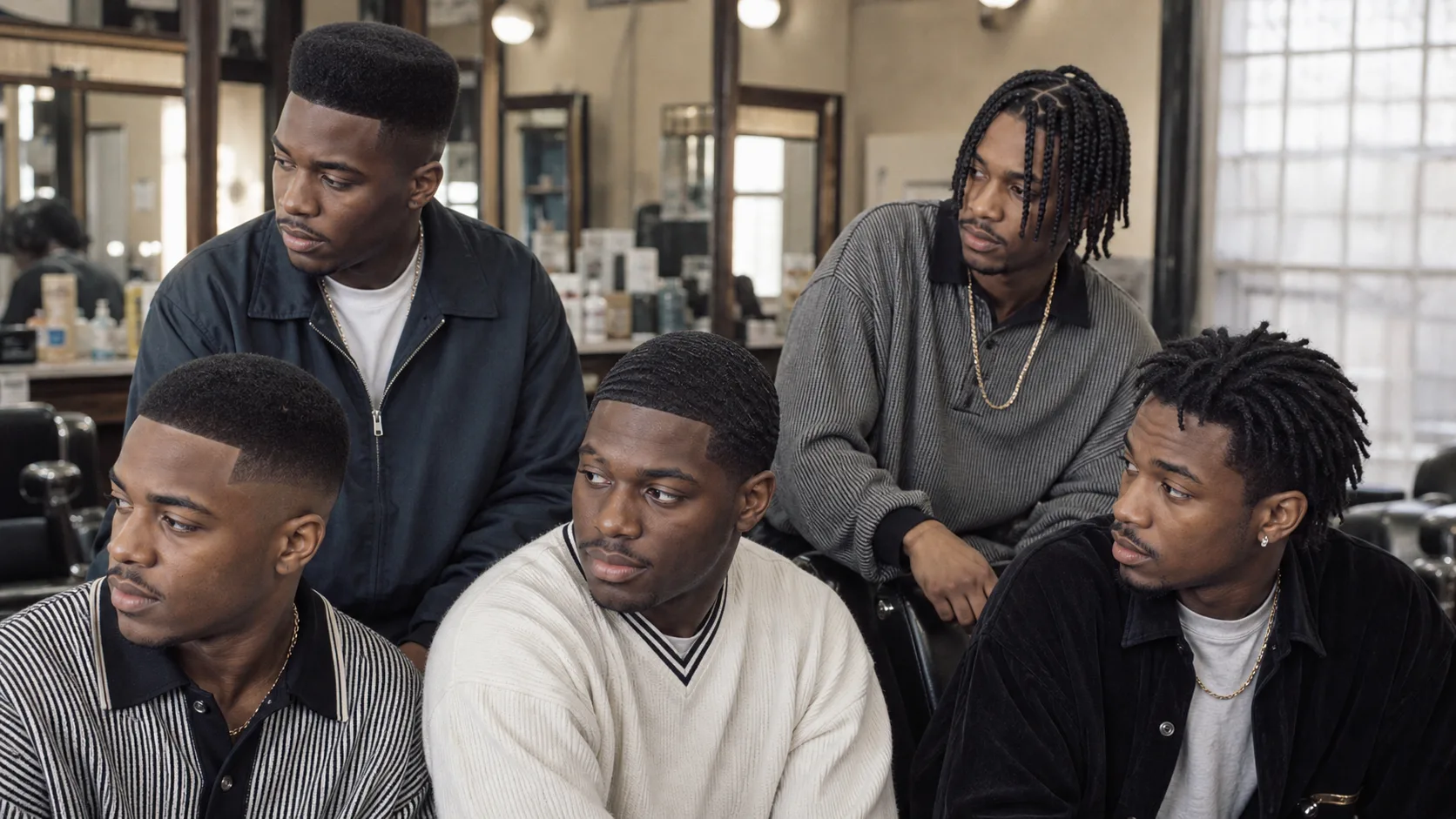
Low fades, high tops, waves, braids, twists and locs created very different outlines. Skilled barbering, natural texture, maintenance and individual identity mattered more than a single decade trend.
In one paragraph
What Black men's hairstyles were popular in the 90s?
Visible 1990s Black men's hairstyles included low and high fades, shaped lineups, high-top fades, close cuts, waves, short natural hair, box braids, cornrows, twists and locs. Popularity changed throughout the decade and across regions, ages, workplaces and music scenes. A historical reference cannot predict the same result for every person: curl pattern, density, growth direction, scalp condition, head shape and maintenance time all influence an appropriate cut or style.
01
Eight silhouettes inside the decade
Low fade
Short transition near the temple and neckline keeps more visible texture above. Edge shape can be soft or sharply defined.
High fade
The transition rises farther up the sides, making the top appear more prominent even at moderate length.
High-top fade
Height and a deliberate upper shape create a graphic silhouette. Versions ranged from compact and rounded to tall and squared.
Close cut
Short, even length emphasizes the hairline and head shape. Precision and regular cleanup determine the finish.
Waves
A close cut arranged into visible wave pattern depends on consistent brushing, moisture, compression and individual growth pattern.
Braids and cornrows
Parting, size, direction and length offered enormous variation. Installation skill and appropriate tension remain essential.
Twists
Two-strand and other twist structures gave natural hair definition and could be worn short, medium or as part of a longer journey.
Locs
Length, maturity, parting and maintenance method created many silhouettes; locs should not be reduced to a music-era prop.
No style belonged exclusively to the 1990s, and several have much longer histories. The decade made particular shapes highly visible through film, television, sport and music, while barbershops and homes sustained the real craft.
02
Describe geometry before naming a trend
How far does the top extend, and is that height uniform, rounded, sloped or squared?
Where does the fade begin, how compressed is it and how much weight remains near the temple?
Is the hairline natural, lightly shaped or highly defined? What neckline treatment suits the growth pattern?
For braids, twists or locs, size and direction of sections affect tension, movement and visible scalp.
Coil pattern, density, strand size and shrinkage affect how a reference translates into actual shape.
Facial hair, glasses, head shape and clothing collar all change the complete head-and-shoulder silhouette.
This vocabulary is more useful than bringing one celebrity photograph and requesting an exact copy. A skilled professional can explain which parts translate and which need adjustment.
03
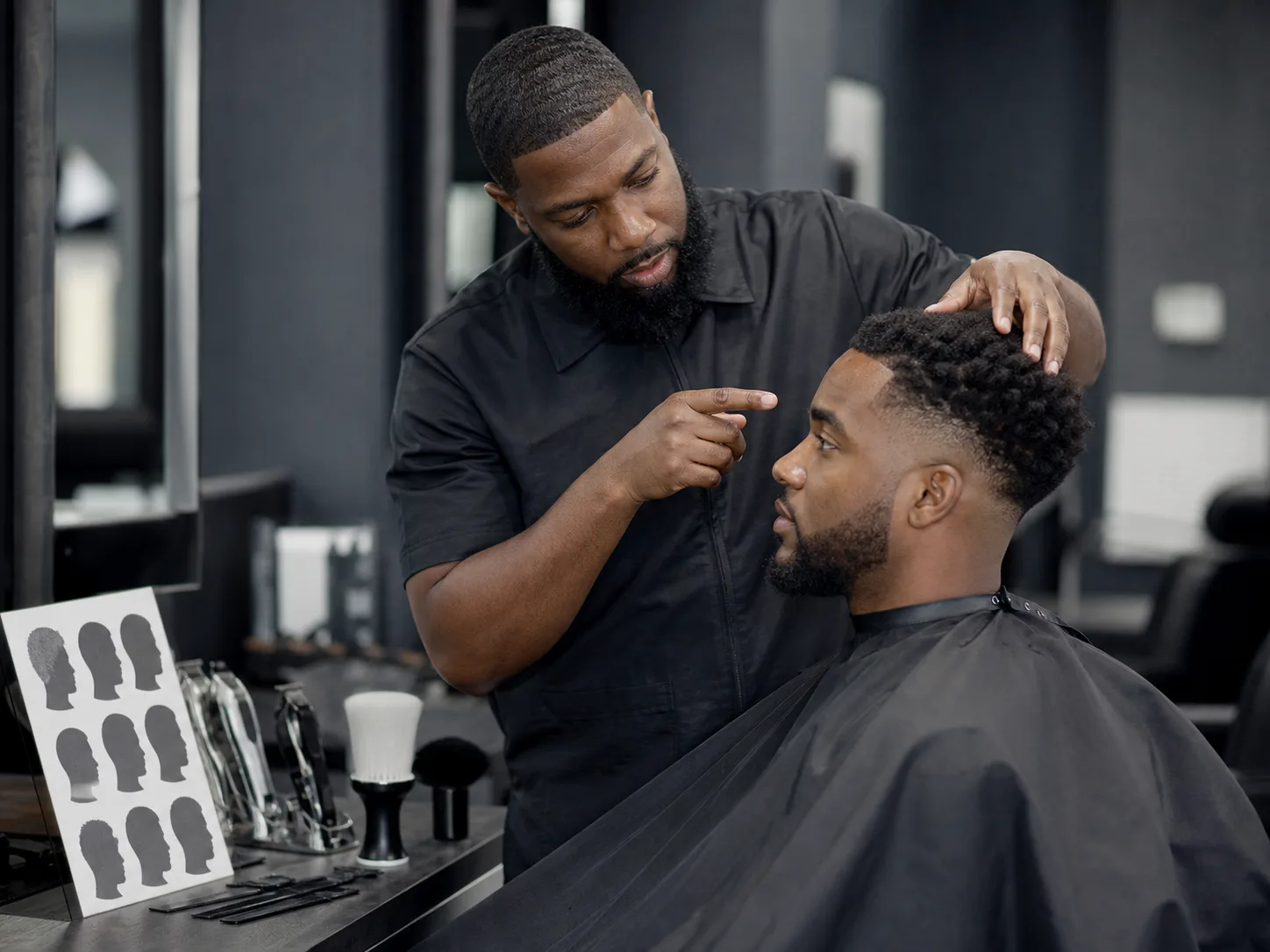
A useful barber conversation has five details
- Show several references. Front, side and back views reveal more than one dramatic portrait.
- State the fade height. “Low,” “mid” and “high” can still vary; indicate where you expect the transition.
- Discuss top length. Explain how much shrinkage and styling height you want after the hair is dry.
- Choose the perimeter. Ask for a natural, lightly cleaned or sharper line based on your preference and hairline.
- Be honest about maintenance. A style requiring frequent visits or daily work should fit your schedule.
Listen when a barber or loctician identifies limitations related to density, growth direction, current length or prior damage. A reference is a goal for discussion, not a guarantee of identical anatomy.
04
The barbershop was also a fashion institution
Barbers translated public imagery into individual shapes and created local variation through technique. The shop was a place where clients observed cuts, discussed sport and music, and learned who could execute a particular fade, line or design.
That expertise often disappears when hairstyle history credits only a person photographed on camera. The visible figure may popularize an image, but barbers, braiders, locticians and community practice make the style possible. Reliable credits should be preserved whenever they exist.
Hair and clothing also worked together. A high top changed the vertical balance above a broad jacket. Braids or locs moved differently around caps and collars. A close fade made a rugby shirt or relaxed suit feel especially clean. See 90s Black Men's Fashion for the broader wardrobe.
05
Maintenance depends on the structure
Regular shape cleanup, gentle cleansing, scalp comfort and at-home brushing or styling as appropriate.
Consistent brushing pattern, moisture, reasonable compression and avoidance of excessive friction.
Appropriate installation tension, scalp observation, nighttime protection and timely removal rather than indefinite wear.
Method-specific cleansing, drying and maintenance with attention to buildup, tension and the needs of the individual scalp.
Product needs differ. More product is not automatically more moisture or hold, and fragrance does not prove scalp compatibility. Stop using anything that causes irritation and seek an appropriate licensed professional or healthcare professional for persistent pain, inflammation, sores or sudden hair loss.
06
Reference photos need date and context
A film still, album image, sports photograph and family portrait each has different styling intent. Confirm when the image was created, not only when it was uploaded. A late-80s photograph may be labeled “90s” because the style remained visible; a modern recreation can lose its original disclosure as it circulates.
Describe visible shape without assuming the exact product, tool or technique used. Low-resolution imagery rarely proves whether hair was chemically processed, added, cut in a particular method or styled with a specific formula. The Editorial Policy explains how BAAM Boys separates observation from sourced fact.
07
Modern versions can soften the historical outline
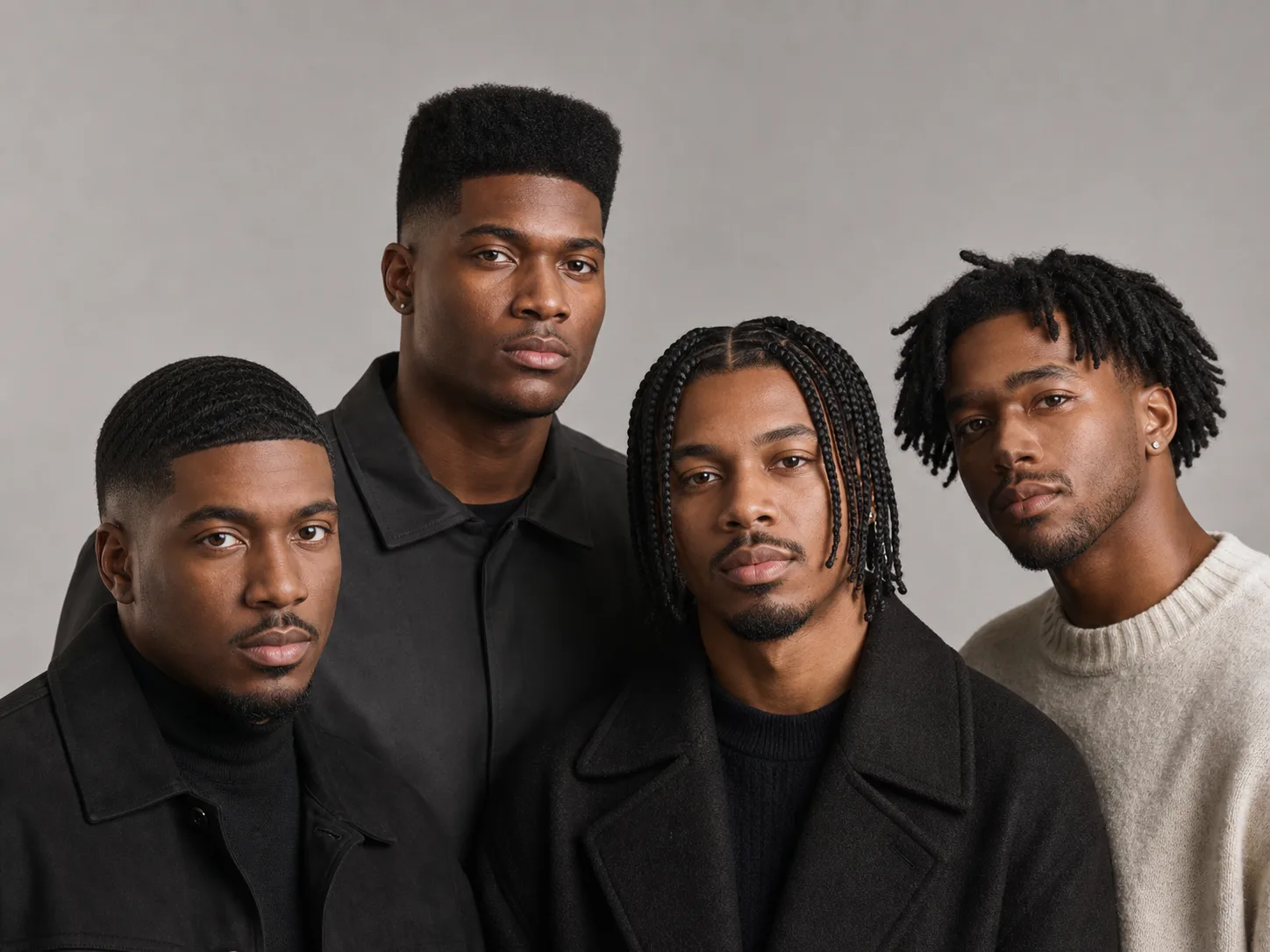
A low taper with waves keeps the clean perimeter while allowing a more gradual transition. A high top can use moderate height and a softer upper edge rather than an extreme geometric block. Box braids can be adjusted in size and length for routine, while short maintained locs create movement without copying a public figure.
The best update suits the wearer's texture and maintenance capacity. Bring references showing people with similar density and growth pattern when possible. Discuss how the style looks between appointments, not only on the first day.
Clothing can remain quiet when the hair has strong shape. A dark jacket, knit or simple tee provides a clean frame. The Men's Style hub connects grooming with proportion, accessories and wardrobe planning.
08
Avoid five common mistakes
- Treating hair as costume. Natural texture and protective styling carry identity, skilled labor and histories beyond entertainment.
- Requesting an exact celebrity copy. Anatomy, density and styling teams differ; translate the geometry instead.
- Choosing tension for neatness. Pain is not a requirement for braids, twists or loc maintenance.
- Ignoring the grow-out. Consider how the cut or style behaves between professional appointments.
- Making medical claims from an image. Hair or scalp conditions cannot be diagnosed through a fashion photograph.
Evidence trail
Sources & Further Reading
These references support the historical, cultural or care-related claims in the guide. Outfit combinations and fit recommendations are BAAM Boys editorial judgment unless specifically attributed.
- American Academy of Dermatology — Black hair: Tips for everyday care
Dermatologist-reviewed guidance on conditioning, heat, chemical services, tension and when to seek medical care.
- American Academy of Dermatology — Hairstyles that pull can lead to hair loss
Medical guidance on traction alopecia, warning signs and reducing repeated tension.
- The Museum at FIT — Fresh, Fly, and Fabulous: Fifty Years of Hip Hop Style
Cultural context for grooming, accessories and self-presentation within hip-hop style.
Observation card
Six fields for identifying a 90s hairstyle
- Top profile
- Flat, rounded, directional, parted, braided or locked.
- Side profile
- Uniform, tapered, faded, disconnected or extended.
- Hairline
- Natural, sharpened, curved or intentionally softened.
- Surface
- Brushed, waved, twisted, braided, coiled or free.
- Date clue
- Use clothing, known event and image source alongside the haircut.
- Confidence
- State what is visible and avoid inventing technique from one angle.
Use the card to compare several documented images. It is an observation tool, not a medical assessment or a universal instruction for every texture.