Everyday Wardrobe · 1990—1999
90s Black Men’s Fashion Lived Beyond the Music Video
Black men dressed for offices, churches, campuses, dates, family events and ordinary weekends as well as clubs and concerts. Relaxed proportion connected many of those wardrobes, while material, finish and setting kept each one distinct.
In one paragraph
How did Black men dress across everyday 1990s settings?
Everyday 90s Black men's fashion included relaxed suits, pleated trousers, dress shirts, ties, fine knits, polos, rugby shirts, cardigans, denim jackets, loose jeans, work jackets, hoodies, tracksuits and leather outerwear. Shoes ranged from loafers and dress shoes to work boots, clean low-tops and basketball sneakers. Age, occupation, region, faith community, music taste and occasion changed the combination, so baggy hip-hop clothing represents an influential part of the decade rather than its entire wardrobe.
01
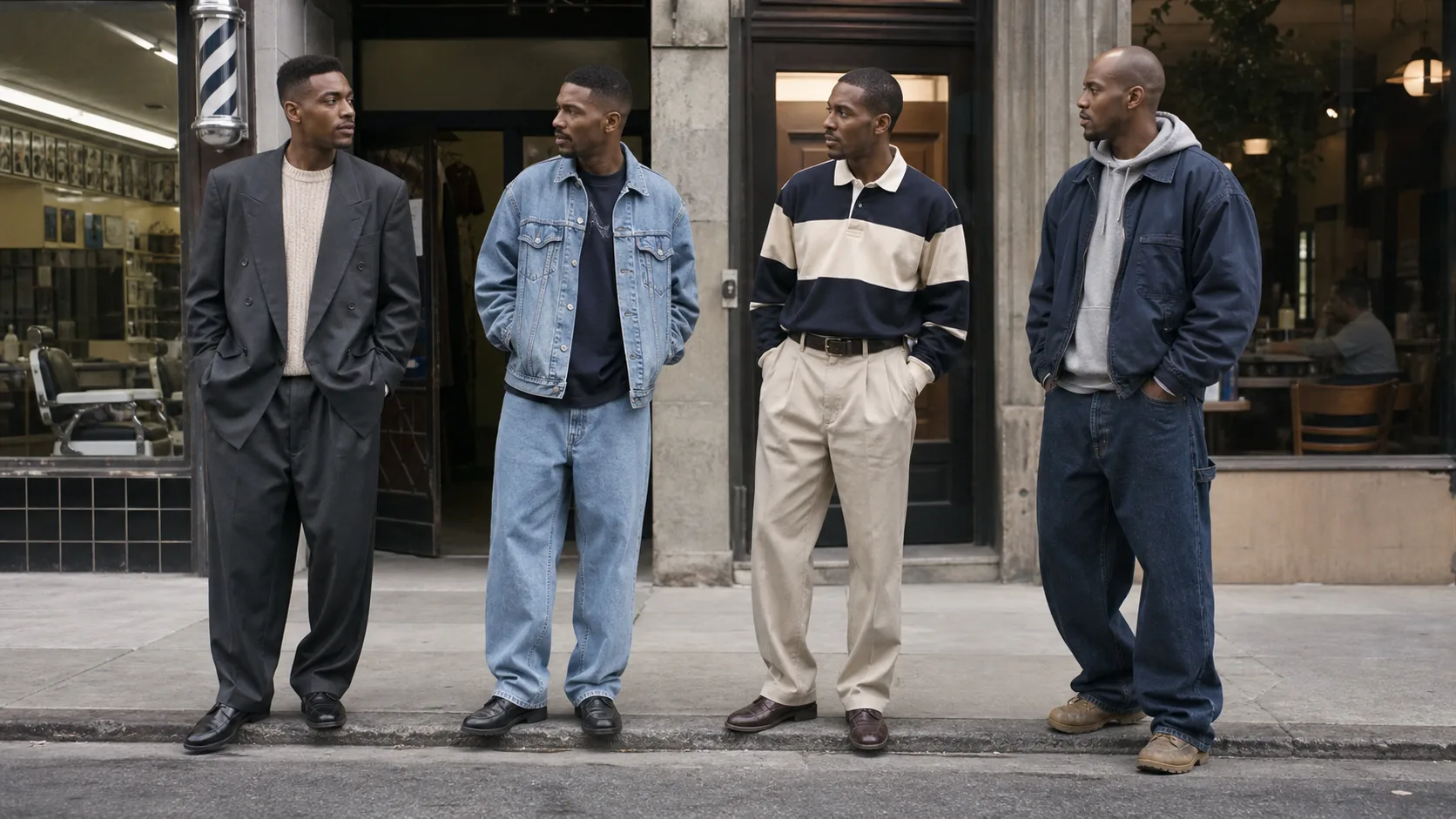
Five settings reveal a fuller wardrobe
Soft professional tailoring
Roomy jackets, pleated trousers, shirts and patterned ties reflected the decade's broader suit line. Dress codes varied enormously, and uniforms or practical workwear were equally important parts of daily dress.
Presentation with intention
Suits, polished shoes, coordinated shirts and carefully groomed hair made respect and occasion visible. Family gatherings also allowed knits, slacks and leather to bridge formality and comfort.
Collegiate ease
Rugby shirts, polos, sweatshirts, varsity layers, straight or loose denim and clean athletic shoes made prep less rigid. Historically Black colleges and universities held distinct style traditions that resist one national summary.
Denim and practical layers
Denim jackets, tees, cardigans, work coats, hoodies and relaxed jeans supported errands and social time. Condition and coordination separated considered casualwear from neglect.
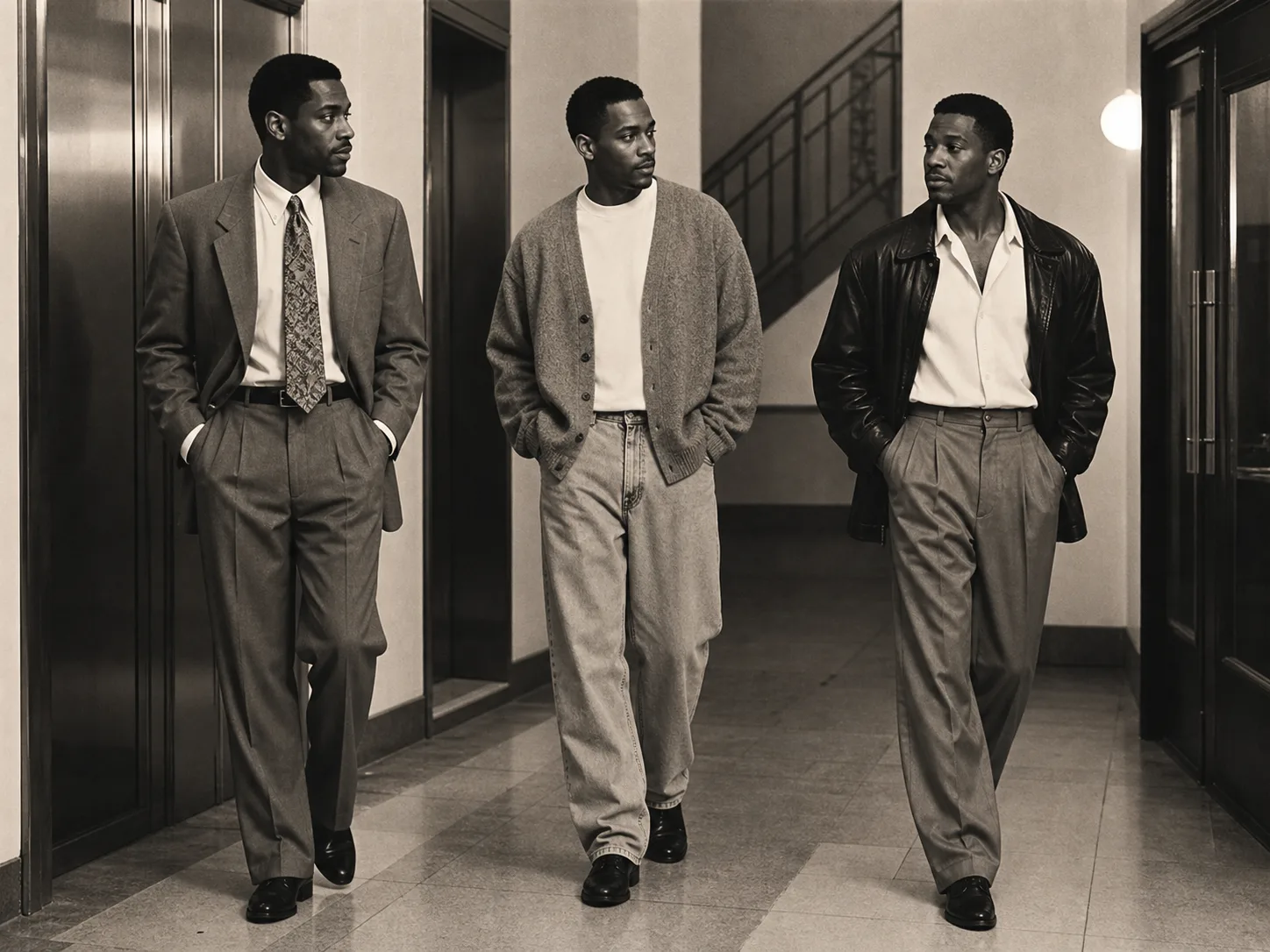
Leather, knit and polish
A dark leather jacket, open-collar shirt or fine sweater with pleated trousers created an adult evening line. Loafers, boots or restrained sneakers changed the degree of formality.
These settings overlapped. The same man could own a suit, sportswear and loose denim without contradiction. A complete cultural history must make room for that movement rather than assigning every wearer a single visual identity.
02
Relaxed fit still required control
The shoulder was often wider, the jacket longer and the trouser fuller than common slim tailoring of later years. Pleats created room near the hip, while a higher rise helped a wide leg fall instead of collapsing. Casual denim could sit lower and stack more heavily over footwear.
“Oversized” is too blunt to explain every garment. A relaxed blazer may have extended shoulders but still shape cleanly through the chest. A rugby shirt may be roomy without reaching the thigh. A work jacket can be boxy and compact, producing contrast over wider jeans.
Look for intention at the seam. Slight extension can create ease; extreme drop changes the entire outfit.
A medium or higher rise supports pleats and a clean drape. Lower casual denim creates a different, longer torso line.
Room through seat and thigh should continue coherently toward the hem rather than pinch at one point.
Dress trousers may break softly; denim may stack. Both require a shoe with enough visual presence.
For a wider historical view of silhouette and regional style, read the main 90s Black Fashion guide.
03
Formal did not mean narrow or severe
Many 1990s suits gave the body space. Jackets could be double-breasted or single-breasted, shoulders structured or softened, and trousers pleated with a generous line. A fine crewneck under a suit reduced formality while preserving shape.
Patterned ties and shirts supplied controlled expression. For social occasions, an open collar changed the mood, especially beneath leather or a relaxed blazer. Shoes mattered: a polished loafer or lace-up clarified that volume was deliberate.
Church and family photographs are especially useful because they preserve dress outside commercial fashion imagery. They also require care: one family's clothing cannot prove what an entire community wore, and private photographs should be used only with proper rights and context.
04
Sportswear entered everyday life in several ways
A tracksuit could serve as coordinated leisurewear rather than workout equipment. A sweatshirt carried campus, team or local identity. Jerseys became visible layers over tees, but athletic influence also appeared more quietly through nylon jackets, caps and clean sneakers.
Basketball shaped shoe desire and public imagery, while football, baseball and other sports contributed silhouettes and symbols. Team clothing connected wearers to player, city and community. Those meanings cannot be reduced to color matching.
Hip-hop greatly amplified sportswear and relaxed scale. Its influence deserves direct attention in the separate 90s Hip-Hop Fashion guide, where music imagery and regional scenes are the central questions.
05
Hair, grooming and accessories completed the outfit
Close cuts, fades, waves, braids, twists and locs all appeared, with substantial variation across age, location and point in the decade. Hair was skilled work and personal identity, not a detachable costume accessory. A clean hairline or carefully maintained style could sharpen even the most relaxed clothing.
Belts, watches, rings, chains, glasses and hats created smaller signals. Office and formal settings often favored restrained scale. Casual and music-adjacent dressing allowed more visible pieces. The best historical reading considers who wore the object, where and why instead of declaring one accessory universally essential.
Fragrance, skin care, barbering and garment maintenance rarely dominate surviving fashion headlines, but they affected how clothes were experienced. Pressed trousers, brushed shoes and clean sneakers gave familiar pieces authority.
06
A compact 90s-inspired wardrobe
Works with fine knit, shirt or plain tee.
Provides the decade's room without relying on denim.
Choose a controlled hem and convincing rise.
Adds collegiate structure and easy color blocking.
Balances wider trousers and handles daily wear.
Moves from evening polish to rugged casualwear.
Supports casual and prep combinations.
Clarifies tailoring and elevated outfits.
Buy for current use rather than historical completeness. A garment that cannot work with at least two existing pieces will remain a reference object instead of becoming part of a wardrobe.
07
Three modern formulas preserve the logic
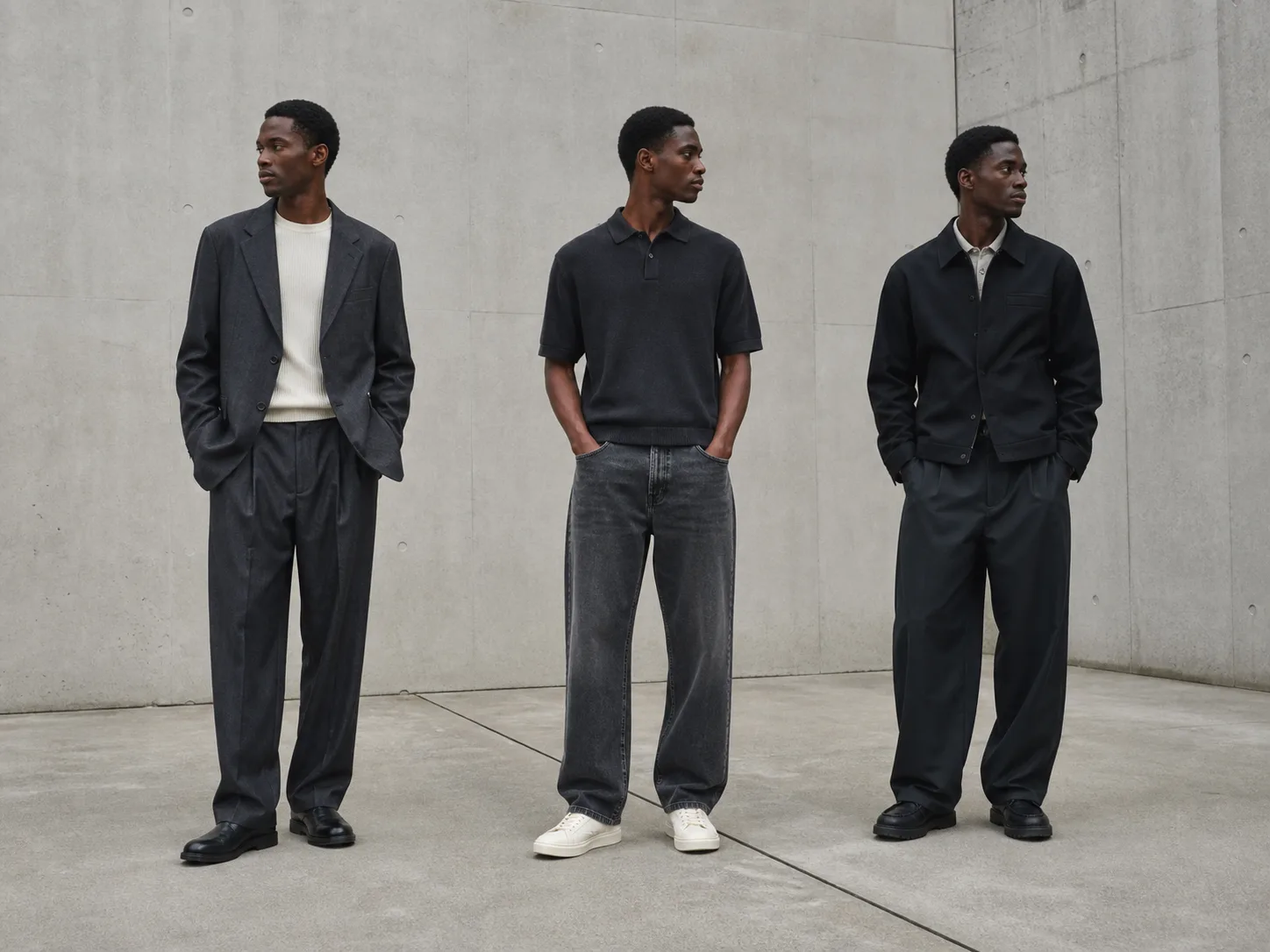
Smart: relaxed charcoal blazer, fine cream knit, pleated trouser and substantial black loafer. The silhouette feels period-aware while the quiet palette keeps it contemporary.
Casual: heavyweight polo, straight loose denim and clean low-top sneaker. Tuck or shorten the top if the leg is especially wide so the body retains a clear center.
Rugged: compact work jacket, tucked knit or tee, controlled wide trouser and sturdy dark shoe. Texture provides interest without a logo.
Choose one dominant proportion. If the trouser is wide, the jacket can be shorter and structured. If the blazer is long and broad, keep the trouser full but clean. More fit and capsule guidance appears in Men's Style.
08
Use photographs responsibly
Family albums, school portraits and community photographs can correct the celebrity-heavy historical record. They also carry privacy, authorship and context. Date, location, photographer and permission should be established before publication whenever possible.
Look beyond the most obvious garment. A trouser rise, jacket length, shoe shape or grooming detail may reveal more than a logo. Compare several images from a known setting before claiming a pattern. The BAAM Boys Editorial Policy explains the distinction between visual observation and historical proof.
Evidence trail
Sources & Further Reading
These references support the historical, cultural or care-related claims in the guide. Outfit combinations and fit recommendations are BAAM Boys editorial judgment unless specifically attributed.
- Federal Trade Commission — Clothes Captioning: Care Labeling Rule
Official explanation of garment care labels and the evidence manufacturers need for care instructions.
- The Metropolitan Museum of Art — Superfine: Tailoring Black Style
Institutional context for tailoring, Black identity, distinction and self-presentation.
- The Museum at FIT — Fresh, Fly, and Fabulous: Fifty Years of Hip Hop Style
Curatorial context for sportswear, designer fashion, customization and individual expression.
Common questions
90s Black men's fashion FAQ
Was 90s Black men's fashion always baggy?
No. Relaxed fits were prominent, but the decade included structured suits, fine knits, polos, straight denim and many degrees of volume. Setting and age made a major difference.
What is an easy everyday 90s-inspired outfit?
Try a heavyweight polo or tee, straight loose jeans and clean low-top sneakers. Add a compact work or denim jacket when needed.
How were men's suits cut in the 1990s?
Many suits used broader shoulders, longer jackets, pleated trousers and a fuller leg than later slim styles. Construction still varied from structured business tailoring to softer social dressing.
What shoes did Black men wear in the 90s?
Dress shoes, loafers, work boots, low-top sneakers, basketball shoes and other athletic styles all appeared. The choice followed occupation, occasion, climate and outfit.
How can I research a family fashion photograph?
Record the approximate date, location, event, people shown and photographer if known. Separate family memory from verified fact, preserve the original and obtain permission before publishing it.