Cultural History · 1990—1999
90s Black Fashion History: The Movement Behind the Silhouette
Hip-hop visibility, professional sport, regional street scenes, Black media and community exchange moved relaxed denim, workwear, jerseys and substantial shoes into a global visual language. This history guide examines the forces and influence; the separate men's guide focuses on work, church, campus, weekends and practical outfits.
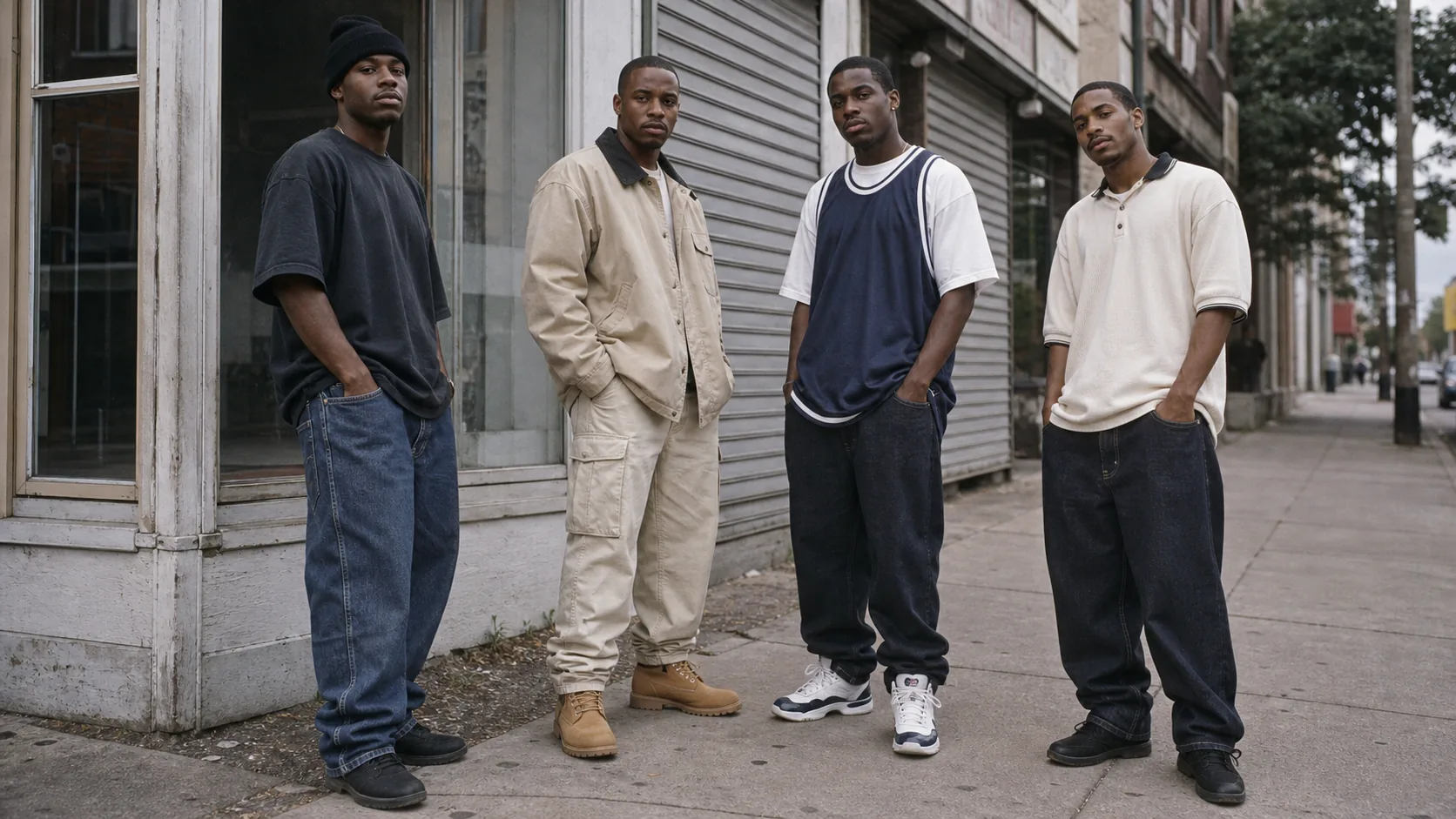
What did Black men wear in the 1990s?
Popular 90s Black men's outfits combined loose jeans or cargos with oversized tees, flannels, hoodies, work jackets, varsity layers and sports jerseys. Basketball sneakers and wheat-colored work boots balanced the wider hems. Other men leaned into polos, rugby shirts, leather jackets, relaxed suits and cleaner dark denim. Hip-hop made many looks internationally visible, while local communities, sports, campuses and everyday work supplied much of the style language.
Read the silhouette before the logo
The decade's most important shift was spatial. Shoulders dropped, tees extended, trousers widened and outerwear gained room. Clothing no longer traced the body as closely as much 1980s tailoring. The empty space between fabric and body became part of the attitude.
A seam sitting beyond the natural shoulder makes the upper body appear broader and more relaxed.
Long tees and jerseys create a lower visual center, especially over jeans worn below the natural waist.
Room through seat and thigh allows denim to fall, stack or break over a substantial shoe.
Boots, padded sneakers and dense outerwear prevent the wide silhouette from feeling visually fragile.
Not every loose garment fits well. A good relaxed jean still needs a usable rise and enough control at the hem. An oversized tee should hang from the shoulder rather than twist around the torso. The goal is intentional room, not simply the largest available size.
Four wardrobes inside the decade
Workwear street
Utility jackets, hoodies, cargos, loose denim and boots supplied durability and a grounded silhouette. Muted color placed emphasis on material and weight.
Sports layered
Jerseys over tees, varsity jackets, caps and basketball sneakers turned team identity into everyday presentation. Proportion mattered as much as the team or player.
Preppy relaxed
Polos, rugby shirts, cardigans and loafers or clean sneakers offered a polished countercurrent. Worn with roomy denim, prep became less formal and more local.
Leather evening
Dark leather over a knit or open-collar shirt worked with relaxed trousers and polished shoes. It was adult, controlled and far from a caricature of streetwear.
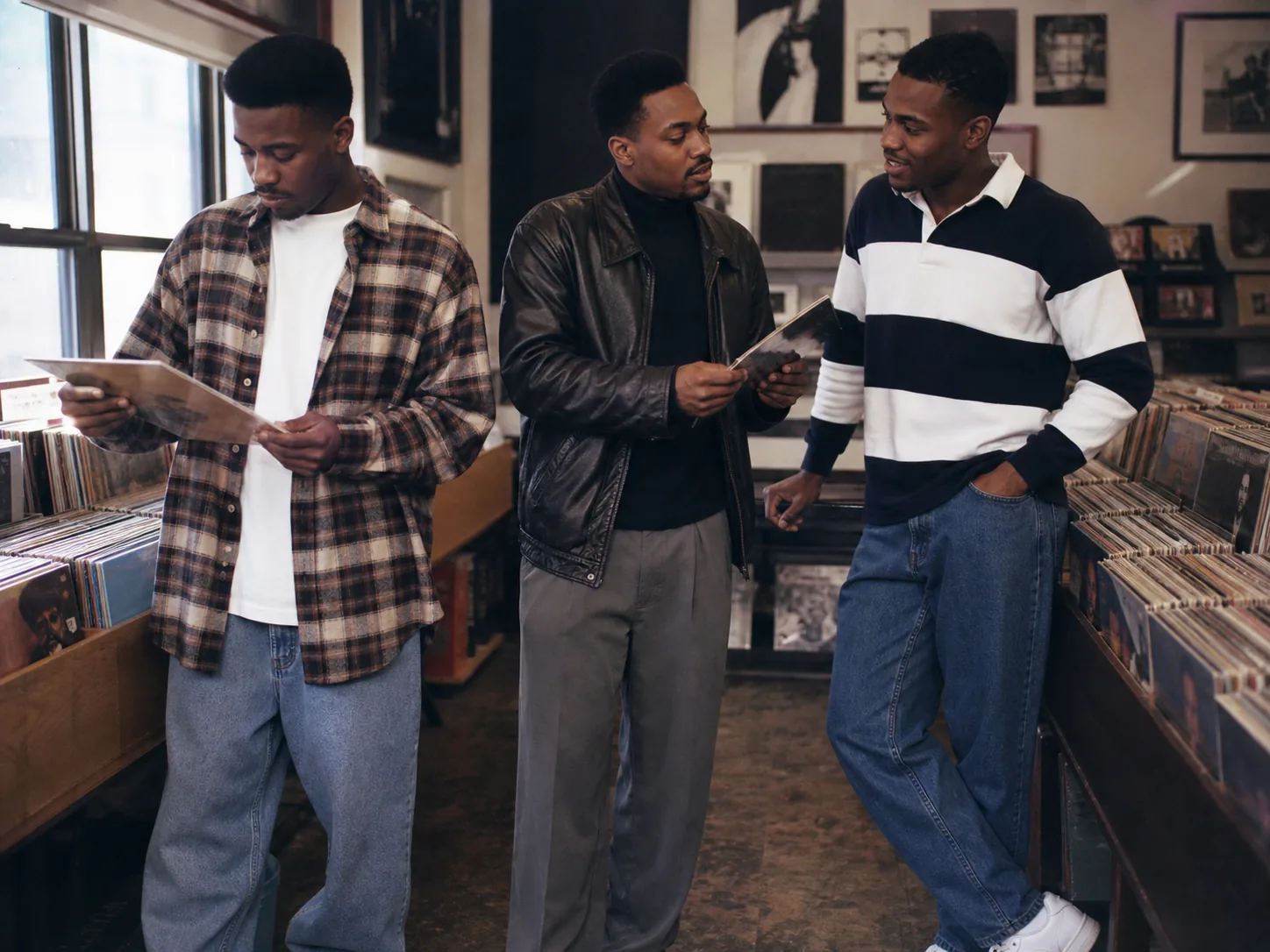
Music scenes were powerful, but locality stayed visible
Hip-hop artists gave clothing unprecedented reach, yet the image changed between cities and coasts. Cold weather made layering and boots practical in the Northeast. West Coast combinations could emphasize relaxed shirts, flannel, straight or loose denim and cleaner footwear. Southern scenes developed their own relationships with sportswear, tailoring, bright presentation and later oversized scale.
These descriptions are broad, and each region contained disagreement. Touring, television and migration moved ideas rapidly. A look could be identified with one city while borrowing garments manufactured and worn elsewhere. Good fashion history acknowledges influence without pretending that cultural borders were sealed.
Record stores, barbershops, campuses, courts, clubs and neighborhood sidewalks were all fashion spaces. People saw what others wore, adjusted the details and carried those experiments into photographs and performances. Celebrity accelerated the exchange; it did not replace it.
Early, middle and late 90s do not look identical
| Phase | Visible tendencies | Forward or backward link |
|---|---|---|
| Early 1990s | Color, patterned sportswear, relaxed tailoring, denim and carryover from late-80s hip-hop | Still connected to 1980s coordination and shape |
| Mid 1990s | Heavier workwear, baggy denim, varsity layers, jerseys, boots and muted palettes | The decade's most familiar street silhouette |
| Late 1990s | Longer tops, wider denim, technical sportswear and more visible luxury references | Points toward early Y2K scale |
A garment cannot always be dated from silhouette alone. Older pieces stayed in wardrobes, and trends reached communities at different speeds. Use hairstyle, shoe release, image format and known event information alongside clothing when identifying a photograph.
Shoes, hats, jewelry and hair complete the line
Wheat work boots give wide denim a solid base and suit layered cold-weather outfits. Retro basketball sneakers connect the hem to sports imagery and often add color or technical shape. Cleaner low-tops work with polos, leather and preppy combinations. The BAAM Boys footwear archive explains how shoe volume should relate to trouser opening.
Fitted caps, bucket hats and knit caps change the head-to-toe outline. Jewelry ranged from subtle chains and watches to more prominent pieces associated with performance and success. Accessories made the outfit specific, but they worked because the clothing already had a clear shape.
Popular Black men's hairstyles included fades, close cuts, waves, braids, twists and locs, with enormous variation across the decade. Hair should not be treated as a detachable trend. Texture, maintenance, professional skill and personal identity determine whether a historical reference makes sense now.
Three modern ways to wear 90s proportions
A convincing modern reference edits the silhouette instead of copying every symbol. Use current fabric and a controlled hem so relaxed clothing remains functional.
Dark denim balance
Wide dark jean + compact work jacket + heavyweight tee + substantial basketball sneaker.
Why it works: the short jacket reveals the full leg line.Utility without costume
Relaxed cargo + clean tee + simple overshirt + sturdy boot.
Why it works: texture and function replace obvious nostalgia.Preppy ease
Loose blue jean + polo knit + minimal low-top sneaker.
Why it works: a polished top controls the relaxed lower half.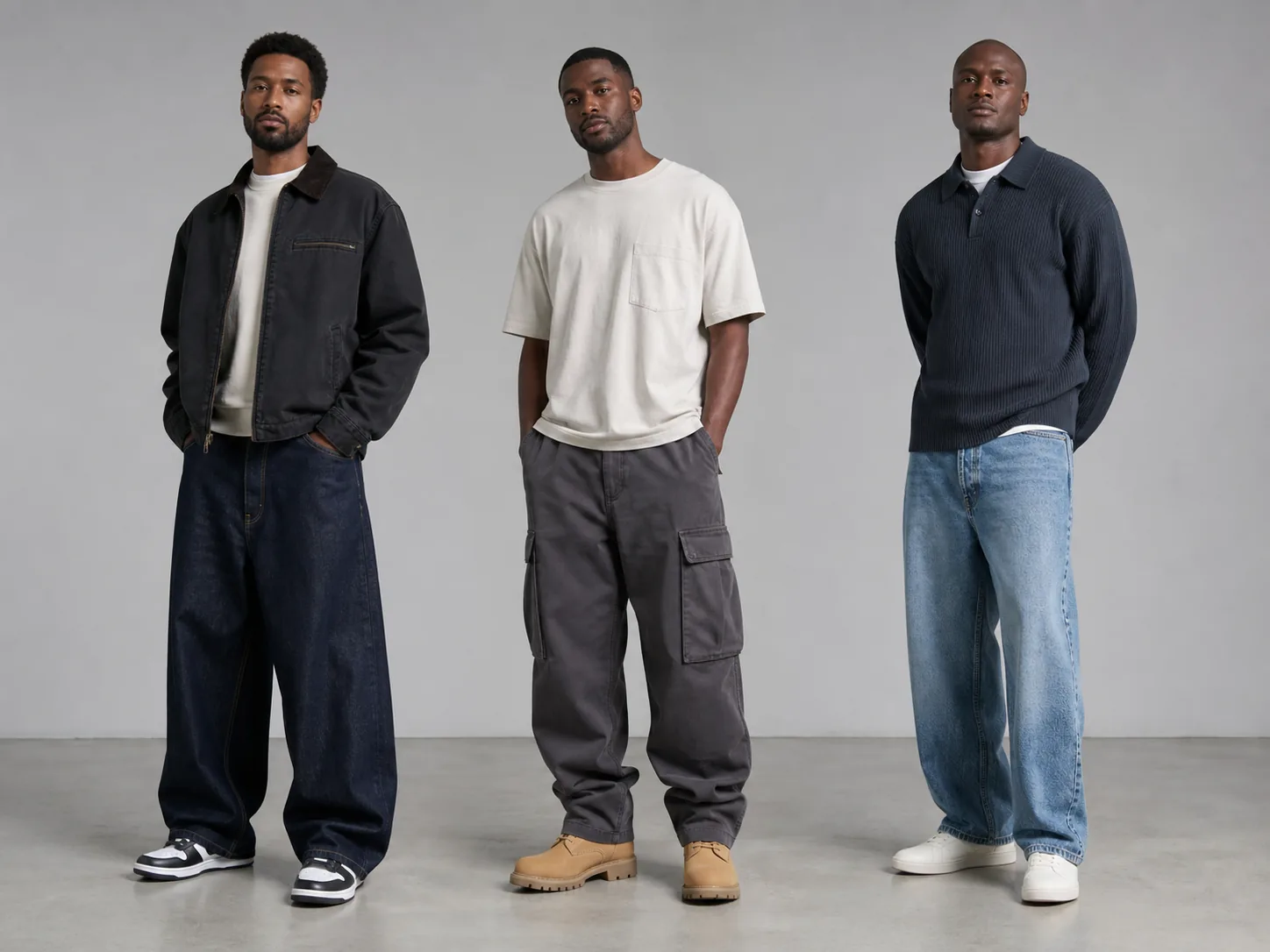
How to buy baggy jeans that still fit
Measure a pair you like across the waist, front rise, thigh, knee, hem and inseam. Baggy describes the leg volume, not a waist that falls without support. A longer rise provides room and changes how the jean sits; a very low rise produces a different early-2000s effect.
Check the rear view. Pockets that sit too low can make the leg look shorter, while a tight seat contradicts the relaxed line below. At the hem, decide whether you want a clean break, controlled stack or crop. That decision should include the actual shoe you plan to wear.
Vintage denim may have shrunk or changed shape through washing, so tagged size is especially unreliable. Inspect crotch seams, pocket corners and hems for thinning. Repairs can add character, but weak fabric around a stress point may continue tearing.
Continue the cluster
90s specialist guides
Evidence trail
Sources & Further Reading
These references support the historical, cultural or care-related claims in the guide. Outfit combinations and fit recommendations are BAAM Boys editorial judgment unless specifically attributed.
- The Metropolitan Museum of Art — Superfine: Tailoring Black Style
A cultural and historical examination of Black style, identity and dandyism through garments, art and photography.
- Library of Congress — African American clothing and fashion photographs
A cataloged photographic record with creator, date, subject terms, repository and rights notes.
- The Museum at FIT — Fresh, Fly, and Fabulous: Fifty Years of Hip Hop Style
Curatorial material on the invention, remixing and wider adoption of hip-hop fashion.
Common questions
90s Black fashion FAQ
What is a simple 90s Black men's outfit?
Try loose straight denim, a heavyweight plain tee, a compact work jacket and retro basketball sneakers or boots. The relaxed trouser supplies the period reference while the quiet upper layers keep it wearable.
Were all men's jeans baggy in the 1990s?
No. Baggy denim became highly visible, especially through hip-hop, but straight, relaxed and cleaner dark jeans remained common. Age, region, workplace and personal taste produced many fits.
What accessories were popular in 90s hip-hop fashion?
Fitted caps, bucket hats, knit caps, chains, rings, watches, sunglasses and belts all appeared. Scale varied. Accessories worked alongside regional styling, performer image and the outfit's overall proportion.
What should men wear to a 90s hip-hop party?
A jersey over a tee, relaxed denim, a varsity or work jacket, retro sneakers and one hat create a recognizable outfit. Choose a coherent color story and avoid stacking every decade symbol together. See our complete outfit guide.
How did 90s fashion lead into Y2K?
Late-90s tops grew longer, denim widened and sports and luxury references became more prominent. Early-2000s style extended that scale before later moving toward slimmer fits. Read the Black 2000s fashion guide for the continuation.