Image Study · 1990—1999
90s Rapper Outfits Were Built for Different Frames
A stage demanded contrast, a music video needed character, a press portrait required a lasting identity and travel called for practical layers. Reading the setting explains more than copying the most recognizable garment.
In one paragraph
What did rappers wear in the 1990s?
90s rapper outfits ranged from baggy denim, hoodies, work jackets, boots and sports jerseys to relaxed overshirts, tracksuits, leather, fine knits, pleated trousers and luxury accessories. Early-decade coordination gradually gave way to heavier workwear and wider mid-90s silhouettes, followed by longer late-90s layers and more visible technical or luxury elements. Region, performer identity and image format changed the result, so no single outfit represents every artist or phase.
01
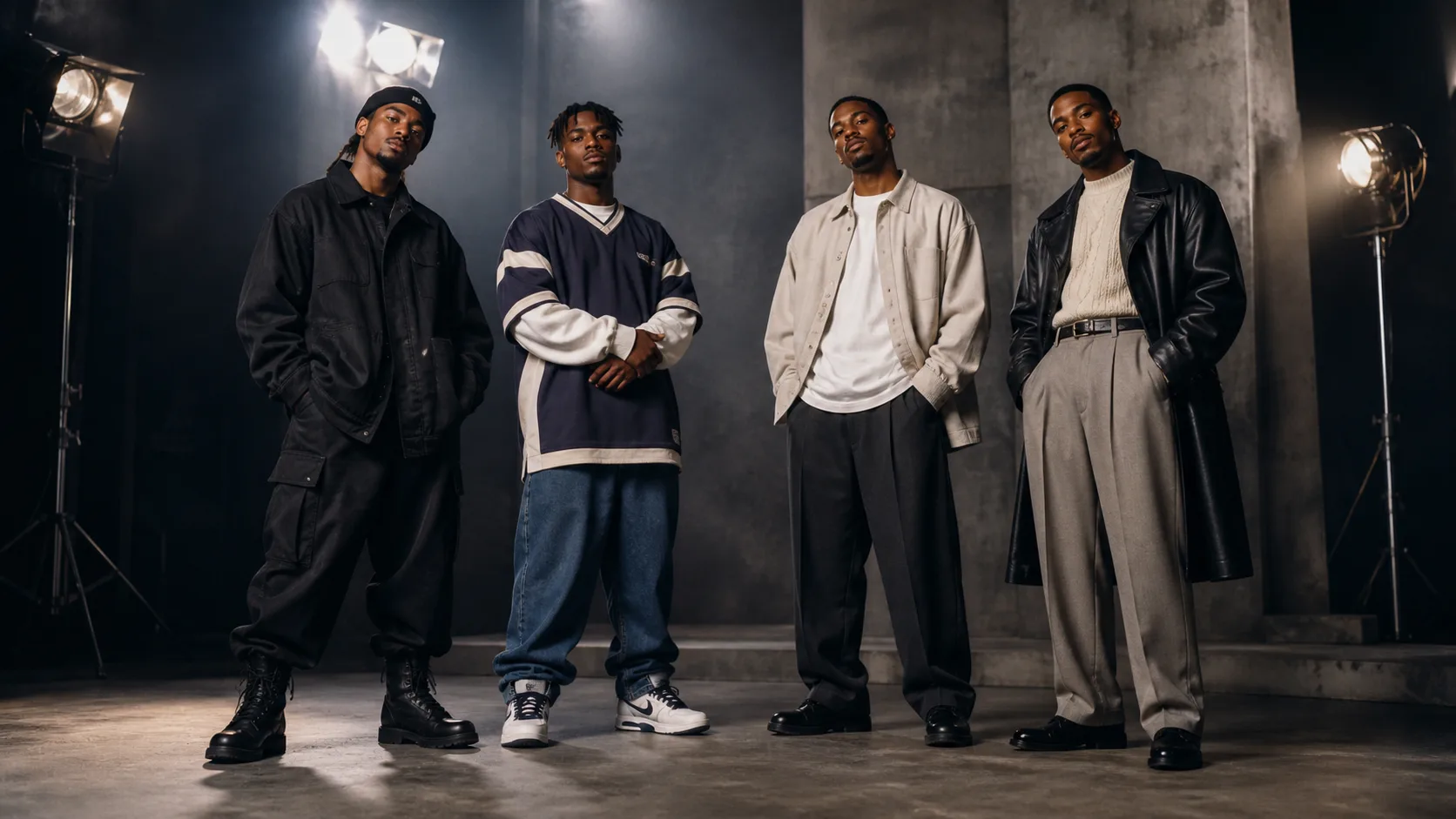
Four image frames produced four wardrobe needs
Readable at distance
Strong contrast, coordinated group color, reflective accessories and substantial footwear survived bright lights, movement and a large venue.
Character in motion
Layers, texture and scale supported a narrative. Wide shots rewarded silhouette; close-ups rewarded jewelry, leather and grooming.
A controlled signature
A jacket, hat, knit or restrained palette could establish identity without the competing information of a performance set.
Practical continuity
Travel, rehearsal and candid imagery often used quieter denim, tees, tracksuits and workwear while retaining recognizable proportion.
Album covers and award appearances create additional contexts. Each image is a constructed record: pose, crop, lighting and publication choices affect what viewers remember. A famous photograph proves that an outfit appeared in that frame, not that every element was common everyday dress.
02
Six archetypes help organize the range
Utility jacket, hoodie or tee, loose denim or cargo trousers, knit cap and sturdy boot. Texture and weight create presence.
Jersey over a long tee, roomy denim, cap and basketball sneaker. Player and city associations add meaning.
Relaxed overshirt, clean tee, straight or loose trousers and low footwear. The long vertical line matters more than decoration.
Matching athletic jacket and trouser with clean sneakers. Repeated color and piping make a group or performer legible quickly.
Leather jacket or coat over a fine knit, open-collar shirt or tee, paired with pleated trousers or dark denim.
Fine material, jewelry, eyewear and considered tailoring communicate arrival. Their impact depends on restraint and camera context.
Archetypes are analytical tools, not boxes assigned permanently to artists or regions. One performer could move between rugged, athletic and formal images across a single album campaign. The main 90s Hip-Hop Fashion guide explains how these wardrobes relate to the decade's cultural map.
03
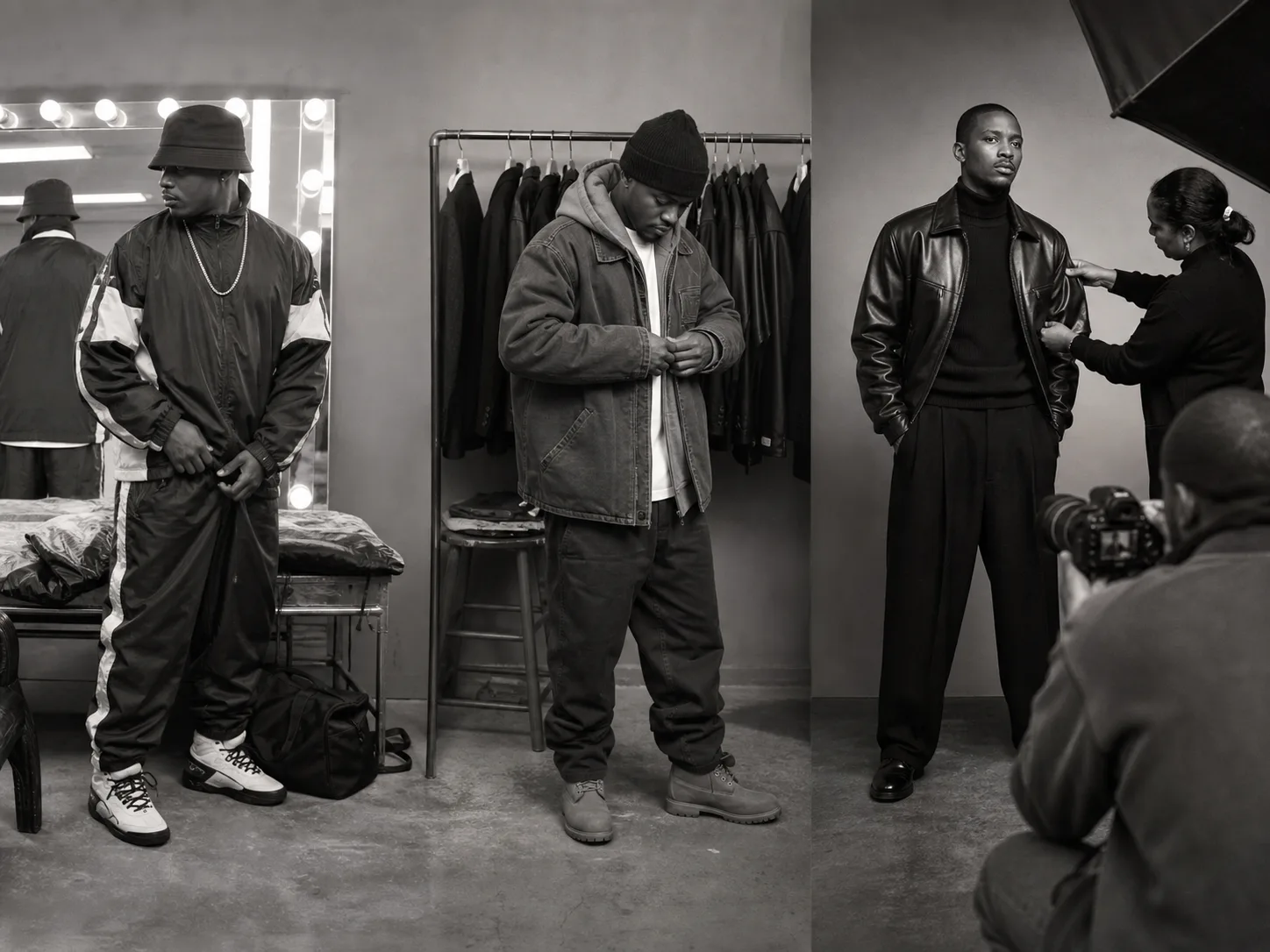
The person on camera was not the entire credit line
Artists brought lived taste, references and the authority to decide whether clothing fit their identity. Stylists sourced pieces, balanced color and adjusted proportion for the planned image. Designers, independent makers, tailors, jewelers and retailers contributed objects and alterations. Directors and photographers translated everything through light and frame.
Communities remain part of that authorship. Music often gave national visibility to combinations already developing in local streets, campuses, clubs and stores. Saying an artist “invented” an entire style usually demands more evidence than a memorable photograph supplies.
When a reliable credit cannot be found, responsible writing describes what is visible without inventing a brand, designer or stylist. Uncertainty is more credible than an attractive but false attribution.
04
Early, mid and late decade images need separate labels
Coordinated sets, patterned sportswear, leather, caps and carryover from late-80s image-making shared space with loosening denim.
Workwear, hoodies, jerseys, boots and wide jeans created the weight most often recalled as classic 90s rap style.
Longer tops, broader denim, technical sportswear and greater luxury visibility anticipated early-2000s scale.
A release date does not always date a photograph exactly. Campaigns can be shot earlier, older clothes remain in circulation and reissues create misleading visual clues. Cross-check the image source, event and publication date before making a precise claim.
05
A six-step method for analyzing a rapper outfit
- Confirm the source. Locate the original video, publication, event record or photographer rather than relying on a repost.
- Date the image. Separate creation, release and later upload dates whenever possible.
- Name the frame. Identify stage, scripted video, portrait, red carpet, rehearsal or candid context.
- Describe before identifying. Record silhouette, material, color, layer order and shoe type before guessing brands.
- Seek credits. Look for artist, stylist, designer, photographer and custom-maker documentation.
- Limit the conclusion. Explain what the image supports without turning one outfit into a universal origin story.
This discipline is especially important with low-resolution scans. A familiar shape or logo-like mark is not enough to authenticate a garment. See the Editorial Policy for sourcing and image standards.
06
Accessories supported character and camera
Chains, rings, watches and earrings could communicate success, affiliation or personal continuity. Scale varied from subtle to spectacular, particularly between candid and performance imagery. Caps, knit caps and bucket hats changed the upper silhouette and sometimes carried city or team association.
Eyewear, belts and gloves added smaller points of recognition. Footwear anchored the lower frame: work boots reinforced utility, basketball shoes supplied technical mass and cleaner low-tops suited quieter or more polished outfits. The Sneakers archive covers shoe construction and the risks of wearing aging vintage pairs.
Never assume an accessory's material or value from a photograph. Plating, stones and construction require documentation or physical inspection. Visual description is not appraisal.
07
Three formulas borrow principles, not identities
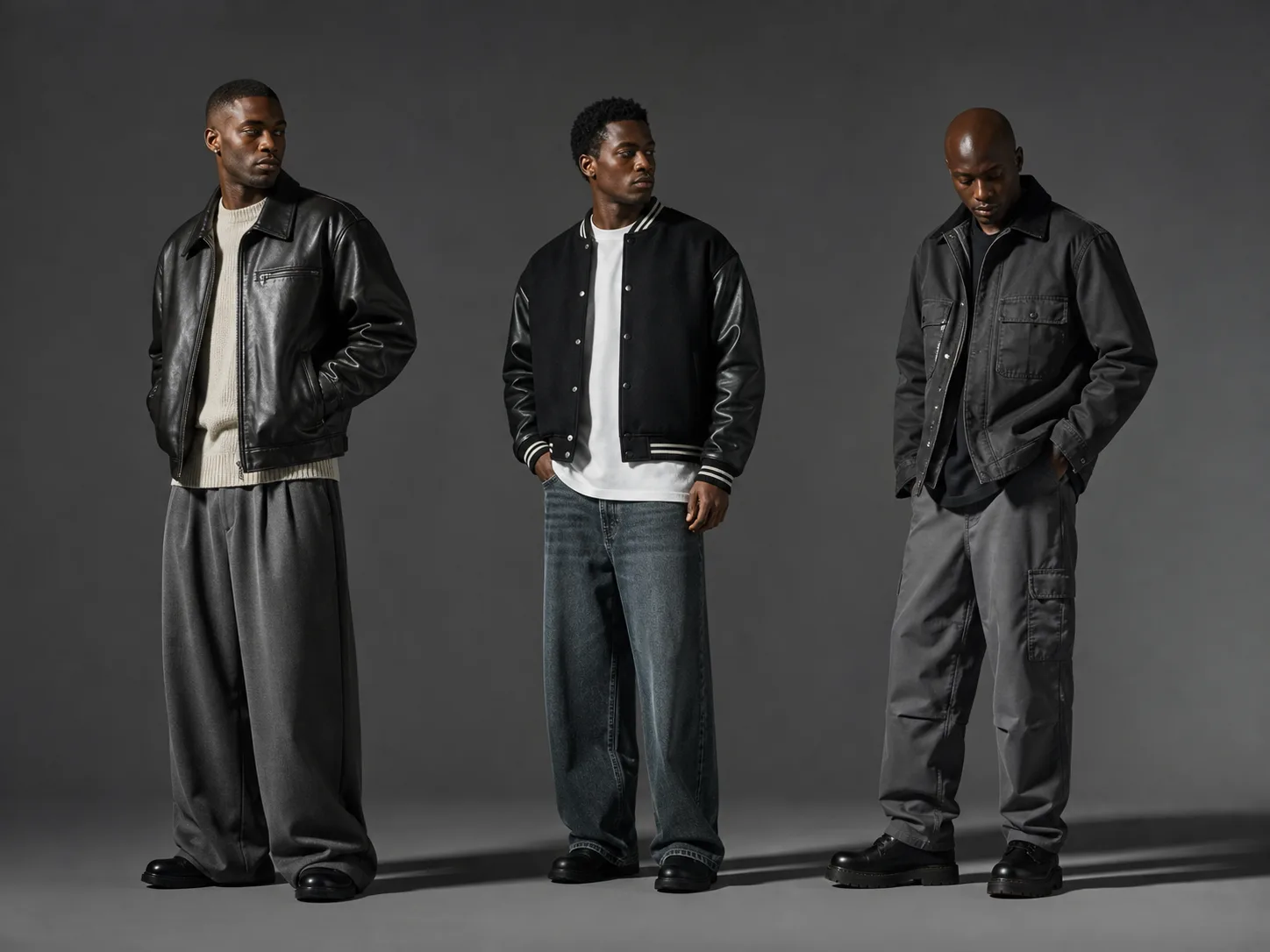
Polished leather: compact leather jacket, fine knit, wide pleated trouser and substantial black shoe. Texture carries the image; accessories can remain minimal.
Restrained varsity: dark varsity jacket, heavyweight white tee, straight loose denim and clean retro sneaker. One athletic reference is enough.
Tonal workwear: utility jacket, plain knit, relaxed cargo trouser and sturdy boot in related dark values. Vary fabric so the outfit does not become flat.
Fit each formula to your present life. Do not copy a named artist's jewelry, identifying symbols or exact styling as a shortcut to credibility. More event-ready combinations appear in 13 90s Hip-Hop Outfit Ideas.
08
Common research and styling mistakes
- Calling every loose outfit hip-hop. Wider silhouettes appeared across multiple communities and settings.
- Using one artist for an entire region. Cities contained many scenes, ages and social worlds.
- Guessing every brand. Similar-looking products and low-resolution images make false certainty easy.
- Ignoring the stylist. A famous image may be the result of extensive collaborative planning.
- Combining every symbol. A convincing modern outfit needs hierarchy, not maximum nostalgia.
Evidence trail
Sources & Further Reading
These references support the historical, cultural or care-related claims in the guide. Outfit combinations and fit recommendations are BAAM Boys editorial judgment unless specifically attributed.
- The Museum at FIT — Fresh, Fly, and Fabulous: Fifty Years of Hip Hop Style
Curatorial overview connecting hip-hop clothing to community, customization, aspiration and fashion-industry influence.
- Smithsonian NMAAHC — Five Things to See: The Fashion of Hip-Hop
Collection-based examples of garments, jewelry, photographs and sneakers used to document hip-hop style.
- The Metropolitan Museum of Art — Superfine: Tailoring Black Style
Institutional context for Black dress, identity, tailoring and self-presentation across time.
Case index
How to file a 90s rapper look
| Case field | Record | Why it matters |
|---|---|---|
| Setting | Stage, video, portrait, award event or daily appearance | Explains performance demands and styling intensity |
| Date and region | Known year, city and scene | Prevents the whole decade from collapsing into one moment |
| Silhouette | Shoulder, length, rise, leg and footwear mass | Makes the analysis useful beyond logos |
| Creative credits | Stylist, designer, photographer, jeweler and barber when documented | Keeps the image-making network visible |
| Claim level | Observed, documented or interpreted | Stops a photograph from proving more than it can |
A growing casebook should prefer fewer well-documented looks over a long gallery of unattributed screenshots.