Rise, wash, weight and footwear
Black Men's Denim Outfits: Make the Jeans Control the Line
Denim looks simple because it is familiar, but small choices change the entire outfit. Rise moves the apparent waist. Thigh room controls drape. The leg opening decides which shoes feel stable. Wash changes formality and contrast. Build from those relationships, then use jackets, knits and tailoring to choose the mood.
Quick answer
How should men style jeans?
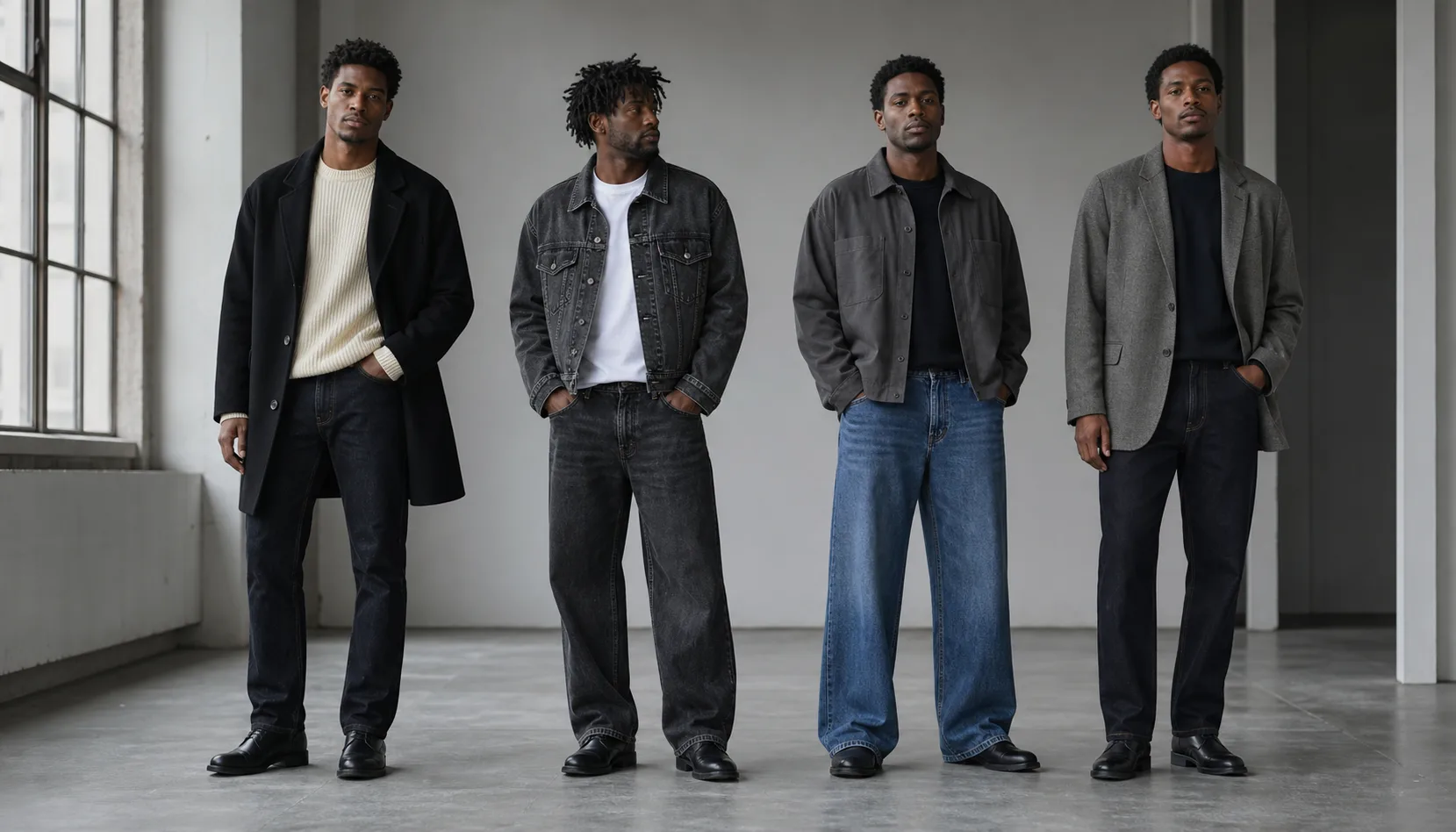
Choose jeans by waist comfort, rise, seat, thigh and leg opening before focusing on wash. Pair straight or relaxed dark jeans with knits, coats and clean shoes for polish; use washed black denim with tees, overshirts and boots for texture; balance wide blue jeans with a shorter or controlled top layer. Let the hem meet the intended shoe cleanly.
Sets the waist and changes the apparent length of torso and leg.
Determines comfort, pocket behavior and how the leg begins to fall.
Controls coverage and visual weight around footwear.
Changes contrast, aging, formality and how seams become visible.
01 / Fit sequence
Judge the jeans from top to bottom
Start at the waist in the position where the jeans are designed to sit. A waistband that fits only while standing will not survive a full day. Sit and check the front rise, back rise and pressure across the abdomen. The seat should follow the intended cut without deep pulling lines or empty collapse.
Move to the thigh. Denim with no stretch may ease through wear but should not require pain as a break-in strategy. Stretch denim should recover after movement; if it remains bagged at the knee after a fitting-room walk, consider another cloth or shape. Check pockets: flaring front pockets or a pulled fly reveal tension.
Finally, look at knee, calf and opening. A taper should narrow without gripping. A straight leg should preserve a consistent visual line. Wide jeans need enough structure or drape to fall rather than balloon. Labels such as athletic, relaxed and loose are not standardized, so measurements matter.
02 / Four cuts
Give each silhouette a clear supporting cast
Works with knitwear, coats, blazers, low-tops, loafers and compact boots.
Provides thigh room while narrowing toward sneakers; watch for abrupt ankle grip.
Needs deliberate length and footwear weight; shorter jackets reveal the waist.
Opens subtly below the knee and requires the actual boot during hemming.
No cut is inherently more flattering for Black men. Body build, posture, movement, preference and intended style vary. Fit language should describe cloth and silhouette rather than assigning value to a body.
03 / Wash map
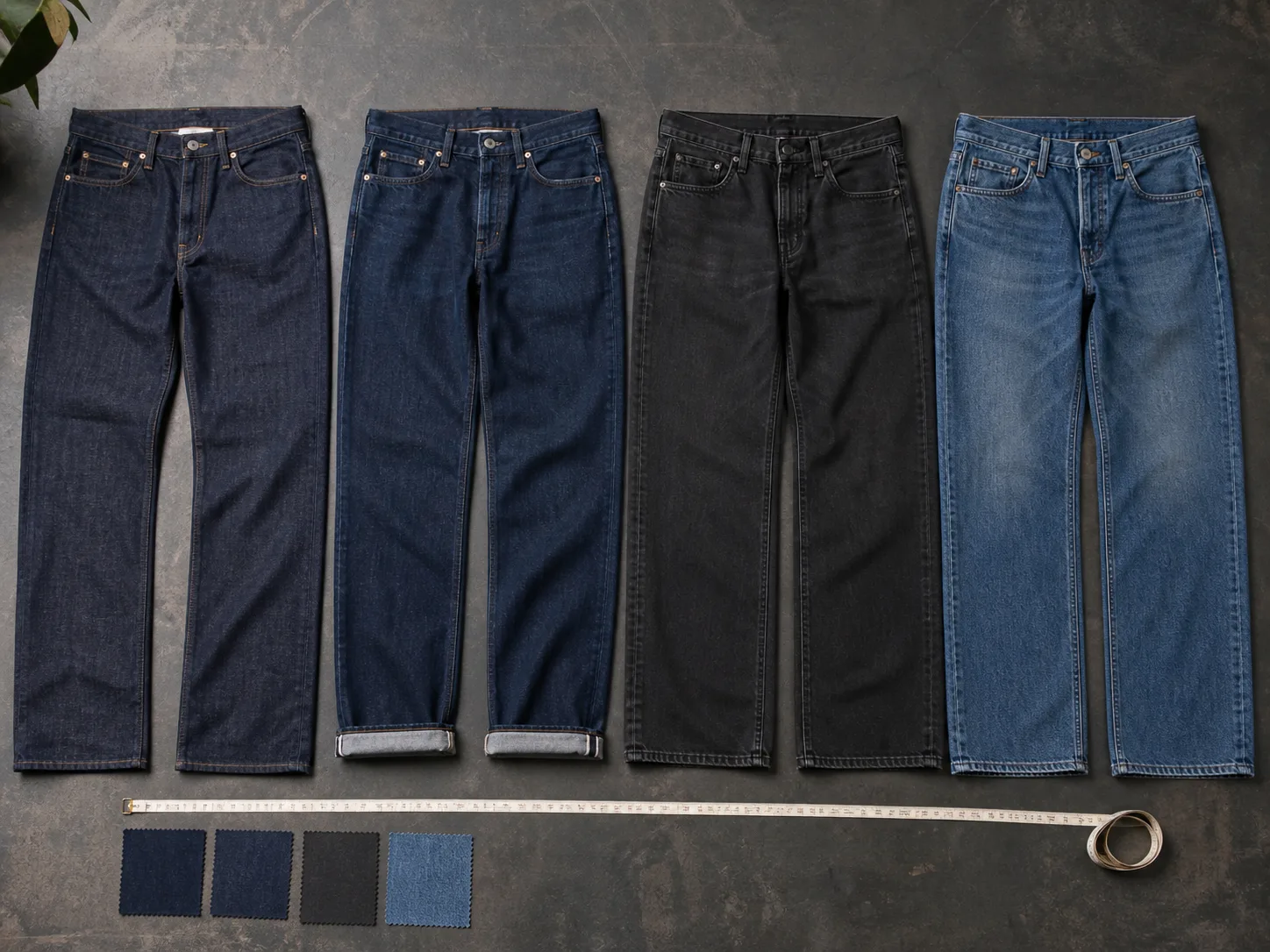
Use color to set the outfit's register
Deep raw or rinsed indigo appears clean and structured. It can support a blazer, fine knit or leather shoe, but dye transfer and shrink behavior require attention to maker instructions. Dark washed denim supplies similar versatility with less break-in.
Medium blue reveals seams and fading more clearly, making the outfit feel casual and historically familiar. Washed black is especially useful within BAAM Boys' deep-gray palette because it separates from true black while staying neutral. Very pale denim creates high contrast beneath dark layers and places more attention on the trouser.
Artificial whiskers and heavy distressing direct the eye toward specific areas. Choose them intentionally rather than assuming more processing creates more character. Natural wear, repair and subtle variation can tell a longer personal story.
04 / Outfit formulas
Six combinations cover most denim situations
White tee + washed black straight jeans
Add a charcoal overshirt and clean dark shoe for a dependable neutral base.
Fine knit + dark jeans
Use low contrast, a leather belt and compact boot or loafer.
Canvas jacket + relaxed denim
Mix texture and fading; do not make every piece equally heavy.
Soft blazer + clean dark denim
Choose minimal fading, controlled hem and footwear appropriate to the room.
Wide blue jeans + varsity layer
Preserve volume but edit top length and shoe weight for current wear.
Denim jacket + jeans
Use matching wash as a column or distinct washes as separate layers.
The 90s Baggy Jeans guide explores period volume, while the Black Men's Fashion Guide places denim inside a complete wardrobe.
05 / Hem clinic
Fit the jeans with the shoe they will meet
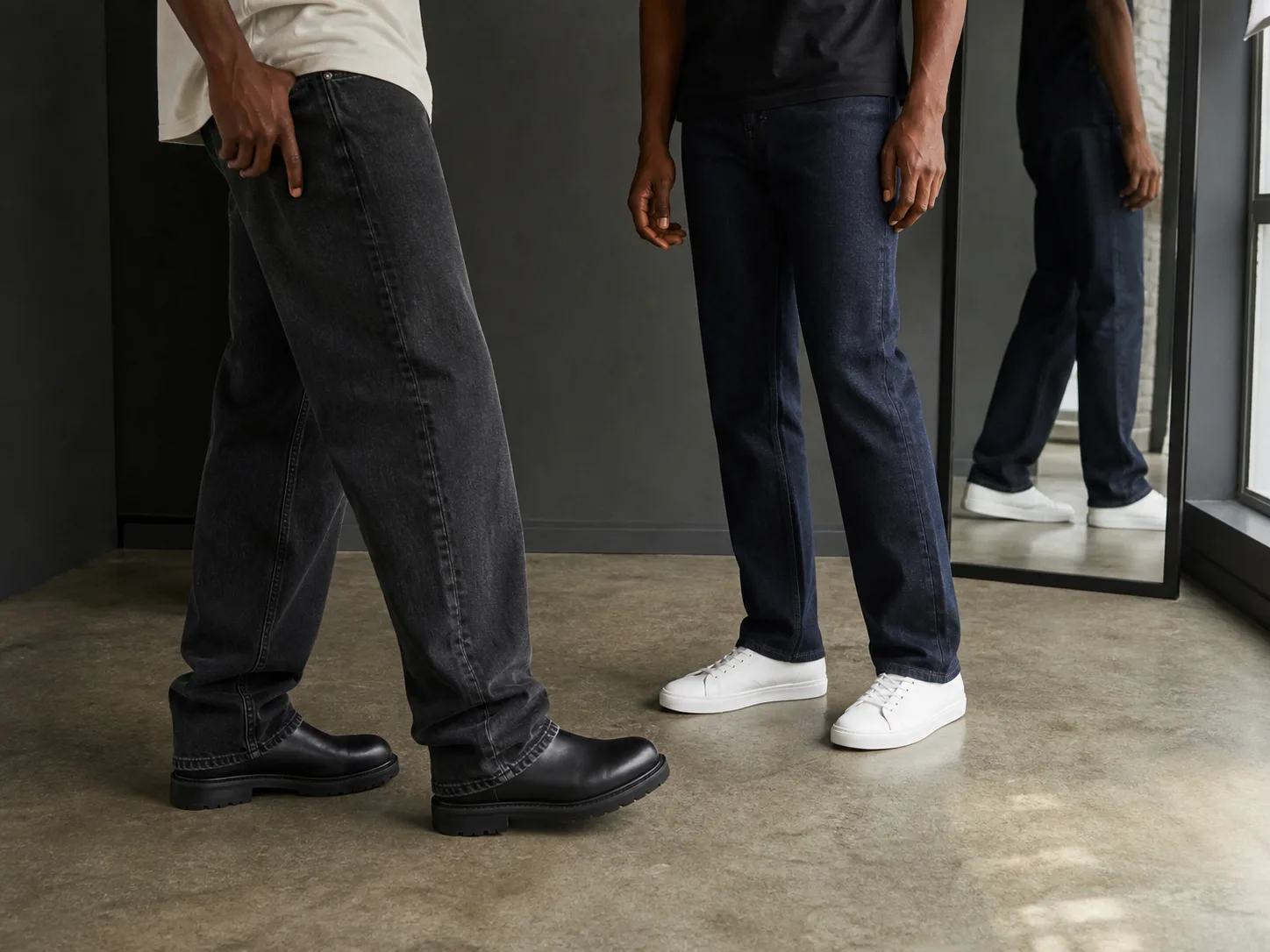
A no-break or slight break suits straight dark denim and low-profile footwear. Wide jeans may rest across more of the upper or stack deliberately, but the back hem should stay out from under the heel. Boots add height and toe volume; trousers hemmed over sneakers may look short when transferred to a boot.
Compare sole width with the leg opening. A broad shoe underneath a narrow opening can make the jean appear pinned at the ankle. A very small shoe under a wide leg may disappear. Neither contrast is forbidden, but it should serve the silhouette.
Walk and sit during fitting. The hem rises in motion, and stiff denim changes as the knee bends. Wash or account for shrinkage before permanent alteration when maker guidance suggests it. A qualified tailor can preserve original hems when appropriate, but the method should match construction and desired finish.
06 / Double denim
Choose a column or a conversation
Matching denim jacket and jeans create a continuous set. Keep the base layer simple and use footwear to determine whether the result feels rugged, clean or retro. Near-matching pieces can be harder because a small accidental difference may look like a failed set; either match convincingly or create enough separation.
Contrasting denim can divide the body deliberately: dark jacket above medium jeans, or faded overshirt above black denim. Repeat a tone through the tee or shoe to reconnect the halves. Varying weight also helps—a lighter shirt over sturdy jeans feels easier than two rigid heavy layers.
Denim-on-denim carries historical associations across labor, Western dress, music and street style. Context, cut and styling decide which association becomes visible. Avoid treating it as a novelty costume.
07 / Care and repair
Preserve cloth without turning wear into mythology
Follow the garment label. Washing needs vary with soil, sweat, dye and finish; no universal rule that jeans should never be washed is hygienically or materially useful. Turn jeans inside out when appropriate, use a suitable cycle and detergent, and avoid excessive heat when it risks shrinkage or fiber damage.
Air denim fully before storage. Address stains promptly according to dye and fiber. Reinforce thinning crotch, pocket and knee areas before holes expand. Repair can add character, but comfort and structural integrity matter more than preserving every original thread.
- Buying for waist only. Rise, seat and thigh determine whether the waistband stays comfortable.
- Hemming without shoes. Different soles change break and effective length.
- Assuming dark means formal. Cut, fading, stitching and accompanying pieces all matter.
- Forcing a break-in. Pain and restricted movement are not reliable fit strategies.
Evidence trail
Sources & Further Reading
These references support the historical, cultural or care-related claims in the guide. Outfit combinations and fit recommendations are BAAM Boys editorial judgment unless specifically attributed.
- Federal Trade Commission — Clothes Captioning: Care Labeling Rule
Official explanation of garment care labels and the evidence manufacturers need for care instructions.
- The Metropolitan Museum of Art — Superfine: Tailoring Black Style
Institutional context for tailoring, Black identity, distinction and self-presentation.
- The Museum at FIT — Fresh, Fly, and Fabulous: Fifty Years of Hip Hop Style
Curatorial context for sportswear, designer fashion, customization and individual expression.
Denim audit
Photograph the jean with the shoe you will wear
Check rise, fly tension and whether the leg begins cleanly.
Observe seat balance, knee shape and the path toward the hem.
Check pocket placement, drag lines and excess fabric under the seat.
Confirm that the hem clears the floor and the shoe remains legible.
The audit distinguishes intentional volume from a waist, seat or inseam problem that styling cannot solve.
Direct answers
Black men's denim outfits FAQ
What fit of jeans is most versatile for men?
A straight or gently relaxed dark jean is highly adaptable because it works with tees, knits, jackets, sneakers and boots. The best fit still depends on waist, rise, thigh and movement.
Can men wear denim with a blazer?
Yes. Choose clean dark jeans with limited distressing, a soft blazer and footwear that suits the setting. Check dress codes where denim may not be accepted.
How do I wear double denim?
Use a convincing matched set for a continuous column or choose clearly different washes. Keep the base simple and let footwear define the level of polish.
Should jeans stack over sneakers?
They can, especially in wide or period-inspired outfits, but the stack should be deliberate and the back hem should not drag beneath the heel. Straighter polished looks often benefit from less break.
How often should jeans be washed?
Wash according to soil, sweat, odor, fabric and care instructions. Avoid rigid rules; hygiene and material preservation should both guide the schedule.