Persona, performance and camera
Rapper Style Guide: Build an Image That Can Survive Real Work
A strong artist wardrobe does more than produce one dramatic photograph. It creates recognition across rehearsal, stage, video, interview and travel while allowing the performer to move, repeat, repair and evolve. The method begins with persona and silhouette—not with copying another rapper's shopping list.
Quick answer
How can a rapper develop personal style?
Define three words for the artist's public image, select one repeatable silhouette, build separate rehearsal, stage and media versions, and test every outfit in movement and on camera. Use recurring color, footwear, neckline or outerwear as recognition anchors. Study hip-hop history for context, but translate relationships rather than copying a specific celebrity.
Three clear traits guide choices more reliably than a mood board of famous faces.
One recurring outline makes changing garments feel connected.
Heat, movement, travel and microphone use alter the clothing brief.
Repeated color, material or accessory builds recognition across settings.
01 / Persona brief
Write the image before selecting the jacket
Choose three traits that can be seen: controlled, technical, romantic; direct, workwear, grounded; elegant, relaxed, monochrome. Avoid empty terms such as cool or fashionable. Each word should change a garment decision. “Technical” might favor weather shells, pockets and articulated trousers. “Elegant” might move toward drape, open collars and polished footwear.
Add a boundary list. What should the image never become? Perhaps logos should remain limited, jewelry should never restrict performance, or historical references should not look like costume. Boundaries prevent last-minute loans and trend pressure from dissolving the identity.
Finally, identify truth. The persona can amplify part of a person, but a completely foreign costume is difficult to inhabit across interviews and long tours. Observe what the performer already repeats, then refine rather than replace that instinct.
02 / Four original systems
Use an archetype as a working structure, not a stereotype
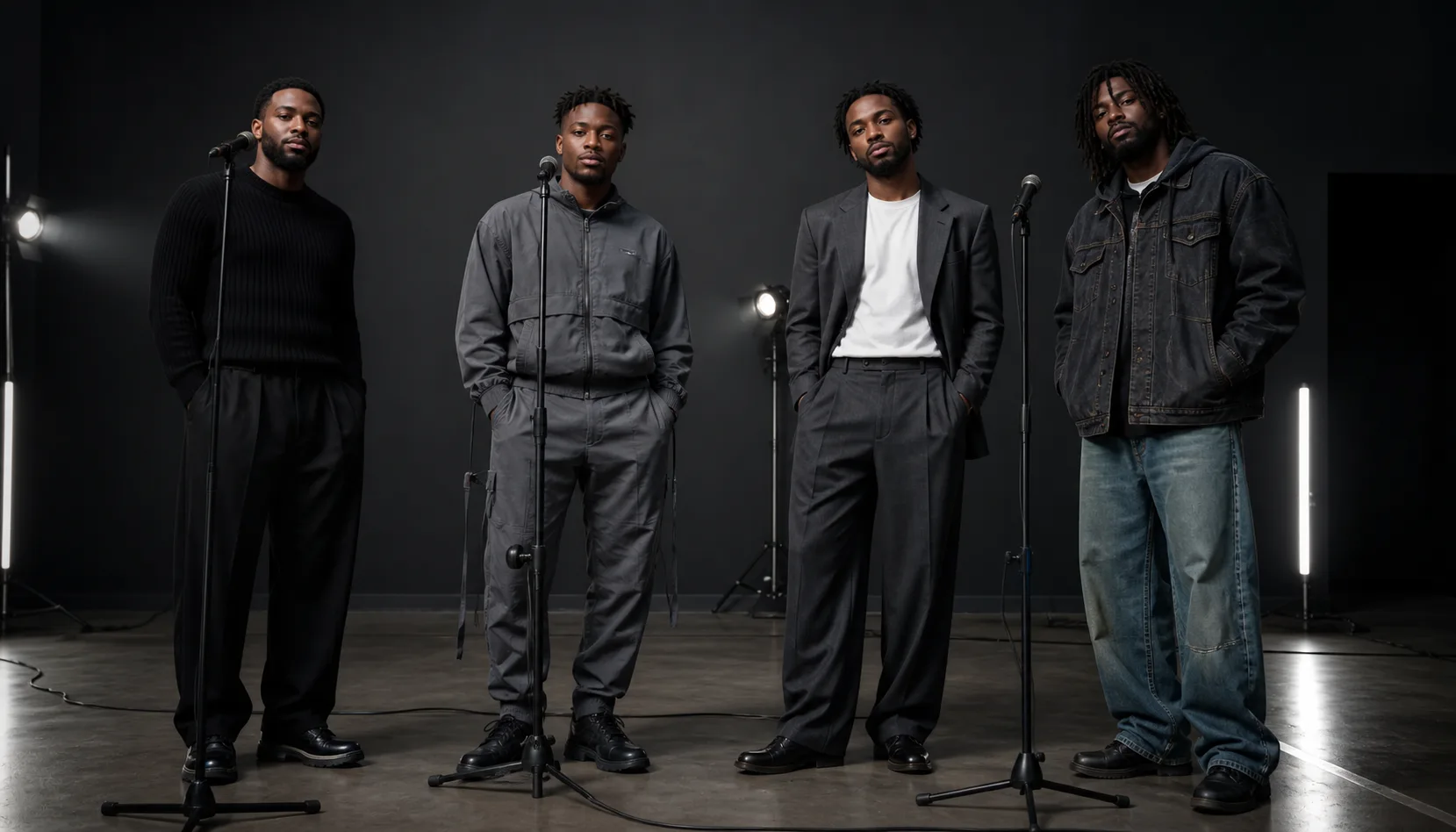
Black knit, relaxed trousers, controlled leather shoe and one silver detail; recognition comes from consistency.
Layered nylon, utility pockets, supportive footwear and tonal gray; function leads the image.
Soft jacket, pleated trouser, clean tee or open shirt; drape supplies authority without stiffness.
Washed denim, canvas or leather, broad trouser and grounded boot; material aging builds depth.
These systems can mix, but choose one leader. A tailored trouser can support a technical shell. A denim jacket can sit above cleaner wool. Combining every archetype at full intensity produces noise rather than originality.
03 / Fitting room
Test the performance, not the pose
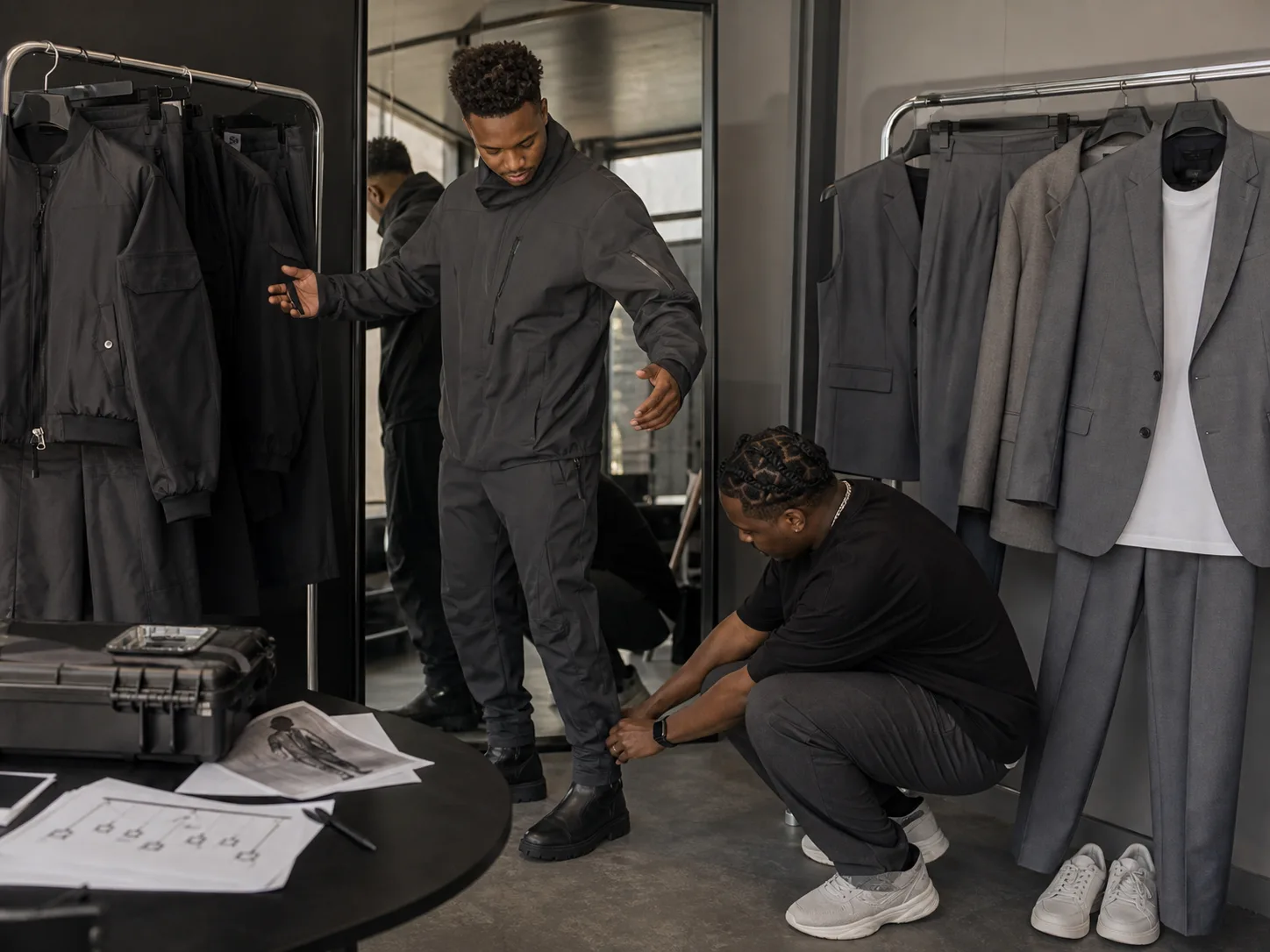
Rehearse the movements that actually occur: reaching, crouching, stepping onto risers, handling a microphone, removing a jacket and moving through cables. Watch whether a hem catches, a neckline shifts, a pocket spills or a chain strikes the mic.
Stage heat changes fabric behavior. Heavy leather can become exhausting; pale cloth may turn transparent under light; reflective surfaces can overwhelm cameras. Build ventilation, washable base layers and backup pieces into the plan. Footwear needs grip, support and a secure fit.
Photograph front, side and back under stage-like lighting. A dark outfit can disappear against a black set; a small detail may vanish at audience distance. Adjust value and texture rather than automatically adding a bright logo.
04 / Context wardrobe
Create versions instead of forcing one outfit everywhere
Durable base
Washable tee or knit, movement-friendly trousers and supportive shoes reveal what the body needs.
Amplified silhouette
Stronger outer layer, deliberate contrast and secure details survive distance and lighting.
Camera-specific story
Color, continuity and multiple takes require a documented wardrobe plan and backups.
Quiet recognition
Use the same palette or proportion in softer tailoring, knitwear or a clean jacket.
Comfort with identity
Layerable, pocket-aware clothing keeps the visual language while serving long movement.
Respect the room
Read dress code and translate persona through cloth, cut and one anchor rather than ignoring context.
05 / Continuity
One performer can change level without losing identity
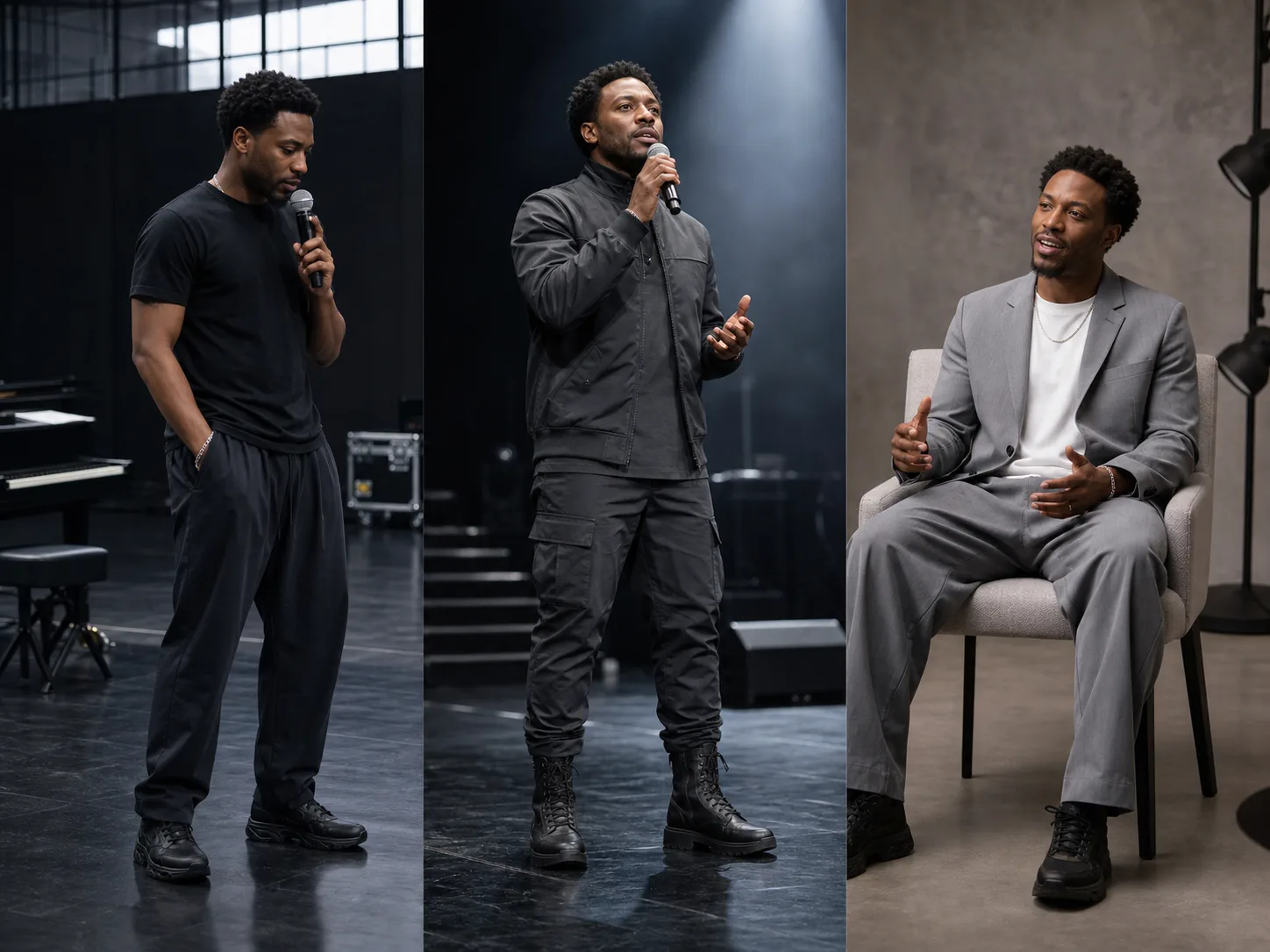
A rehearsal tee, technical stage jacket and soft interview suit can belong to the same person when they share a dark-gray palette, relaxed trouser line and restrained silver chain. Recognition comes from repeated relationships, not wearing one uniform until it becomes impractical.
Build a visual continuity sheet for the team: approved colors, preferred rise and leg opening, useful necklines, shoe categories, jewelry limits, grooming direction and items that require permission or special handling. Record garment sources and credits. This is operational clarity, not a public claim of sponsorship.
Continuity also helps budgets. A trouser block can repeat in several fabrics. One jacket can move from interview to event. Backup stage garments can be visually identical where sweat, weather or damage requires a change.
06 / Camera language
Design for frame size, light and movement
A full-body photograph reads silhouette and shoe. A close portrait reads hair, eyewear, collar and jewelry. A low-resolution social clip rewards strong value differences; a high-resolution editorial reveals poor finishing. Know the primary frame before deciding where detail belongs.
Run a phone test under ordinary light and a proper camera test when production allows. Pattern can strobe or distort on video. All-black layers can merge unless their surfaces differ. White can overexpose. Highly reflective jewelry may create unwanted flashes.
Video continuity requires photographs of every layer, accessory placement, trouser break and grooming detail. If scenes are shot out of order, memory is not enough. Credits should be recorded at fitting, not reconstructed after publication.
07 / Culture and credit
Reference history without turning identity into props
If a look draws from a decade or region, research the source. Identify whether the reference came through dance, workwear, sport, nightlife, local retail or a specific community. Preserve one relationship—coordinated athletic color, broad denim over substantial footwear, or leather against knit—rather than stacking every recognizable symbol.
Stylists, designers, tailors, jewelers, barbers and image-makers deserve credit. A garment loan is not automatically an endorsement; an appearance is not a collaboration. Use accurate commercial language. The Sneakers Worn by Rappers guide provides an evidence ladder for product claims.
For historical grounding, use Hip-Hop Fashion History. For the specific 1990s image system, compare 90s Rapper Outfits.
08 / Working kit
Build a reliable ten-piece artist wardrobe
One rehearsal trouser, two stage trousers, three washable base tops, one recognizable outer layer, one media jacket, one performance shoe and one polished shoe form a practical core. Add backups based on tour, weather and production.
- Copying one artist literally. Extract proportion or function and rebuild it through your own persona.
- Buying before movement tests. A static fit can fail under performance.
- Using labels as identity. Recognition needs shape and continuity, not only logos.
- Ignoring credit. Record every contributor and loan at the fitting.
- Making every context stage-level. Quiet versions strengthen rather than weaken the public image.
Evidence trail
Sources & Further Reading
These references support the historical, cultural or care-related claims in the guide. Outfit combinations and fit recommendations are BAAM Boys editorial judgment unless specifically attributed.
- The Museum at FIT — Fresh, Fly, and Fabulous: Fifty Years of Hip Hop Style
Curatorial overview connecting hip-hop clothing to community, customization, aspiration and fashion-industry influence.
- Smithsonian NMAAHC — Five Things to See: The Fashion of Hip-Hop
Collection-based examples of garments, jewelry, photographs and sneakers used to document hip-hop style.
- The Metropolitan Museum of Art — Superfine: Tailoring Black Style
Institutional context for Black dress, identity, tailoring and self-presentation across time.
Working brief
Write the image system before shopping
- Core signal
- What should a stranger understand before hearing the music?
- Repeatable shape
- Which shoulder, length, leg and shoe relationship can recur?
- Performance version
- What changes for heat, movement, lighting and distance?
- Portrait version
- Which texture or detail survives a tight crop?
- Everyday version
- What remains when stage scale is removed?
- Boundary
- Which references would feel borrowed rather than personally grounded?
The finished style guide should produce a family of related looks, not one costume that fails outside a single photograph.