Sightings, partnerships and outfit intelligence
Sneakers Worn by Rappers: Read the Evidence Before the Hype
A rapper wearing a sneaker can document a moment in style. It does not automatically prove a favorite pair, paid endorsement, design collaboration or cultural origin. The useful approach is to identify what the evidence actually supports, preserve the date and setting, then study why the footwear worked with the clothes.
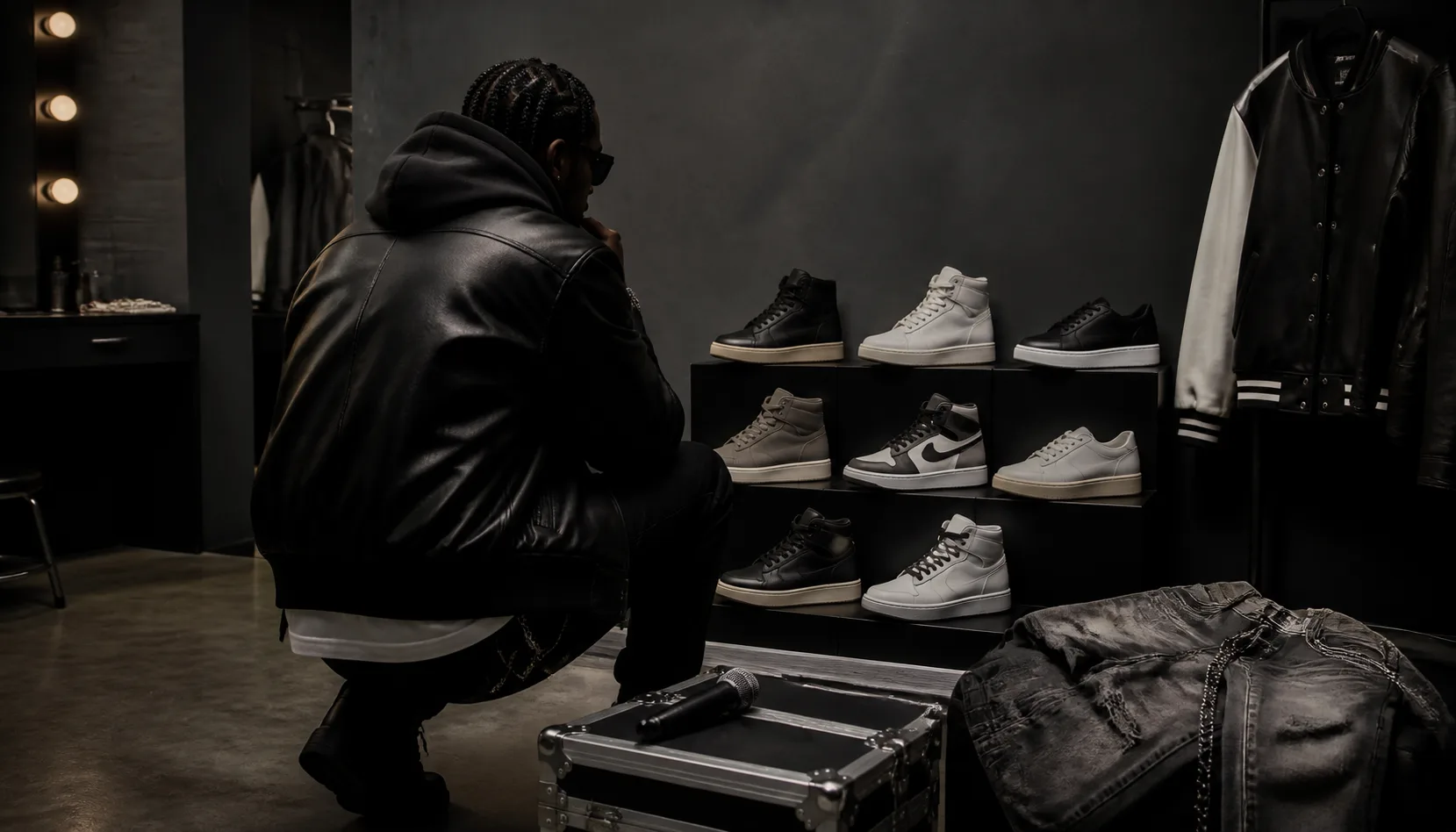
Quick answer
How should rapper sneaker sightings be interpreted?
Treat each sighting as a claim with a level of proof. A clear dated photograph may verify one appearance. Repeated independent photographs can suggest a pattern. A named campaign confirms a commercial relationship only when reliable credits or an official announcement support it. A collaboration requires evidence that the artist participated in an authorized product or project. None of those facts alone proves who started a trend.
A visible pair in a dated image or performance.
Repeated wear across separate, verifiable occasions.
A documented commercial relationship, not an assumption.
A broader claim requiring adoption beyond one famous person.
01 / The claim ladder
Use the narrowest statement the evidence can carry
Footwear lists often flatten several different relationships into one sentence. “Wore,” “favored,” “endorsed,” “collaborated on” and “made popular” are not interchangeable. The first may need one clear source. The last can require years of community history, retail information, interviews and visual archives. Precise verbs protect the reader and make the cultural record more useful.
| Claim | Minimum useful evidence | Safe wording |
|---|---|---|
| Appearance | Dated, clear image or video | “Wore during…” |
| Repeated preference | Several independent dated appearances | “Was photographed in repeatedly…” |
| Endorsement | Contract reporting, campaign credit or official statement | “Partnered with…” |
| Collaboration | Authorized product record and role | “Released a collaboration…” |
| Cultural influence | Multiple sources showing wider adoption and chronology | “Contributed to visibility…” |
When the model cannot be identified confidently, describe the visible category—low-top court shoe, padded high-top, rugged boot-like sneaker or technical runner—instead of guessing. A cautious description is stronger than a confident error.
02 / Context ledger
Record the setting, not just the shoe
A sneaker seen in a music video may belong to a stylist’s concept. A stage pair may be selected for movement and grip. An airport photograph can reveal genuine travel preference. A campaign image is constructed advertising. Each setting answers a different question, so the caption should preserve it.
Check movement, sole stability, trouser clearance and whether the same pair appears across the set.
Look for photographer, stylist, publication, issue and original caption.
Confirm date and source; avoid inferring private preference from one frame.
Separate paid brand communication from organic community adoption.
The distinction does not make styled imagery less valuable. It makes the image legible. Costume, performance and daily dress are all parts of hip-hop fashion; they simply carry different evidence.
03 / Verification desk
Build a source trail another editor can follow
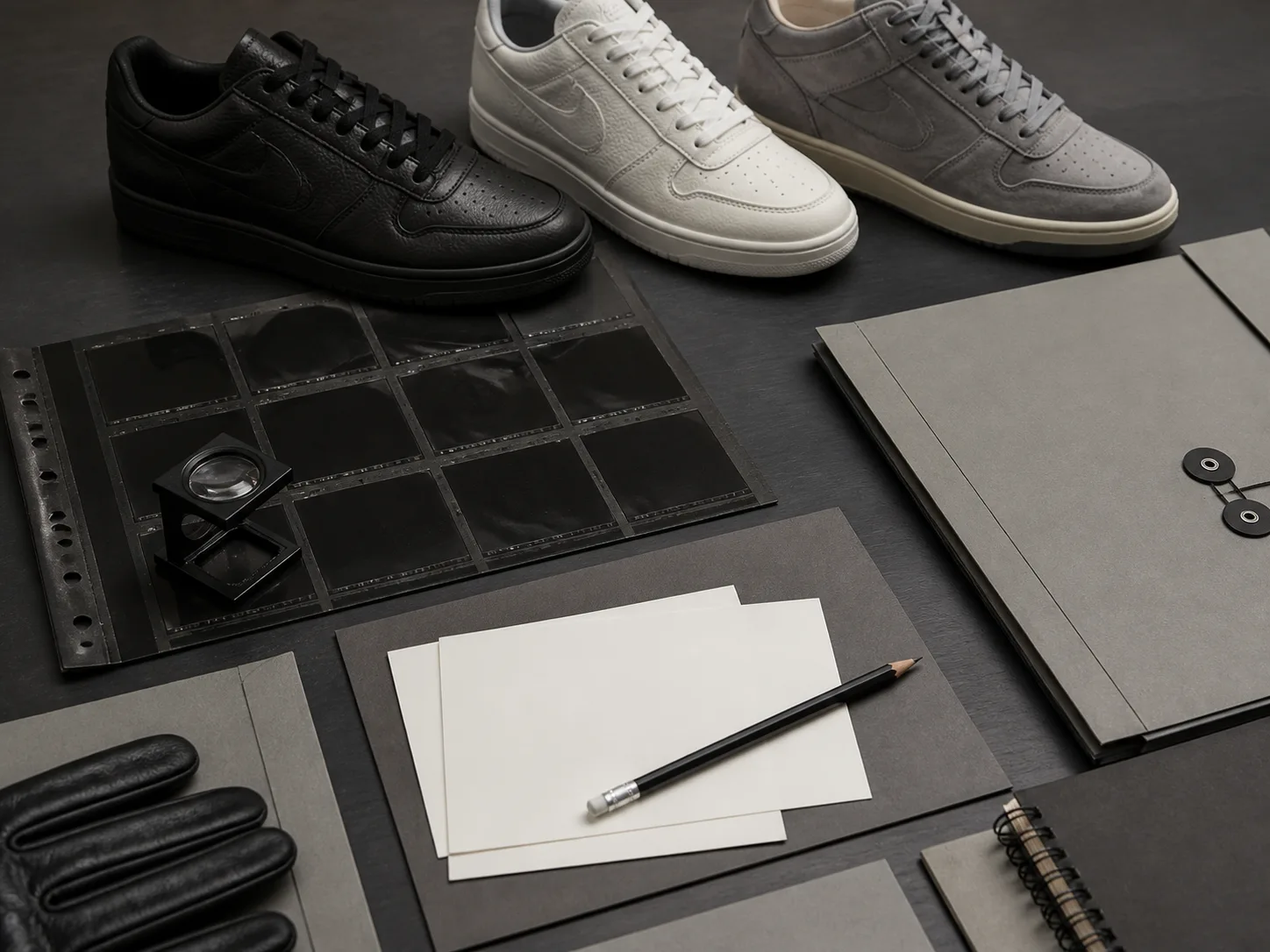
Start with the earliest traceable version of the photograph, performance or announcement. Social reposts often remove dates, crop footwear and detach captions. Save the creator or publisher, publication date, event date when different, and a stable URL or archive reference. Note whether the view shows enough construction to identify the pair.
For identification, compare the outsole shape, panel arrangement, collar height, lace structure, tongue, visible cushioning and period-appropriate color blocking. Color alone is weak evidence. Many shoes share black-and-white palettes, and lighting can shift gray toward blue or brown.
Then record uncertainty. “Likely a court high-top; exact release unconfirmed” is honest and searchable. Do not enlarge a blurred image until artifacts look like details. If an article repeats another outlet’s claim without adding evidence, it is corroboration only in appearance, not a second independent source.
04 / Why the sighting worked
The outfit usually explains more than celebrity status
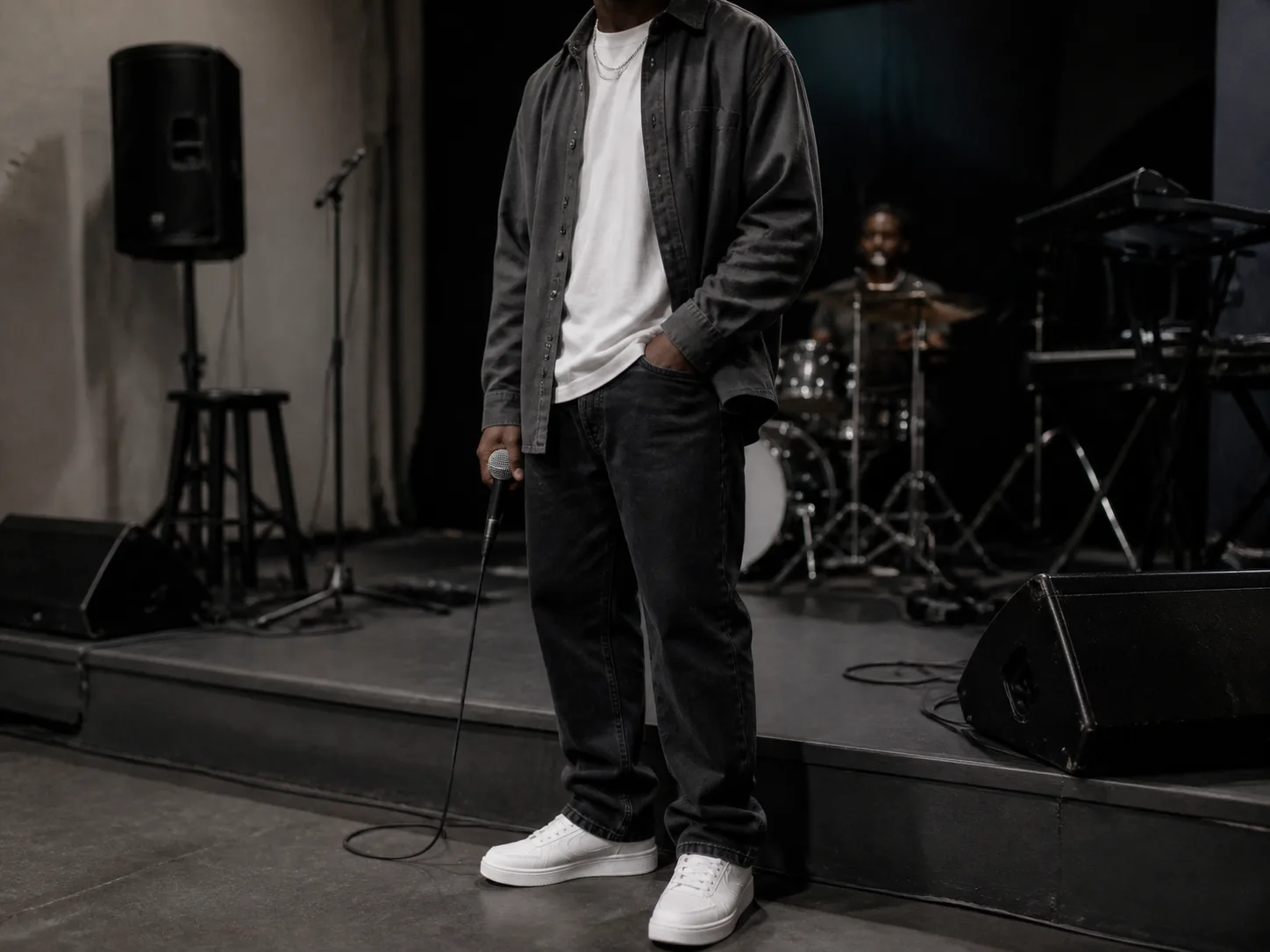
Once the evidence is sound, study proportion. A compact low-top can sharpen relaxed trousers because the hem resolves onto a clean, narrow base. A broad basketball high-top can support oversized denim and a varsity jacket because its collar and sole carry similar visual weight. A technical runner can add texture beneath nylon, while a rugged dark pair can anchor canvas and leather.
Also notice repetition. A white tee may echo a white midsole. A leather jacket may connect with a smooth upper. Silver jewelry can pick up reflective or metallic details without creating a literal match. The best looks rarely depend on the shoe being expensive; they depend on scale, material and movement agreeing.
For historical context, compare the Iconic Hip-Hop Sneakers guide. For court construction and its 1990s clothing relationship, use 90s Basketball Shoes. These guides explain why entire categories mattered beyond any single artist sighting.
05 / Translate, do not costume
Borrow the relationship between pieces
A useful reference can be recreated without copying a celebrity head to toe. Identify the dominant relationship first: wide denim over a substantial sole, a monochrome tracksuit around a clean trainer, or dark workwear grounded by a rugged pair. Preserve that relationship while choosing colors, brands and prices appropriate to your wardrobe.
Fit comes before symbolism. Try footwear with the actual trousers. Walk, sit and turn. The hem should not catch under the heel; the toe should not vanish accidentally; the collar should not fight a narrow opening. On stage or long days, traction, cushioning and stability matter more than a famous association.
Keep branding controlled. If the footwear already has complex paneling, quieter clothing gives it space. If the sneaker is plain, texture in denim, leather or a gray overshirt can provide depth. One chain or watch is often enough. The goal is a coherent silhouette, not a checklist of recognizable signals.
06 / Editorial safeguards
Four errors that distort sneaker history
- Turning one frame into a lifelong favorite. Describe one documented appearance unless repeated evidence supports more.
- Calling wear an endorsement. Commercial language needs commercial evidence.
- Assigning a trend to one celebrity. Neighborhood wearers, dancers, athletes, retailers and stylists may predate national visibility.
- Ignoring the date of the shoe. A later reissue can resemble an original; release timing helps prevent anachronistic identification.
Corrections should be visible and direct. If a model, date or relationship changes after stronger evidence appears, update the sentence and modified date rather than quietly preserving a more dramatic claim. BAAM Boys’ standards are detailed in the Editorial Policy.
07 / A practical rotation
Convert cultural observation into three wearable jobs
Clean low-top
Works with straight or relaxed jeans, simple tees and coordinated athletic layers.
Structured court shoe
Balances varsity jackets, wider denim and garments with stronger shoulder lines.
Comfort runner
Supports travel, rehearsal and long days while adding layered texture.
Rugged dark pair
Connects naturally with canvas, leather and colder-season workwear.
Buy for the job you actually have. A collectible original may be unsuitable for wear because foam, glue and rubber age even when the upper looks clean. The Retro Basketball Sneakers guide explains how to separate display value from wearable safety.
Evidence trail
Sources & Further Reading
These references support the historical, cultural or care-related claims in the guide. Outfit combinations and fit recommendations are BAAM Boys editorial judgment unless specifically attributed.
- Smithsonian NMAAHC — Five Things to See: The Fashion of Hip-Hop
Museum collection records connecting documented sneakers and other objects to hip-hop performers and culture.
- adidas Archive — History
The brand archive's account of the Superstar's basketball origin and its documented relationship with Run-D.M.C.
- Nike Department of Archives — The History of the Air Force 1
An official design history covering Bruce Kilgore, the 1982 release and the shoe's original basketball function.
- Converse — Converse History
An official chronology of the All Star, Chuck Taylor and the model's early basketball context.
Verification card
Record a sneaker sighting in six fields
Use the correctly identified performer.
Stage, video, portrait, event or ordinary appearance.
Record the known date or a qualified range.
Separate visible features from an exact unconfirmed release.
Link to the original or strongest traceable record.
Do not infer payment, partnership or preference from appearance alone.
A small verified ledger is more useful than a long list copied from captions with no provenance.