Condition before nostalgia
Retro Basketball Sneakers: How to Buy for Wear or Display
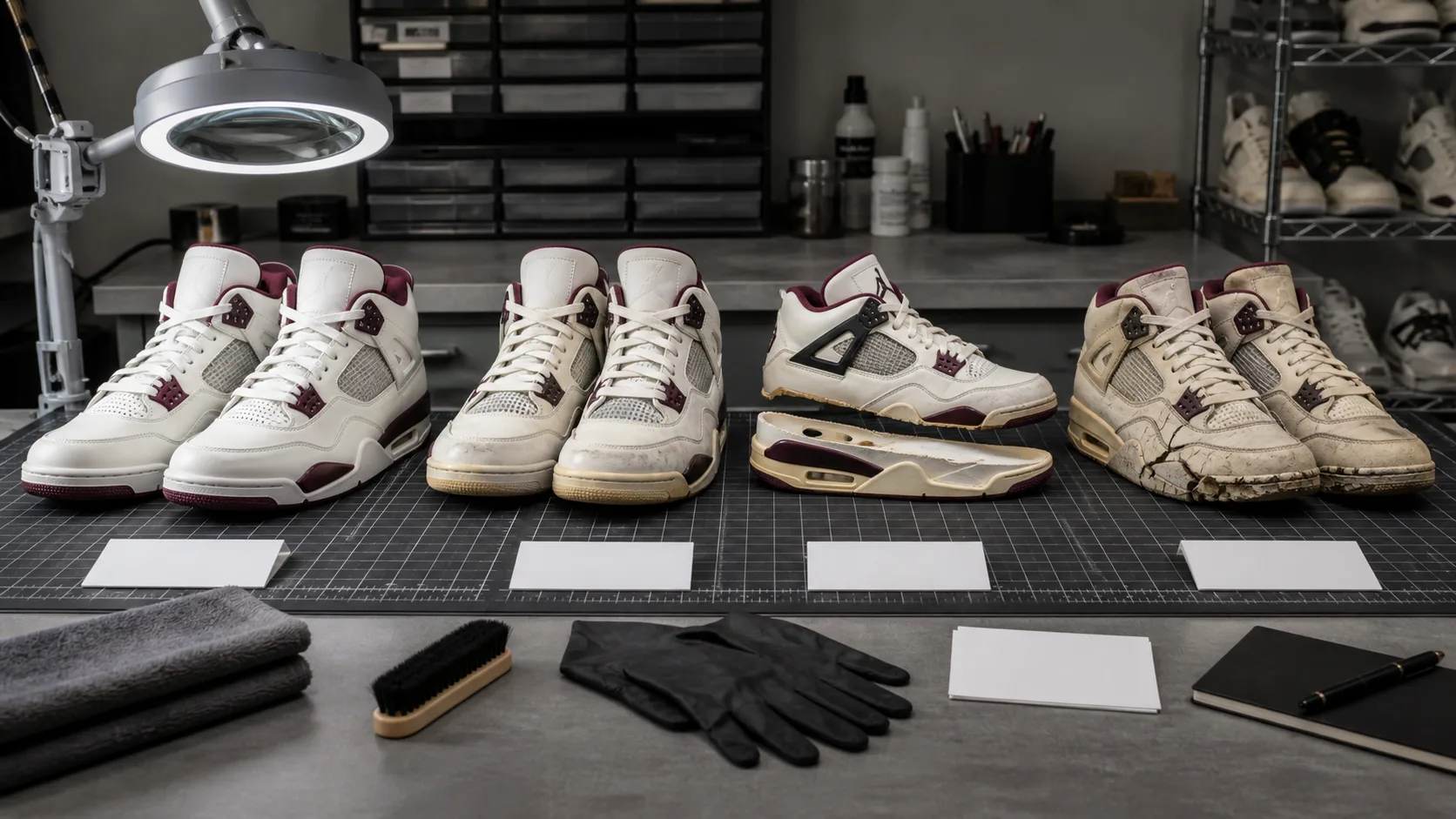
Retro basketball sneakers include original vintage pairs, later reissues and modern shoes inspired by older court designs. They may share a silhouette but differ in materials, construction, condition and intended use. Decide whether you want to collect, display, walk or play before evaluating authenticity or price.
Decision first
Original, reissue or retro-inspired?
| Type | Main value | Main risk | Best use |
|---|---|---|---|
| Original vintage | Period construction and history | Material failure and uncertain provenance | Collection or display |
| Later reissue | Familiar shape with newer materials | May still be aged; details can differ | Lifestyle wear after inspection |
| Current retro release | Accessible sizing and fresh construction | Not necessarily performance footwear | Daily outfits |
| Retro-inspired shoe | Historical visual language without exact replication | Less collector significance | Regular wear and styling |
No category automatically guarantees authenticity, quality or safety. A reissue from many years ago may have the same aging problems as an original, while a current lifestyle release may not be engineered for competitive basketball.
01 / Define the job
Purchase criteria change with intended use
A collector may prioritize original materials, box, tags, documented provenance and cosmetic completeness. A display buyer may accept structural weakness if the damage is stable and disclosed. A daily wearer needs sound bonding, flexible materials, suitable fit and a return policy. A basketball player should choose current performance footwear designed for their activity and body.
Confusion begins when one pair is expected to satisfy all four jobs. Scarcity does not make brittle foam safe. A faithful reissue does not promise modern court performance. A comfortable retro-inspired shoe may have little historical value. State the job before comparing prices.
The 90s Basketball Shoes guide covers the decade's design and court-to-street history. This guide concentrates on buying and condition.
02 / Material clock
Every component ages differently
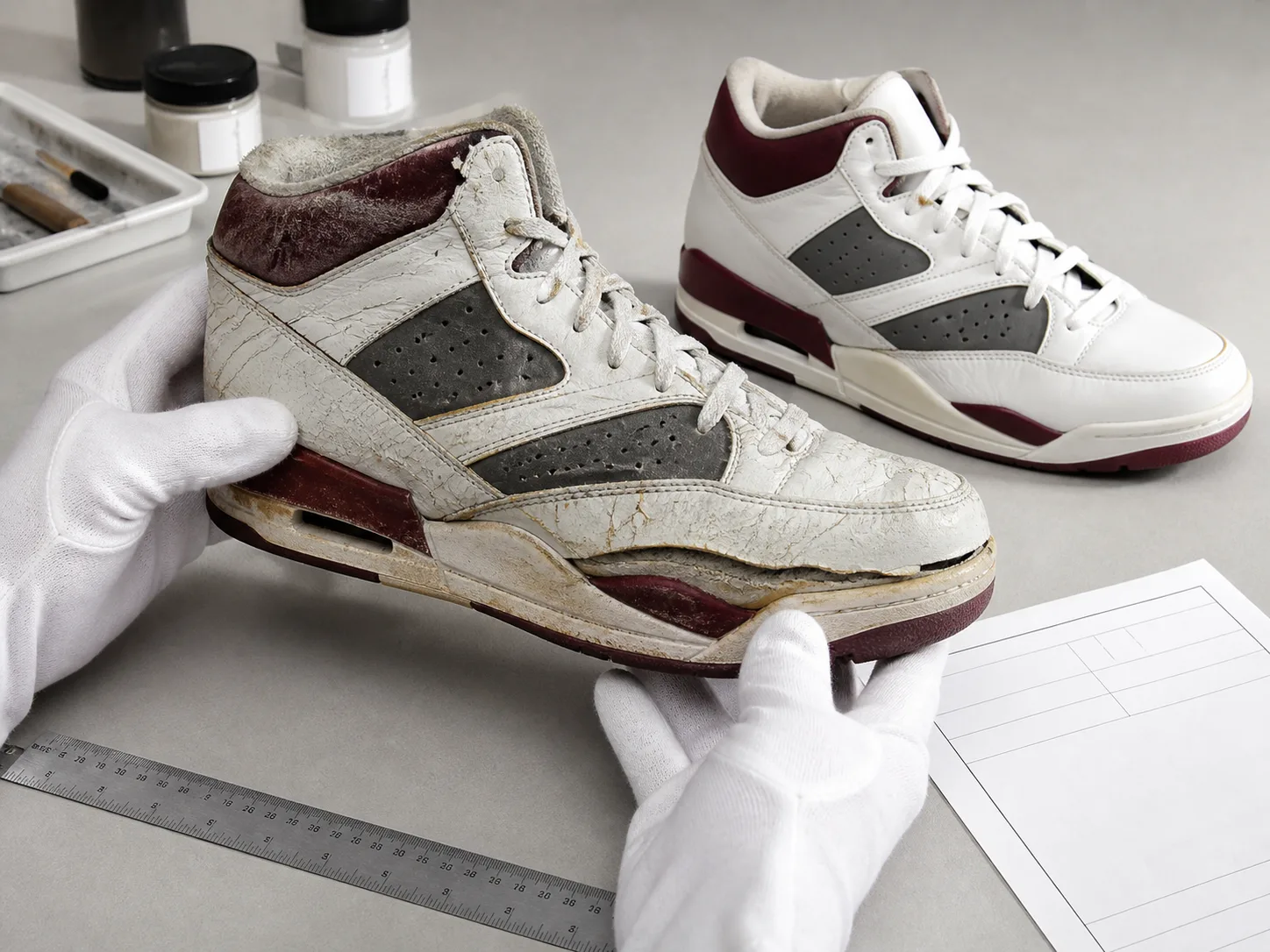
May harden, compress, yellow or crumble according to chemistry and storage.
Can dry and release at toe, sidewall or heel even when panels look clean.
May become hard, cracked or slick as flexibility and surface texture change.
Leather coatings can crack; synthetics may peel; mesh can tear at flex points.
Collar foam compresses and lining fabric wears, changing heel hold.
Eyelets, lace loops and decorative pieces can become brittle or detach.
Storage in heat, sunlight or humidity can accelerate damage. An unused pair is not frozen in time. “Deadstock” describes wear history, not material freshness or safety.
03 / Inspection
Use a consistent sequence
- View both shoes in neutral light and compare symmetry.
- Inspect collar, lining, flex points and lace hardware.
- Follow the bond line around toe, sidewall and heel.
- Check midsole for cracks, powder, softness or hardening.
- Examine outsole wear and remaining grip.
- Smell cautiously for mold, heavy chemical odor or concealed moisture.
- Flex gently only with permission; never force a collectible pair.
A photograph cannot reveal every internal weakness. For expensive purchases, request detailed images, storage history and return terms. If the seller resists basic condition questions, price is not the only risk.
Do not use an aged pair for basketball because a surface inspection looks acceptable. Sudden separation or material collapse can cause a fall.
04 / Authenticity
Build a case instead of trusting one detail
Authentication can involve provenance, box and tag information, production codes, shape, stitching, materials, construction and comparison with reliable period examples. Counterfeiters may reproduce isolated details, and legitimate production variation can make simplistic rules unreliable.
Online photographs add uncertainty through lighting, compression and hidden angles. A high-value pair deserves review by a trusted specialist with knowledge of the specific release. Authentication services have limitations; read their terms and retain documentation.
Do not confuse authenticity with condition. A genuine original can be crumbling. A counterfeit can look cosmetically clean. The two decisions need separate evidence.
05 / Seller conversation
Ask questions that expose uncertainty
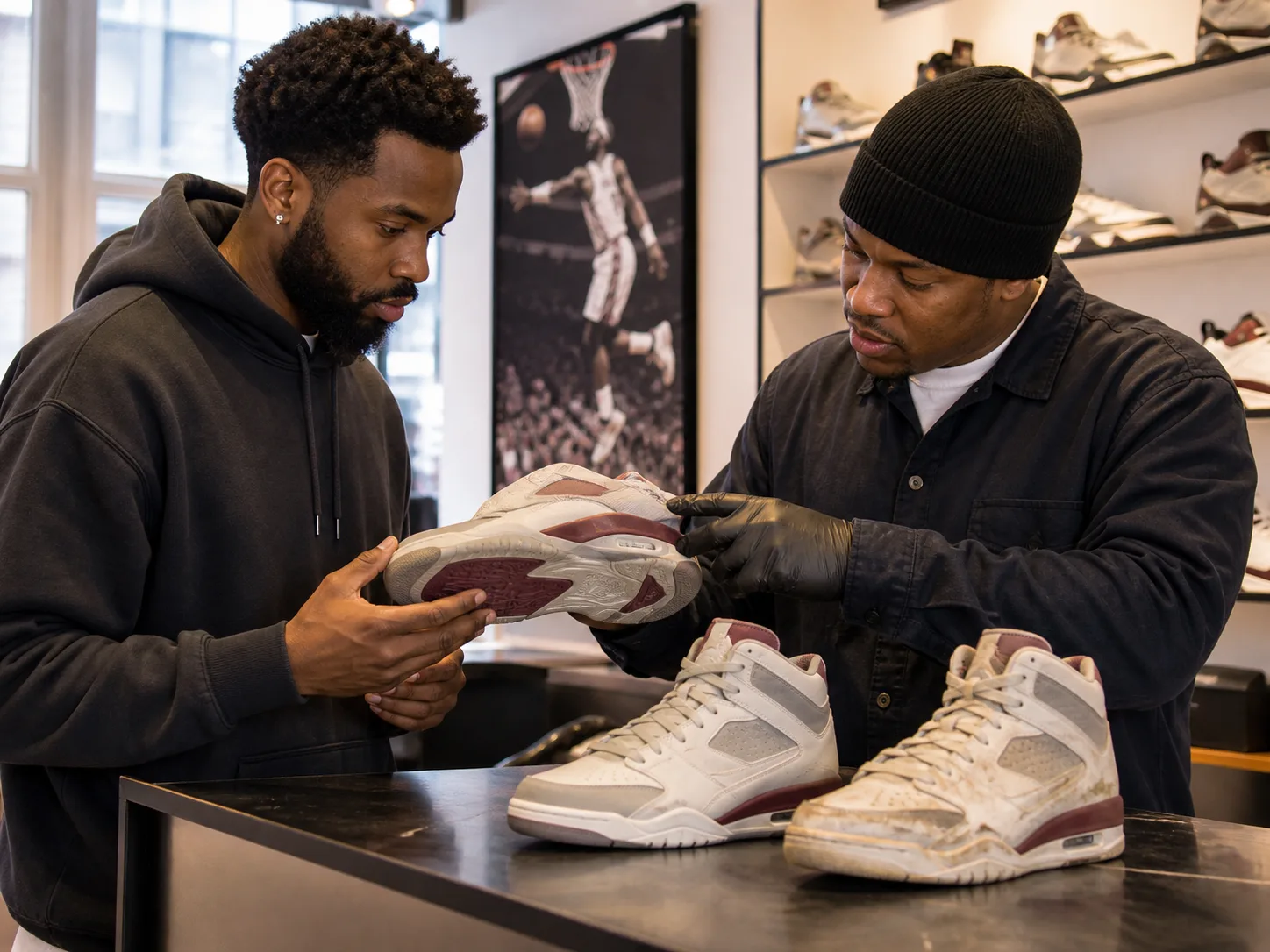
- When and where was the pair acquired?
- How was it stored, and for how long?
- Has either shoe been reglued, repainted or sole-swapped?
- Are box, accessories and purchase records included?
- Can the seller provide daylight photos of tags, soles and bond lines?
- What happens if condition differs materially on arrival?
A restoration can preserve display appearance but changes originality and must be disclosed. Regluing an old sole does not renew degraded foam or transform the pair into safe performance equipment.
Compare prices using matching size, release, condition, completeness and restoration status. A low price may reflect hidden damage; a high price does not certify anything.
06 / Care
Preservation is controlled, not aggressive
Remove dry surface dust with a soft brush. Follow material-specific guidance and test any cleaner in a hidden area. Avoid soaking mixed-material shoes, high heat, harsh household chemicals and forceful flexing. Dry at room temperature with airflow.
Store clean and dry, away from direct sunlight and temperature extremes. Use neutral support inside the shoe without stretching the upper. Allow air circulation and check periodically for mold, separation or material shedding. Containers and desiccants require climate-aware use; trapping moisture can create another problem.
Restoration involves tradeoffs. Repainting improves appearance but changes surface originality. Sole replacement can make a display pair more stable, yet other old components remain. Document every intervention for future owners.
Keep a simple condition record when the pair has collector value. Dated photographs of both side profiles, soles, tags, collars and known damage make later changes easier to recognize. Note the storage environment and any cleaning or repair work. That record supports an honest future sale and prevents a cosmetic improvement from being mistaken for untouched originality.
07 / Wardrobe alternative
Use a current pair when the silhouette matters most
If your goal is a retro outfit, a current release or unbranded retro-inspired shoe often makes more sense. Pair a substantial mid-top with relaxed denim, cargos or a tonal tracksuit. Control the hem and let the footwear provide the period reference.
The Iconic Hip-Hop Sneakers guide explains cultural adoption; the 90s outfit guide compares other footwear families. History can inform daily style without placing a fragile artifact under your feet.
- “Unworn” means fresh. Chemistry continues during storage.
- Authentic means wearable. Provenance and structure are different decisions.
- Glue solves aging. A bond repair cannot renew every component.
Evidence trail
Sources & Further Reading
These references support the historical, cultural or care-related claims in the guide. Outfit combinations and fit recommendations are BAAM Boys editorial judgment unless specifically attributed.
- Smithsonian NMAAHC — Five Things to See: The Fashion of Hip-Hop
Museum collection records connecting documented sneakers and other objects to hip-hop performers and culture.
- adidas Archive — History
The brand archive's account of the Superstar's basketball origin and its documented relationship with Run-D.M.C.
- Nike Department of Archives — The History of the Air Force 1
An official design history covering Bruce Kilgore, the 1982 release and the shoe's original basketball function.
- Converse — Converse History
An official chronology of the All Star, Chuck Taylor and the model's early basketball context.
Purchase decision
Stop the purchase when evidence is weaker than the price
- Purpose: decide whether the pair is for display, lifestyle wear or current sport before comparing listings.
- Identity: match tags, shape, materials, construction and provenance; do not rely on one detail.
- Condition: inspect foam, adhesive, outsole, upper, lining and hardware as separate aging systems.
- Disclosure: obtain written information about storage, restoration, regluing, repainting and returns.
- Safety: choose current performance footwear for basketball regardless of an old pair's cosmetic condition.
Walking away is a valid outcome. Scarcity does not compensate for missing evidence, hidden damage or a seller who will not answer condition questions.