Shape, texture and care
80s Black Hairstyles for Men: A Texture-Aware Guide
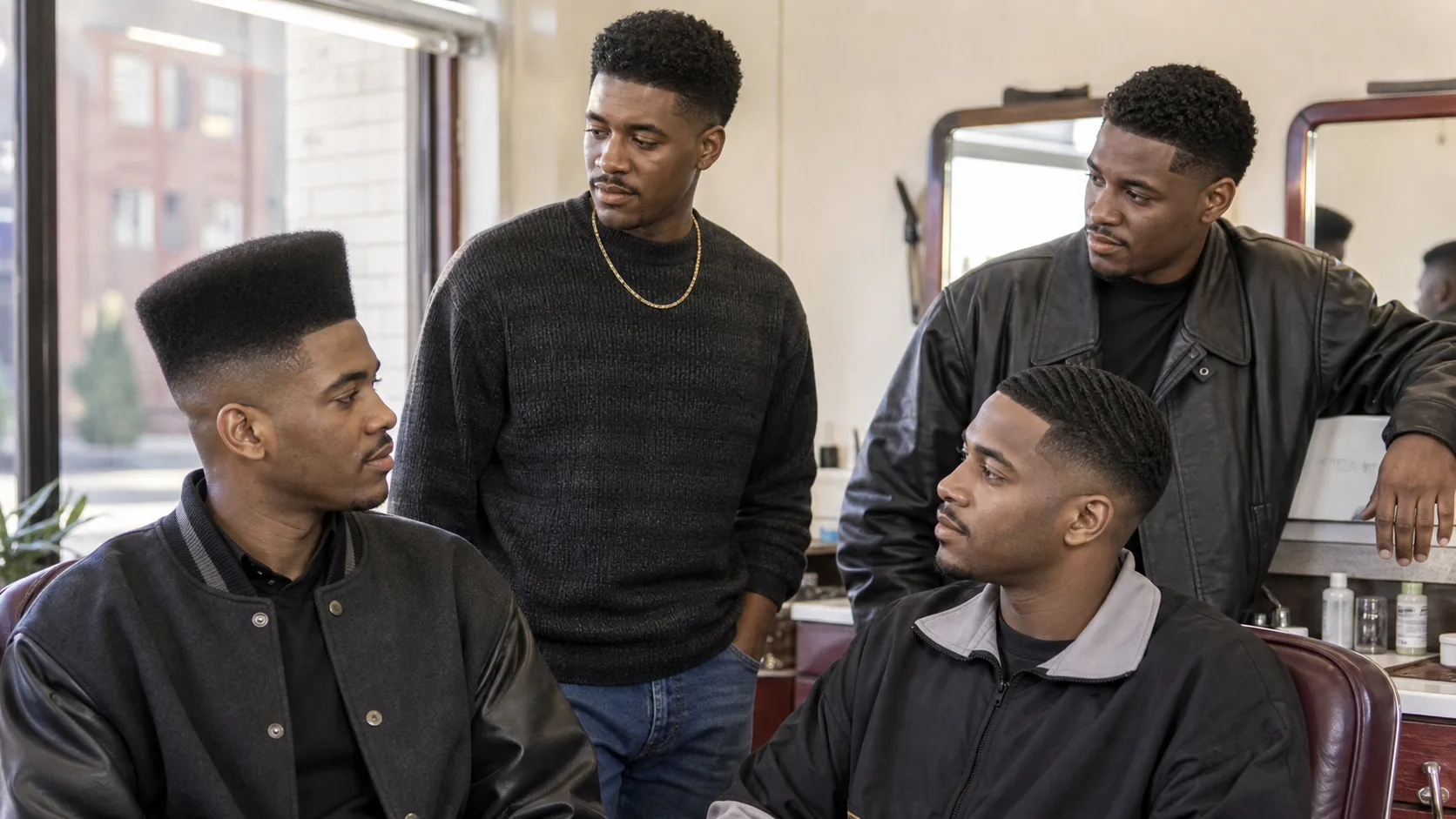
1980s Black men's hairstyles ranged from sculpted high-top fades and short naturals to waves, compact curls and clean tapers. The decade celebrated geometry, but no cut worked identically across every curl pattern, density or hairline. A good reference begins with the desired silhouette, then adapts it to the person and a sustainable care routine.
Quick directory
Which Black men's hairstyles defined the 1980s?
The sculpted high-top fade became one of the decade's most recognizable shapes, while short naturals, low and temple tapers, brushed waves, compact curls and clean line-ups offered lower-profile alternatives. Length, graduation and finish varied widely. Choosing among them should account for curl pattern, density, scalp comfort, maintenance time and how frequently a barber visit is realistic.
High-top fade
Height on top, graduated sides and a carefully balanced front and rear profile.
Short natural taper
Natural curl remains visible while edges and sideburns receive controlled structure.
Waves with fade
Brushing pattern provides surface direction; the taper keeps the perimeter clean.
Compact curls
Moderate length and selective taper preserve movement without demanding a rigid outline.
01 / Read the shape
Names help, but geometry gives better instructions
A haircut name can conceal several decisions. “High-top” does not specify height, top width, corner sharpness, taper level or how the back meets the crown. “Short natural” does not explain whether the outline should be round, squared or closely contoured. Before sitting in the chair, identify the front, side and rear silhouette you want.
Face and head shape influence balance, but they do not create rigid rules. A taller top adds vertical emphasis; more width at the upper sides broadens the outline; a lower taper preserves density near the temple; a sharp line-up makes the forehead edge more graphic. A skilled barber adapts these levers without promising that one reference photograph will reproduce exactly.
Changes vertical emphasis and the amount of daily shaping.
Controls whether the top reads columnar, tapered or softly rounded.
Line-up, temple and neckline determine how finished the cut appears.
02 / The high-top
A dramatic cut requires a maintenance agreement
The high-top fade depends on contrast: preserved length above, carefully graduated sides and a clean silhouette from every angle. The top may be flat, softly shaped or slightly sloped according to density and preference. Its apparent simplicity is technical. Uneven shrinkage, cowlicks and different growth rates need to be considered before symmetry is judged.
Bring several reference views rather than one front photograph. Discuss the maximum height, whether corners should be hard or softened, and how much scalp exposure feels comfortable at the sides. Ask how the cut will grow between appointments. A very sharp outline may need frequent professional reshaping; a slightly softer version can tolerate more time.
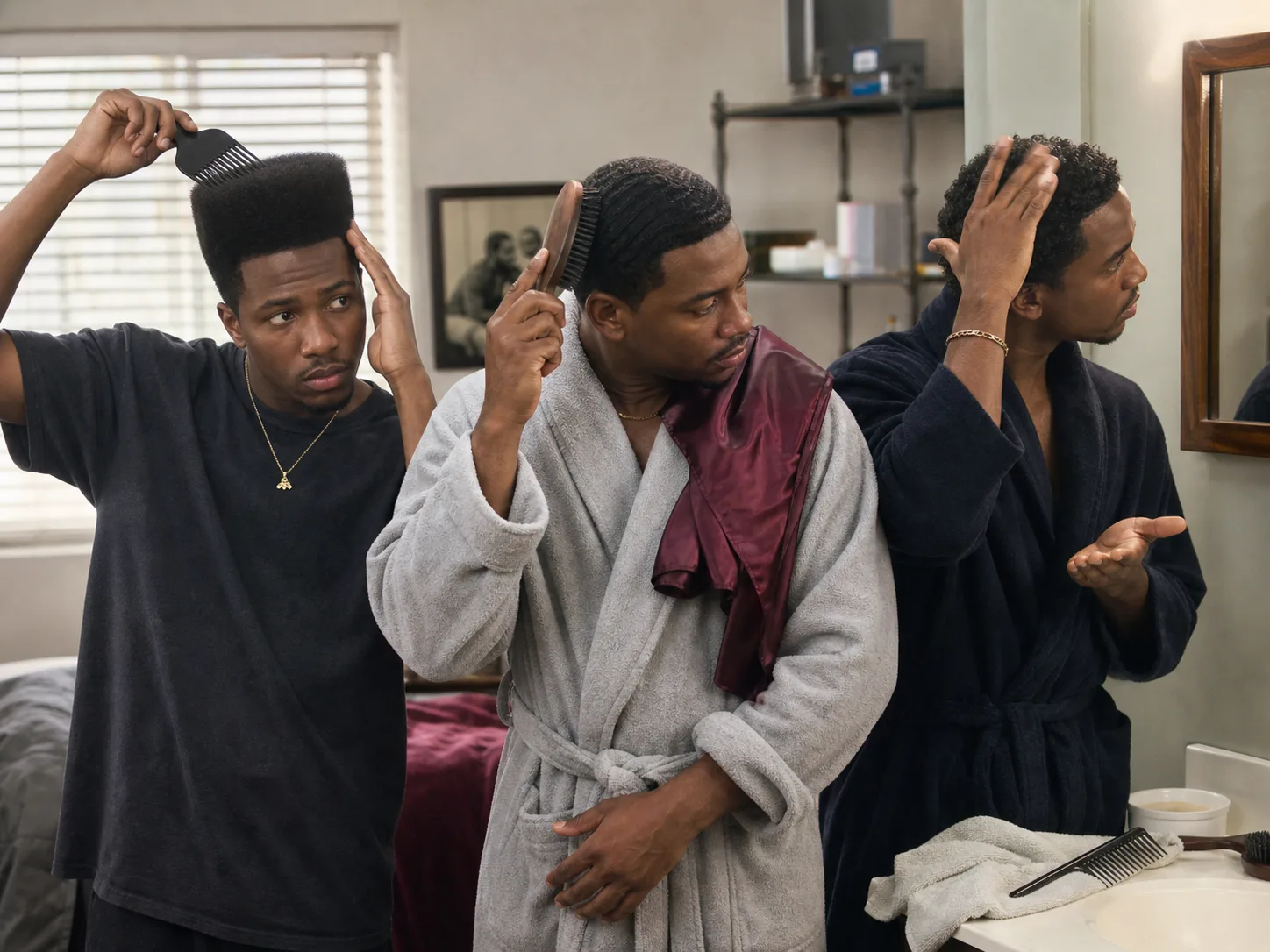
Do not force dry hair into a rigid shape with aggressive picking. Detangle with appropriate slip, work in sections and stop when there is resistance or pain. Individual products vary, so patch testing and attention to irritation matter more than copying a period routine.
03 / Barber brief
Use observations instead of demanding a duplicate
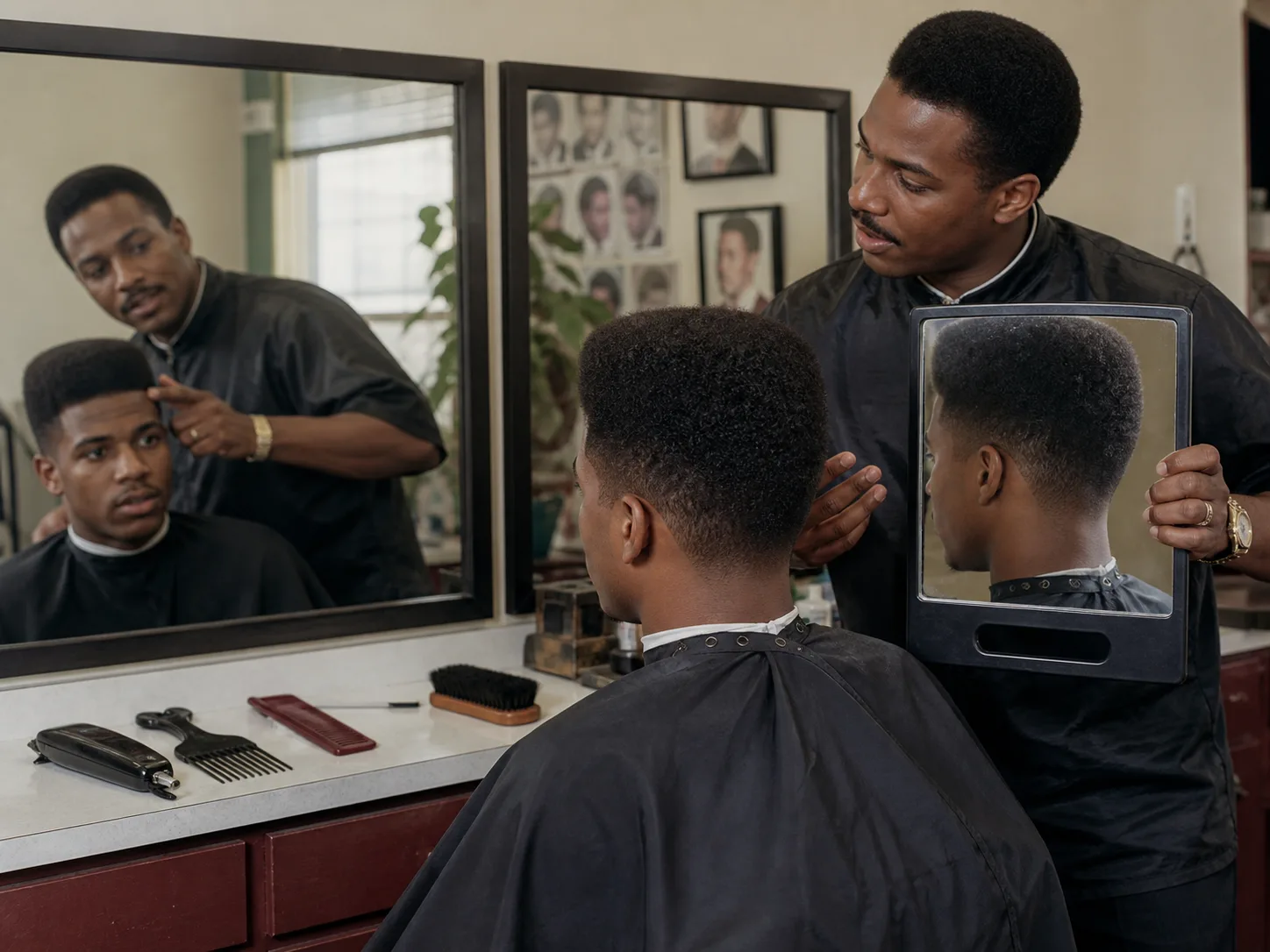
Start by showing photographs of hair with a similar density and curl behavior when possible. Point to features rather than saying “exactly this”: preserve this much height, keep this taper low, soften this corner, or leave the hairline natural. Tell the barber how long you can spend styling and how often you expect to return.
Five questions before the cut
- How much length will remain after shrinkage?
- Where will the fade begin at temple and back?
- Will the front line be enhanced, lightly cleaned or kept natural?
- How should the top be shaped between visits?
- Which signs of dryness or irritation should pause the routine?
A trustworthy consultation allows the professional to say that a reference is unsuitable or needs modification. Hairline preservation and scalp comfort outrank a perfectly sharp period silhouette.
04 / Other routes
Lower-maintenance does not mean less deliberate
Preserves visible curl with a clean temple and neckline. It grows more softly than a severe high-top and adapts to many settings.
Require consistent gentle brushing and moisture. Excess pressure or tight headwear can create discomfort and breakage.
Prioritize hydration, separation and an outline that respects natural shrinkage. A subtle taper adds definition.
Offers a restrained option whose quality depends on balanced length, a comfortable line and clean upkeep.
These styles shared the decade with more dramatic shapes. Reducing 1980s Black men's hair to a single high-top erases the diversity of daily choices and workplace needs. The wider 80s Black Men's Fashion guide shows how grooming interacted with tailoring, sportswear and casual wardrobes.
05 / Home care
A repeatable routine beats a crowded shelf
Begin with gentle cleansing at a frequency that suits scalp and activity. Condition and detangle with care, using fingers or a suitable wide-tooth tool from ends toward roots. Apply a modest amount of compatible moisture or styling product rather than layering several formulas without knowing how they interact.
For a shaped top, lift and arrange the hair without repeatedly scraping the scalp. For waves, use a clean soft or medium brush appropriate to hair length and avoid excessive force. Satin or another low-friction sleep surface may help reduce rubbing, but tight compression should never cause pain, bumps or numbness.
Clean combs, picks, brushes and headwear regularly. Shared tools can transfer debris, and product buildup changes how hair behaves. Photograph the cut shortly after a barber visit so you have a realistic maintenance reference rather than relying on a highly lit celebrity portrait.
06 / Style relationship
Hair can balance clothing without matching its decade
A strong vertical high-top works naturally with a short varsity or leather jacket because both keep the body outline clear. Waves and a clean fade add precision to a tonal tracksuit or tailored outfit. Compact curls can soften the hard lines of structured outerwear. These relationships are compositional, not rules.
If both hair and clothing are highly graphic, reduce accessories. A tall top, broad jacket, bright eyewear and several large jewelry pieces compete for the same attention. Let one element lead and photograph the complete outline. The 80s Rapper Fashion guide explains how performers repeated hair, hats and clothing to create a recognizable persona.
The 90s Black Hairstyles for Men guide tracks how high-tops, fades, braids, locs, waves and short cuts evolved in the following decade. The transition was gradual; a style did not disappear when the calendar changed.
07 / Health boundary
Style guidance is not scalp treatment
Persistent itching, pain, sores, sudden shedding, spreading scale or inflamed bumps deserve advice from a qualified healthcare professional. A barber can observe and pause service, but should not be asked to diagnose a condition.
Avoid a cut or routine that repeatedly causes discomfort. Very tight styles, harsh brushing, contaminated tools or close clipping over irritated skin may worsen problems. Discontinue a new product if it causes a concerning reaction and follow its safety instructions. People with known allergies or scalp conditions should use professional guidance appropriate to them.
Historical accuracy never requires using outdated or unsafe methods. Recreate the visible shape with current hygiene, tools and professional judgment. That approach respects the era while protecting the person wearing the style.
Evidence trail
Sources & Further Reading
These references support the historical, cultural or care-related claims in the guide. Outfit combinations and fit recommendations are BAAM Boys editorial judgment unless specifically attributed.
- American Academy of Dermatology — Black hair: Tips for everyday care
Dermatologist-reviewed guidance on conditioning, heat, chemical services, tension and when to seek medical care.
- American Academy of Dermatology — Hairstyles that pull can lead to hair loss
Medical guidance on traction alopecia, warning signs and reducing repeated tension.
- The Museum at FIT — Fresh, Fly, and Fabulous: Fifty Years of Hip Hop Style
Cultural context for grooming, accessories and self-presentation within hip-hop style.
Visual archive card
Turn a reference into a barber brief
Describe height, width, corner shape and the relationship between top and sides.
Identify where the fade begins and whether the change is sharp, gradual or nearly uniform.
Bring references with comparable density and curl pattern; do not ask a name to override actual hair behavior.
Agree on refresh frequency, home shaping limits and what happens as the cut grows out.
Archive labels organize what can be seen. A barber consultation determines what can be built safely and maintained on one person's hair.