Cultural History · 1980—1989
80s Black Fashion History: Movements, Media and Influence
The history of 1980s Black fashion sits at the intersection of hip-hop's rise, sports visibility, expanding music television, Black tailoring traditions and community life. This cultural account traces how those forces changed silhouette and meaning; the separate men's guide handles work, church, campus, weekend and outfit decisions.
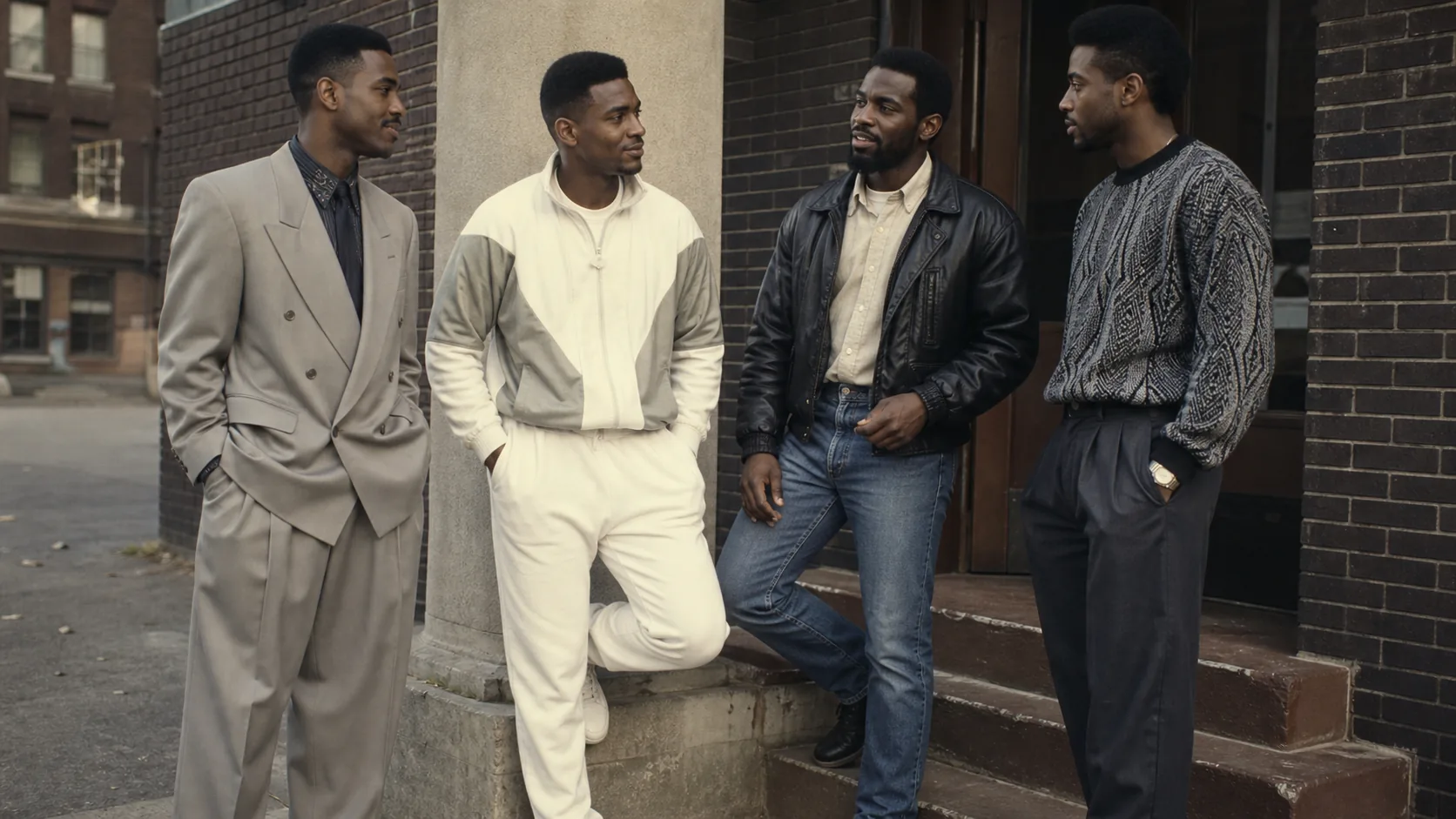
What defined 80s Black fashion for men?
Strong silhouette and deliberate coordination defined many memorable looks. Broad or soft-shouldered jackets sat over high-waisted pleated trousers; tracksuits turned athletic clothing into a complete street outfit; leather jackets, straight denim and high-top sneakers added practical weight. Polished shoes, hats, gold jewelry and sculpted hairstyles finished the image. The balance changed by city, scene and occasion, so there was never one universal 1980s Black wardrobe.
The decade contained several wardrobes at once
A sharp suit, a matching track set and a leather jacket with jeans may appear to tell different stories. In the 1980s, they often existed within the same social world. A man might dress formally for church or work, wear knitwear and pleated trousers on a date, then choose athletic clothing for an ordinary weekend. Photographs tied to music capture the most theatrical side, while family albums reveal quieter combinations.
Economic change, migration and media expansion shaped those choices. Cable television and music video gave performers a new visual reach. Basketball and other sports turned athletic clothing into recognizable public imagery. At the same time, independent shops, tailors, beauty professionals and neighborhood taste continued to determine what clothing looked like on actual bodies.
Black fashion should not be treated as a reaction to a mainstream decade. Black designers, stylists, artists and wearers were active makers of the period's visual culture. Ideas later described as general “80s trends” often became widely legible after creative communities had already tested and refined them.
80s Black men's style at a glance
| Direction | Core pieces | What creates the look |
|---|---|---|
| Relaxed tailoring | Broad blazer, pleated trouser, knit or open-collar shirt | Visible waist and controlled volume |
| Athletic set | Matching track jacket and pants, clean sneakers | Coordination and crisp condition |
| Leather casual | Bomber or moto-style jacket, denim, boot or high-top | Material contrast and compact outer layer |
| Collegiate | Cardigan, polo, oxford shirt, tailored trouser | Layering and polished footwear |
The clothes that carried the decade
Tailoring built presence
Jackets often created width through cut rather than cartoonish padding. Double-breasted fronts, longer lengths and wider lapels gave the torso authority. Below, pleats supplied room while a higher rise clarified the waist. The best examples look fluid rather than rigid: cloth hangs, trousers move and the jacket frames the knit or shirt underneath.
Modern eyes sometimes call any large vintage suit “oversized.” That misses the internal structure. A jacket may be roomy through the chest yet precise at the neck and sleeve. Trousers may be generous through the thigh while tapering toward a polished shoe. Those relationships are why simply buying several sizes larger rarely reproduces the effect.
Tracksuits made coordination effortless
A matching athletic set solved the outfit in one decision. Contrast piping, panel construction and zip collars created graphic lines; clean sneakers kept the result disciplined. The tracksuit also made sense for dance and street movement. Its cultural power came from both function and presentation.
Leather and denim added durability
Leather bombers and short jackets brought sheen and structure. Worn with straight or gently relaxed denim, they produced a compact upper body above a clean leg. Washes varied from dark indigo to faded blue. The silhouette was generally less pooled and extreme than the denim associated with the following decade.
Knitwear supplied pattern and softness
Geometric sweaters, cardigans, mock necks and textured crewnecks gave men color and surface without relying on outerwear. Knit tucked into a pleated trouser could feel polished; worn loose with denim, it became casual. In a grayscale wardrobe, rib, cable and weave can still provide the same visual depth.
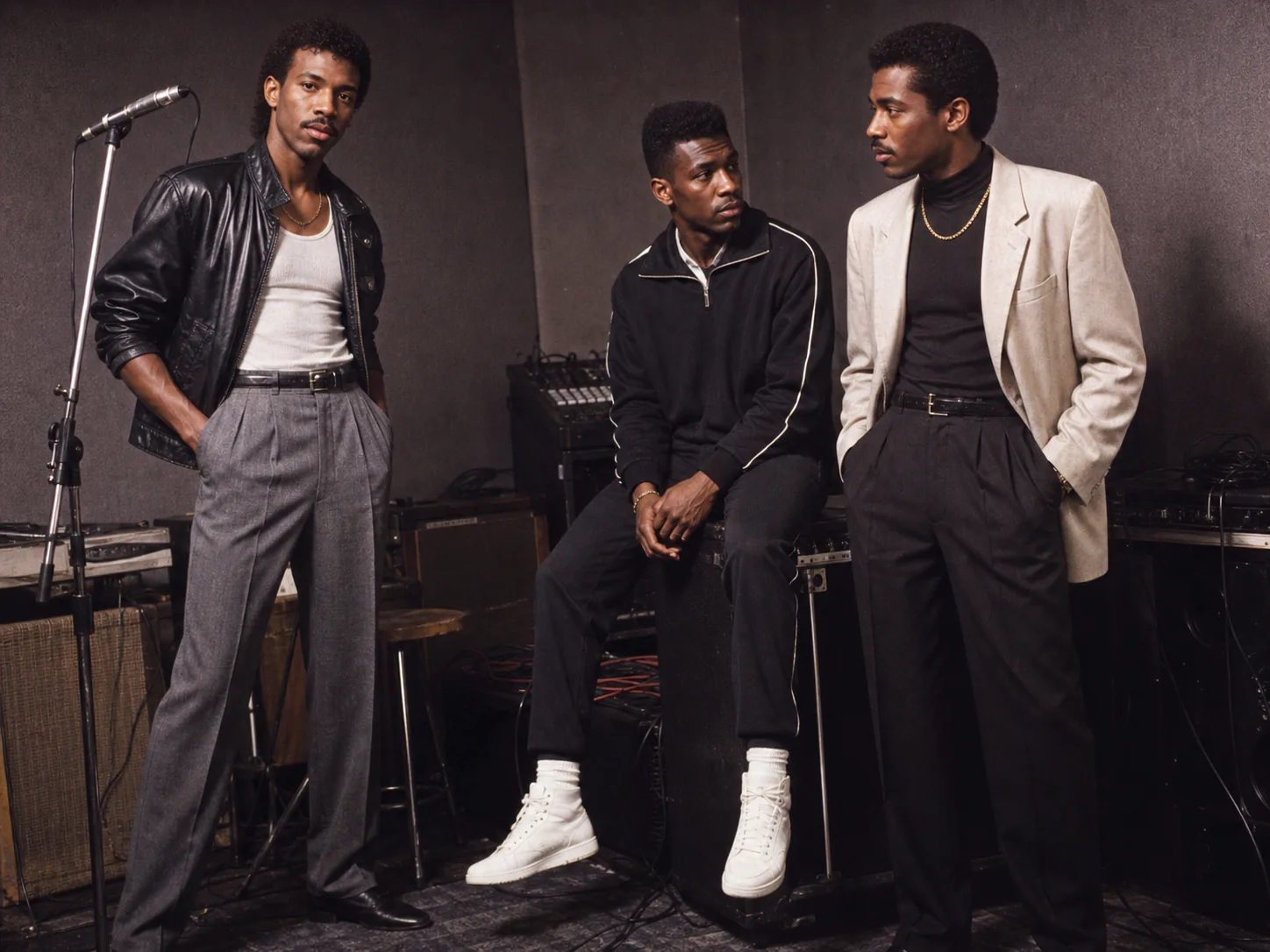
Music made clothing part of the performance
Hip-hop's visual identity was developing rapidly, with artists using sportswear, leather, hats, sneakers and jewelry to make group identities instantly readable. Matching mattered. So did cleanliness, customization and the confidence to turn accessible objects into a complete image.
Yet hip-hop was not the decade's only musical fashion source. R&B, funk, pop, house and jazz performers offered tailored, romantic, futuristic and minimalist alternatives. A complete archive must resist using one genre to stand in for Black dress as a whole.
Stage clothing should also be separated from ordinary wear. Reflective material, large jewelry and bold contrast survive lights and distance. Their scale makes sense within performance. Offstage photographs often show those same artists in quieter knits, denim or suits, which can be more useful references for contemporary outfits.
Hair, jewelry and finishing details
High-top fades, carefully shaped natural hair, close cuts and chemically processed styles all appeared during the decade. Hair was architectural: line, height and surface could answer the shoulder of a jacket or the clean geometry of a track set. A skilled barber or stylist mattered as much as the clothing store.
Gold chains, rings and watches caught available light and communicated success or group identity. Scale ranged from restrained to deliberately prominent. Hats and sunglasses changed the outline of the face, while belts made the higher trouser waist visible. The strongest outfits used these details as punctuation, not a substitute for fit.
Historical appreciation does not require copying a hairstyle without regard to hair texture or maintenance. Choose references compatible with your hair and speak to a knowledgeable barber. For skin or scalp conditions, consult a qualified professional rather than relying on fashion advice.
How to wear an 80s influence now
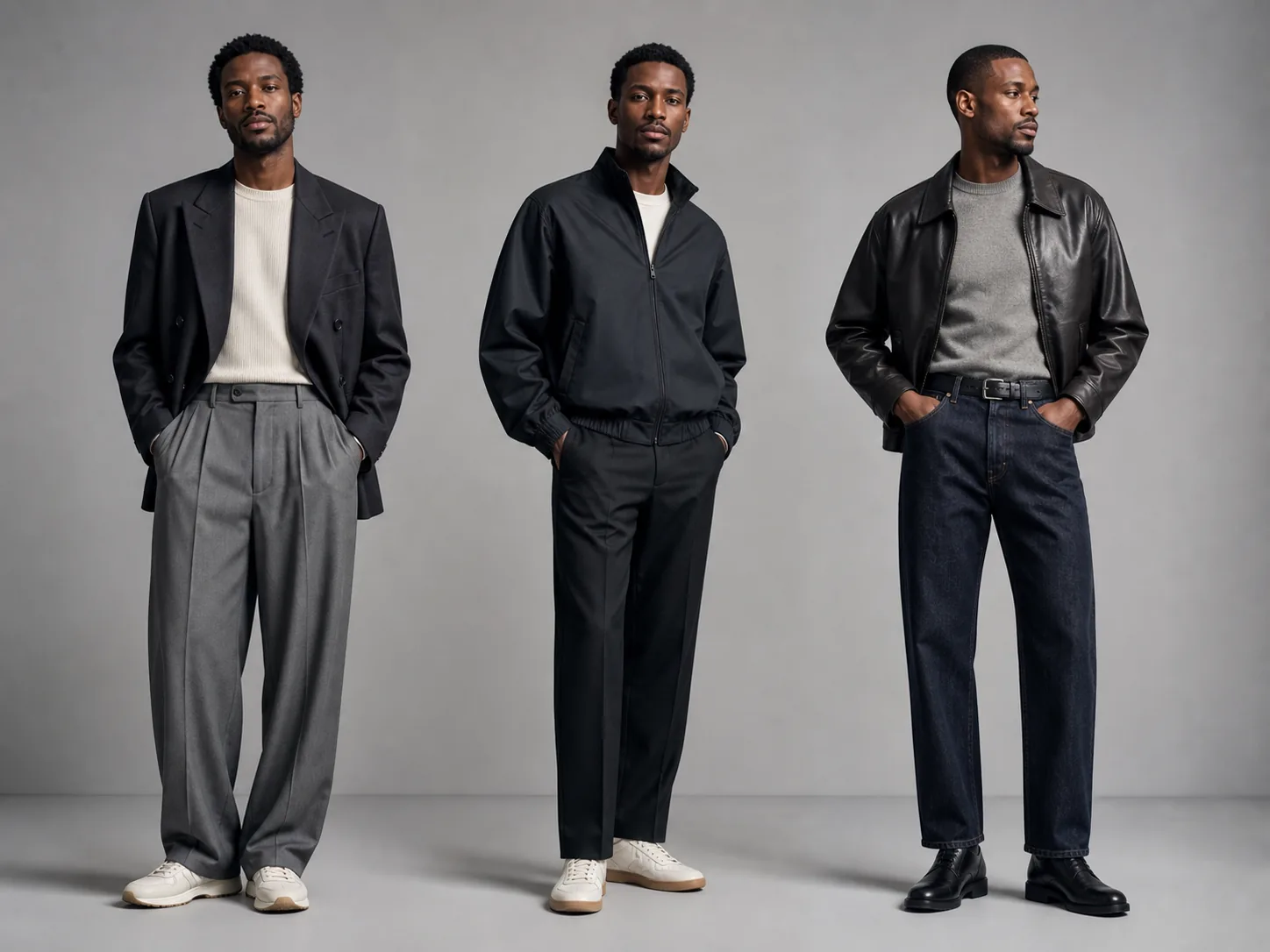
The most successful approach preserves the decade's logic—shape, coordination and finish—while removing costume cues. Start with one of the formulas below and adjust it for your daily environment.
Relaxed double-breasted blazer + pleated trouser + fine knit + clean low-top sneaker.
Minimal track jacket + straight wool trouser + simple leather sneaker.
Cropped leather jacket + tucked knit + high-waisted straight denim + black boot.
Color does not need to be loud. Charcoal, cream, navy and faded denim reveal proportion clearly. If you do use a vivid track jacket or patterned sweater, let it lead and quiet the remaining pieces. Our Men's Style desk offers a broader method for fit and wardrobe planning.
What to check when buying vintage 80s clothing
Measurements matter more than the size tag. Compare shoulder, pit-to-pit, jacket length, trouser rise, waist, thigh and hem with clothing you own. Vintage trousers may contain extra cloth for alteration, but moth damage, brittle lining and weakened seams can make tailoring uneconomical.
Inspect leather for dryness along the collar, cuffs and folds. Check elastic in track clothing; it may have lost recovery even when the fabric looks clean. Knitwear deserves bright-light inspection for holes and repairs. Ask about odor and storage. A good vintage garment should enter your wardrobe as clothing, not as an expensive problem hidden by nostalgia.
Continue the cluster
80s specialist guides
Evidence trail
Sources & Further Reading
These references support the historical, cultural or care-related claims in the guide. Outfit combinations and fit recommendations are BAAM Boys editorial judgment unless specifically attributed.
- The Metropolitan Museum of Art — Superfine: Tailoring Black Style
A cultural and historical examination of Black style, identity and dandyism through garments, art and photography.
- Library of Congress — African American clothing and fashion photographs
A cataloged photographic record with creator, date, subject terms, repository and rights notes.
- The Museum at FIT — Fresh, Fly, and Fabulous: Fifty Years of Hip Hop Style
Curatorial material on the invention, remixing and wider adoption of hip-hop fashion.
Common questions
80s Black fashion FAQ
What did Black men wear in the 1980s?
Wardrobes included broad and double-breasted suits, pleated trousers, tracksuits, leather jackets, straight denim, patterned knitwear, polos, high-top sneakers, dress shoes, hats and gold jewelry. Occasion, region and music scene changed the combination.
Was all 80s fashion colorful?
No. Bold color and geometric pattern were visible, but monochrome tracksuits, charcoal tailoring, black leather, cream knitwear and ordinary blue denim were equally useful parts of the period.
What shoes suit an 80s-inspired outfit?
Clean leather sneakers, simple high-tops, loafers and streamlined boots work well. Choose according to the outfit direction: athletic, tailored or leather casual. Avoid using an extremely bulky later-90s shoe if period accuracy matters.
How was 80s style different from 90s Black fashion?
Eighties looks often showed a higher waist, more visible tailoring structure and tighter coordination. The 1990s generally relaxed the shoulder and expanded denim, tees and workwear. The transition was gradual, with considerable overlap.
Can I wear an 80s look without bright colors?
Yes. Focus on a pleated high-rise trouser, relaxed blazer, cropped leather jacket or clean track top in charcoal, navy, gray or cream. Silhouette communicates the reference before color does.