1980s wardrobe study
80s Black Men's Fashion: Structure, Sportswear and Everyday Style
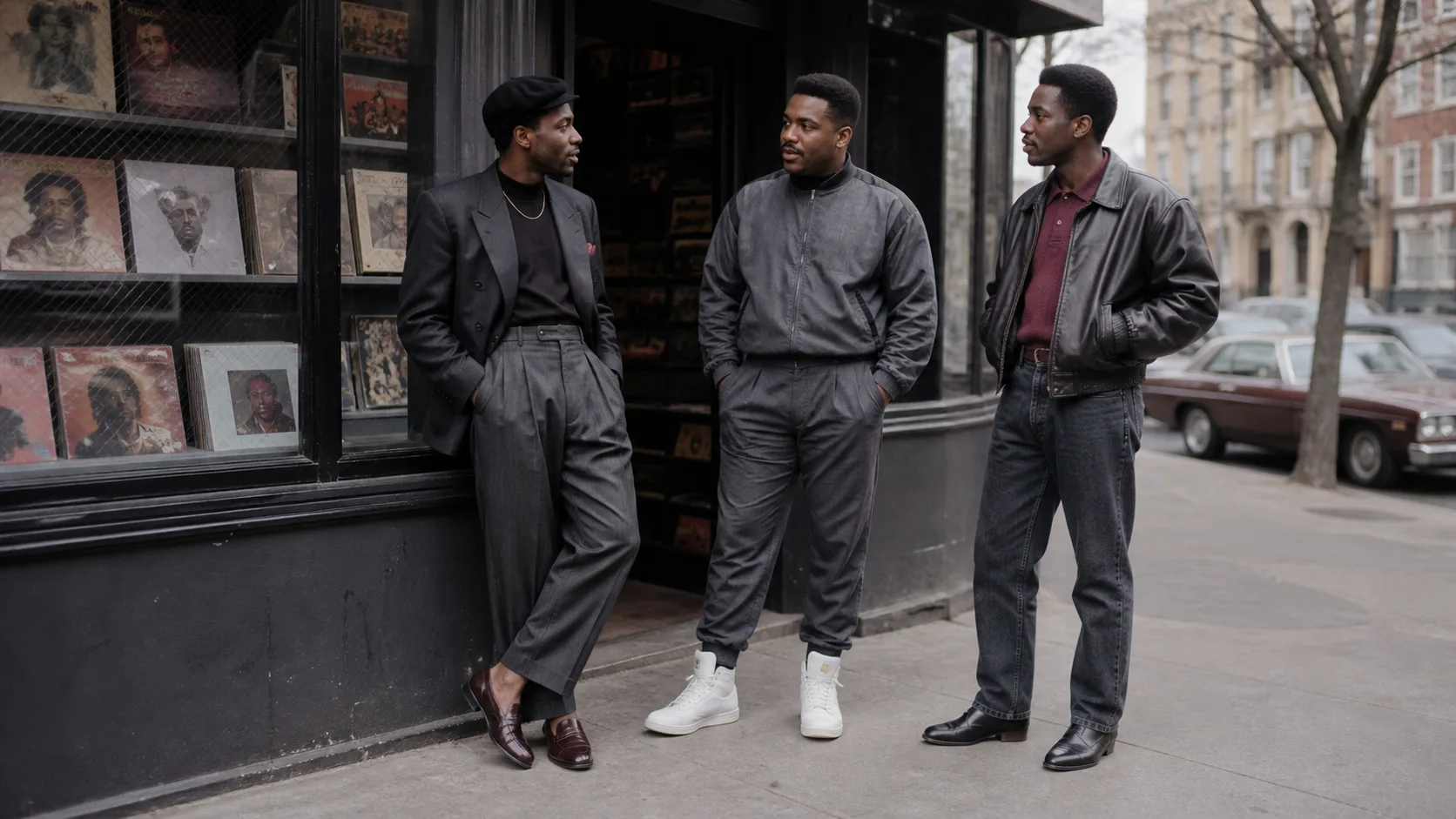
1980s Black men's fashion combined broad tailoring, high-rise pleated trousers, leather jackets, coordinated sportswear, straight denim, knit polos, loafers and high-top sneakers. The defining idea was not one uniform but confident structure: a visible waist, a deliberate shoulder, a clean athletic set or a polished evening combination.
Quick answer
What did Black men wear in the 1980s?
Black men wore everything from double-breasted suits and fine-gauge knits to tracksuits, varsity jackets, leather bombers, straight-leg jeans and athletic sneakers. Early hip-hop expanded the visibility of sportswear, hats, jewelry and customized details, while workplaces, churches, campuses, clubs and neighborhood life sustained formal, preppy and practical wardrobes. The strongest modern interpretation begins with silhouette and setting instead of assembling a costume.
| Wardrobe lane | Typical pieces | Shape | Modern starting point |
|---|---|---|---|
| Tailored | Double-breasted jacket, pleated trouser, dress shirt, loafer | Broad shoulder, higher waist | Relaxed gray suit with a knit polo |
| Athletic | Tracksuit, windbreaker, high-top sneaker | Coordinated and mobile | Tonal track jacket and straight pant |
| Casual | Leather bomber, denim, cardigan, polo | Trim upper body, straight leg | Leather jacket over a simple knit |
| Evening | Soft suit, dark leather, polished shoe | Clean and intentional | Charcoal trousers with texture |
01 / The outline
Silhouette carried the message
The easiest way to recognize a 1980s men's outfit is to look at its geometry before its color. Tailored jackets frequently carried width across the shoulder. Trousers often sat nearer the natural waist, with pleats creating room through the hip and thigh before the leg narrowed or fell straight. A tucked shirt, knit polo or short jacket kept that waist visible. Even relaxed clothing tended to have a defined boundary: the ribbed band of a bomber, the matching blocks of a tracksuit or the clean hem of straight denim.
That geometry matters because contemporary retro styling often borrows a loud print while missing the underlying cut. A low-rise slim trouser beneath an enormous jacket reads differently from a higher-rise pleated trouser supporting a controlled shoulder. Likewise, a modern tapered jogger cannot fully recreate the long, coordinated line of an older track pant. Start with rise, jacket length and leg shape; pattern and accessories come later.
Tailoring and leather created presence without requiring extreme size.
Tucking and ribbed hems made the middle of the body legible.
Pleated trousers and straight denim balanced movement with polish.
Loafers, dress shoes and high-tops completed distinct settings.
The broader overview in 80s Black Fashion covers the decade's full cultural range. Here the lens stays on men's dressing decisions and how to use them now.
02 / Beyond streetwear
Formal, preppy and social dressing belong in the record
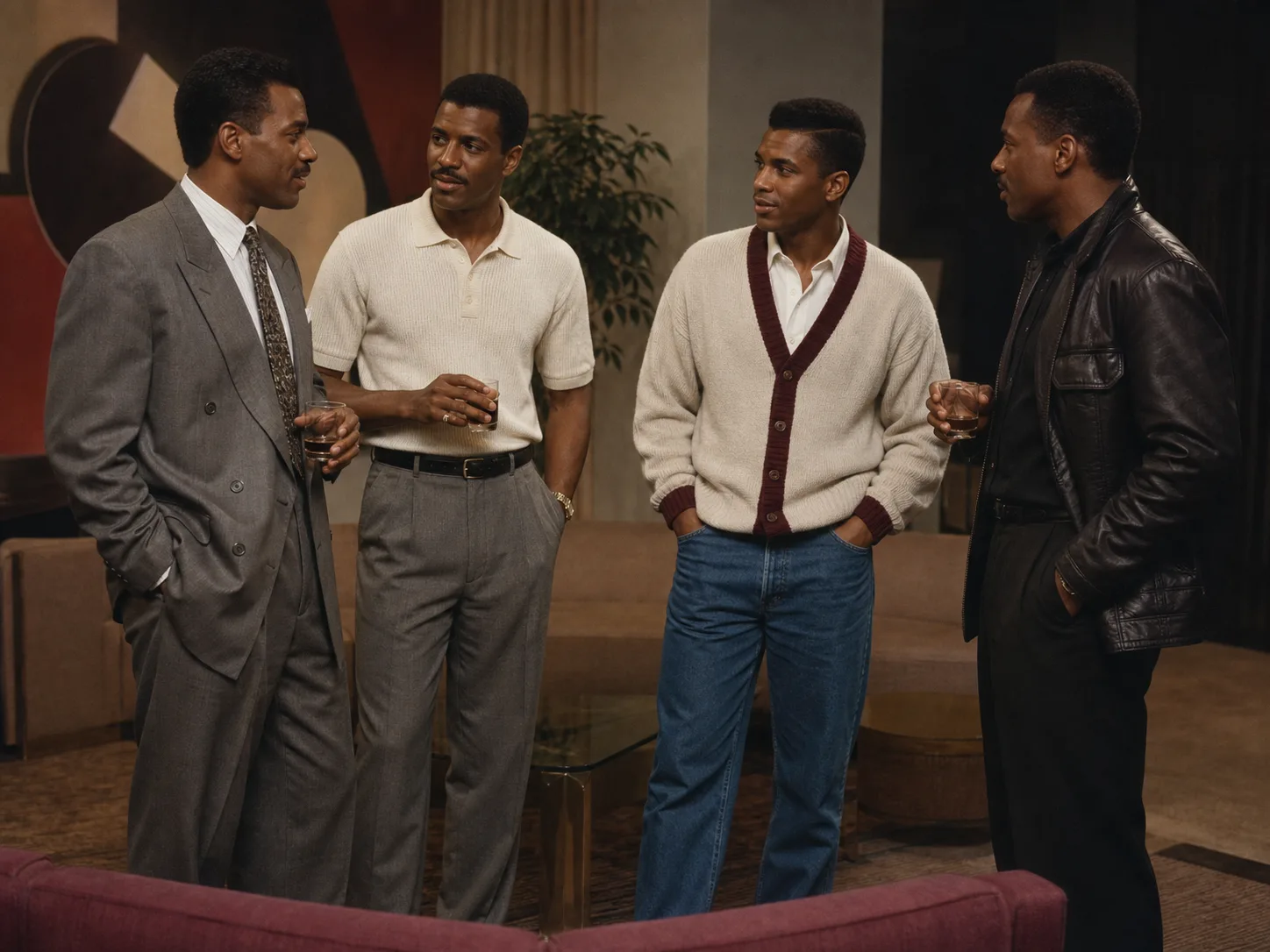
Music imagery is indispensable, but it cannot stand in for every Black man's closet. Work, worship, family occasions, school and nightlife each brought their own expectations. A suit might use a strong shoulder and generous pleated trouser; a less formal combination could replace the shirt and tie with a knit polo. Cardigans, loafers and collegiate references offered a quieter form of distinction. Leather shifted from everyday outerwear to evening statement according to finish and styling.
This wider view prevents a familiar mistake: describing Black men's fashion as though it began and ended with performers. Artists amplified styles, designers refined them and television circulated them, yet many choices were also built in barbershops, offices, campuses, churches and homes. Fashion history becomes more credible when the spectacular image is placed beside ordinary social dressing.
A practical smart-casual formula
Choose a charcoal pleated trouser with enough rise to sit securely, add a cream or muted knit polo, then finish with a dark loafer. Contrast comes from texture rather than bright color. For evening, add a waist-length leather jacket. Keep the shoulder natural enough for current wear and let the trouser retain the period reference.
03 / Athletic influence
Sportswear became a complete presentation
A tracksuit was not merely clothing worn on the way to exercise. Coordination turned athletic pieces into a public outfit. Matching color, clean shoes and deliberate grooming gave nylon or knit sets a finished line. Track jackets also worked independently with denim or trousers, while varsity jackets and windbreakers brought team and campus language into daily dress.
Early hip-hop helped make these choices highly visible, but the relationship between Black style and sports was broader than any one genre. Basketball, boxing, track and school athletics supplied garments, heroes and visual codes. A careful account distinguishes performance images, regional everyday use and later nostalgia. The dedicated 80s Hip-Hop Fashion guide examines music; the Sneakers archive follows footwear.
For a modern outfit, a tonal gray track jacket and straight athletic pant create a cleaner reference than a shiny costume set. If both pieces match, keep the shirt and sneaker quiet. If only the jacket is vintage-inspired, pair it with straight dark denim rather than an aggressively tapered jogger. The objective is a coherent line, not a collection of retro signals.
04 / The wardrobe
Eight pieces with real range
Look for a shoulder that gives presence while the collar remains flat.
A secure higher rise and room through the thigh establish the tailored line.
Waist-length leather works with trousers, denim or an athletic base.
Tonal color and a clean zipper make sportswear easy to integrate.
Texture softens tailoring without making the outfit casual.
A medium or dark wash supports varsity, leather and cardigan layers.
A substantial sole balances pleated trousers and cropped outerwear.
Use a simple court shape with straight denim or an athletic set.
These pieces should not all appear together. Pick one wardrobe lane, then use two or three compatible elements. A tracksuit and a tailored overcoat can work, but adding every recognizable symbol collapses unrelated references into costume.
05 / Hair and finish
Grooming completed the silhouette
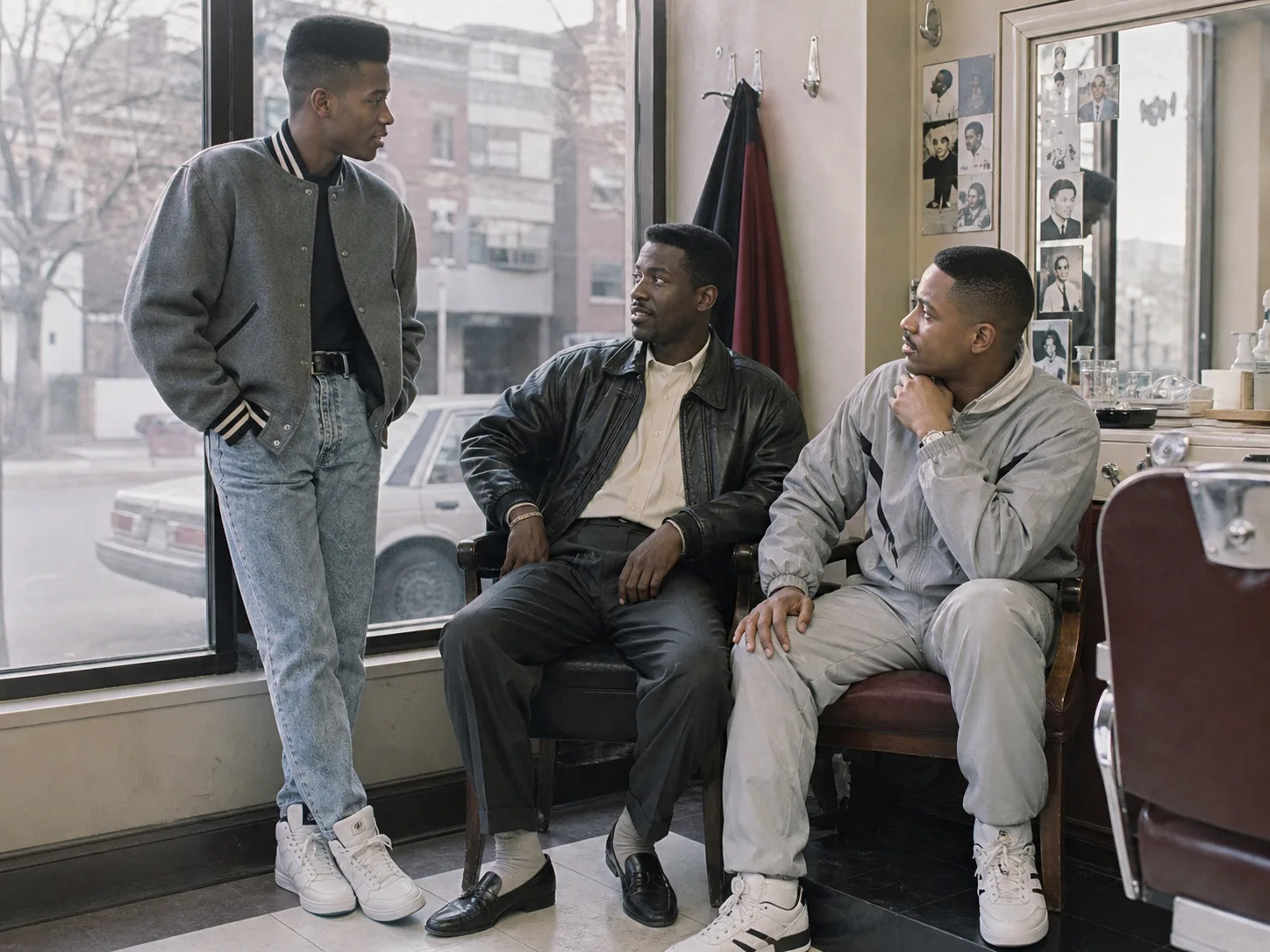
Hair shape was part of the composition. High-top fades created a strong vertical counterpoint to broad jackets and athletic clothing. Short natural cuts, neat low fades and carefully maintained facial hair supported both tailored and casual looks. No single cut represented all Black men, and texture, workplace, region and preference shaped what was practical.
A historically inspired haircut should still begin with the person wearing it. Bring reference images that show similar hair density and curl pattern, discuss how often the shape must be refreshed and ask what daily maintenance requires. Avoid treating a dramatic outline as universal. The 80s Black Hairstyles guide separates shape, technique and upkeep.
Jewelry and eyewear changed the final read. A watch, slim chain or signet ring can support a tailored outfit; stronger jewelry may suit a music-informed combination. Clean lenses, maintained leather and polished shoes usually contribute more than another conspicuous item.
06 / Modern application
Four outfits that reference the era without reenacting it
Soft tailoring
Charcoal double-breasted jacket, cream knit polo, gray pleated trouser and dark loafer. Keep the shoulder controlled and hem with a light break.
Leather and denim
Waist-length leather bomber, plain tee, straight washed denim and clean high-top sneaker. Let the jacket define the waist.
Tonal athletic
Deep-gray track jacket, matching straight pant, neutral base layer and minimal court shoe. Condition provides the polish.
Collegiate texture
Cardigan, tucked shirt, higher-rise denim and substantial loafer. Use one muted accent at the trim or sock.
For jackets, confirm that the collar stays against the neck and the sleeve allows movement. For pleated trousers, sit down and check the rise before judging the waist. Straight denim should fall cleanly rather than cling to the calf. Photograph the full outfit from waist height; a close mirror view can hide an imbalanced shoulder or shoe.
To compare decades, use 80s vs 90s Hip-Hop Fashion. The 1990s generally loosened and lengthened many lines, while the 1980s more often kept waist and upper-body structure visible.
07 / Buying well
Vintage measurements matter more than the label
Older sizing is inconsistent, and garments may have been altered. Ask for shoulder, chest, jacket length, sleeve, waist, rise, thigh, inseam and hem measurements, then compare them with something you wear. A broad shoulder is intentional only when the collar, sleeve and chest still behave properly. A pleated trouser needs enough room for the pleats to remain closed while standing.
Inspect leather for dry cracking at folds, nylon for damaged elastic, and wool for moth activity. Shoes require extra caution: foam and adhesives can deteriorate even when an upper looks clean. Budget for tailoring before buying, but remember that a tailor can shorten a sleeve or refine a waist more easily than rebuild a shoulder or add missing thigh room.
Three common mistakes
- Combining every symbol. Choose a social setting and build one coherent wardrobe lane.
- Using color as the only reference. Rise, length and shape communicate the era more reliably.
- Copying an image without context. A stage outfit, family portrait and everyday street photograph answer different questions.
Evidence trail
Sources & Further Reading
These references support the historical, cultural or care-related claims in the guide. Outfit combinations and fit recommendations are BAAM Boys editorial judgment unless specifically attributed.
- Federal Trade Commission — Clothes Captioning: Care Labeling Rule
Official explanation of garment care labels and the evidence manufacturers need for care instructions.
- The Metropolitan Museum of Art — Superfine: Tailoring Black Style
Institutional context for tailoring, Black identity, distinction and self-presentation.
- The Museum at FIT — Fresh, Fly, and Fabulous: Fifty Years of Hip Hop Style
Curatorial context for sportswear, designer fashion, customization and individual expression.
Direct answers
80s Black men's fashion FAQ
What clothes defined 80s Black men's fashion?
Broad tailored jackets, high-rise pleated trousers, tracksuits, leather bombers, varsity jackets, straight denim, knit polos, loafers and high-top sneakers all mattered. Their prominence varied by year, region, age and setting.
Was all 1980s men's fashion brightly colored?
No. Bright athletic color and bold patterns were visible, but charcoal tailoring, black leather, cream knitwear, dark denim and restrained collegiate combinations were equally important.
How were 80s and 90s Black men's fashion different?
The 1980s often emphasized a visible waist, structured shoulder, pleated trouser or coordinated athletic line. Many 1990s outfits became longer, wider and more layered, although both decades contained many shapes.
How can a man wear 80s style today?
Begin with one proportion: a higher-rise pleated trouser, waist-length leather jacket, straight denim or tonal tracksuit. Combine it with restrained basics and footwear that balances the hem.
What shoes work with an 80s-inspired outfit?
Loafers and polished dress shoes suit tailoring; clean high-top court sneakers support straight denim and athletic sets. Choose by trouser shape and occasion rather than decade label alone.