Decade Comparison · 1980—1999
80s vs 90s Hip-Hop Fashion: Coordination Became Volume
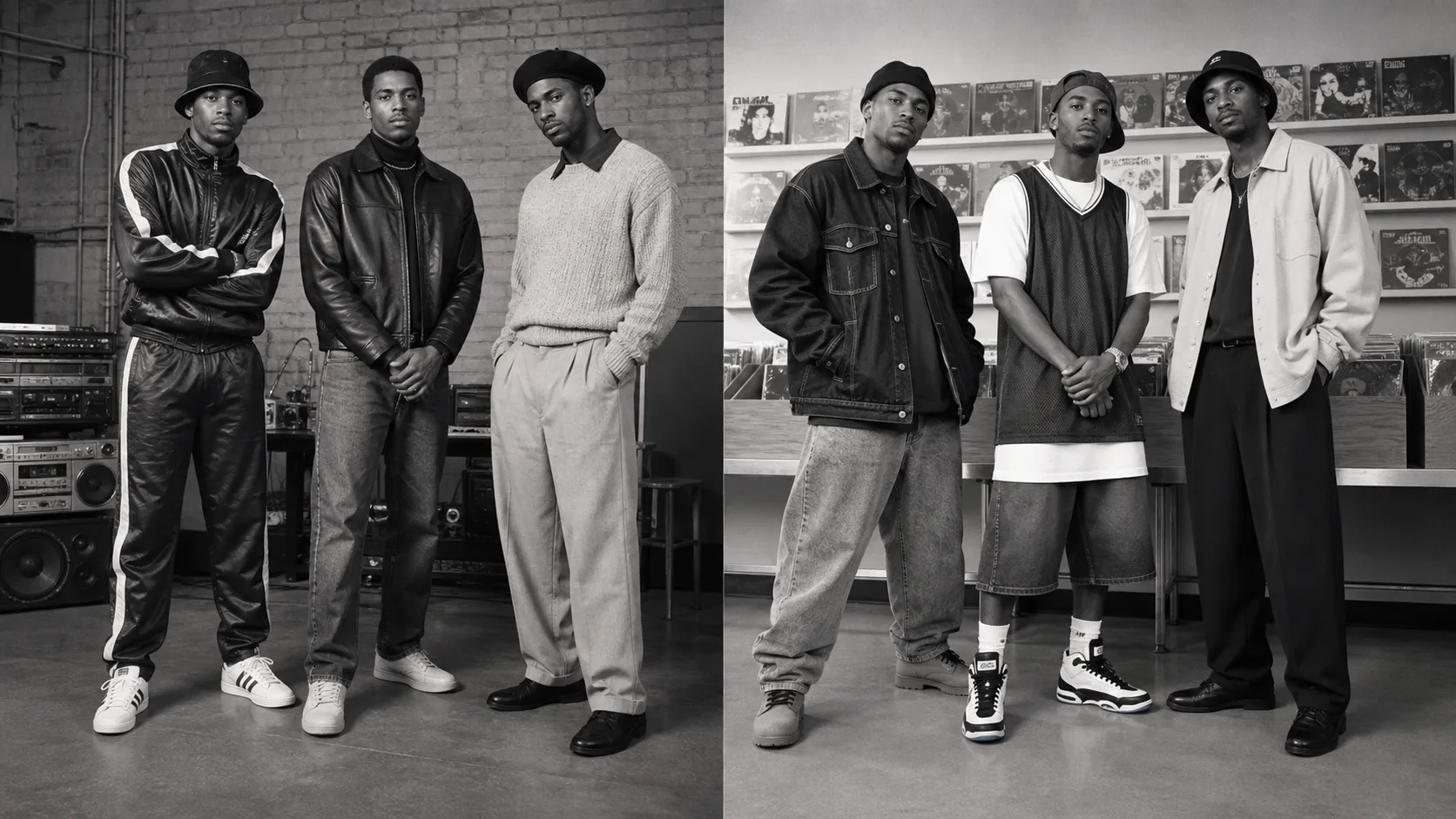
The 1980s often used compact athletic coordination, leather and crisp identity. The 1990s generally expanded the body through workwear, wider denim and heavier footwear. Both decades also contained tailoring, prep and regional variation.
In one paragraph
How did 80s and 90s hip-hop fashion differ?
1980s hip-hop fashion often emphasized coordinated tracksuits, compact leather, straight or tapered trousers, clean sneakers, structured hats and visible jewelry, with color and matching making group identity readable. In the 1990s, silhouettes generally became wider and longer through loose denim, hoodies, work jackets, jerseys, flannels, boots and padded basketball shoes. The shift was gradual, varied by region and coexisted with prep, tailoring and luxury in both decades.
01
The differences at a glance
| Dimension | 1980s tendency | 1990s tendency |
|---|---|---|
| Overall silhouette | Compact coordination, straighter or tapered leg | Greater width, length and layered volume |
| Sportswear | Matching track sets, crisp sneaker line | Jerseys, varsity layers, technical and basketball influence |
| Outerwear | Leather, track jackets, bombers | Work jackets, hoodies, varsity, relaxed leather |
| Trousers | Track pants, straight denim, pleated tailoring | Loose denim, cargos, wide pleated trousers |
| Footwear | Clean low profiles and early basketball shapes | Work boots and more padded basketball silhouettes |
| Accessories | Structured hats, jewelry, clear coordination | Caps, knit caps, bucket hats and varied jewelry scale |
| Image channel | Performance, photography and expanding music video | Global video, magazines, touring and larger campaigns |
The table identifies dominant visual movement, not an absolute border. Late-80s clothing overlaps early-90s imagery, and pieces from one period remained in use long afterward.
02
The largest change was space around the body
Many 1980s outfits used clear coordination: jacket and trouser repeated color or stripe, the waist remained legible and shoes completed a relatively compact lower line. Leather could be fitted, straight or mildly relaxed, while tailoring used broad shoulders and pleated trousers without necessarily producing streetwear-scale length.
During the 1990s, shoulders dropped, tees extended and jeans gained room through seat, thigh and hem. Hoodies created depth under substantial jackets. The body was not simply hidden; fabric volume became an expressive surface that moved with the wearer and read strongly on camera.
The transition did not happen on January 1, 1990. Early-90s looks retained color and coordination, while the extremely long layers associated with the early 2000s appeared mainly toward the later decade. Read the standalone 80s Black Fashion and 90s Black Fashion pillars for broader Black menswear beyond hip-hop.
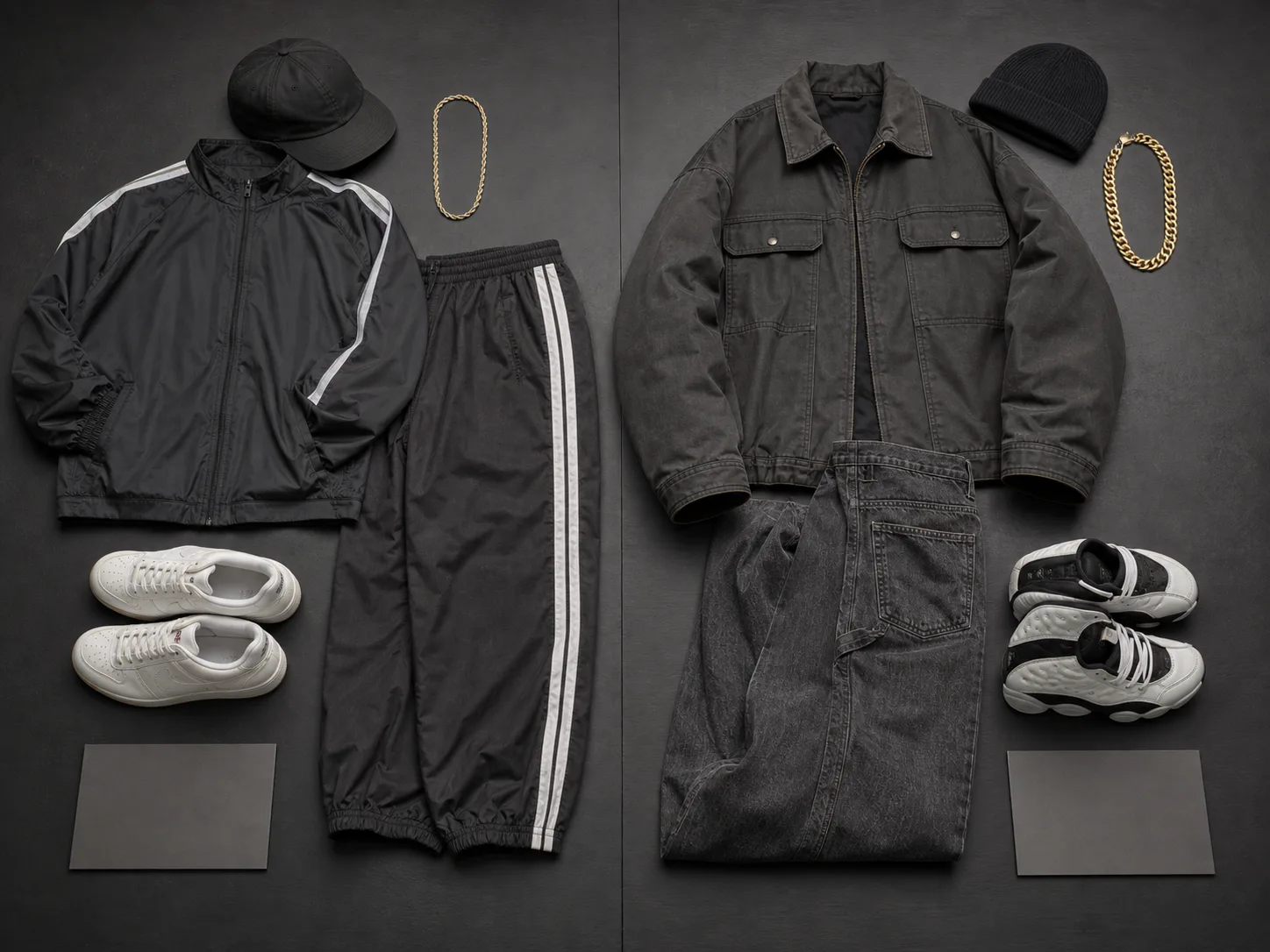
From defined athletic or leather structure toward more frequent drop and boxiness.
From visible coordination at waist toward longer tees, jerseys and layered depth.
From straight, tapered and track shapes toward wider denim, cargos and stacking.
From cleaner low profiles toward greater boot and padded-sneaker weight.
03
The wardrobe did not replace itself overnight
Tracksuits remained important in both decades, but a 1980s set often emphasized crisp head-to-toe matching while later sportswear could be layered or mixed with wider trousers. Leather continued from compact jackets and graphic stage pieces into roomier coats, bombers and polished combinations.
Denim expanded gradually. Straight and relaxed jeans existed before the 1990s; hip-hop's increasing visibility helped wider versions become a defining global image. Workwear brought dense canvas, utility pockets and boots into heavier combinations.
Prep also crossed the boundary. Knits, polos, collegiate layers and pleated trousers complicate any story in which the 1980s were only athletic and the 1990s only rugged. Hip-hop repeatedly absorbed and reassigned the meaning of familiar dress codes.
04
Shoes reveal technology and trouser change
Clean low-top sneakers worked especially well with straight track pants, tapered trousers and coordinated 1980s outfits. Basketball footwear was already culturally important, but later technical development and player visibility made padded, layered silhouettes increasingly prominent.
In the 1990s, wider hems benefited from greater shoe mass. Basketball sneakers supplied it; work boots provided another firm base. Low-tops remained useful for preppy and West Coast-influenced ease, while loafers and dress shoes supported the polished side of both decades.
A specific shoe cannot date an outfit by itself. Releases, reissues and long ownership blur boundaries. The 90s Outfit Shoe Guide focuses on safe modern selection and hem balance.
05
Accessories shifted scale without following one line
Jewelry was highly visible in 1980s hip-hop imagery, where coordinated clothing and relatively compact silhouettes could make metal a central focal point. In the 1990s, jewelry ranged from restrained to spectacular as workwear, sportswear and luxury images diversified.
Caps, bucket hats and knit caps appeared across periods in changing shapes and contexts. Eyewear moved between practical, polished and futuristic roles. A broad claim such as “90s chains were always larger” cannot replace dated comparison of specific images.
Camera distance matters: close portraits magnify jewelry and hats while removing the clothing that balanced them. See 90s Hip-Hop Accessories for a verification-first approach.
06
Media growth changed how quickly an outfit traveled
During the 1980s, music video became an increasingly important image channel alongside stage performance, album photography, magazines and television. Strong coordination made groups and artists legible in a limited frame. Independent shops, designers, tailors and local communities remained essential sources of style.
By the 1990s, music television, larger video budgets, magazines and international touring expanded the reach and complexity of artist imagery. Stylists assembled narratives across multiple looks. Wide shots rewarded silhouette; close-ups rewarded texture, grooming and accessories.
Neither decade should be credited only to performers. Stylists, designers, photographers, barbers and communities formed the visual system. When sources do not preserve a contributor, responsible coverage avoids invention.
07
Region prevents a false single timeline
New York played a foundational and highly visible role, but the story expanded through many cities and local conditions. Climate influenced layering and footwear. West Coast scenes developed distinctive ease and shirt-to-trouser relationships. Southern scenes formed varied languages of sportswear, polish, color and later scale.
Touring, migration and media created exchange rather than sealed regional uniforms. A garment could carry different meanings in different places, and an artist could change image across releases. Region is context, not a costume code.
08
Modern outfits can combine both decades
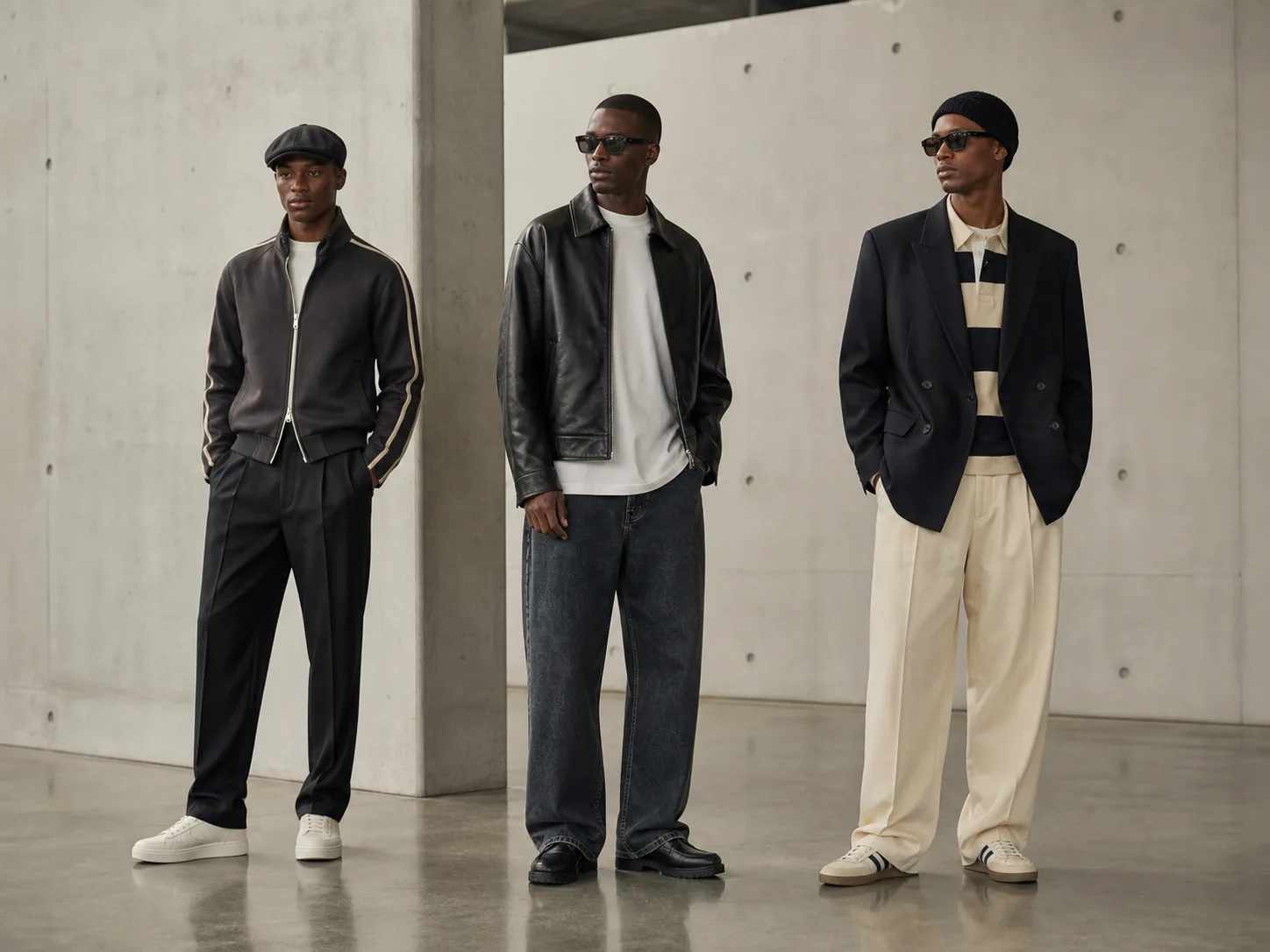
Track and tailor: a coordinated track jacket with straight pleated trousers and clean sneakers uses 1980s coordination with a more polished base.
Leather and volume: a compact leather jacket, heavyweight tee, loose denim and sturdy shoe joins a crisp upper line to 1990s trouser space.
Prep across eras: a relaxed double-breasted blazer, rugby knit, wide trouser and retro sneaker reveals collegiate and tailoring continuity.
Choose one idea from each decade rather than stacking every recognizable item. The Men's Style hub explains how to adjust proportion for present use.
09
Five comparison mistakes to avoid
- Reducing the 80s to neon. Black, leather, denim, tailoring and muted sportswear were also present.
- Reducing the 90s to baggy jeans. Prep, leather, straight fits and relaxed tailoring remained important.
- Using one celebrity per decade. No performer represents all regions, phases or everyday wardrobes.
- Ignoring the transition. Late-80s and early-90s imagery overlap; late-90s style points toward Y2K.
- Dating from logos alone. Reissues and long product life make silhouette, source and event date essential.
Evidence trail
Sources & Further Reading
These references support the historical, cultural or care-related claims in the guide. Outfit combinations and fit recommendations are BAAM Boys editorial judgment unless specifically attributed.
- The Metropolitan Museum of Art — Superfine: Tailoring Black Style
A cultural and historical examination of Black style, identity and dandyism through garments, art and photography.
- Library of Congress — African American clothing and fashion photographs
A cataloged photographic record with creator, date, subject terms, repository and rights notes.
- The Museum at FIT — Fresh, Fly, and Fabulous: Fifty Years of Hip Hop Style
Curatorial material on the invention, remixing and wider adoption of hip-hop fashion.
Comparison verdict
Choose a decade by relationship, not by prop
| If the priority is… | Start with the 1980s | Start with the 1990s |
|---|---|---|
| Body line | Visible waist, coordinated set, compact boundary | Dropped shoulder, longer layer, wider leg |
| Footwear | Cleaner court and shell-toe relationships | Heavier basketball shapes, boots and wider hems |
| Image rhythm | Sharper repetition, graphic contrast, group uniform | Layered volume, regional variation, material weight |
| Modern edit | Keep one strong shoulder or coordinated athletic line | Keep one relaxed proportion and control the hem |
A successful reference can mix periods only after each relationship is understood. One bucket hat or gold chain cannot date an outfit by itself.