Everyday clothes, deliberate style
80s Streetwear: A Practical Men's Wardrobe Guide
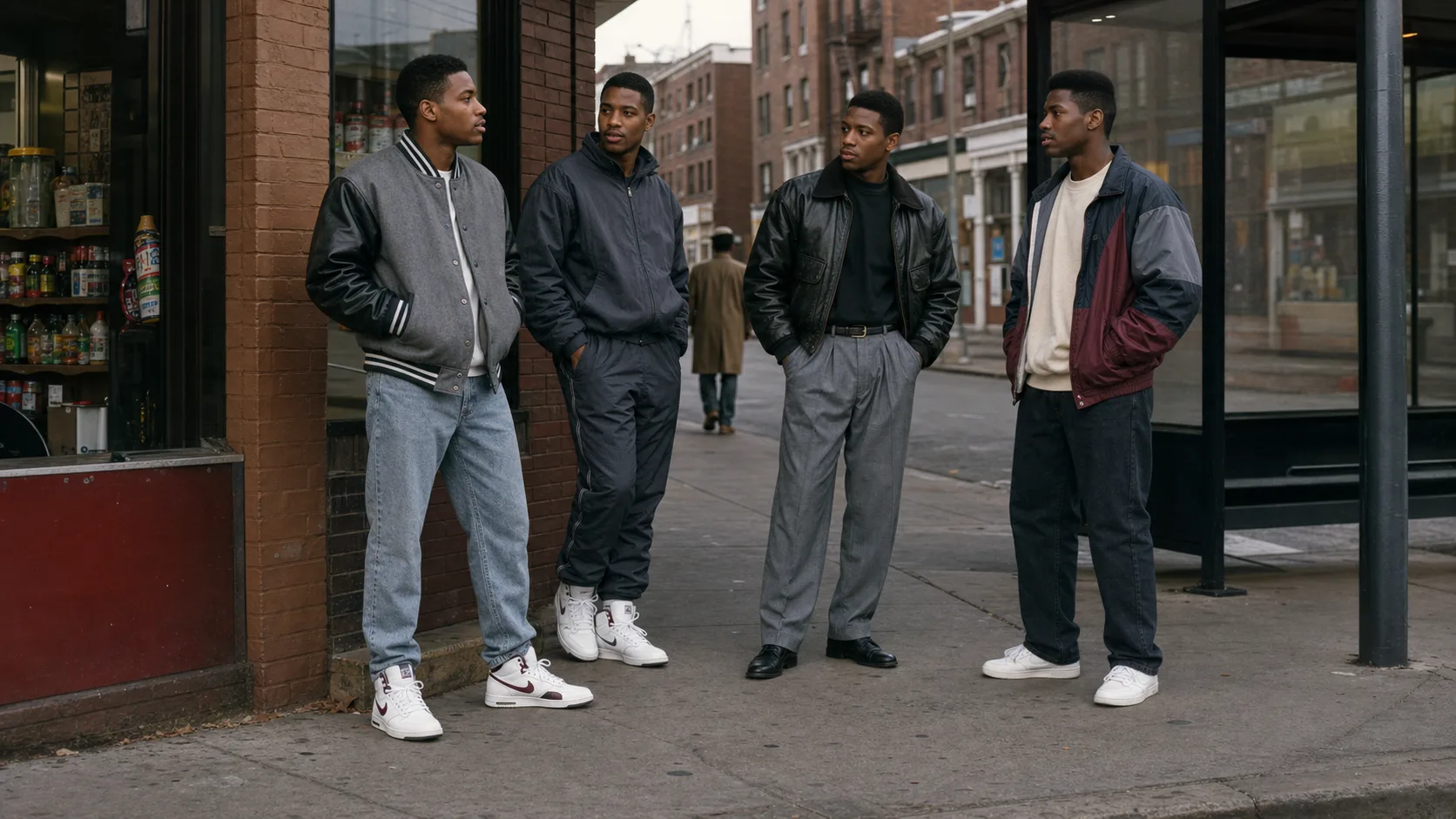
1980s streetwear drew from sport, school, work, weather and nightlife. Varsity jackets, technical windbreakers, tracksuits, leather bombers, straight denim, pleated trousers, sweatshirts and court sneakers became street style through fit, maintenance and combination—not because every item belonged to a dedicated “streetwear” category.
Quick answer
What counted as 80s streetwear?
Streetwear was the clothing people selected for public daily life: athletic sets, varsity and leather jackets, sweatshirts, knitwear, denim, pleated trousers, caps, sneakers and sturdy shoes. Music and sports increased the visibility of many combinations, but the wardrobe also responded to climate, commuting, school, work and local taste. Clean condition and a clear silhouette made practical clothes look intentional.
Sport
Tracksuits, court shoes, windbreakers and varsity outerwear.
School
Cardigans, sweatshirts, denim, team jackets and backpacks.
Work and transit
Leather, durable trousers, weather layers and functional bags.
Music and nightlife
Sharper coordination, polished footwear, hats and selective jewelry.
01 / A useful definition
The street was a setting, not a product label
Modern retail uses streetwear as a category, but applying that category backward can hide how the wardrobe actually formed. A young man might wear an athletic jacket because it moved well, a varsity because it connected to school, leather because it blocked wind, or pleated trousers because he was traveling from work to an evening gathering. Once these pieces were coordinated and seen in public, they became part of street style.
Music photography and film preserved memorable examples, yet ordinary dress rarely arrived as a complete themed outfit. Clothes were repeated, altered, handed down and combined across contexts. A jacket could shift from practical layer to identity marker through condition, fit and association. That is why an accurate modern reference does not require rare vintage labels. The relationship among pieces does more historical work than a logo.
For music-specific history, visit 80s Hip-Hop Fashion. For the broader men's wardrobe, 80s Black Men's Fashion includes tailoring and social dressing beyond the street.
02 / The outer layer
Jackets organized the rest of the outfit
Ribbed edges define the waist, while wool and leather panels add texture and team language.
A short body supports straight denim or pleated trousers and protects against cool weather.
A coordinated set produces the clearest athletic line; alone, it works as a light layer.
Color blocking, low weight and packability serve transitional weather and transit.
Choose the outer layer first because its hem establishes proportion. A waist-length varsity reveals more trouser and works well with a higher rise. A longer technical shell may need a straighter, quieter pant below. When jacket and trousers are both shiny or highly blocked, reduce visual noise at the shirt and shoe.
03 / Weather and movement
Practical layering shaped city silhouettes
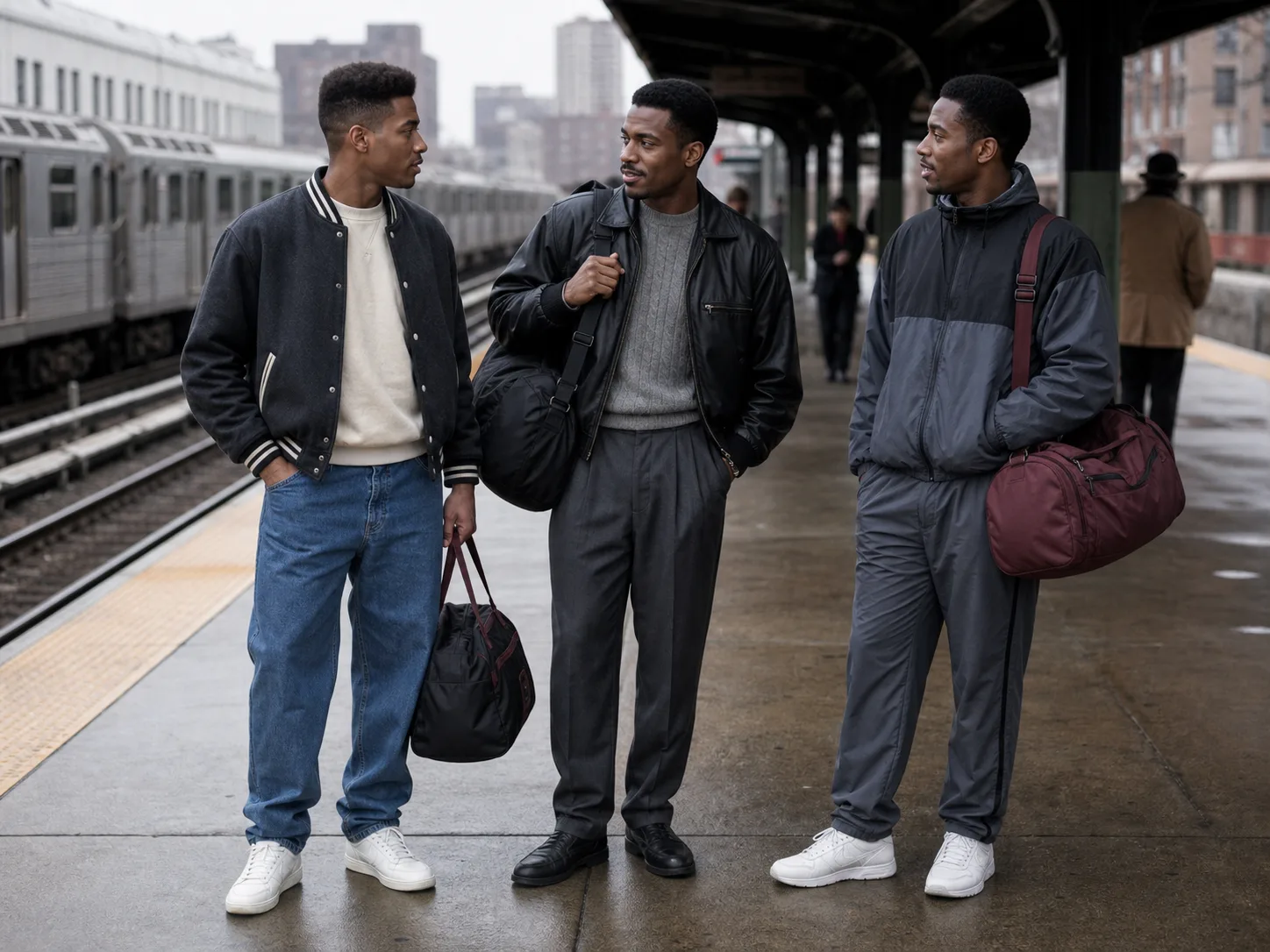
Cool weather encouraged sweatshirts beneath varsity jackets, knits under leather and athletic shells over simple base layers. The combinations looked substantial because each layer had room. A tight modern jacket over a thick sweatshirt creates pulling and restricts movement; a slightly relaxed armhole and body let the same idea function.
Transit also affected footwear and bags. High-top court shoes offered a visually strong base for straight denim or track pants. Polished black shoes could work with leather and pleated trousers when the destination required more formality. A simple gym bag carried another layer without turning function into decoration.
Layer by responsibility
- The base manages skin comfort.
- The sweatshirt or knit provides warmth and texture.
- The jacket handles wind, light rain or abrasion.
- The shoe matches walking distance and surface.
Historical style should not override present-day safety. Old sneaker soles, worn leather and failed elastic need inspection before regular commuting.
04 / Proportion map
Four relationships make the outfit readable
A cropped bomber or varsity works naturally over a higher-rise trouser.
A relaxed sweatshirt gains structure from straight denim and a clear hem.
A tracksuit becomes one uninterrupted athletic column.
Footwear must carry the visual weight of the hem. A wider straight jean can overpower a very thin shoe, while a bulky high-top may dominate a narrow trouser. Let the pant touch or lightly break rather than puddle excessively. The next decade pushed stacking and volume further; the 90s Streetwear for Men guide explains that shift.
Color is secondary to these relationships. Charcoal, black, cream and washed denim can communicate the period through shape alone. A muted burgundy panel or bag adds a point of recognition without turning the entire outfit into color blocking.
05 / The capsule
Seven pieces can cover a working week
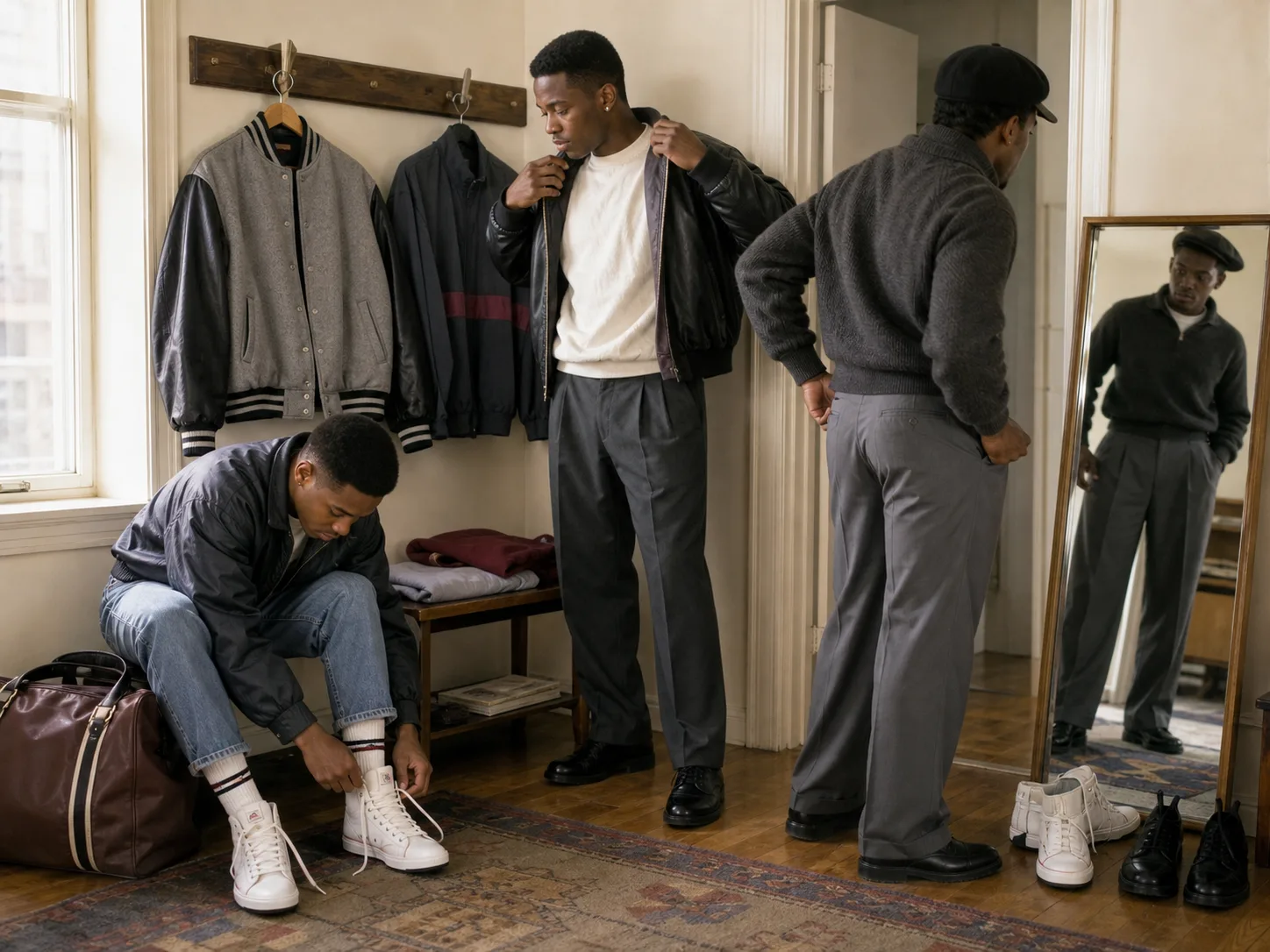
Build around two outer layers: one varsity or leather jacket and one light technical shell. Add a cream sweatshirt, gray knit, straight denim, pleated charcoal trouser and straight athletic pant. Finish with a clean court sneaker and one polished black shoe. The resulting capsule moves between casual, transit and smart-casual settings without forcing every combination to look retro.
Lay outfits out before buying another piece. The varsity should work with denim and athletic pants. The leather should work with denim and pleated trousers. Both base layers should fit beneath both jackets. If an item only works with one themed combination, it is a specialty purchase rather than a wardrobe foundation.
Condition supplies much of the polish. Brush wool, condition suitable leather, wash athletic pieces according to the care label and replace frayed laces. Street style reads as deliberate when familiar garments look maintained.
06 / Outfit desk
Five combinations for real settings
Varsity and denim
Gray varsity jacket, cream sweatshirt, straight medium-wash jeans and white high-top sneakers.
Technical layers
Charcoal windbreaker, gray knit, straight track pants, court shoes and a practical gym bag.
Leather and pleats
Black leather bomber, dark crewneck, charcoal pleated trousers and polished black shoes.
Split athletic
Track jacket, plain tee, straight dark denim and neutral low-profile court shoes.
For warm weather, remove the outer layer without changing the trouser-to-shoe relationship. A tucked knit polo or structured tee preserves waist definition. Loose clothing can be comfortable, but fabric choice and airflow matter more than simply increasing size.
07 / Buying and evidence
Shop the measurement, then verify the story
Vintage jackets need chest, shoulder, sleeve and length measurements. Trousers need waist, rise, thigh, inseam and hem. Check knit cuffs for lost elasticity, leather folds for cracking and nylon coatings for separation. Old size tags do not translate reliably to current sizing.
A seller's decade label is not proof. Construction, care tags, zipper details and provenance can help, but precise dating may require specialist knowledge. A modern reproduction with a useful shape is often the better daily garment. BAAM Boys labels generated images as illustration and separates interpretation from archival claims under its Editorial Policy.
- Too many references. One strong outer layer is enough to lead.
- Wrong hem-to-shoe balance. Adjust trouser length before adding accessories.
- Ignoring the destination. Street style still answers weather, walking and social context.
Evidence trail
Sources & Further Reading
These references support the historical, cultural or care-related claims in the guide. Outfit combinations and fit recommendations are BAAM Boys editorial judgment unless specifically attributed.
- The Museum at FIT — Fresh, Fly, and Fabulous: Fifty Years of Hip Hop Style
Curatorial overview connecting hip-hop clothing to community, customization, aspiration and fashion-industry influence.
- Smithsonian NMAAHC — Five Things to See: The Fashion of Hip-Hop
Collection-based examples of garments, jewelry, photographs and sneakers used to document hip-hop style.
- The Metropolitan Museum of Art — Superfine: Tailoring Black Style
Institutional context for Black dress, identity, tailoring and self-presentation across time.
Direct answers
80s streetwear FAQ
What were the main pieces in 80s streetwear?
Varsity jackets, leather bombers, tracksuits, windbreakers, sweatshirts, knitwear, straight denim, pleated trousers, court sneakers and practical bags formed many everyday combinations.
Were jeans baggy in the 1980s?
Jeans varied, but straight and relaxed fits were common references. The extreme length and volume often associated with late-1990s and early-2000s denim were not the only or dominant 1980s shape.
How can I make an 80s streetwear outfit?
Choose one short outer layer, a simple base, straight denim or a higher-rise trouser and footwear with enough visual weight. Use a restrained palette and one accent.
Did hip-hop create 80s streetwear?
Hip-hop transformed the visibility, coordination and cultural meaning of many garments, but street clothing also drew from sports, schools, work, weather and wider Black community style.
Can old 1980s sneakers still be worn?
Sometimes, but age can weaken foam, rubber and adhesives even when the upper appears clean. Inspect construction carefully and use a modern shoe with a similar silhouette when safety is uncertain.