Street System · 1990—1999
90s Streetwear for Men Started With Function
Work jackets, hoodies, varsity layers, loose denim, cargos, boots and sneakers earned their place through warmth, movement and durability. Proportion and local styling turned useful clothing into a powerful visual language.
In one paragraph
What did men wear as streetwear in the 1990s?
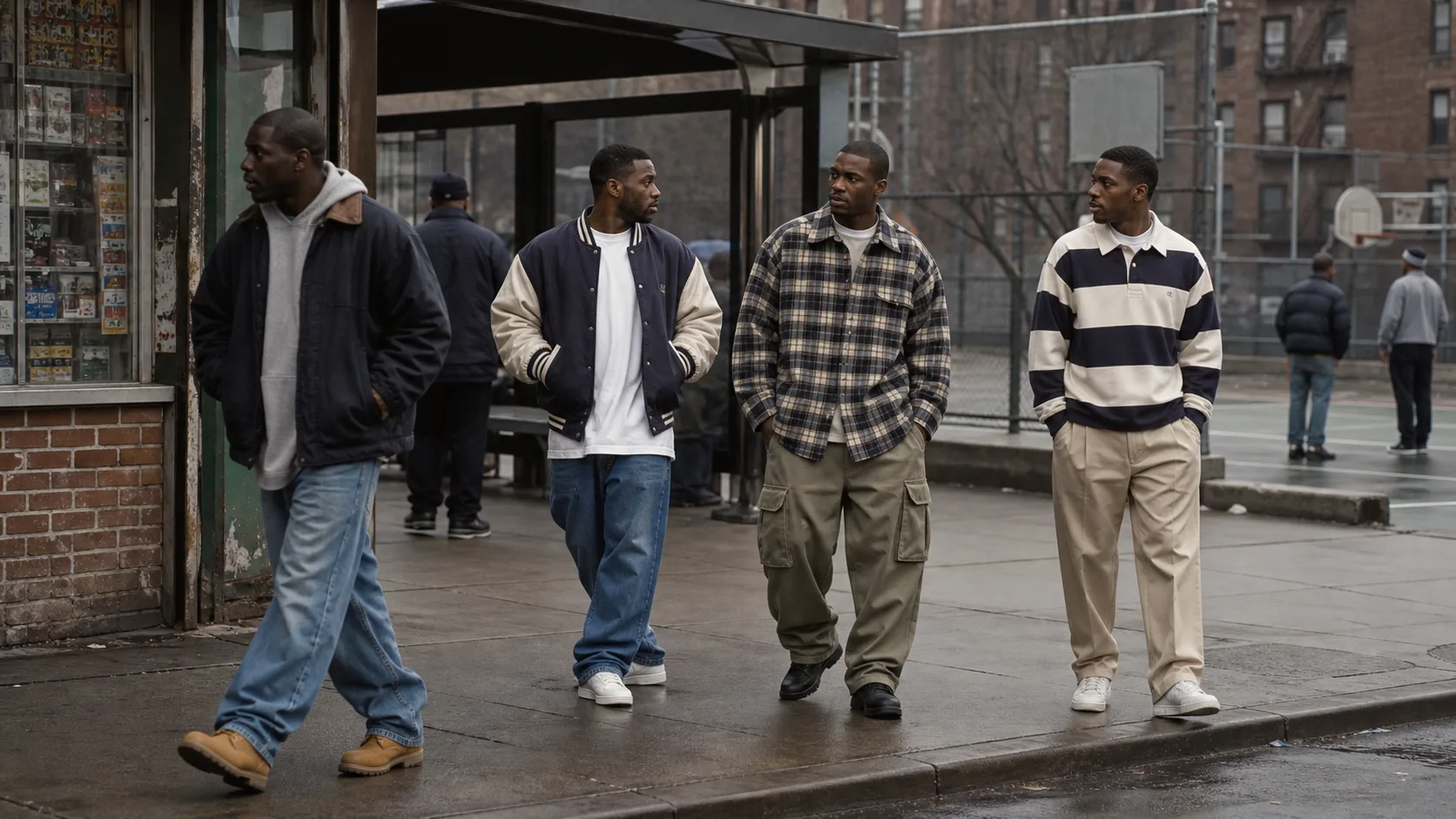
Popular 90s men's streetwear combined boxy work or varsity jackets, hoodies, heavyweight tees, flannels, rugby shirts and jerseys with loose jeans, cargo trousers or coordinated track pants. Work boots, retro basketball sneakers and clean low-tops anchored the wider hems. The clothing drew from work, sport, skating, campuses, music and local retail; hip-hop amplified many combinations, but everyday street style changed with city, climate, age and community.
01
Streetwear drew from places, not one runway
Workwear supplied dense canvas, practical pockets and abrasion resistance. Athletic clothing offered movement, team identity and technical materials. Campus and prep traditions contributed varsity jackets, rugby shirts, polos and sweatshirts. Skate culture reinforced durable loose trousers and flexible shoes. Military-derived utility influenced cargos and field-style outerwear.
These sources overlapped in actual wardrobes. A varsity jacket could sit over a workwear-weight hoodie; a rugby shirt could meet relaxed jeans; a practical boot could acquire music and fashion meaning far beyond its original job. The style came from selection and coordination, not simply ownership of certain items.
Black communities and hip-hop helped make these combinations globally visible. Credit should remain specific: broad streetwear did not emerge from one artist, brand, city or subculture. The 90s Hip-Hop Fashion guide focuses on music's role in that exchange.
Canvas, denim, boots, utility pockets
Jerseys, varsity layers, tracksuits, sneakers
Rugby shirts, polos, sweats, collegiate shape
Local remix, fit, maintenance and identity
02
Read four relationships before buying a logo
Boxy or dropped
A compact work jacket may widen the torso without becoming long. A hoodie or tee can drop farther for a more relaxed line.
Visible depth
The base tee extending below a jersey or jacket creates separation. Too many long layers can erase the body's center.
Room with direction
Loose jeans need usable rise and thigh space. Cargos add pocket volume, so the upper half may need less decoration.
Weight at the ground
Boots and padded sneakers balance wide openings. A quiet low-top suits a straighter or preppy outfit.
Fit is relational. A wide jean can look intentional under a shorter jacket but shapeless beneath an equally long, broad top. A roomy varsity jacket may need a straighter trouser. Clothing measurements are more reliable than modern size labels when buying older garments.
03
The core pieces earned repeat wear
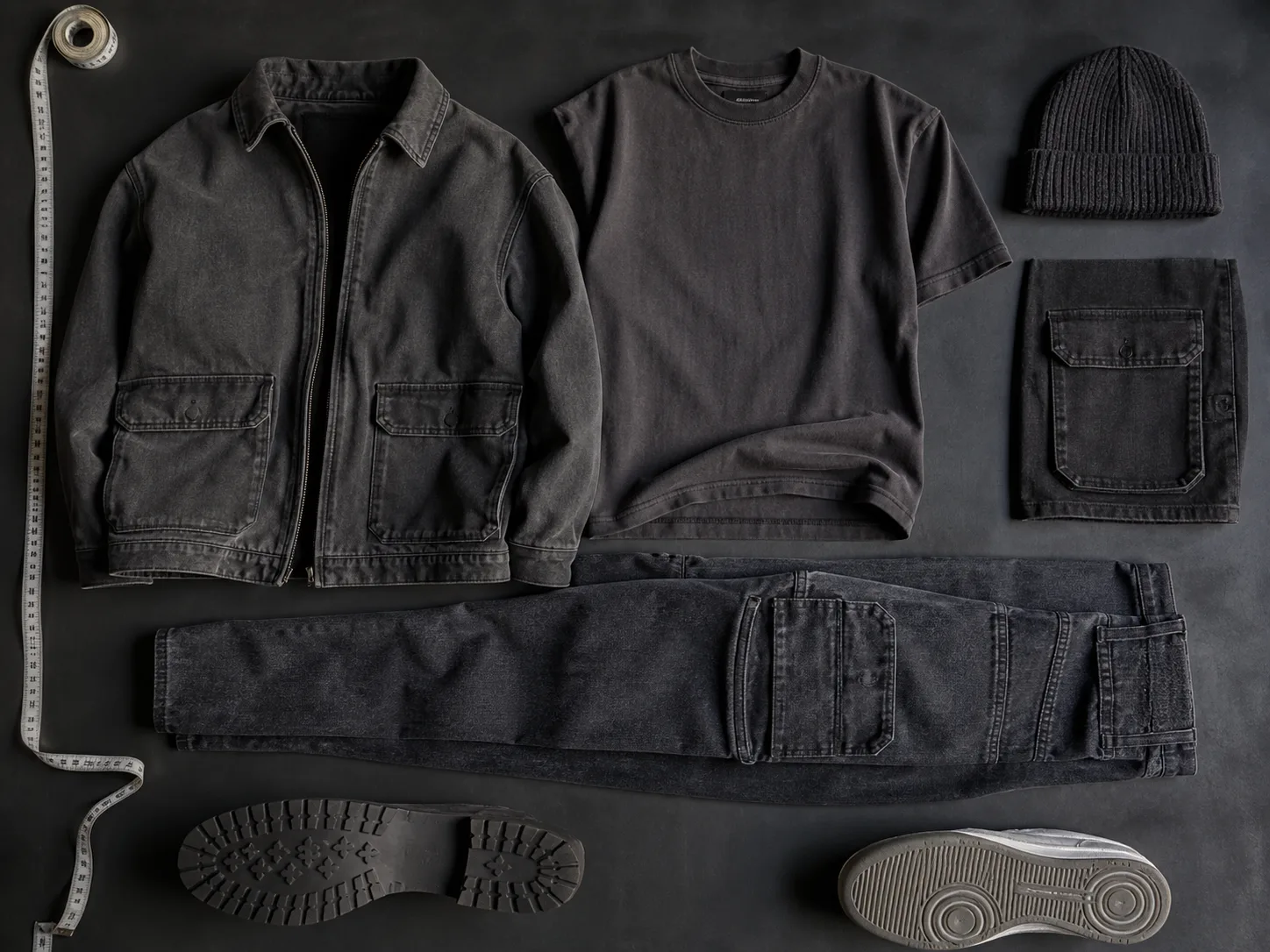
A boxy work jacket resisted weather and gave the shoulder structure. A heavyweight tee hung more cleanly than a thin undershirt. Loose denim handled movement and wear, while cargo trousers added practical storage and a different leg shape.
Hoodies supplied warmth beneath jackets. Flannels and relaxed overshirts worked open or closed, changing the vertical line. Varsity layers and rugby shirts introduced graphic contrast without requiring a printed slogan.
Footwear depended on the job of the outfit. A lugged boot suited wet or cold streets and dense clothing. A padded basketball shoe connected athletic technology to wide denim. A simple low-top kept prep and summer combinations light.
04
Color and texture made quiet outfits readable
Black, charcoal, navy, olive, brown, cream and faded denim allowed silhouette to lead. Washed cotton beside smooth nylon, dense canvas beside soft fleece or leather beside knit created depth within a restrained palette.
Color blocking often came through athletic or collegiate pieces. A varsity sleeve, jersey edge or rugby stripe could become the focal point while jeans and shoes stayed neutral. Repetition connected the outfit: an off-white tee might echo a sneaker sole, or a dark cap might answer the jacket.
Wear and cleanliness coexisted. Faded denim and broken-in canvas could look better with age, while dirty collars, damaged soles or uncontrolled hems weakened the line. Streetwear's everyday origin never meant that care was irrelevant.
05
Climate and movement changed the formula
Hoodie + lined work jacket + loose dark denim + weather-capable boot. Leave enough hem clearance to avoid constant saturation.
Heavy tee + varsity or denim jacket + straight relaxed jean + retro sneaker. Adjust base length before adding accessories.
Rugby or substantial tee + light straight trouser or denim short + clean low-top. Favor breathability over forced layering.
Track jacket + relaxed athletic trouser + supportive sneaker. Coordination keeps the functional set visually deliberate.
Regional summaries should remain flexible. Northeast winters encouraged substantial layers; warmer West Coast settings supported relaxed shirts and lighter footwear; Southern scenes developed varied relationships with sportswear, polish and scale. Cities exchanged ideas constantly.
06
Buying vintage requires measurements and material checks
Measure a jacket's chest, shoulder, back length and sleeve rather than trusting the tagged size. For jeans, record waist, front rise, thigh, knee, hem and inseam. Compare those numbers with a garment you already wear successfully.
Inspect stress points: cuffs, pocket corners, crotch seams, zipper tape and waistband. Odor, dry rot and hidden repairs may matter more than surface fading. Old synthetic coatings can peel, and vintage sneaker foam or adhesive can fail even when the upper looks clean.
Ask for clear photographs and an accurate return policy. A seller's “90s” label is not provenance. If an item is mainly for wear, sound construction and useful fit should outweigh an uncertain decade claim.
07
Three modern streetwear formulas
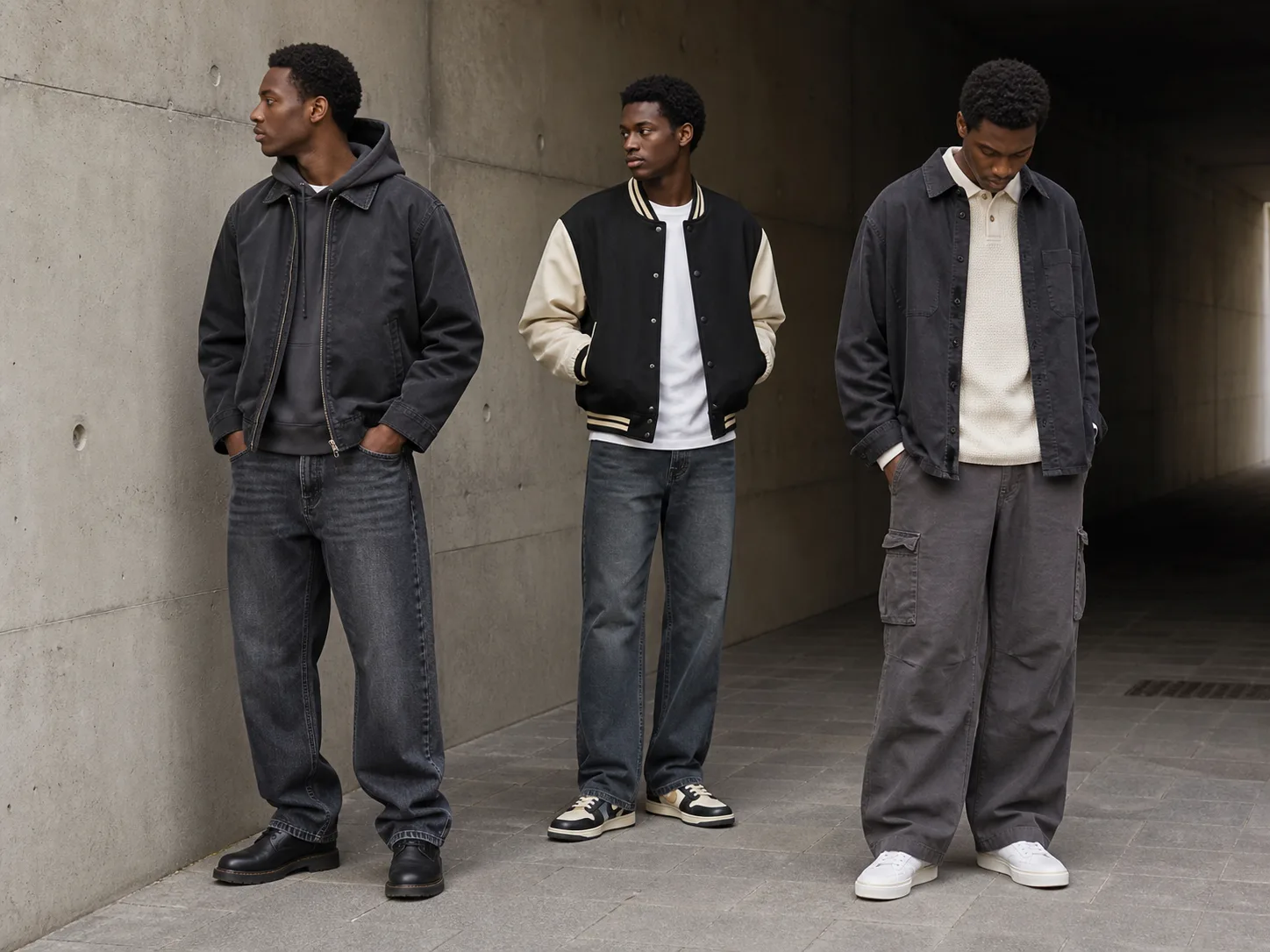
Workwear stack: compact canvas jacket, medium-weight hoodie, controlled loose jean and sturdy boot. Keep the hoodie close enough to fit beneath the jacket without bunching.
Varsity balance: varsity jacket, heavyweight tee, straight relaxed denim and retro sneaker. Let the jacket provide contrast; avoid adding unrelated graphics.
Quiet utility: relaxed overshirt, knit polo, wide cargo trouser and clean low-top. Tonal gray or olive emphasizes pocket placement and drape.
The outfit should function on your actual route. Sitting, walking, weather and carrying needs are better tests than a static mirror photograph. Visit Men's Style for broader wardrobe planning.
08
Common mistakes flatten the style
- Buying everything two sizes larger. Historical room came from pattern shape as well as nominal size.
- Making every layer long. Contrast between compact and extended pieces keeps the silhouette legible.
- Ignoring shoe condition. Vintage footwear may be display-safe but structurally unreliable for walking.
- Using symbols instead of context. A cap, chain or jersey cannot create authenticity on its own.
- Calling every outfit hip-hop. Work, sport, skate, prep and local everyday dress all contributed to streetwear.
Evidence trail
Sources & Further Reading
These references support the historical, cultural or care-related claims in the guide. Outfit combinations and fit recommendations are BAAM Boys editorial judgment unless specifically attributed.
- The Museum at FIT — Fresh, Fly, and Fabulous: Fifty Years of Hip Hop Style
Curatorial overview connecting hip-hop clothing to community, customization, aspiration and fashion-industry influence.
- Smithsonian NMAAHC — Five Things to See: The Fashion of Hip-Hop
Collection-based examples of garments, jewelry, photographs and sneakers used to document hip-hop style.
- The Metropolitan Museum of Art — Superfine: Tailoring Black Style
Institutional context for Black dress, identity, tailoring and self-presentation across time.
Field notes
Observe the outfit where it is used
- Climate
- Record why the jacket, boot, cap or layer may be practical.
- Movement
- Notice sitting, walking, skating, carrying and public transport rather than judging a still pose.
- Access
- Local stores, uniforms, teams and hand-me-downs shape the available wardrobe.
- Alteration
- Cuffs, laces, layering and maintenance reveal how ordinary garments become personal.
The field guide treats streetwear as lived clothing. A product name is secondary to function, fit and local use.