Maintenance, shape and wardrobe balance
Black Men's Grooming and Style: Build a Routine You Can Sustain
Grooming and clothing meet at the outline: hair shape, facial hair, collar, eyewear and jacket shoulder all frame the face. The goal is not a universal standard of polished Black masculinity. It is a routine that respects texture, health, time and personal expression while making the wardrobe feel coherent.

Quick answer
What is a practical grooming routine for Black men?
Use a simple repeatable schedule: cleanse skin gently, moisturize according to how it responds, protect from sun, keep hair and scalp clean on a texture-appropriate rhythm, detangle with care, and maintain facial hair and tools hygienically. Communicate desired shape and hairline restraint to a barber. Persistent irritation, hair loss, painful bumps or scalp changes belong with a qualified clinician, not a style article.
Basic hygiene, moisture as needed, sun protection and beard alignment.
Hair routine, tool cleaning, neckline check and product buildup review.
Discuss shape, maintenance interval and what should not be pushed.
Escalate persistent symptoms instead of hiding them with sharper grooming.
01 / Define the outcome
Choose a presentation, not a borrowed standard
“Clean” is often used as if it means short hair, no beard and invisible skin texture. That is too narrow. Locs can be meticulously maintained; a full natural can have a deliberate shape; facial hair can be soft rather than sharply edged; clear skin is not the same as poreless edited imagery. Define what you want people to read: precise, relaxed, creative, traditional, low-maintenance or adaptable.
Then calculate upkeep honestly. A sharp fade may need frequent appointments. Twists, braids, locs or longer natural hair require different time, skill and protection. A detailed beard line can demand regular trimming and may not suit skin prone to shaving irritation. A sustainable presentation looks better over months than an aspirational style maintained for two days.
Use reference images with similar texture, density and growth pattern where possible, but do not promise the same result. Hairlines, head shapes, cowlicks, facial growth and shrinkage vary. A skilled professional can explain what translates and what needs modification.
02 / Shape map
Coordinate four outlines around the face
Height, width, taper and parting create the first visible frame.
Mustache, beard, goatee or clean shave change chin and jaw emphasis.
Frame width, bridge and color add another line through the center.
Crew, open collar, roll neck and lapel alter the space below the face.
These outlines do not need to “correct” a face. They can echo or contrast. A high hairstyle with an open collar creates vertical room. A broad natural shape above a structured coat establishes balance. Strong glasses may replace the need for prominent jewelry near the face.
The Black Men's Accessories guide explains frame, necklace and neckline scale in greater detail.
03 / Barber language
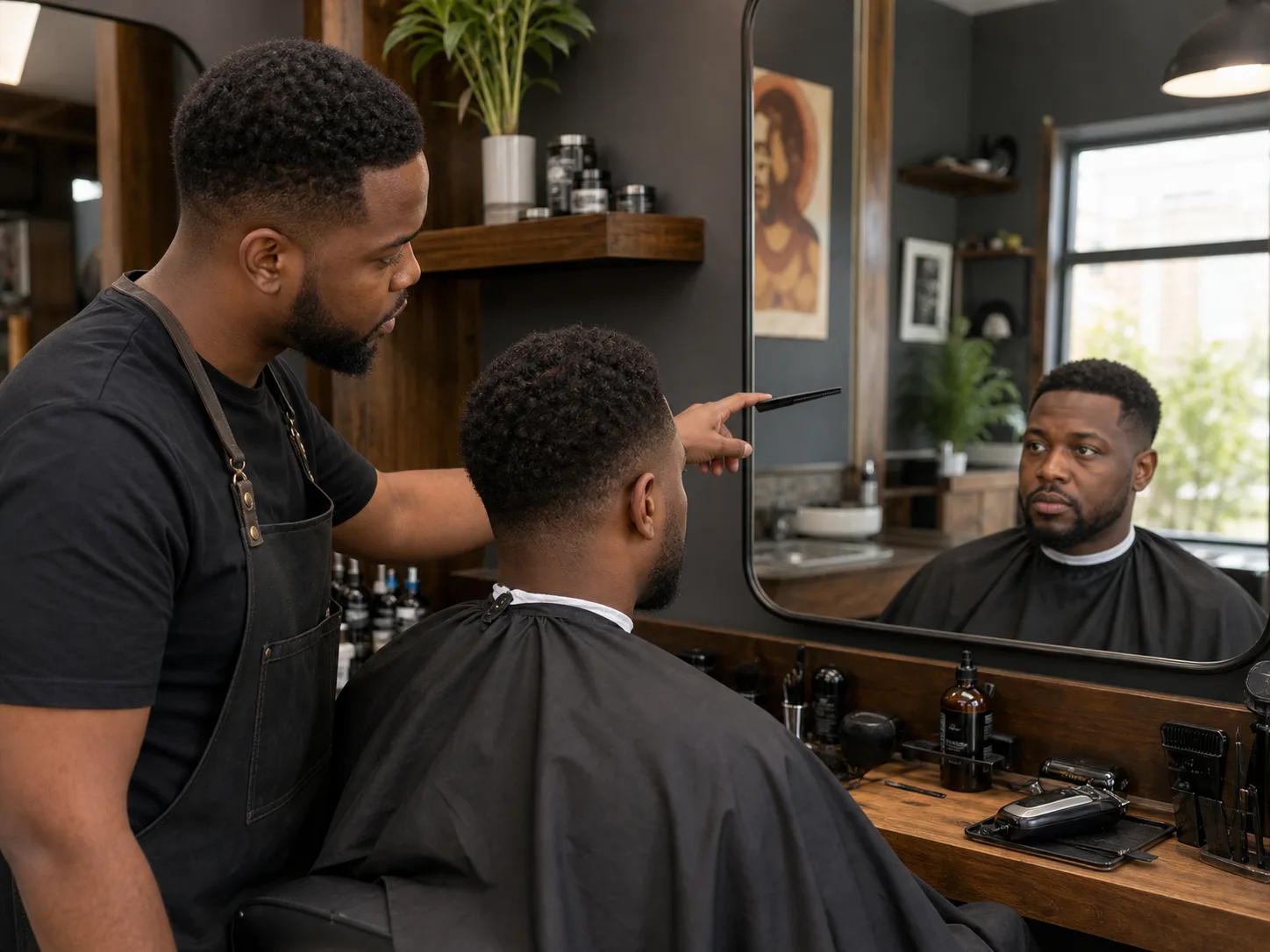
Describe shape before naming a haircut
Names vary by region and barber. Say how much length should remain on top, where the fade or taper should begin, how dark the sides should look, whether the neckline is natural or edged, and how much daily styling you will do. Point to specific features in a reference rather than saying “exactly that.”
Ask the barber not to push the front line beyond its natural position. A temporarily sharper appearance may create an unsustainable shape as hair grows. If clipper pressure or product causes discomfort, speak immediately. Sanitation, clean tools and professional practice matter more than decorative shop aesthetics.
Photograph the finished cut from front, side and back under normal light. These images create a personal record for the next visit. Note what happened after one and two weeks; the best cut is not only the one that photographs well on appointment day.
04 / Hair routine
Texture-aware does not mean one prescription
Black hair includes many curl patterns, densities, porosities, lengths and conditions. Cleansing frequency depends on scalp, activity, styling and product use. The useful principle is to remove buildup without turning every wash into aggressive friction. Apply products in manageable sections, detangle with appropriate tools and patience, and avoid forcing knots.
Moisture language can become vague marketing. Water and conditioning practices affect feel; oils and butters can reduce friction or seal but may also build up. Observe the actual response of hair and scalp rather than stacking products because a video called them essential. Patch test when appropriate and stop using products that cause irritation.
Protective styling should still be comfortable. Excessive tension, pain, bumps or progressive thinning are warnings, not proof that a style is “tight enough.” Seek a qualified professional for concerning changes. Historical hairstyle guides such as 90s Black Hairstyles for Men can supply visual context, but historical inspiration does not override present hair health.
05 / Skin and beard
Keep the base routine simple enough to evaluate
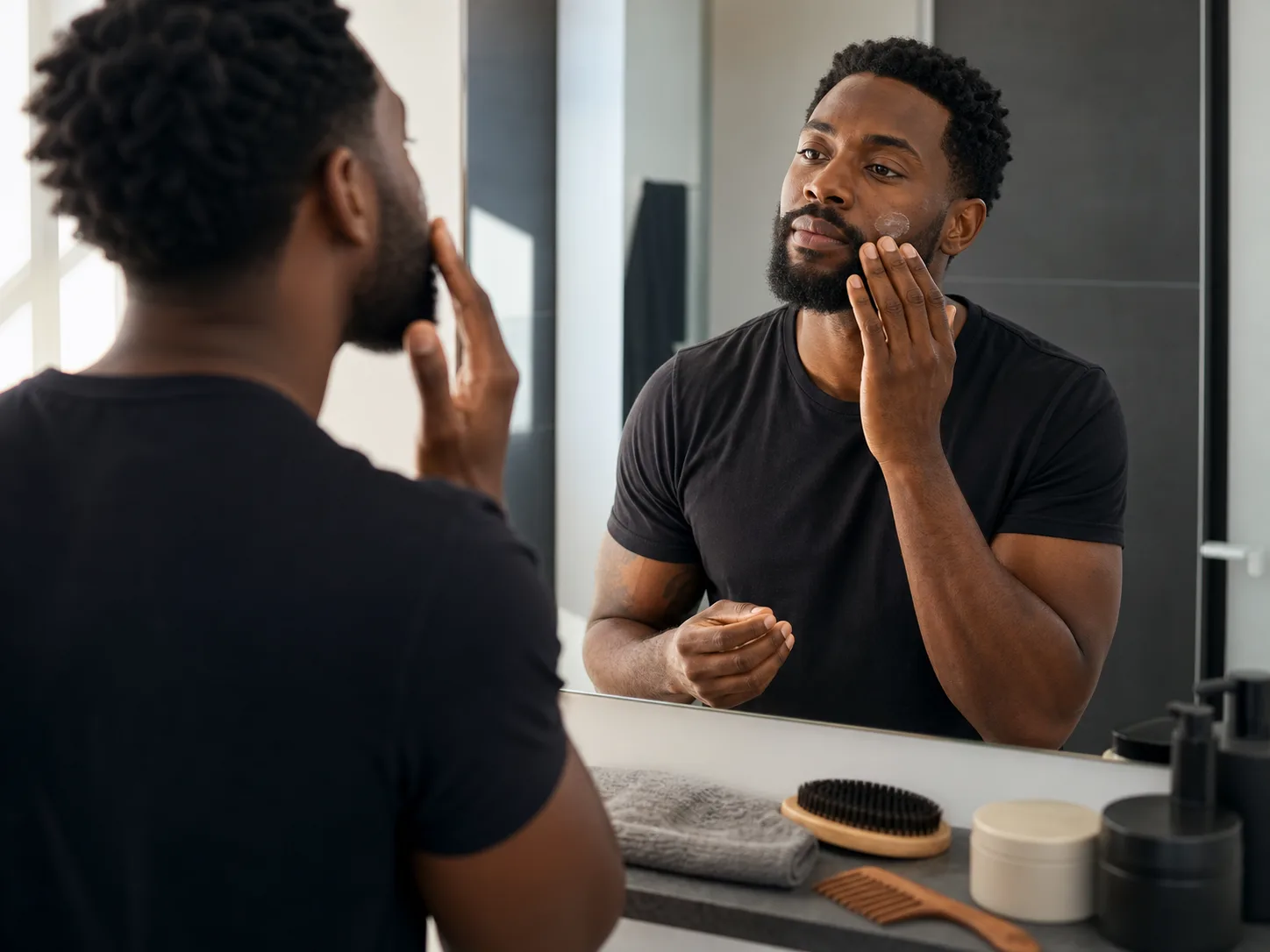
Introduce one product at a time so you can see how skin responds. A gentle cleanser, suitable moisturizer and sun protection form a common basic structure, but individual needs vary. Follow product directions and obtain professional guidance for persistent acne, discoloration, eczema, painful shaving bumps or other concerns.
For facial hair, decide the desired length and outline before trimming. Work gradually with clean tools and check both sides from a normal distance. Beard oil may soften hair and reduce friction for some people, but it is not a treatment for skin disease or hair loss. Keep the skin beneath facial hair clean according to its needs.
Close shaving can aggravate bumps in some men with tightly curled hair. Technique changes may help, but recurring inflammation deserves qualified advice. Do not repeatedly cut over irritated skin to preserve a line for photographs.
06 / Wardrobe connection
Let grooming and clothing share a level of intention
A precise taper can sharpen a relaxed tee and denim. Medium twists add texture above smooth tailoring. A full beard can balance a broader coat collar; an open neckline can create space beneath it. These are visual options, not face-shape corrections or rules tied to respectability.
Consider friction and residue. Tight collars can disturb hair at the neckline. Rough wool may irritate bare skin. Hair products can transfer onto hats, jackets and pillowcases; choose washable barriers and clean contact surfaces. Sunglasses and caps need enough room for hair without painful pressure.
On appointment day, wear a neckline that allows the barber to work and remove loose hair before putting on valued outerwear. For events, test the full combination early. A new beard product, haircut and starched collar introduced simultaneously make discomfort difficult to diagnose.
The Casual Outfits guide offers everyday clothing formulas that can be adjusted around grooming shape and maintenance.
07 / Calendar
Build maintenance around actual time and money
| Rhythm | Review | Reason |
|---|---|---|
| Daily | Comfort, hygiene, moisture, sun and facial-hair alignment | Prevents small needs becoming rushed fixes |
| Weekly | Hair and scalp routine, tool cleaning, nail and neckline check | Keeps the system sanitary and observable |
| Before appointment | Reference, desired shape, questions and current concerns | Improves professional communication |
| Seasonally | Product weight, hat friction, humidity and schedule | Routines may need adjustment as conditions change |
Do not copy another person’s interval automatically. Choose a cadence that keeps the style recognizable without creating financial strain or constant manipulation. A softer grow-out can be part of the design.
08 / Safety boundary
Know when style advice stops
- Persistent pain or inflammation. Stop aggravating the area and seek qualified care.
- Sudden or progressive hair loss. Do not rely on oils, hats or a different fade to conceal the cause.
- Spreading scalp changes. A barber can observe but should not be used as a medical diagnosis.
- Product reaction. Discontinue the suspected product and obtain appropriate advice when symptoms warrant it.
- Tool hygiene concerns. Choose professionals who use sound sanitation practices.
Editorial honesty matters here. BAAM Boys discusses visual relationships, routine planning and barber communication. It does not diagnose, prescribe or promise results.
Evidence trail
Sources & Further Reading
These references support the historical, cultural or care-related claims in the guide. Outfit combinations and fit recommendations are BAAM Boys editorial judgment unless specifically attributed.
- American Academy of Dermatology — Black hair: Tips for everyday care
Dermatologist-reviewed guidance on conditioning, heat, chemical services, tension and when to seek medical care.
- American Academy of Dermatology — Hairstyles that pull can lead to hair loss
Medical guidance on traction alopecia, warning signs and reducing repeated tension.
- The Museum at FIT — Fresh, Fly, and Fabulous: Fifty Years of Hip Hop Style
Cultural context for grooming, accessories and self-presentation within hip-hop style.
Direct answers
Black men's grooming and style FAQ
How often should a Black man get a haircut?
It depends on the cut, growth, budget and preferred grow-out. A sharp fade may need more frequent refinement than twists, a natural shape or a softer taper. Ask how the cut will develop between visits.
What should I tell my barber?
Describe top length, side darkness, taper or fade height, neckline, hairline restraint and home styling time. Use references to identify features, not to demand an identical result.
What is a simple skin-care routine for Black men?
A gentle cleanser, suitable moisturizer and sun protection are a common basic structure, but needs vary. Introduce products carefully and seek qualified care for persistent or painful concerns.
How can grooming match an outfit?
Compare hair and beard shape with eyewear, neckline and jacket shoulder. Echo or contrast one outline deliberately, and avoid crowding every focal point near the face.
Are razor bumps just a grooming issue?
Recurring painful or inflamed bumps can require professional evaluation. Do not repeatedly shave irritated skin simply to maintain a sharp line.