Occasion, construction and alteration
Black Men's Tailoring Guide: Choose the Suit Before the Suit Chooses You
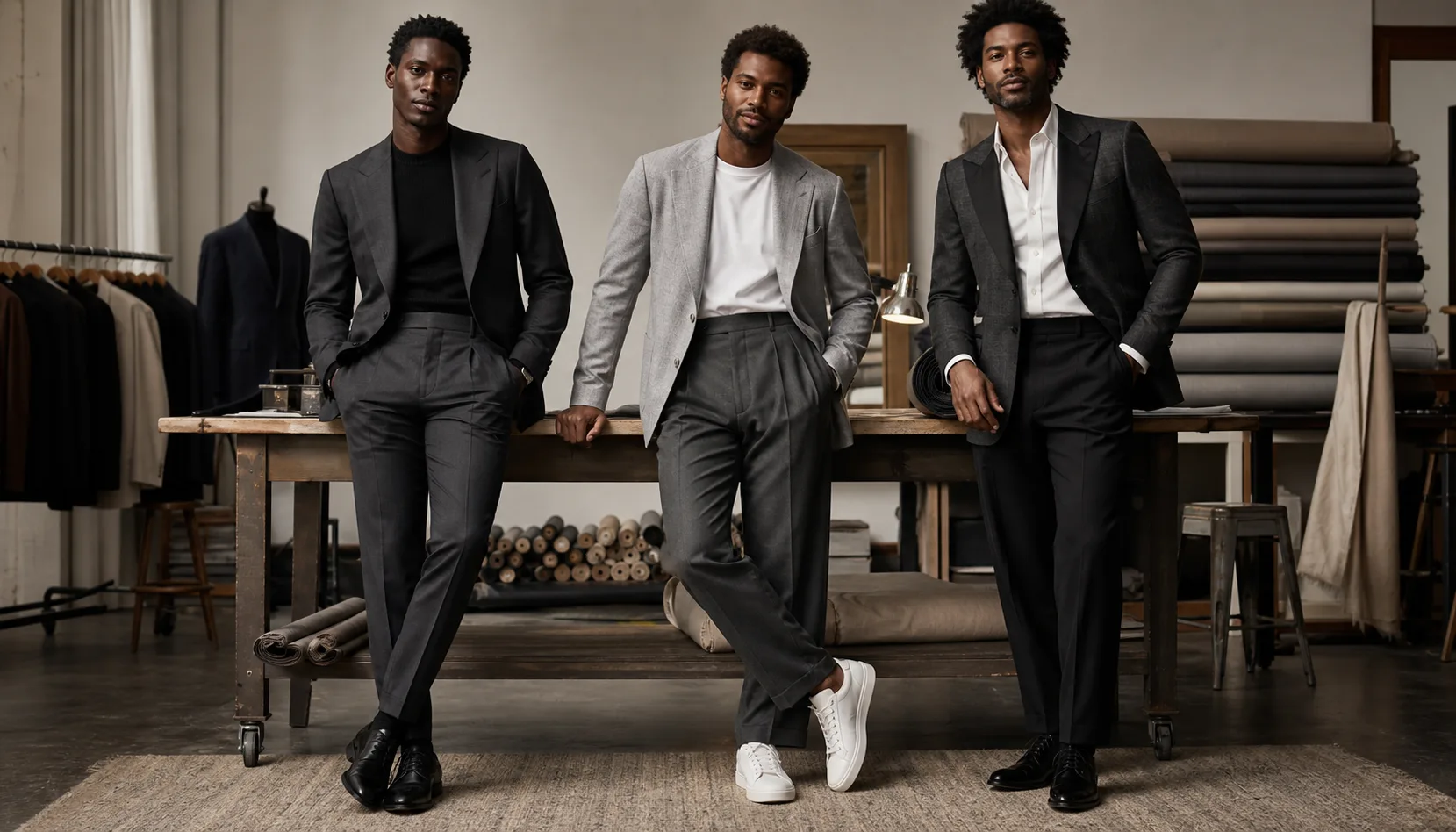
Tailoring can project ceremony, professionalism, ease, creativity or quiet authority. It should not force Black men into a single respectability code. The useful questions are practical: what room are you entering, how must the clothes move, which construction creates the intended line, and what can a tailor realistically change?
Quick answer
How should a men's suit fit?
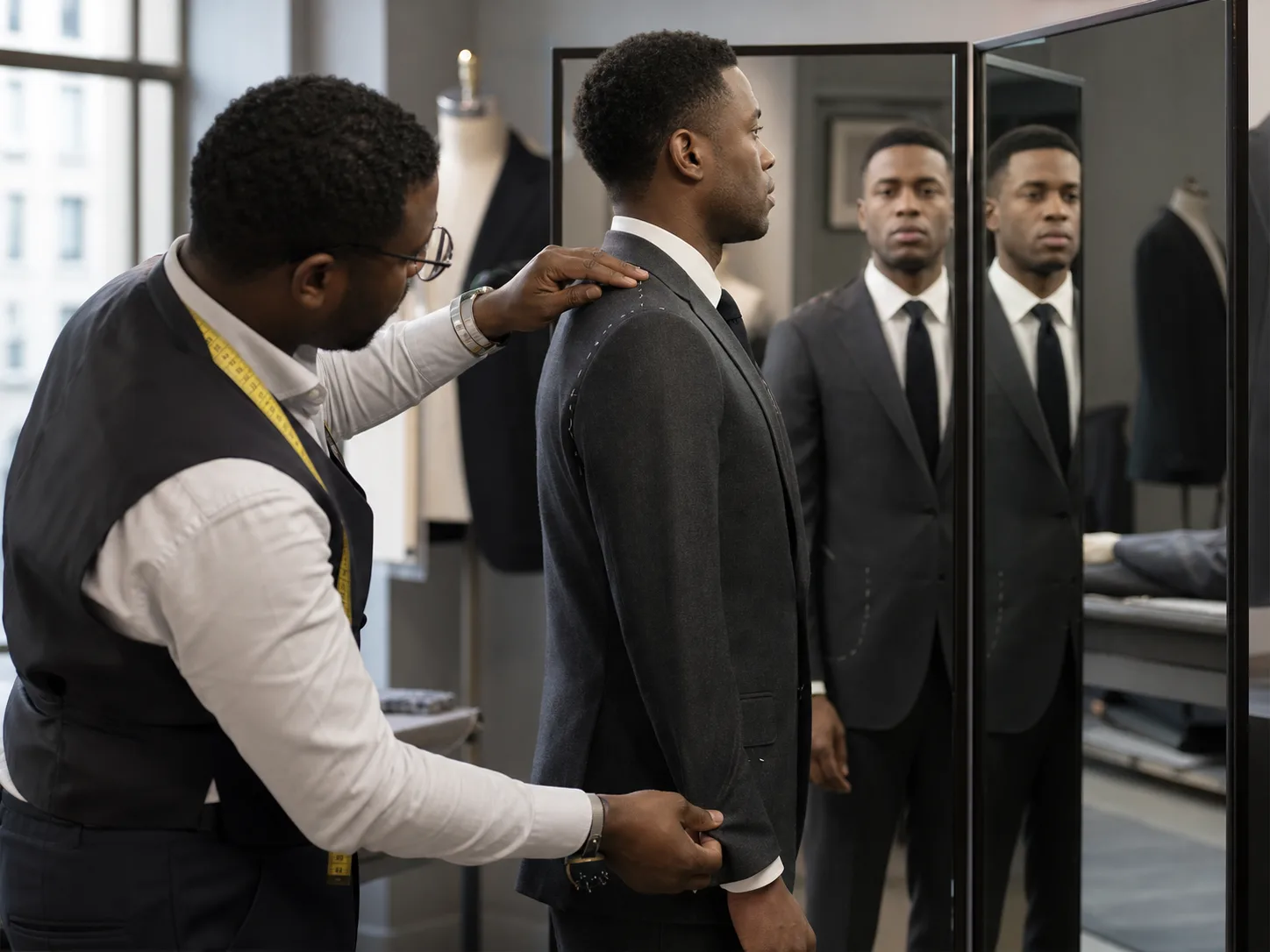
The jacket collar should sit cleanly, the shoulder should support the intended structure, the chest should close without pulling, and the armhole should permit movement. Trousers should sit securely at their designed rise with room through seat and thigh, then fall cleanly to the shoe. Sleeve and trouser length are common alterations; major shoulder, armhole and rise problems are harder and may not be worth rebuilding.
Should meet the shirt without a persistent gap or roll.
Must carry natural, soft or padded structure without collapse.
Needs room to sit without pulling or empty folds.
Reach, walk and sit before judging a still mirror image.
01 / Occasion brief
Define the room before choosing the lapel
Start with dress code, climate, time of day, travel and frequency. A wedding guest needs to respect the invitation without competing with the couple. A work suit must suit the actual workplace. A creative event may welcome soft construction and stronger proportion. Black tie has specific conventions that a standard dark business suit does not automatically satisfy.
Ask whether the garment needs to cross contexts. A charcoal or deep navy two-piece in a versatile wool can handle many professional and social situations. A separate jacket with patch pockets and softer construction works more naturally with odd trousers, denim or a tee. A dinner jacket serves a narrower but distinct purpose.
Cultural and ceremonial dress may follow traditions beyond generic Western codes. Learn the expectations of the family, community and event. Tailoring guidance should not overwrite garments with their own rules, makers and meanings.
02 / Fitting order
Start with what alteration cannot easily rescue
View front, side and back; jacket should hang rather than pitch forward or back.
Check gaps, divots, collapse and whether padding sits where intended.
Button comfortably and reach without the entire jacket climbing.
Place waistband at design position and sit before judging shape.
Look for pulling, pocket flare, twisting and movement restriction.
Set sleeve and hem after the foundation works and shoes are chosen.
Photograph at waist height. Mirrors can be angled; a camera from above shortens the leg and changes judgment. Bring the shirt, shoes and underlayers intended for real wear.
03 / Jacket clinic
Structure is a design choice, not a quality ranking
A natural shoulder follows the body with little extension. A padded shoulder creates a stronger line. A soft unstructured jacket feels casual and mobile. None is universally superior. The right construction depends on the intended image, cloth and body relationship.
Button the jacket at its designed fastening point. Radiating lines from the button can indicate tension, while excess collapse may signal too much volume or poor balance. Lapels should lie cleanly. The jacket length changes the apparent leg and seat coverage; current fashion may move shorter or longer, but proportion should be intentional.
Sleeves should allow an appropriate amount of shirt cuff according to preference and setting. Functional buttonholes can limit easy shortening from the cuff, so inspect construction before buying. The tailor should explain options, cost and risk rather than promising every problem can disappear.
04 / Trouser clinic
Rise and drape create more elegance than a narrow leg
Tailored trousers need a stable waist without dependence on excessive belt tension. Side adjusters, belt loops and braces are different systems; choose one that works with the cut. Pleats provide shaping and room, not automatic bulk. They should remain closed while standing normally.
A higher rise can connect the jacket and trouser cleanly, especially when the jacket opens. Seat and thigh must support sitting. The crease should fall rather than swing toward the inside or outside. Taper can refine the lower leg, but an overly small opening may catch on calf and make the trouser hang in sections.
Hem with the actual shoe. No break produces a sharp line; slight break adds ease; fuller break can suit broader or more traditional trousers when controlled. Formal evening trousers and casual pleated separates may call for different solutions.
05 / Cloth and construction
Match weight, weave and internal build to use
Worsted wool is a versatile category, but cloth varies greatly. Tropical wool uses an open weave for warmer conditions. Flannel adds softness and visual depth in cooler weather. Linen breathes and wrinkles visibly. Cotton can feel casual and may crease sharply at stress points. Blends change recovery, shine, durability and care.
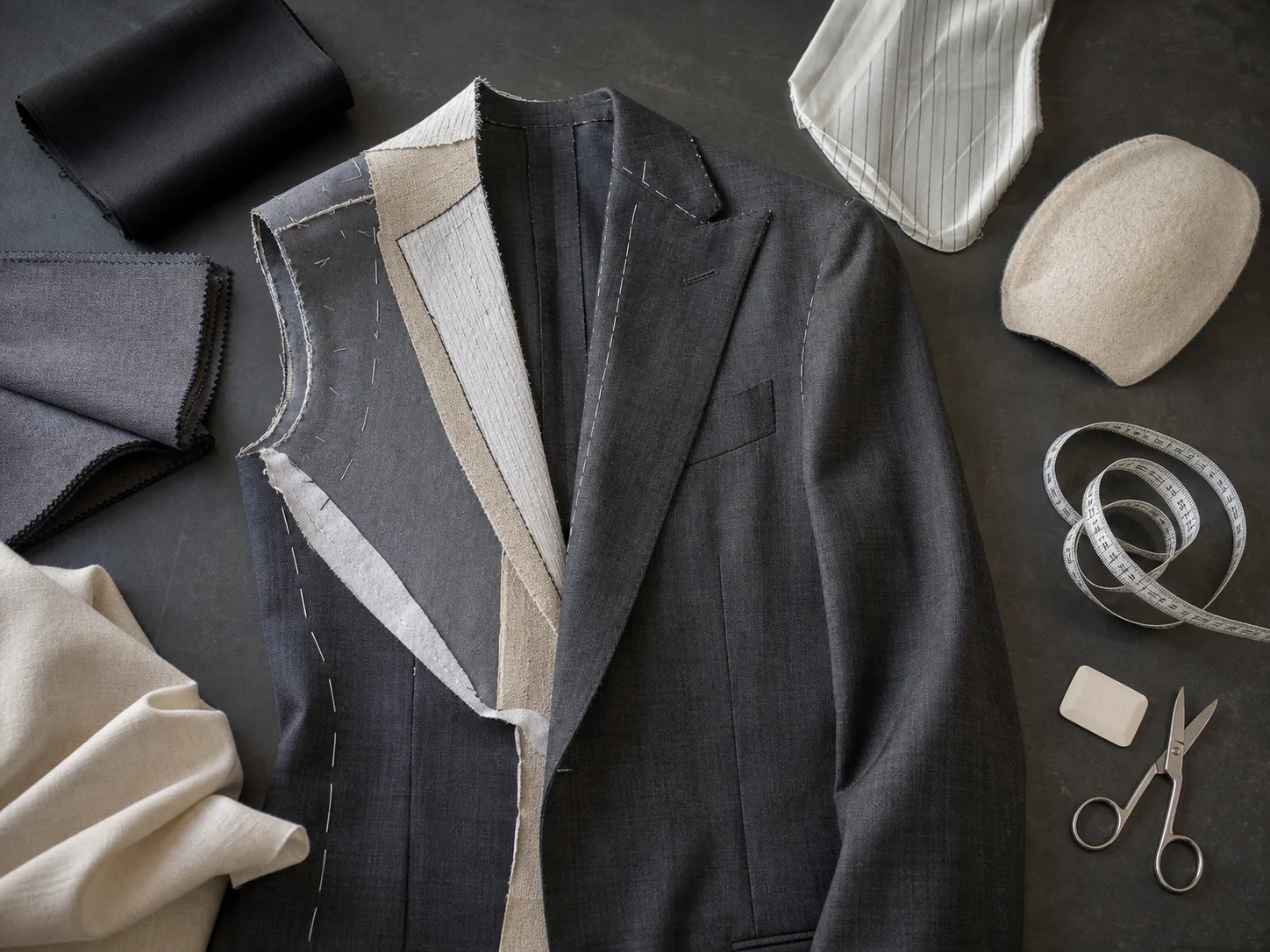
Canvas supports jacket shape between outer cloth and lining. Full, half and fused construction can all be executed at different quality levels. A fused front is not automatically worthless; assess drape, bubbling risk, price and intended frequency. Lining affects warmth and how the jacket moves over a shirt.
Handle a swatch, hold it toward light and crush it gently. Ask how it recovers, whether it will travel, how it should be cleaned and whether the weave suits the climate. Marketing terms do not replace physical behavior.
06 / Alteration map
Know the easy changes and expensive boundaries
| Area | Typical feasibility | What to check |
|---|---|---|
| Trouser hem | Usually straightforward | Shoe, desired break and available cloth |
| Jacket sleeve | Often possible | Buttonholes, lining and cuff details |
| Waist suppression | Often possible within limits | Balance, vents and seam allowance |
| Trouser waist | Often possible within allowance | Seat relation and waistband construction |
| Shoulder or armhole | Complex and expensive | May require extensive reconstruction |
| Trouser rise | Highly limited | Buy the correct rise whenever possible |
Feasibility depends on the specific garment and professional judgment. Obtain a quote before treating alteration as part of the purchase plan.
07 / Styling levels
Change the base and shoe to change the message
For professional tailoring, use a shirt or fine knit, controlled trousers and leather footwear appropriate to the office. For smart casual, an unstructured jacket over an opaque tee or polo works with pleated trousers, clean denim or chinos. Minimal sneakers can fit relaxed tailoring where the dress code permits.
Evening tailoring benefits from texture and low contrast: dark jacket, cream or white shirt, black trouser and polished shoe. Formal black tie has its own expectations around dinner jacket, trousers, shirt and bow tie; follow the invitation rather than calling any black suit a tuxedo.
Jewelry, hair and eyewear frame the look but should remain personal. The Accessories guide explains scale, while the Grooming and Style guide connects hair shape and collar without imposing a single professional appearance.
08 / Care
Rest and brush before sending everything to the cleaner
Hang a jacket on a supportive hanger and give it air after wear. Empty pockets to prevent distortion. Brush suitable cloth gently and spot-address only with methods appropriate to the material. Rotate trousers and allow creases and moisture to recover.
Dry cleaning is useful but repeated aggressive processing can affect cloth, so follow care labels and use a reputable cleaner. Steam cautiously; direct high heat can damage fibers, fusing or finish. Store clean garments with enough room, and choose pest prevention appropriate to the home without placing harmful products against fabric.
- Buying jacket and trouser separately without checking dye lot. Near-matches can look accidental.
- Judging only while standing still. Sit, reach and walk.
- Choosing fashionably narrow trousers over functional drape. The crease needs room to fall.
- Assuming tailoring equals conformity. Cut, styling and cultural context can express many forms of Black identity.
Evidence trail
Sources & Further Reading
These references support the historical, cultural or care-related claims in the guide. Outfit combinations and fit recommendations are BAAM Boys editorial judgment unless specifically attributed.
- Federal Trade Commission — Clothes Captioning: Care Labeling Rule
Official explanation of garment care labels and the evidence manufacturers need for care instructions.
- The Metropolitan Museum of Art — Superfine: Tailoring Black Style
Institutional context for tailoring, Black identity, distinction and self-presentation.
- The Museum at FIT — Fresh, Fly, and Fabulous: Fifty Years of Hip Hop Style
Curatorial context for sportswear, designer fashion, customization and individual expression.
Direct answers
Black men's tailoring FAQ
How should a suit jacket fit at the shoulders?
The shoulder should support the intended natural, soft or padded line without collapse, deep divots or obvious overhang. Major shoulder changes are complex, so prioritize this area when buying.
What suit color is most versatile?
Charcoal and deep navy are widely versatile for business and social settings. Choose according to actual dress codes, climate and existing shirts and shoes rather than treating one color as mandatory.
Can men wear sneakers with a suit?
Yes in many smart-casual settings when the suit is softly constructed and sneakers are clean and visually compatible. Formal ceremonies, conservative offices and black-tie events may require traditional shoes.
Which suit alterations are easiest?
Trouser hems, some waist adjustments and many sleeve changes are common. Shoulder, armhole and rise alterations are more complex and may not be economically sensible.
Does tailoring need to be slim to look sharp?
No. Relaxed tailoring can look precise through shoulder balance, clean drape, appropriate lengths and controlled trousers. Sharpness comes from intentional lines, not tightness.