Craft, visibility, symbolism and proof
Hip-Hop Jewelry History: Read the Object Beyond Its Shine
Jewelry in hip-hop has framed success, affiliation, memory, faith, craft, self-authorship and stage presence. Its story is not a price leaderboard. A useful history looks at who made the object, what materials and construction allowed, how scale worked with clothing and cameras, and which claim the evidence can actually support.
Quick answer
Why is jewelry important in hip-hop?
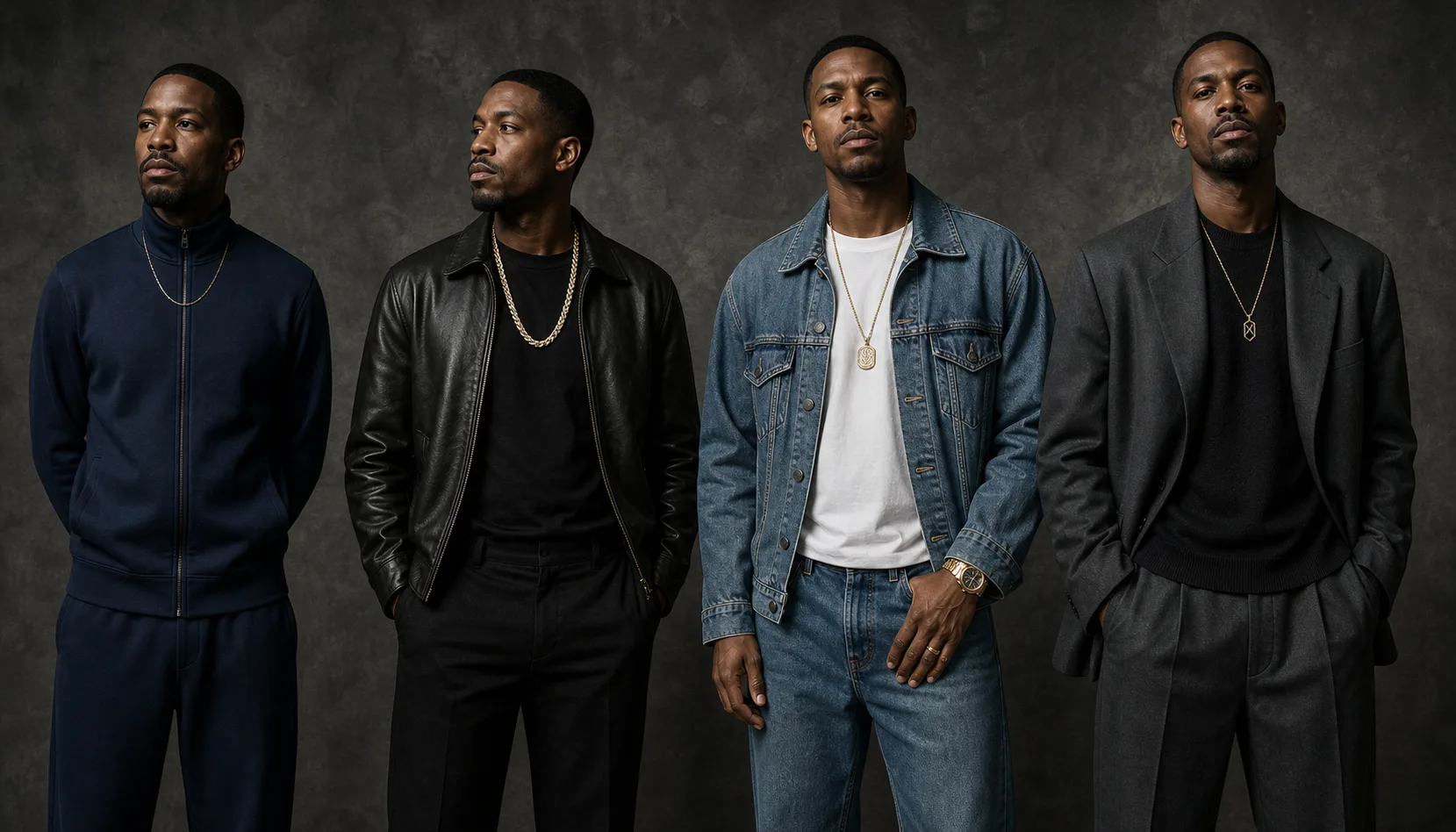
Jewelry can make achievement visible, carry names and symbols, establish group or personal identity, reward skilled craft and focus a performer's image under lights and cameras. Meaning varies by wearer and era. A large chain is not automatically an endorsement, proof of ownership or a universal symbol; those claims require documentation.
Material, link, clasp, setting, finish and repair reveal craft.
Length and scale interact with neckline, movement and microphone.
Stage light and frame size determine which detail remains visible.
Appearance, ownership, gift, commission and partnership need different proof.
01 / Evidence boundary
A photograph proves appearance—not every relationship
A clear dated image may show that a person wore an object. It does not automatically establish ownership, purchase price, permanent preference, maker, gift, insurance value or commercial contract. Those details need credits, invoices, maker records, interviews or other reliable evidence.
Jewelry is frequently loaned, styled, gifted, customized, rebuilt and re-set. A piece may change over time while retaining a familiar pendant or motif. Low-resolution photographs distort color and stone appearance. Identify only what the image supports, and label uncertainty.
Price claims are especially unstable and easy to repeat without basis. BAAM Boys does not provide appraisals or investment advice. Historical importance, replacement cost, market asking price and insured value are different concepts.
02 / Early visibility
Chains connected personal dress with performance scale
Early hip-hop jewelry existed within older Black traditions of watches, rings, chains, religious objects and formal accessories. As the music developed in community settings, jewelry joined athletic clothing, hats, leather and sneakers. Even a restrained chain created a bright line against a dark tracksuit or tee.
Movement mattered. A long or heavy piece swings during dance and can strike the body or microphone. Shorter chains stay close; rings remain visible during gestures; watches connect function and presentation. Clean metal and deliberate placement often mattered more than owning many pieces.
No single early image represents everyone. Access, taste, role and setting varied. Dancers, DJs, performers and audience members had different physical and visual requirements.
03 / Maker's bench
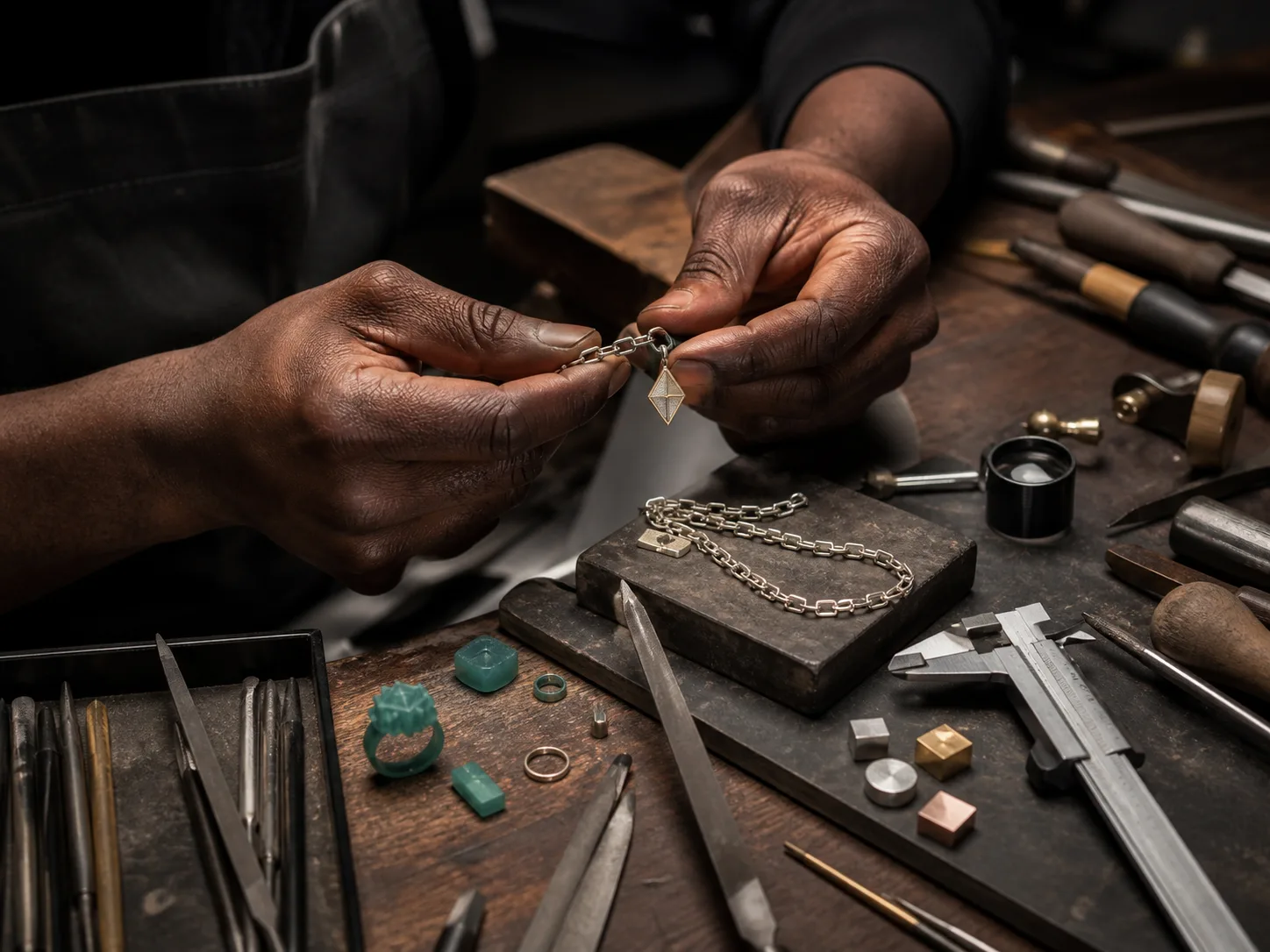
Center the craftsperson, not only the wearer
Chains require decisions about link geometry, thickness, joining, flexibility, clasp and finish. Pendants add drawing, model making, casting or fabrication, bail design, stone setting where used, polishing and final balance. Watches and existing pieces may be modified through different specialist processes.
The maker needs to understand how an object hangs and moves. A pendant can flip if weight and bail are wrong. A broad chain may compete with the collar. Weak joints or undersized clasps create loss risk. Repairability matters when an object tours or appears repeatedly.
Credit should follow the work. “Worn by” does not identify who designed or made it. When a specific maker claim matters, look for documented credits rather than inferring from visual style.
04 / 1980s
Scale grew with leather, athletic sets and broadcast image
Broader chains and stronger metal presence became highly visible in many 1980s hip-hop images. Leather supplied a dark reflective field; athletic sets created color unity; hats framed the upper body. Jewelry could operate as the central bright object rather than one accessory among many.
Stage and video encouraged scale. A slim chain visible at conversation distance might disappear in a wide frame, while a broad link remained legible. This does not mean every performer or community member wore the same weight or material. Photographic prominence can overstate prevalence.
The 80s Hip-Hop Fashion guide places jewelry beside tracksuits, leather, hats and sneakers rather than isolating it from the full image.
05 / 1990s
Pendants, watches and rings expanded the personal vocabulary
1990s hip-hop fashion offered broad clothing surfaces: tees, denim, work jackets, varsity layers and leather coats. Pendants could occupy the open chest area, while watches and rings became visible through hand gestures, portraits and closer video framing. Different regional and stylistic scenes used different levels of ornament.
A pendant can carry letters, names, religious symbols, group identity or an original motif. Meaning should be documented rather than guessed. A symbol that resembles another from a distance may have a specific personal or cultural history.
The 90s Hip-Hop Accessories guide explains how jewelry interacted with hats, eyewear, belts and garment scale.
06 / Early 2000s and after
Customization, product relationships and digital close-up intensified
Early-2000s image often magnified chain, pendant, watch and ring scale alongside wide jeans, long tops and larger footwear. Custom objects supported artist identity, group language and commercial visibility. The boundary between personal wear, loan, endorsement and collaboration became especially important to document.
Digital photography and social media later made small details searchable, while close-up content encouraged increasingly complex surfaces. At the same time, minimalist jewelry remained viable, particularly with tailored, monochrome or technical clothing. Contemporary hip-hop jewelry is not one direction.
Claims about the latest makers, prices or partnerships change quickly and require current primary reporting. A durable history focuses on documented objects, labor and visual function instead of freezing a ranked list.
07 / Research and care
Keep source records beside material observations
For a historical image, record date, publication, photographer, event, styling credits and the narrow identification. For an object, note visible link, length, pendant, clasp, wear and any documented modification. Compare maker statements with independent evidence when influence or value is claimed.
Care depends on material, finish, construction and stones. A method safe for one metal may damage plating, porous material, adhesive or surface treatment. Obtain maker guidance and use a qualified jeweler for valuable, fragile or unknown pieces. Inspect clasps and joints before wear.
Store pieces separately to reduce tangling and scratching. Remove jewelry when activity creates snag or impact risk. Performance safety matters more than maintaining a dramatic image.
08 / Styling scale
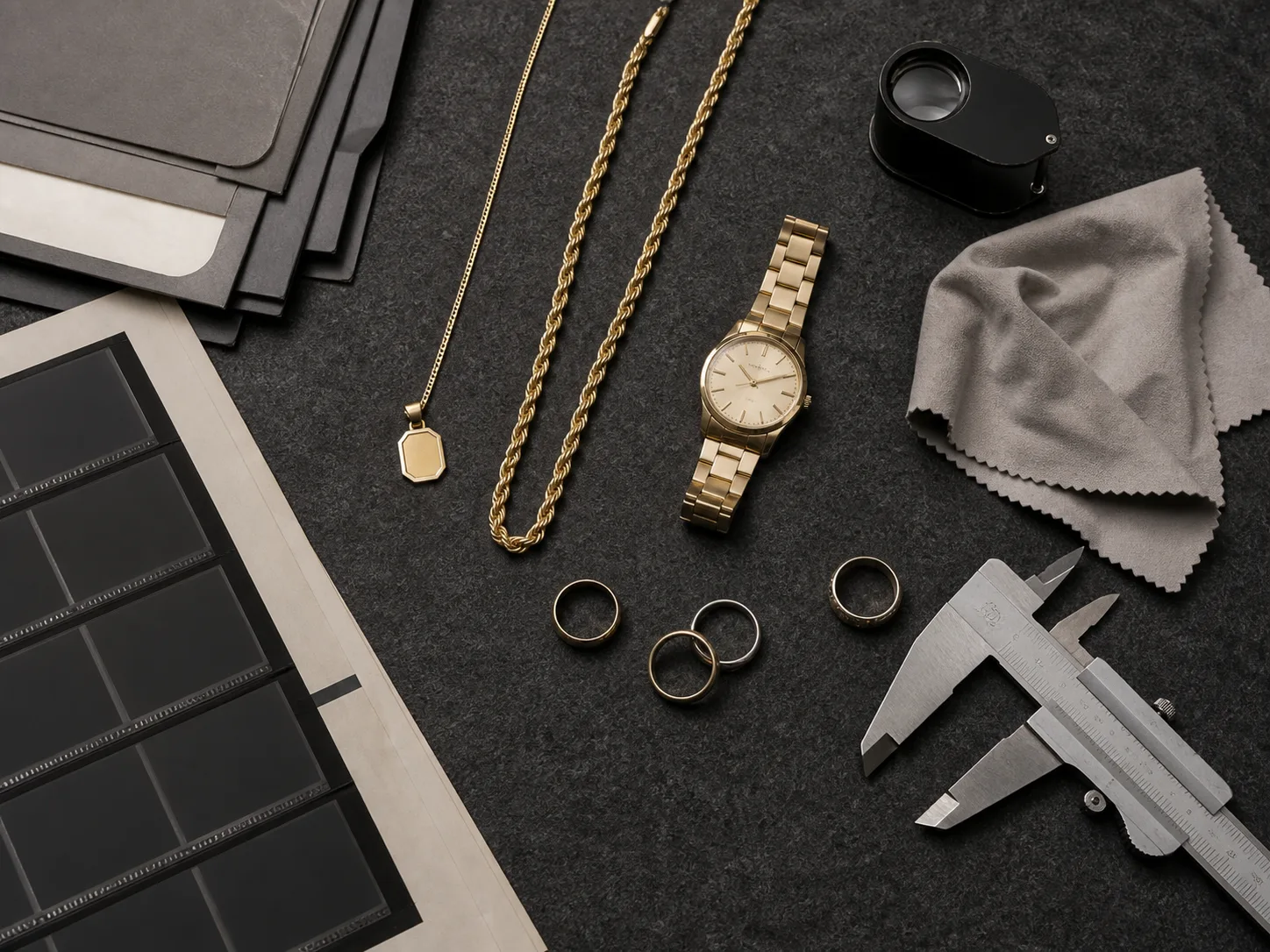
Match object, neckline and setting
Quiet line for knit, crew tee, open shirt or tailoring; easy to layer under outerwear.
Visible above plain sportswear or leather without dominating every upper-body detail.
Needs enough blank chest space and a length that does not collide with collar.
Move attention to hands; consider desk comfort, sleeve clearance and scratching.
There is no universal rule that Black men should choose gold, silver, large or minimal jewelry. Skin tone prescriptions are too broad; test actual material and finish in daylight. Meaning, comfort and personal taste matter.
For general modern accessory decisions, use the Black Men's Accessories guide.
09 / Common errors
Do not let spectacle replace history
- Ranking objects by rumored price. Cost does not explain craft, meaning or influence.
- Calling appearance ownership. Establish the narrow fact first.
- Erasing the jeweler. Credit design, fabrication and modification when documented.
- Assuming size equals one emotion. Scale may serve image, symbol, stage or personal preference.
- Cleaning unknown materials aggressively. Seek material-specific guidance.
Evidence trail
Sources & Further Reading
These references support the historical, cultural or care-related claims in the guide. Outfit combinations and fit recommendations are BAAM Boys editorial judgment unless specifically attributed.
- The Museum at FIT — Fresh, Fly, and Fabulous: Fifty Years of Hip Hop Style
Curatorial overview connecting hip-hop clothing to community, customization, aspiration and fashion-industry influence.
- Smithsonian NMAAHC — Five Things to See: The Fashion of Hip-Hop
Collection-based examples of garments, jewelry, photographs and sneakers used to document hip-hop style.
- The Metropolitan Museum of Art — Superfine: Tailoring Black Style
Institutional context for Black dress, identity, tailoring and self-presentation across time.
Direct answers
Hip-hop jewelry history FAQ
Why do hip-hop artists wear chains?
Chains can express achievement, identity, affiliation, craft, memory and stage visibility. The meaning depends on the wearer and documented context.
When did large chains become visible in hip-hop?
Broader chains became especially prominent in many 1980s images, though jewelry was present earlier and scale varied widely across people and scenes.
Does a rapper wearing jewelry mean they own it?
No. It may be owned, borrowed, loaned, gifted or styled. Ownership and commercial relationships require evidence beyond a photograph.
How should hip-hop jewelry be researched?
Preserve the original dated source, event and credits; identify only visible features; compare maker or campaign statements with independent evidence; and word claims narrowly.
Are the people and historical scene in the hero image real?
No. The image is an editorial reconstruction using fictional people. It illustrates scale and clothing relationships and is not archival evidence.