Culture translated for daily movement
Hip-Hop Streetwear Guide: Dress for the Street You Actually Use
Hip-hop streetwear should work after the photograph: on transit, through weather, at a casual office, over dinner and during a long walk. The strongest outfits preserve cultural relationships—athletic coordination, workwear durability, denim volume and footwear weight—while editing them for the wearer's present life.
Quick answer
How can men wear hip-hop streetwear today?
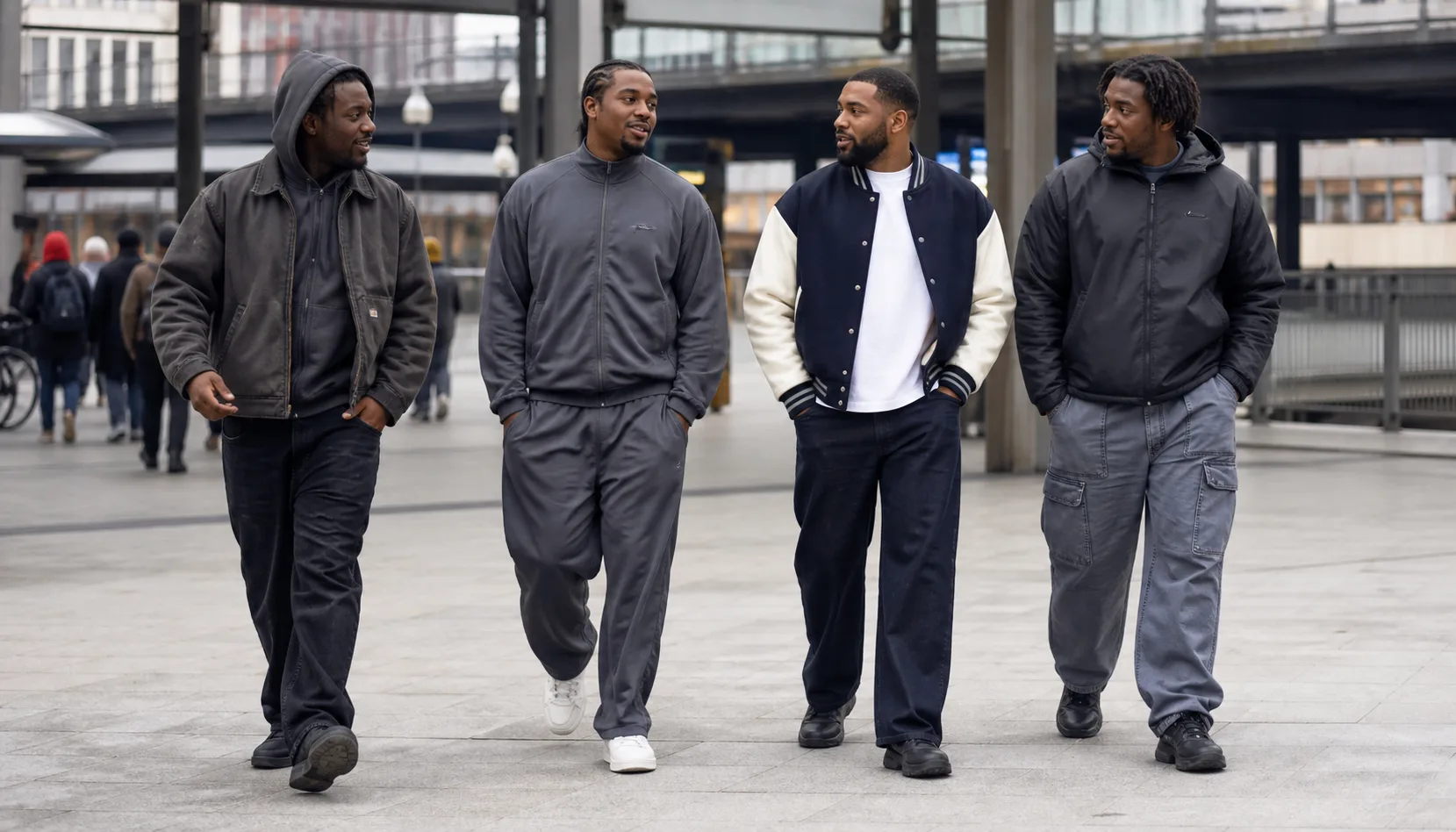
Choose one cultural reference—coordinated sportswear, relaxed denim, a work jacket, varsity layer or technical shell—then build around current fit and function. Match trouser opening to footwear, keep two or three connected colors, and use one accessory as a focal point. Avoid copying a specific artist or combining every decade symbol at once.
One clear source keeps the outfit informed rather than themed.
Top length, trouser rise, opening and shoe weight create the outline.
Pockets, warmth, grip and washability make streetwear useful.
Remove duplicate signals and let one garment lead.
01 / Street test
Start with route, weather and destination
Map the day: walking distance, transport, indoor temperature, rain, bag needs and the most formal room. A heavy hoodie under a rigid jacket may look good for five minutes but become uncomfortable on a crowded train. Long denim can absorb street water. Smooth soles can fail on wet pavement.
Choose the functional layer first. A canvas jacket tolerates daily abrasion. A technical shell manages wind or light weather according to its actual specification. A varsity-inspired jacket supplies structure and history but may be too warm for indoor use. A tracksuit simplifies movement and coordination.
Then decide whether the outfit must transition. If dinner or work requires polish, carry it in trousers, a clean shoe or a more refined outer layer rather than replacing the whole cultural reference.
02 / Four routes
Build from garment origin and present function
Canvas jacket, hoodie, relaxed denim and grounded boot; durability and texture lead.
Coordinated track set, clean trainer and restrained outer layer; movement and color unity lead.
Structured jacket, plain tee, straight trouser and clean shoe; team language becomes personal.
Weather shell, articulated cargo trouser and supportive footwear; equipment logic creates shape.
These routes overlap historically, but the outfit reads better when one remains dominant. Workwear plus a technical bag can work; work jacket, track pant, varsity top and tactical boot all at full intensity may lose its argument.
03 / Capsule
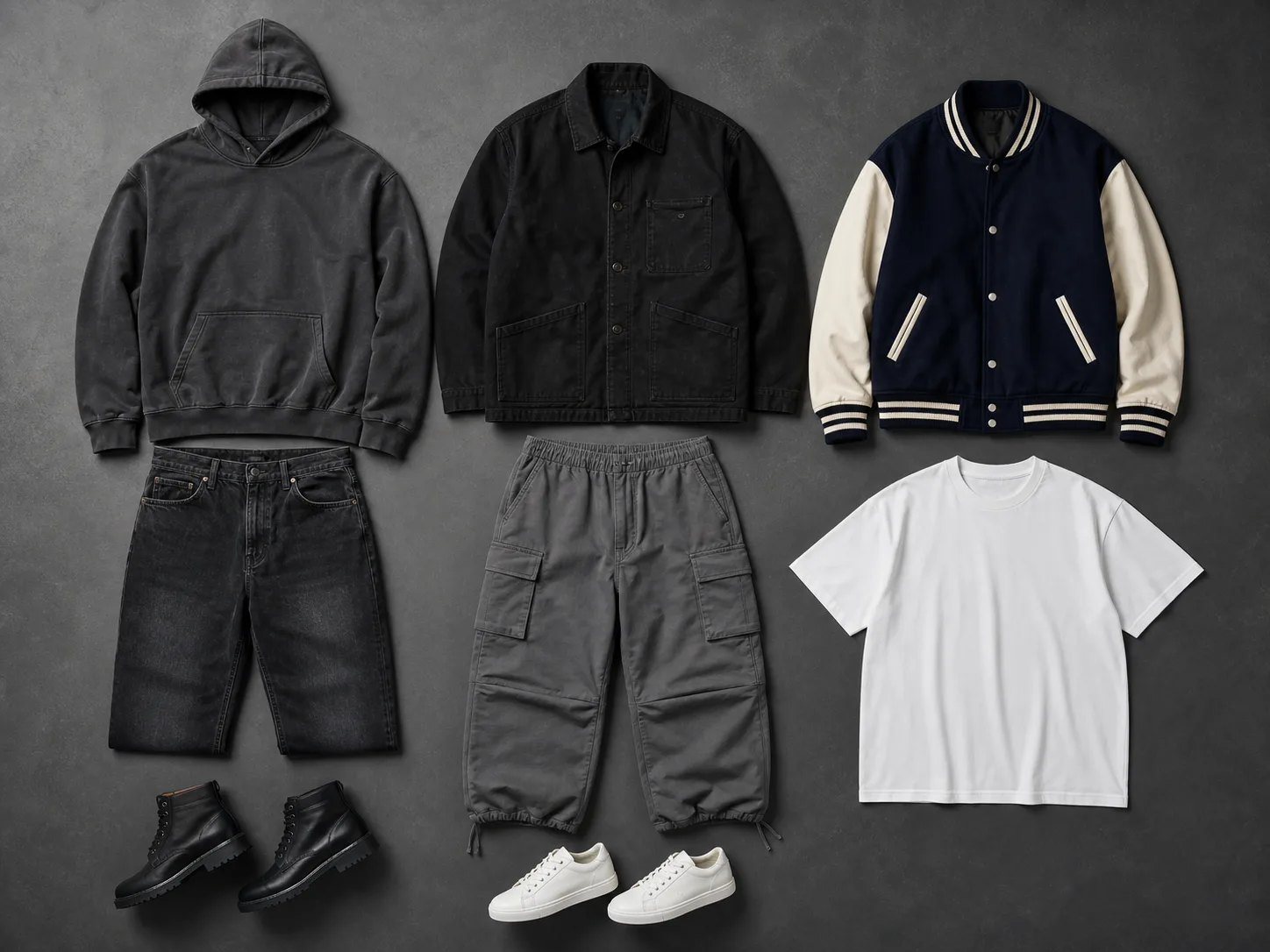
Eight pieces create a working rotation
Use a charcoal hoodie, opaque white tee, black work jacket, varsity-inspired jacket, washed dark jeans, relaxed gray cargo trouser, supportive black boot and clean low-top. The list can change, but each piece should connect to at least two others.
The hoodie supplies warmth and a face-framing hood. The tee resets heavier layers. Two jackets offer rugged and structured directions. Denim and cargo provide different texture and pocket function. Footwear covers weather and cleaner settings.
Test all trousers over both shoes. Check whether the jacket closes over the hoodie, and whether the varsity layer still works above the tee. A capsule is successful when combinations survive movement, not when the items look attractive in isolation.
04 / Proportion
Volume needs one visible anchor
Relaxed streetwear can use width above and below, but establish a clear decision. A shorter work jacket reveals the trouser rise. A long tee beneath a jacket creates a visible layer but can stretch the torso if excessive. A broad cargo trouser needs footwear with enough sole and toe volume.
If the hoodie and trouser are both full, control the outer layer or hem. If the varsity jacket has strong shoulders, the trouser can remain straight rather than equally exaggerated. View the whole body from distance; close inspection overvalues graphics and hardware.
For 1990s volume, use the 90s Streetwear guide. For millennium scale and its shift, see 2000s Streetwear for Men.
05 / Day to evening
Keep the reference and change the register
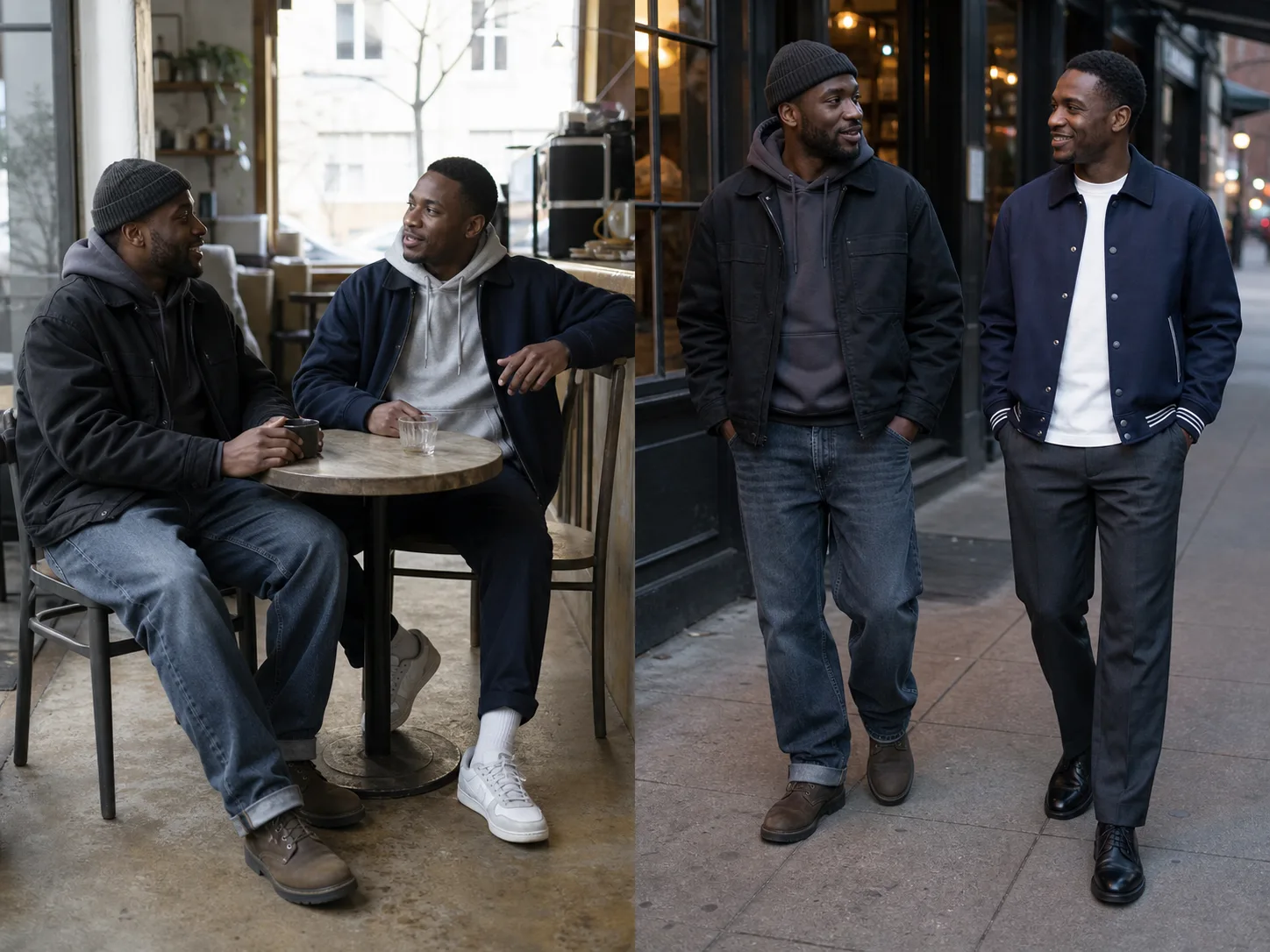
For a daytime route, hoodie, work jacket, relaxed denim and boots handle cold, transit and casual meetings. For evening, the same dark palette can move toward a white tee, varsity-inspired jacket, straight charcoal trouser and clean leather shoe.
The transition works because only formality changes. Both outfits retain a strong outer layer, relaxed but controlled leg and grounded footwear. A beanie may stay with the outdoor workwear look; a cleaner neckline suits dinner. One watch or chain is enough if the jackets already carry visual structure.
Read the venue. Streetwear can be respectful and polished, but formal dress codes may require tailoring. The goal is not to challenge every room; it is to retain identity while understanding context.
06 / Color and graphics
Use recognition without becoming an advertisement
Two or three connected colors make athletic and varsity influences easier to read. Deep gray, black, white and navy provide enough contrast for layers. Muted green, tan, burgundy or a stronger team-like color can lead one garment.
Graphics carry content, so know what they say and where they came from. Avoid wearing an unknown symbol simply because it looks vintage. If the jacket contains a large graphic, let trousers and shoe stay quiet. Small repeated color can reconnect the outfit without exact matching.
Logo-free clothing can still communicate hip-hop influence through proportion, material, coordination and grooming. Cultural meaning did not originate solely in brand marks, even though brands became part of the story.
07 / Footwear and accessories
Choose the shoe by route, then finish one zone
Boots suit workwear, poor weather and broad denim. Low-top trainers keep tracksuits and straight trousers clean. Court-inspired shoes add weight beneath varsity and relaxed jeans. Technical runners make sense for distance and layered nylon. Fit and intended use remain more important than cultural status.
Check the hem in movement. Cargo cords should not catch. Wide jeans should not drag. A tapered track pant should not bunch excessively above the shoe. The Iconic Hip-Hop Sneakers guide explains how shoe roles entered culture.
Finish one zone: hat and glasses near the face, chain at the neckline, watch at the wrist or bag across the torso. Accessories can be expressive, but they should not interfere with transit, work or comfort.
08 / Respect and maintenance
Wear the history with enough knowledge to credit it
Study whether a reference came through dance, basketball, work, school, region or a music scene. Do not assign every broad denim or athletic look to one celebrity. The Hip-Hop Fashion History guide provides a fuller cultural timeline.
Maintain the clothes according to material. Brush canvas, wash denim based on soil and care instructions, clean shells without damaging coatings, and dry footwear fully. A simple outfit reads intentional when cuffs, collars, surfaces and soles remain cared for.
- Wearing a video costume for errands. Translate scale and color into functional layers.
- Buying only statement jackets. A useful tee, trouser and shoe rotation makes them wearable.
- Ignoring weather. Street credibility cannot replace traction or protection.
- Stacking decades without context. Choose one reference and understand its route.
Evidence trail
Sources & Further Reading
These references support the historical, cultural or care-related claims in the guide. Outfit combinations and fit recommendations are BAAM Boys editorial judgment unless specifically attributed.
- The Museum at FIT — Fresh, Fly, and Fabulous: Fifty Years of Hip Hop Style
Curatorial overview connecting hip-hop clothing to community, customization, aspiration and fashion-industry influence.
- Smithsonian NMAAHC — Five Things to See: The Fashion of Hip-Hop
Collection-based examples of garments, jewelry, photographs and sneakers used to document hip-hop style.
- The Metropolitan Museum of Art — Superfine: Tailoring Black Style
Institutional context for Black dress, identity, tailoring and self-presentation across time.
Seven-day rotation
Repeat the system without repeating the outfit
Two tees, one knit or sweatshirt and one weather-appropriate mid-layer.
One straight trouser, one relaxed denim and one utility option.
A compact jacket plus a protective layer selected for climate.
One daily pair and one alternative with a different degree of polish.
Change one relationship at a time: compact top with wider leg, long layer with cleaner trouser, or quiet base with one expressive object. Repetition creates identity when condition and proportion remain deliberate.
Direct answers
Hip-hop streetwear FAQ
What is hip-hop streetwear?
It is everyday clothing shaped by hip-hop culture and connected routes such as sport, workwear, dance, regional style and music image. It is broader than one logo or oversized silhouette.
How can I wear hip-hop style without looking like a costume?
Choose one garment relationship or proportion, combine it with current dependable basics and adapt for your actual route, weather and setting.
Can hip-hop streetwear be smart casual?
Yes. Use a clean varsity or work-inspired jacket, plain tee or knit, straight tailored trouser and polished or minimal footwear where the dress code permits.
Do hip-hop outfits need visible brands?
No. Silhouette, texture, coordination, footwear and cultural knowledge can communicate the influence without visible logos.
Which trousers work best for hip-hop streetwear?
Straight jeans, relaxed denim, track pants and cargo trousers all work. Choose by route and match the rise, opening and hem to the intended shoe.